| Author |
 Replies: 1,299 / Views: 152,694 Replies: 1,299 / Views: 152,694 |
|
|
|
Bedrock of the Community
United States
37100 Posts |
That 1815 Spread Eagle is a beauty!
|
|
Pillar of the Community
 United States
5029 Posts |
Great looking adds Wade and Terry  |
|
Pillar of the Community
Canada
1275 Posts |
Here's a token dated 1833 it has the coinage alignment and also a reeded edge. I believe if correct it's numbered UC-12B2, Breton 730. Cheers, Bill 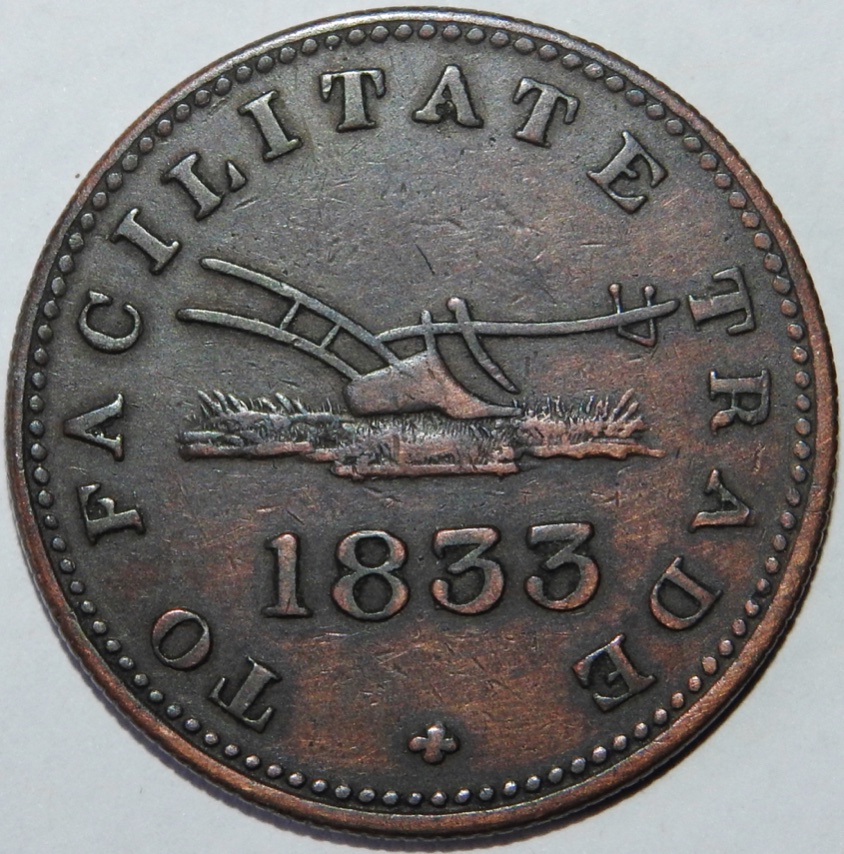 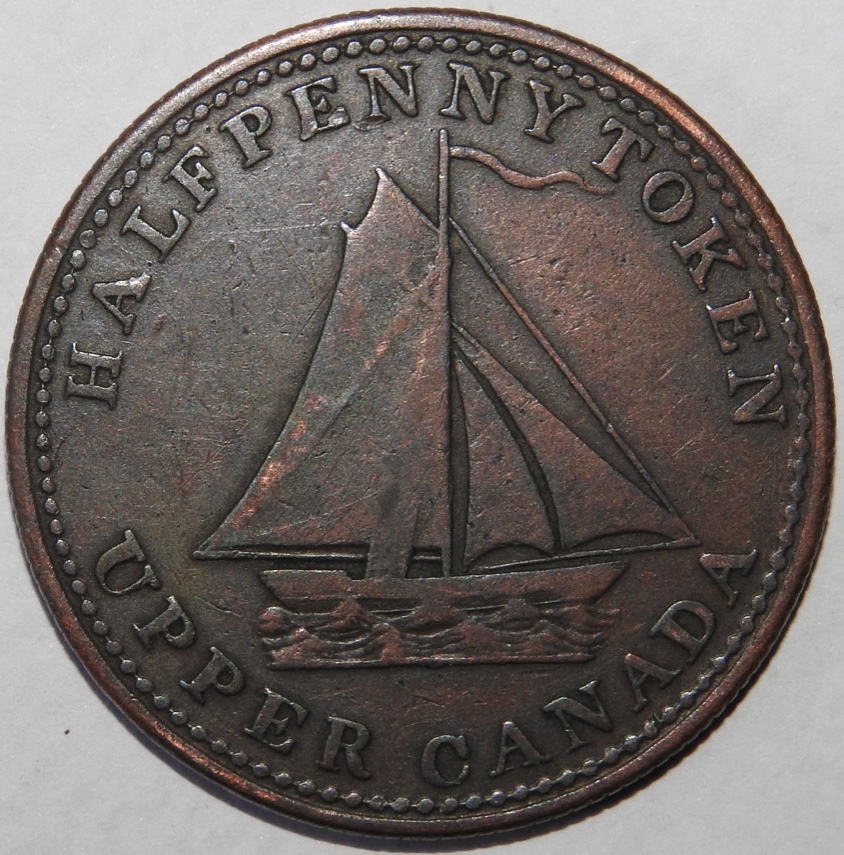 |
|
Pillar of the Community
Canada
2786 Posts |
I have been wanting one of these since I started collecting. While not extremely rare I am pleased to have acquired one in this condition. 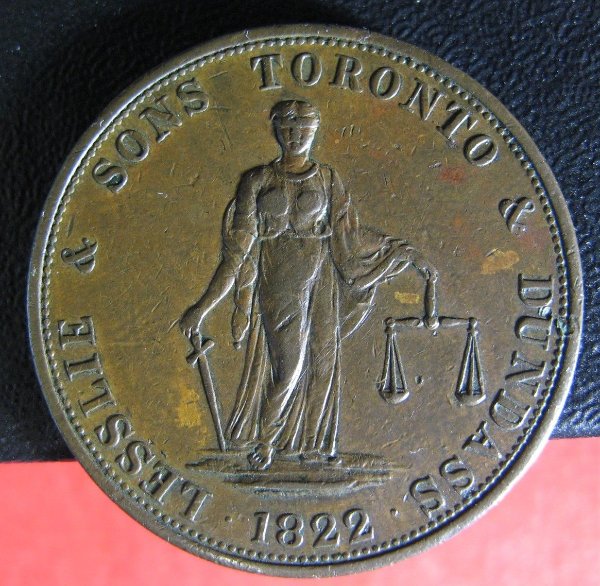 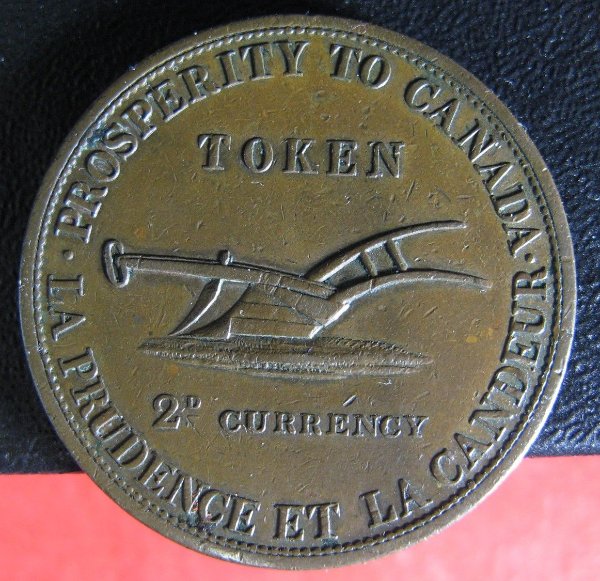 . |
|
Bedrock of the Community
United States
37100 Posts |
|
|
Pillar of the Community
Canada
1275 Posts |
Very nice Wade. It's in much better condition then most.
Cheers, Bill
|
|
Pillar of the Community
Canada
2786 Posts |
2 steps closer to having a complete set of mint state slayers (only need an 1852 1/2P to finish the set). First is a '54 One Penny, listed as AU50 (got it cheap!), but is easily MS62 Second is a '50 One Penny. The 1850 1P is by far the hardest to find in mint state, so I am thrilled to have picked up this MS64! 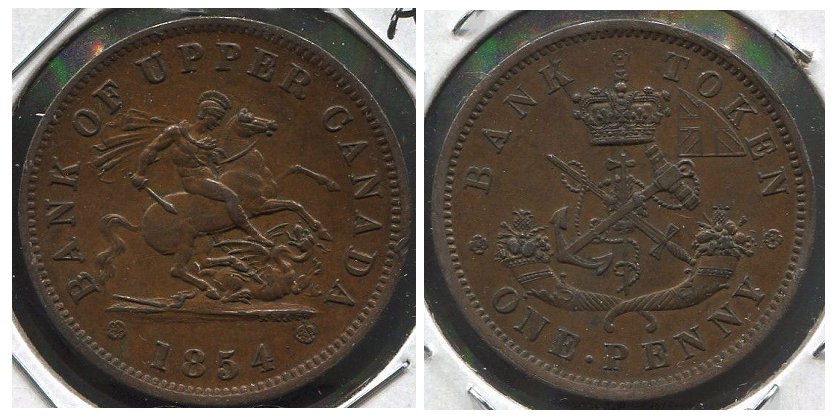 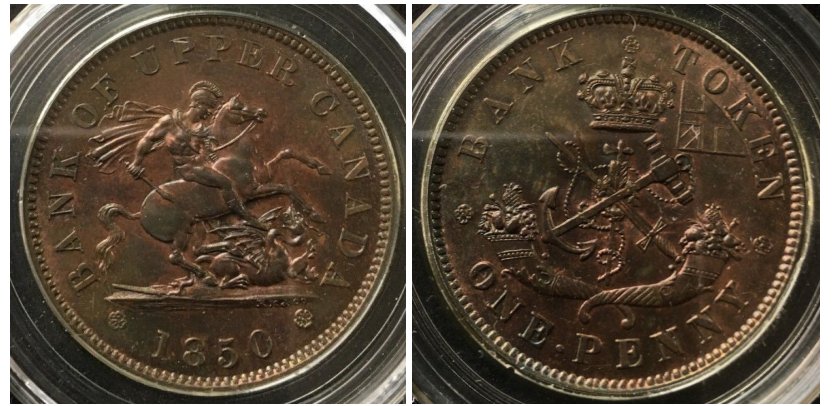 |
|
Pillar of the Community
United States
5029 Posts |
Great pickups Wade . Beautiful examples |
|
Pillar of the Community
Canada
842 Posts |
Finally got over the envy for Wade's 2 penny Lesslie token (the 2 penny holy cow), and then he hit us with a red token. Relapse. I've re-recovered enough to continue my thistle tokens.... just. Here are a couple of 1840 pennies; 7 Fringes NS-2C1 (PNS-603 R-6), and 5 Fringes NS-2C2 (PNS-404 R-4). 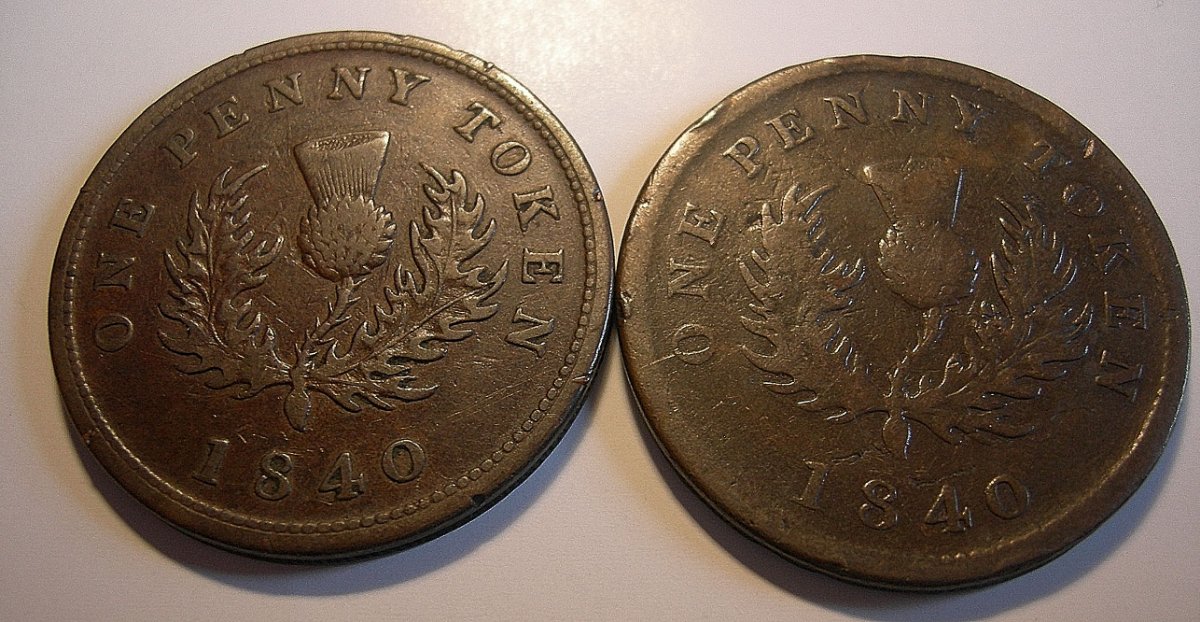 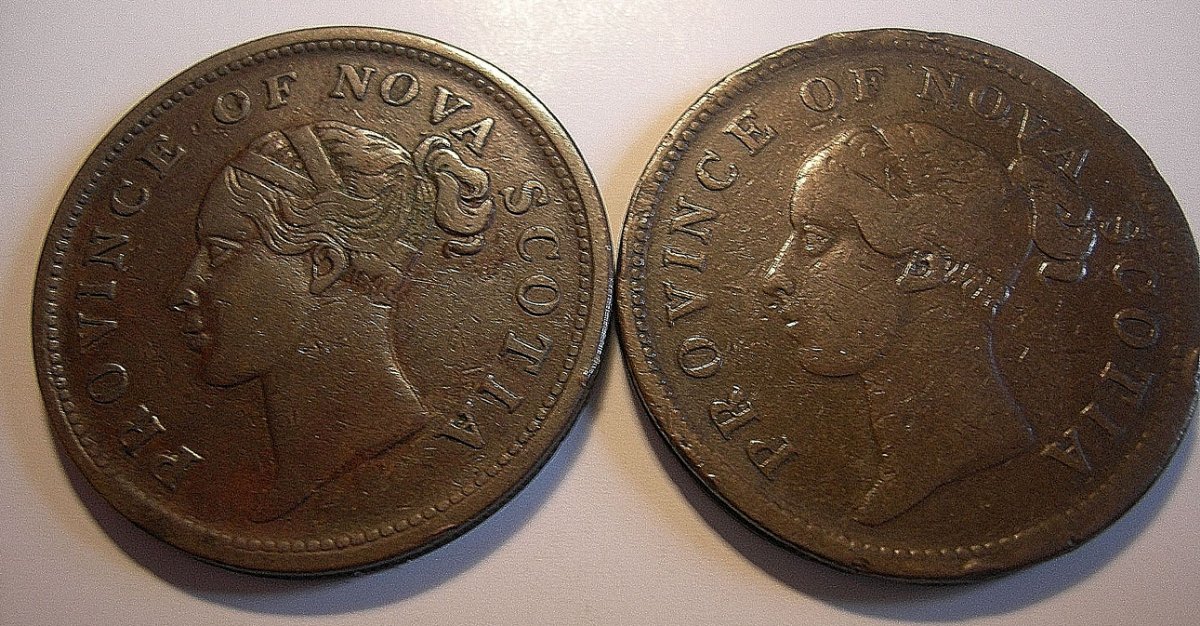 |
|
Pillar of the Community
Canada
842 Posts |
Here are two 1843 pennies. 7 Fringes NS2D1 (PNS-803 R-3), and 4 Fringes NS-2D2 (PNS-801 R-5). 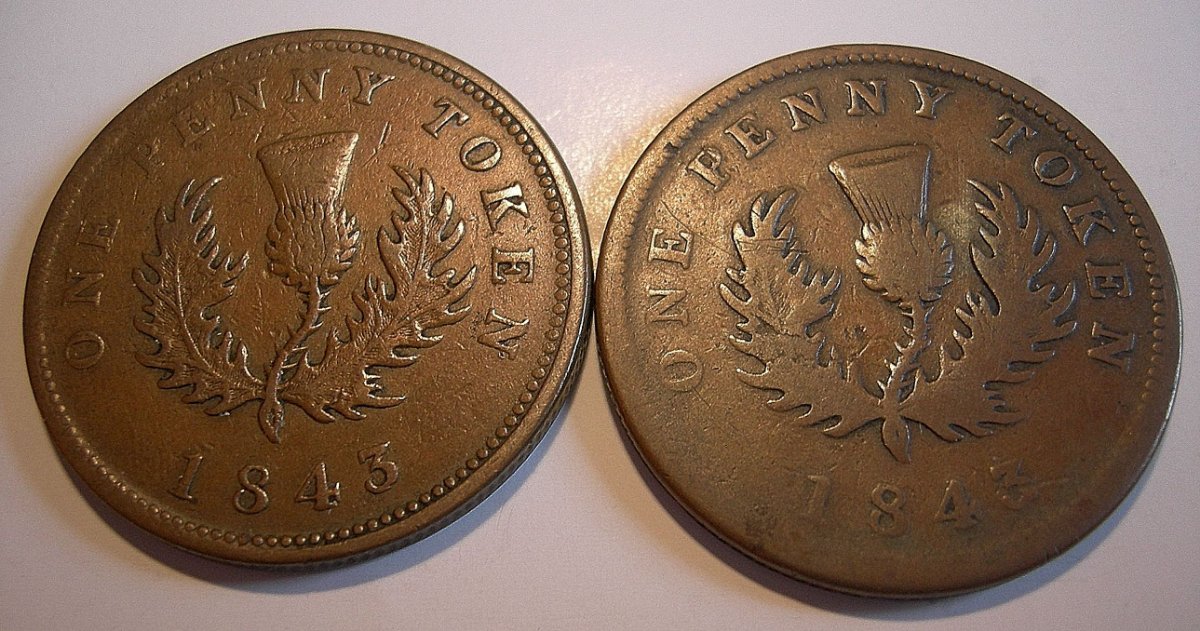 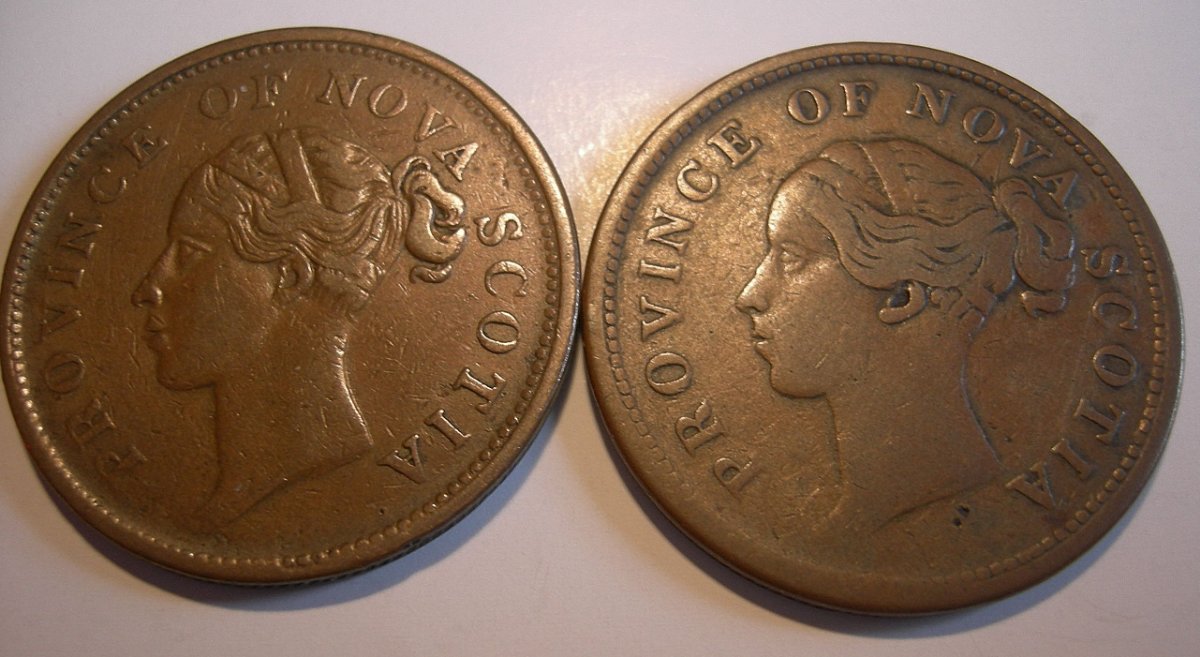 |
|
Valued Member
Canada
222 Posts |
Quote:
Wade: First is a '54 One Penny, listed as AU50 (got it cheap!), but is easily MS62 @Wade: It's a beautiful Courteau #262. However, unless it is the photos that are misleading, otherwise I do not share your opinion. Indeed, because I easily perceive some traces of wear typical of the grade AU/AU+. It's hard to say with such a low resolution picture, but I would probably say between AU-50 and AU-55. 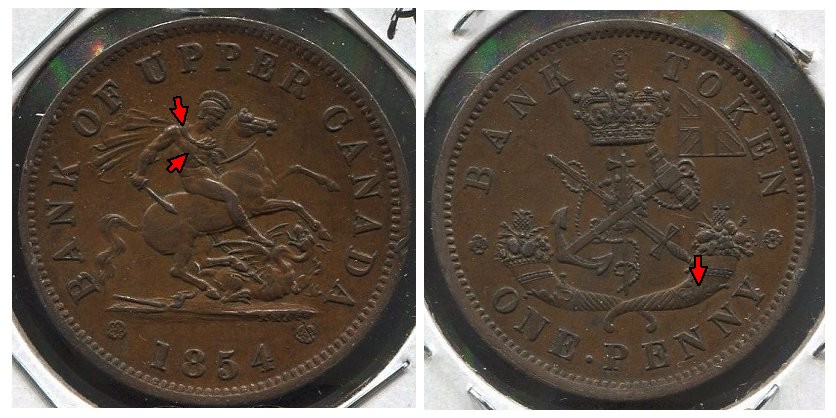 Quote:
Wade: Second is a '50 One Penny. The 1850 1P is by far the hardest to find in mint state Sorry again, but the different population reports and my experience say a different thing. Thus, for the 1 penny, the 1852 Royal Mint issue is undoubtedly the first. Even the 1854 issue is a little more difficult to find in uncirculated grade. Otherwise, your token ( Courteau #209 with its line between letters «t OKen») is amazing. I've seen it at auctions a few times in the last two years, and I've been tempted a lot  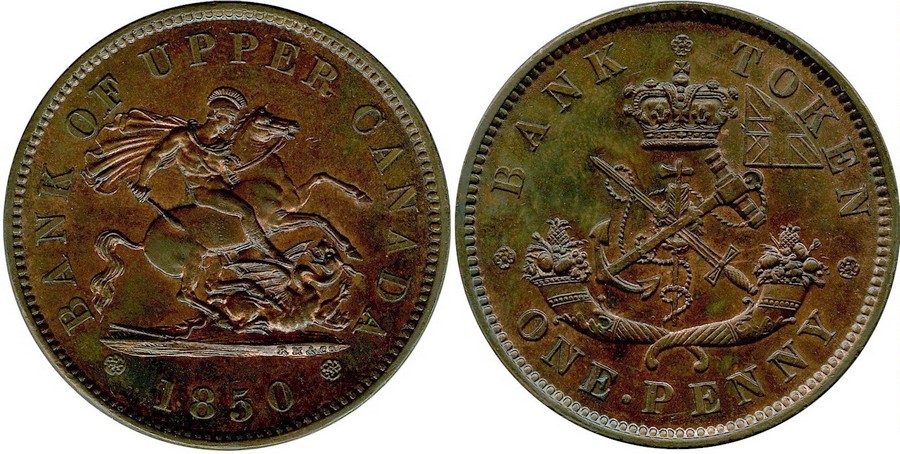 Sorry if I make syntax errors with my English... and without grudges. I'm sorry if my English isn't perfect... I'm learning a little more every day.
Edited by ainsivalavie
11/26/2018 03:04 am
|
|
Pillar of the Community
Canada
2786 Posts |
Population reports mean zero when there are so few being graded. Mintage is half of the other years and in service longer. My experience hunting these down is different from yours, so we will have to agree to disagree. As for the '52, in hand and comparing to other graded examples I will stick to MS  |
|
Valued Member
Canada
222 Posts |
Quote:
Wade: Population reports mean zero when there are so few being graded.
Mintage is half of the other years and in service longer.
My experience hunting these down is different from yours, so we will have to agree to disagree.
As for the '52, in hand and comparing to other graded examples I will stick to MS @Wade: Here is a cumulative population reports for the most reputable companies. Note that I have combined the different varieties for each year, just to simplify it all. 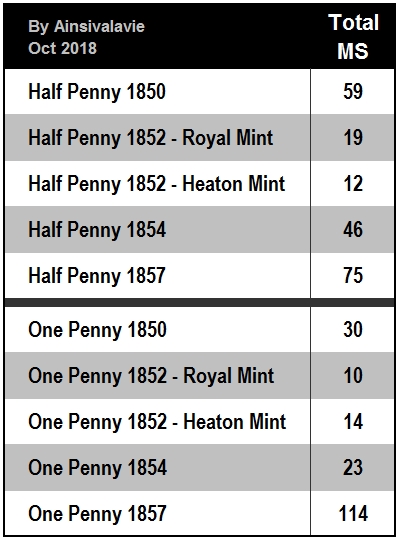 Mintage for the One Penny: Mintage for the One Penny: 1850: 750 000 1852: 750 000 (About 25% Royal Mint / 75% Heaton Mint) 1854: 750 000 1857: 1 500 000 In addition, for my book in the process of being written, I have listed nearly 5000 token sales on this series. So I have a good sample of their frequency of occurrence. I do not wish to start a debate on the grading of this series of tokens. But we can clearly see traces of wear on your photo of 1854 token. Moreover, I often notice tokens of this series on sale on ebay of grade between EF and AU that are overgraded as MS. But hey, you're the one with the token in your hand. I'm sorry if my English isn't perfect... I'm learning a little more every day.
Edited by ainsivalavie
11/26/2018 5:44 pm
|
|
Pillar of the Community
Canada
2786 Posts |
I am very well aware of typical over grading, especially on ebay, and especially for this series, but that's not what I am basing my opinion on. I may not be writing a book, but I have seen a few of these. The softness of the right cornucopia isn't exactly uncommon for the series and IMHO has less of an impact on grading compared to say the anchor dots (very clear), or pineapple serrations (razor sharp). Detail in the chest strap is obscured a little by the picture resolution, also by the 2x2. As for frequency of MS... your pool is under 200 coins, more than half of which are 1857s (which saw limited use) and can not be expected to be a true representation of what's out there. Collectors simply aren't sending these in for grading. So again, sorry, pop reports in this case mean nothing - especially one representing 0.00005% of total mintage. (I almost never take mintage numbers into consideration, but the sample pool you refer to is soooo minuscule - even more so if you remove 1857) Now, a pool of 5000 sales, that is pretty solid information. Have you broken down those down by grade? I think it would be helpful. If you haven't and would like to send me the data I would be happy to make a spread sheet. If not I will eagerly wait for the book! Can I ask the ETA on release date? cheers Edited by Wade
11/26/2018 9:36 pm
|
|
Valued Member
Canada
222 Posts |
Quote:
Wade: As for frequency of MS... your pool is under 200 coins, more than half of which are 1857s (which saw limited use) and can not be expected to be a true representation of what's out there. Collectors simply aren't sending these in for grading. So again, sorry, pop reports in this case mean nothing - especially one representing 0.00005% of total mintage. (I almost never take mintage numbers into consideration, but the sample pool you refer to is soooo minuscule - even more so if you remove 1857)
Now, a pool of 5000 sales, that is pretty solid information.
Have you broken down those down by grade? I think it would be helpful. If you haven't and would like to send me the data I would be happy to make a spread sheet. If not I will eagerly wait for the book!
Can I ask the ETA on release date?
cheers @Wade: For the grading of your token, unless you have better quality photos, otherwise I have nothing to add. For population reports, it is certainly little compared to total mintage, but it allows us to have a trend. Generally, when it comes to a coin type, the first and last year of issue are often the ones that are set aside in larger numbers. For the nearly 5000 sales I have listed over the past few years, I have listed all the tokens that were uncirculated in detail (I can even tell you the price you paid for almost all your uncirculated tokens  ) (Also with this data, I am currently compiling the frequency of appearance at sales for each of the Courteau varieties). And I can confirm that the trend shows with the population report corresponds roughly to reality, at least for the 1 Penny (It's a little more complicated for the 1/2 Penny). The most difficult variety (Among those present in the Charlton catalogue) to find in uncirculated grade is the Half Penny 1854 Crosslet «4» (PC-5B2), followed by Small «2» and Wide «2» varieties for the One Penny 1852 of The Royal Mint (PC-6B1 & PC-6B3). The 1 Penny 1850 is relatively easy to find in MS compared to these. But to answer your question, you will have to wait until the book is published. I'd like to make it available by 2020, but it's still hypothetical. Because I have accumulated a lot of information, and sorting it out to present what is relevant takes a lot of time. In addition, I would like to publish a French and an English version. I have easily exceeded a thousand hours of work on this project since 2011, only in my spare time. And I don't know how many hours of work I still have to do to complete the whole thing. Because I am always looking for information, especially for "Proof/Specimen" tokens, and many other things. On this point, I would like to take this opportunity to say that I am looking for two issues of «Numismatica Canada» with articles on this subject. These are numbers 1 and 4 of the year 2003 (Volume 2). Otherwise, just for the eyes, here is a very rare 1 Penny 1850 «Specimen» with a upset reverse alignment. 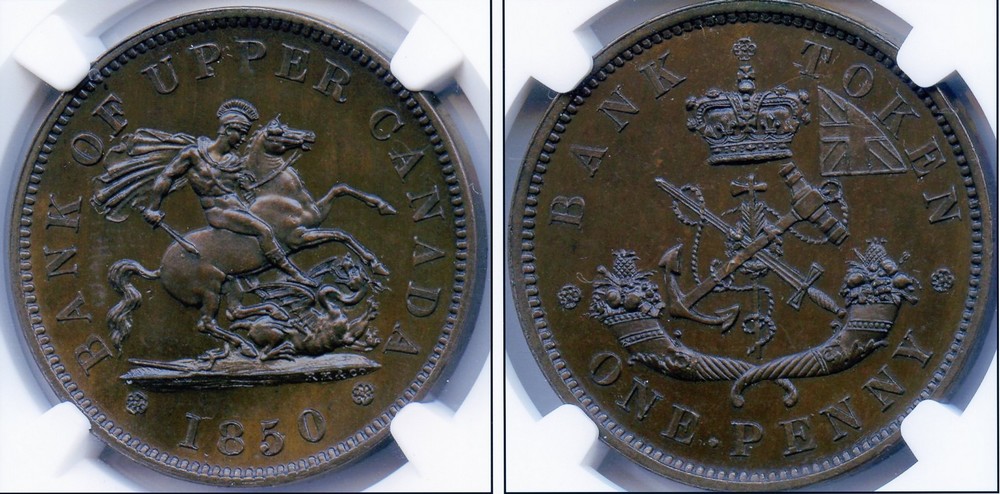 I'm sorry if my English isn't perfect... I'm learning a little more every day.
Edited by ainsivalavie
11/26/2018 10:59 pm
|
| |
Replies: 1,299 / Views: 152,694 |







 First Page
 Previous Page


 Posted 11/03/2018 07:24 am





