| Author |
 Replies: 10 / Views: 2,616 Replies: 10 / Views: 2,616 |
|
|
Pillar of the Community
United States
842 Posts |
In the Green Coin thread I posted a provincial coin of Domitian that features a Latin obverse inscription and a Greek reverse inscription. I posted this coin once before (over a year ago) for identification but one was not able to be pinned down. In frustration, I put the coin away and forgot about it until this past weekend. That wait seemed to do the trick...I was able to locate a match after a few hours of study and web browsing! What caused me to be thrown off at first was the Latin front and Greek back. I had never seen or even heard of a bilingual ancient coin up until this weekend. I was starting to think it was a mule or an ancient fake! Here it is again for those who have not seen it yet: 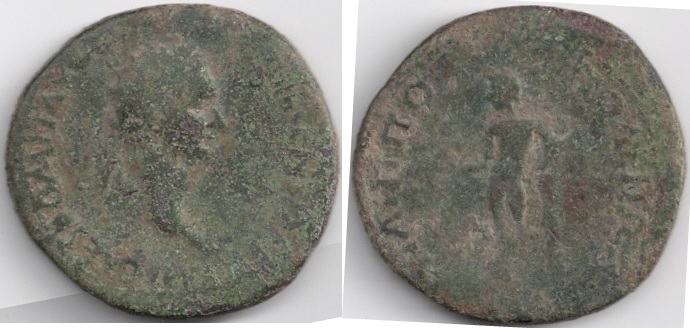 Domitian AE Trias of Philippopolis, Thrace. 88/89 AD. Obv: IMP CAESAR DOMIT AVG GERM COS XIIII CENS PER P P, radiate head right Rev: ΦIΛIΠΠOΠOΛEITΩN, Bonus Eventus, nude, standing right holding patera & lyre, leaning on column. Moushmov 5062. Can anyone tell me more about these bilingual coins? If anyone has any please post them! I'm really fascinated by these. |
|
|
|
Pillar of the Community
United Kingdom
4208 Posts |
Mustve circulated in a greek province...or perhaps a greek die cutter who got the wrong end of the stick.
Theres a rome mint mark which is bilignual which is very interesting (ive been looking out for one since seing an example of this forum) which has a cypher which reads (to those in the know) as the greek word Eros. Eros in latin is Amor, and Amor backwards is Roma. Snuck in by some pagans, probably, as it turns up about the time when Rome is being christianised the and capital moved.
|
|
Pillar of the Community
United Kingdom
946 Posts |
Checking Varbanov for the Philippopolis issues of Domitian:
His was the first Roman issues from that city.
Up until Hadrian "Greek Lover" (Literally) the obverse legends of the coins were in Latin.
There were no issues for Nerva, so Trajan was the last "Latin and Proud", after which it was "all Greek".
Varbanov 615, rated rare 5, from 100 - 200 examples known.
And in Varbanov the deity is called Apollo.
|
|
Pillar of the Community
United Kingdom
2838 Posts |
|
|
Pillar of the Community
 United States
842 Posts |
Wow thanks Masis! So there are only bilingual coins from Philippopolis for Domitian and Trajan? That's an amazingly small window. And an R5 rating makes it one of the rarest in my collection I think. I got this in a lot of other large lower grade coins. They were about $10 a piece. I am adding a bilingual coin of Trajan to my "must buy" list.
Edited by ancientcoinguy
01/28/2014 10:29 am
|
|
Pillar of the Community
United States
5014 Posts |
cool coin ACG...glad you got it IDed. there are several eastern anceints that are bilingula, here's a couple of mine...   pahlavi and arabic   karoshthi and greek |
|
Pillar of the Community
United States
4778 Posts |
Many early Byzantines can be considered bilingual, since they had Latin obverse legends with Greek numerals for the denomination.
|
|
Moderator
 Australia
17012 Posts |
My Axumite coin is bilingual: Greek on one side and an early form of Ge'ez on the other.
Don't say "infinitely" when you mean "very"; otherwise, you'll have no word left when you want to talk about something really infinite. - C. S. Lewis
|
|
Moderator
United States
23731 Posts |
Here is one of the last Baktrian king Hermaios. The obverse is in Greek and the reverse is Kharosthi. 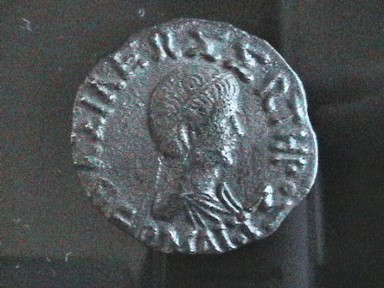 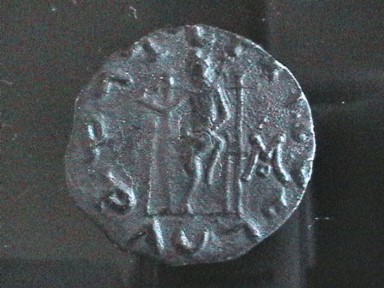 |
|
Pillar of the Community
United States
5155 Posts |
Lets not forget about the trilingual coins... Nahapana c. 78 AD Obverse: Greek Reverse: Kharoshti, Brahmi 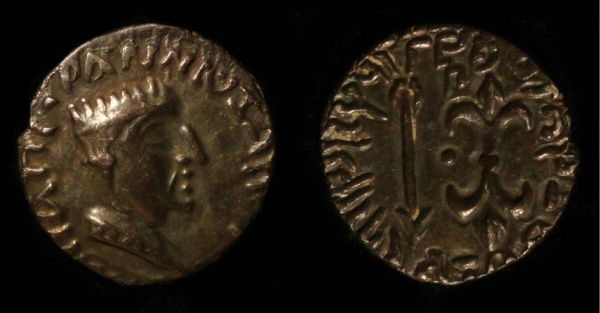 or Vasu Deva s.685 AD Obverse: Cursive Bactrian Greek, Brahmi Reverse: Cursive Bactrian Greek, Pahlavi  Edited by Ancientnoob
01/29/2014 9:20 pm
|
|
Pillar of the Community
United States
567 Posts |
Don't forget the Han-Karoshti coins, which have Chinese and Kharoshti legends.
Also don't forget some of the Arab Byzantine coins with Greek on one side and Arabic on the other.
Lots of multilingual coins out there. Even your plain old Qing cash has Manchu on one side and Chinese on the other.
|
| |
Replies: 10 / Views: 2,616 |
|







 Posted 01/28/2014 10:19 am


