| Author |
 Replies: 338 / Views: 53,391 Replies: 338 / Views: 53,391 |
|
|
|
Pillar of the Community
United States
843 Posts |
Here's a nice federal check from the War Department. If the portrait of Stanton looks familiar, that's because it also appears on the Series 1890 $1 Treasury Note. 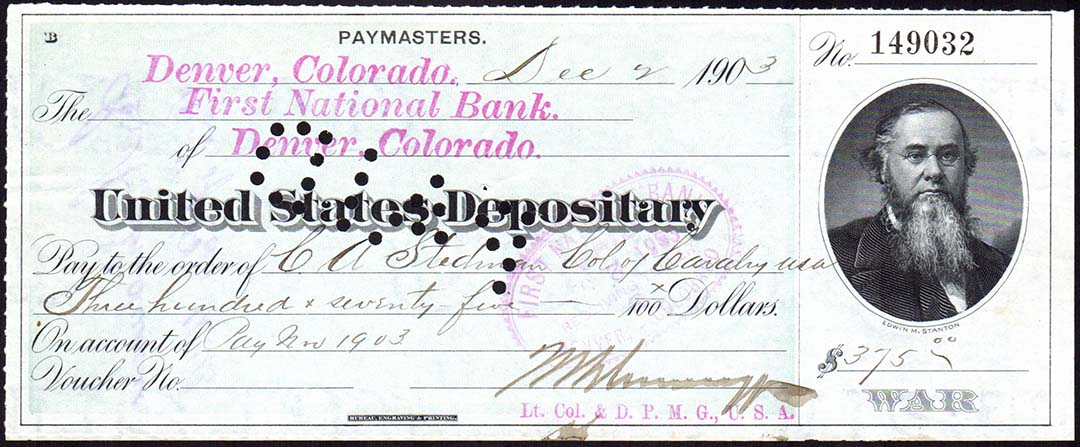 |
|
Moderator
 United States
196424 Posts |
Quote:
Here's a nice federal check from the War Department. If the portrait of Stanton looks familiar, that's because it also appears on the Series 1890 $1 Treasury Note. Very interesting!  |
|
Pillar of the Community
United States
843 Posts |
Something a little different this time -- a traveler's check! This one is a specimen from 1976. These were often printed in quantity for an issuing bank, for advance distribution to their branches to educate tellers on what new checks would look like. 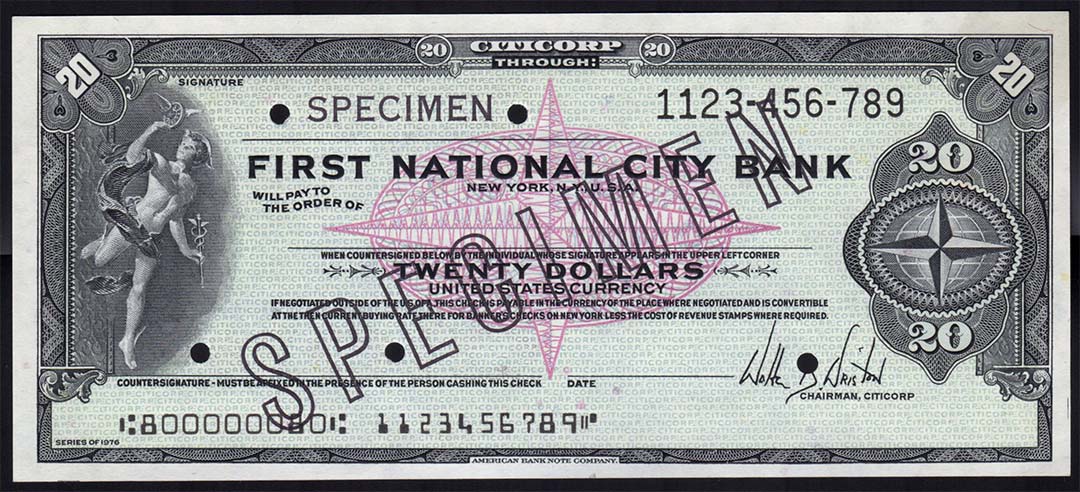 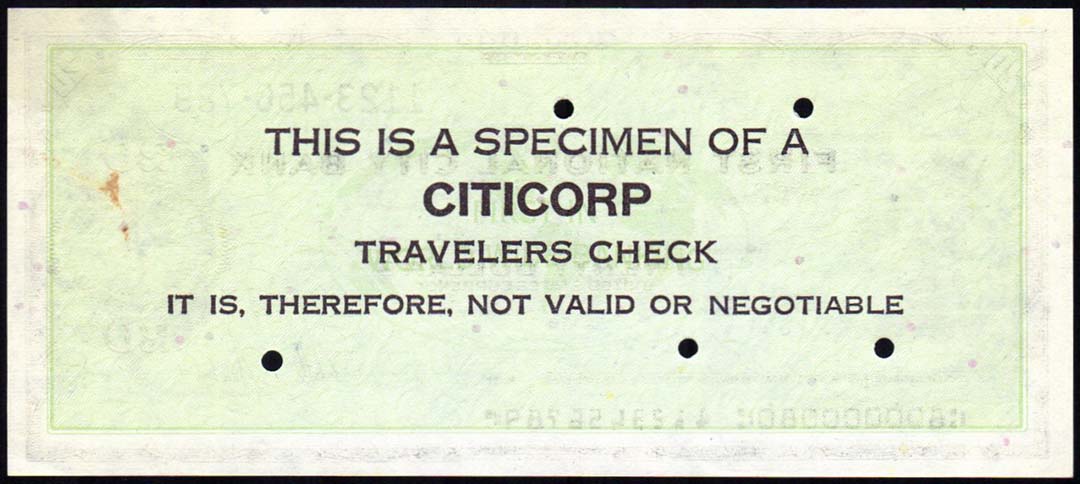 Edited by GregAlex
01/22/2024 10:20 pm
|
|
Bedrock of the Community
United States
27514 Posts |
Beautiful specimen, GregAlex!
Inordinately fascinated by bits of metal with strange markings and figures
|
|
Moderator
United States
196424 Posts |
Quote:
Something a little different this time -- a traveler's check! I remember those. Nice sample example! |
|
Pillar of the Community
United States
843 Posts |
Finally a couple new checks! (Well, new to me.) This first one is quite early -- 1815 -- which really pre-dates the invention of banknote engraving. There was no typical size for checks at that time and this is only about 6" x 2". It was issued just a few months after Andrew Jackson won the Battle of New Orleans, marking the end of the War of 1812. Very nice handmade laid paper. 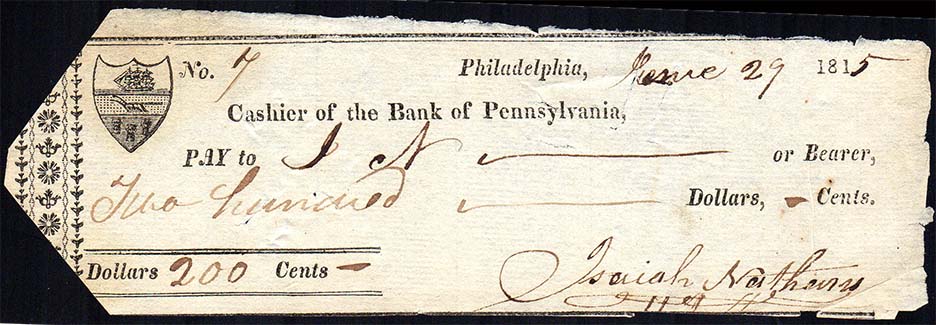 The other is unusual for its deep blue paper color. These seemed to be popular in the 1890s; I have another blue one from that period. I liked it for the nicely engraved portrait of Washington. Printed by Western Bank Note Co. 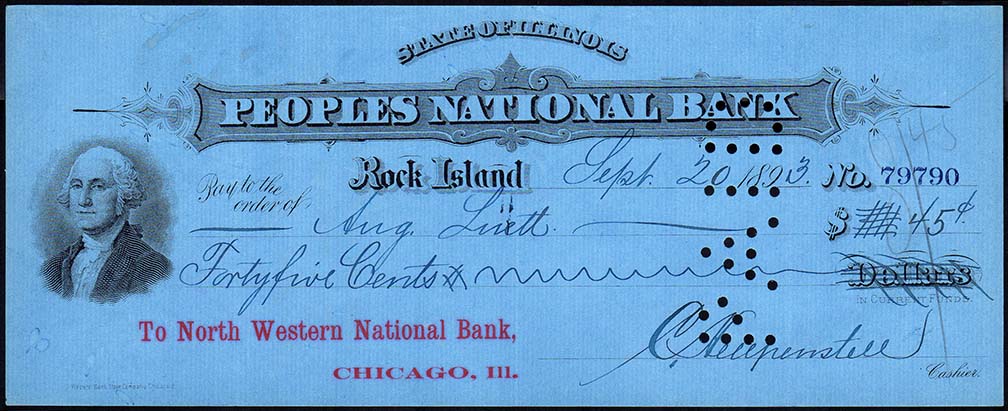 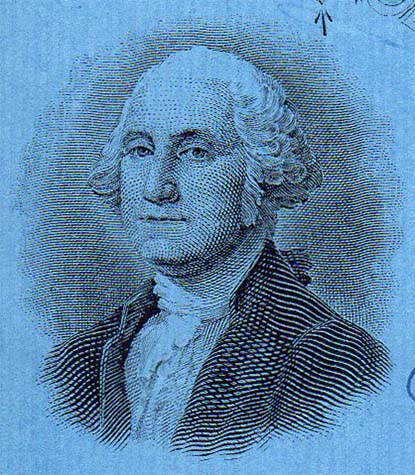 |
|
Moderator
United States
196424 Posts |
Quote:
Finally a couple new checks! (Well, new to me.) Nice examples! Quote:
The other is unusual for its deep blue paper color. I like how it looks.  |
|
Pillar of the Community
United States
843 Posts |
Here's a new addition with a vignette I hadn't seen before. 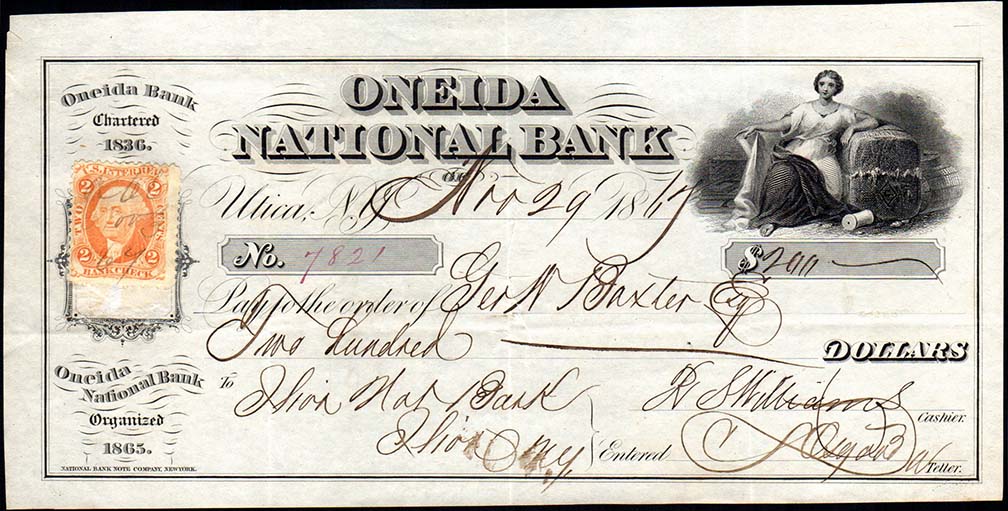 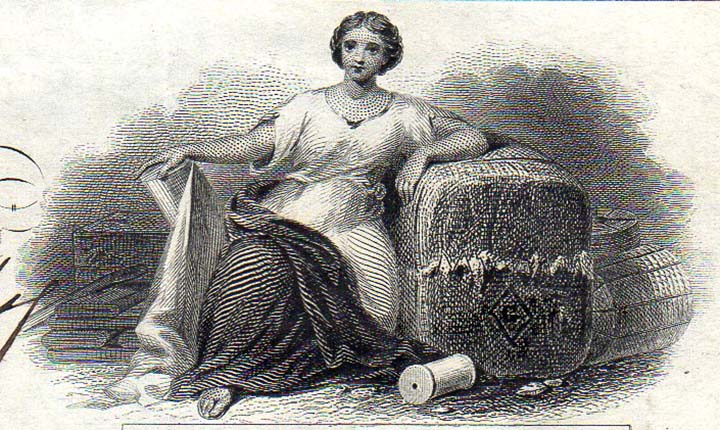 |
|
Moderator
United States
196424 Posts |
Quote:
Here's a new addition with a vignette I hadn't seen before. Very nice! |
|
Valued Member
United States
263 Posts |
Here's a few checks from Bank of LaPorte that was located in LaPorte California. LaPorte was a large mining town in the mid to late 1800's with around 10,000 in population. It had its own brewery and main street had eleven saloons and three hotels. My family first arrived in the late 1940s and we've been there since. Population today I think is around 10-15 people year round. 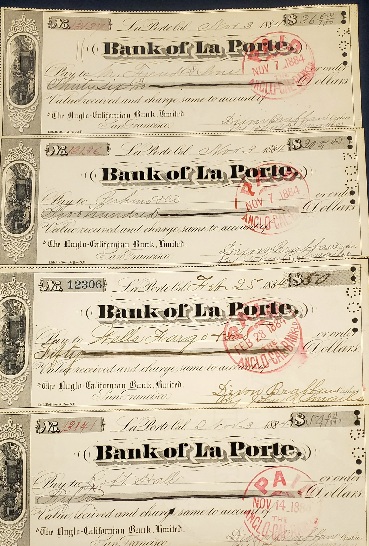 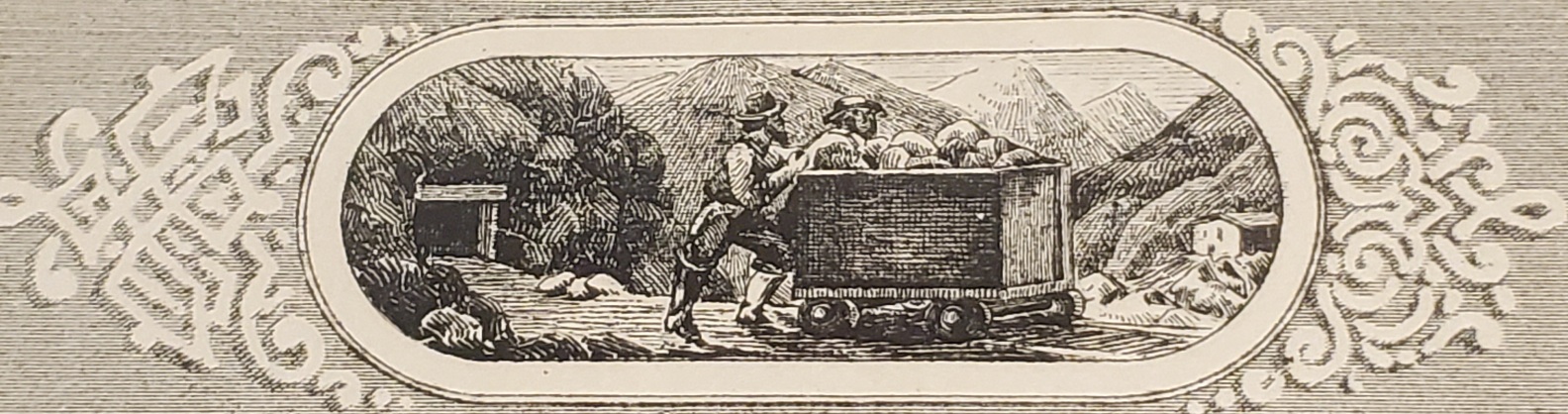 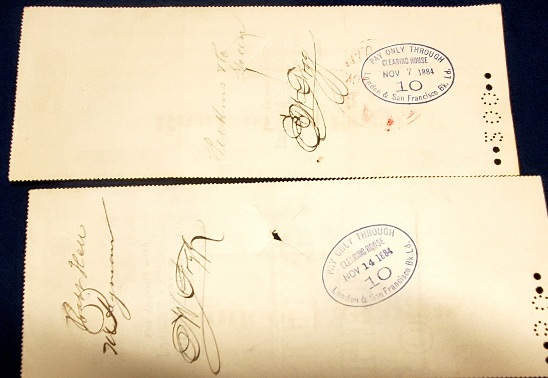 |
|
Pillar of the Community
United States
843 Posts |
I like that little mining vignette. LaPorte looks very scenic -- but pretty remote!
|
|
Valued Member
United States
263 Posts |
Thank you Greg! Yeah it is pretty far up in the mountains but that's how I like it lol.
|
|
Moderator
United States
196424 Posts |
Wonderful examples! |
|
Pillar of the Community
United States
843 Posts |
Here's an interesting check that arrived today! The design is quite plain, though it does have a nice revenue imprint. But take note of the amount: $197,600 in 1866! That represents the buying power of nearly $4 million in today's dollars. I believe this was probably a large gold transaction. Exchange broker C.S. Sloane was in business in NYC as early as 1849. In October 1864, C.S. Sloane & Co. was listed as a member of the New York Gold Exchange. In September 1869, The Banker's Magazine reported the firm had failed, most likely due to the gold panic that August. But apparently they settled up with their creditors, as the company was still in business in 1886. Not much info on Ward & Co. of New York, but I think this was John and William Greene Ward acting as private bankers during the 1860s. 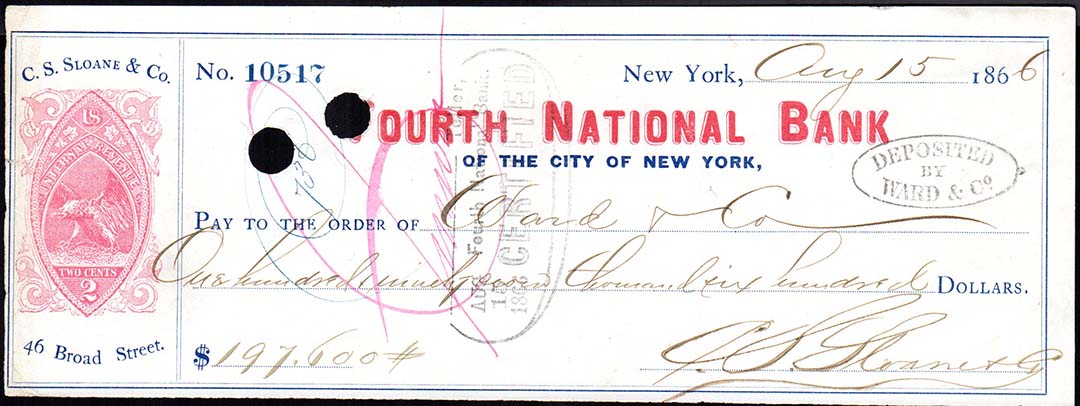 Edited by GregAlex
07/13/2024 4:03 pm
|
|
Moderator
United States
196424 Posts |
Quote:
Here's an interesting check that arrived today! The design is quite plain, though it does have a nice revenue imprint. But take note of the amount: $197,600 in 1866! That represents the buying power of nearly $4 million in today's dollars. Oh my!   |
| |
Replies: 338 / Views: 53,391 |








 First Page
 Previous Page


 Posted 06/19/2023 11:56 am


