| Author |
 Replies: 427 / Views: 59,215 Replies: 427 / Views: 59,215 |
|
|
|
Pillar of the Community
United States
1211 Posts |
David, I love your circ Arkansas. I just got this coin a few days ago and wanted to share. I know its really late, sorry!   |
|
Pillar of the Community
United States
7265 Posts |
|
|
CCF Master Historian of USA Commemoratives
  United States
12448 Posts |
Day Thirty-Two: 1935 Hudson, NY Sesquicentennial Why issued?1) To commemorate the 150th anniversary of the founding of the City of Hudson, NY. 2) To help the Mayor's Office of Hudson, NY raise funds for its celebration of the anniversary. Design // DesignerObverse:. The design is based on the then-current seal of the city of Hudson. It features Neptune, the Roman god of the sea, holding a trident while sitting backward on a spouting whale; a mermaid blowing a conch shell is seen in the background at left. // Chester Beach Reverse: Henry Hudson's ship, the Half Moon with a rather fanciful crescent moon in the background at left.. // Chester Beach Net Mintage:1935: 10,000 Original Selling Price:$1.00 Quick Fact: Chester Beach also designed the 1923 Monroe Doctrine and 1925 Lexington-Concord half dollars, plus created the models for the 1928 Hawaiian commemorative from design sketches prepared by Juliette May Fraser. Here's a link to my previous post about the Hudson half dollar: https://goccf.com/t/119575Here's my example, it is a brilliant example with nice cartwheel luster on both obverse and reverse and the slightest hint of pastel toning. 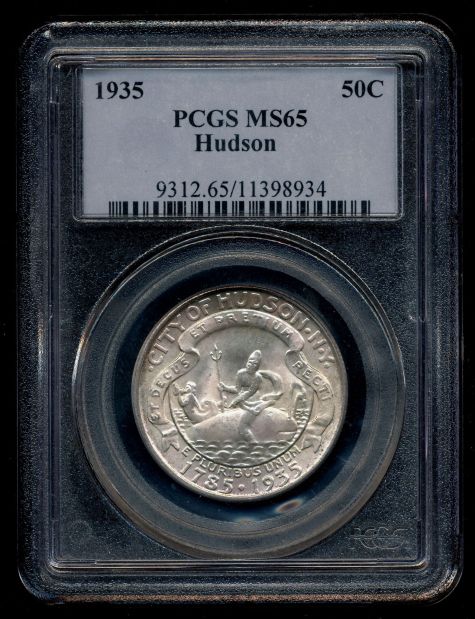 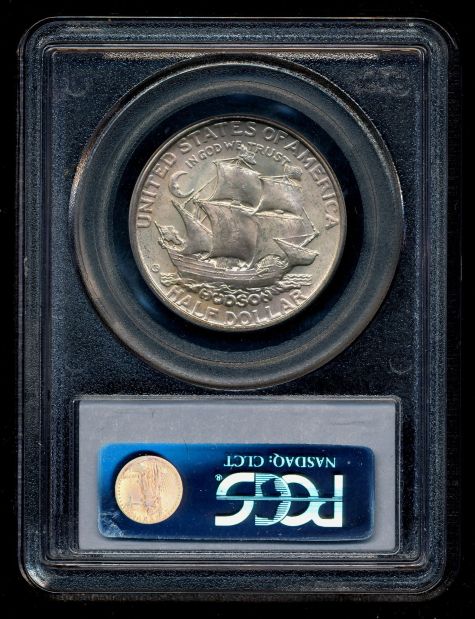
Collecting history one coin or medal at a time! (c) commems. All rights reserved.
|
|
Moderator
United States
15786 Posts |
October 25 - Hudson HalfChester Beach whimsical design for this coin is one of my favorites in the series. I chuckle every time I view the reverse image of the quarter moon ... Beach's fun reference to Henry Hudson Half Moon flagship shown as well on the reverse. Where else are you going to find a USA coin showing Neptune riding backwards on a whale? How about a mermaid blowing on a conch shell? :) 1935 Hudson (NY) Sesquicentennial Half Dollar - PCGS MS66/CAC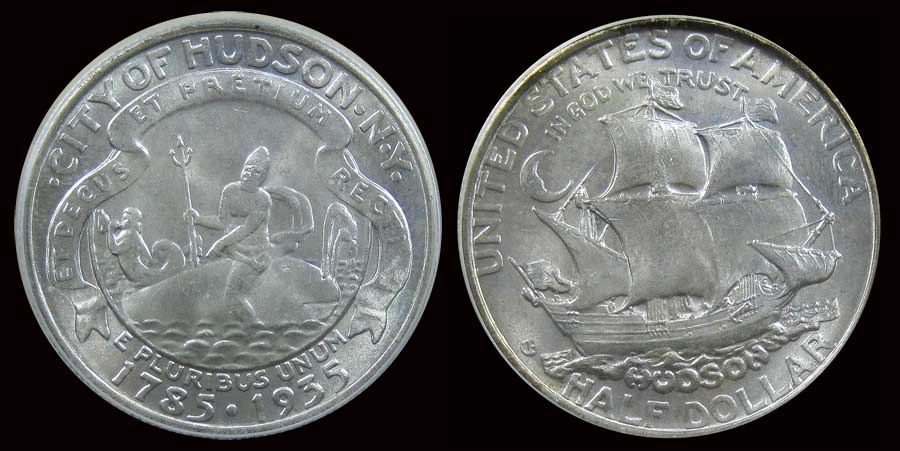 Blast white and fully lustrous. My poor digital photography does not convey the in-hand visual impact of this coin. I recall paying a substantial premium when acquiring this coin 2010 ... given that MS66 Hudson are somewhat expensive to begin with. This coin brings me great joy every time I view it. 1935 Hudson (NY) Sesquicentennial Half Dollar - PCGS VF35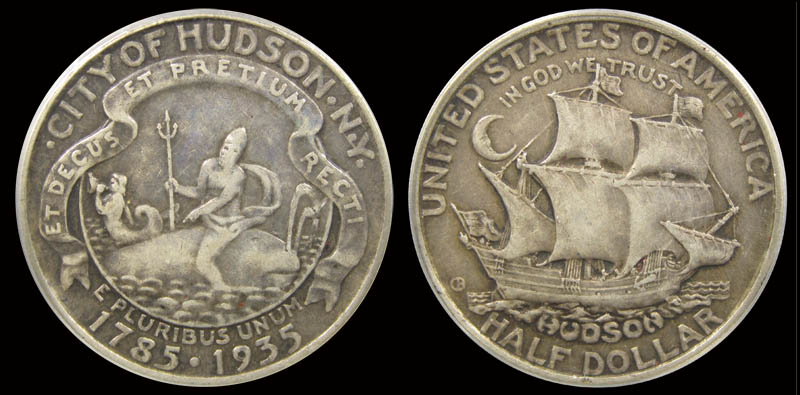 Lovely toned surfaces indicating a lifetime of service in our nation's commerce prior to its retirement. This is an extremely difficult coin to find in honestly circulated state. This example is the only one I have seen in over 5 years of dedicated searching for the circulated type set. The original net mintage of 10,008 pieces (including assay coins) coupled with the high-price shenanigans with the original distribution combined to allow very few of these coins to see circulation use. PCGS has certified 5 Hudson at XF45 or lower. The current lowball are two Hudson certified at VF30. Tough as this coin might be to obtain in circulated state ... rarer ones are coming up soon. Looking forward to discussing them with you. Black Cabinet HudsonCounterfeit Hudson half dollars appear with some regularity in the market ... alas often fooling less educated collectors into paying high prices for a Chinese manufactured coin. A typical black cabinet example was recently shown in this forum by MeadowviewCollector ... check it out. Gain the knowledge to protect yourself. David
Take a look at my other hobby ... http://www.jk-dk.art |
|
CCF Master Historian of USA Commemoratives
United States
12448 Posts |
Day Thirty-Three: 1935-36 San Diego / California-Pacific Exposition Why issued?1) To indicate the interest of the Government of the United States in the fulfillment of the ideals and purposes of the California-Pacific International Exposition. 2) To help the California-Pacific International Exposition Company raise funds to assist with the staging of the Exposition. Design // DesignerObverse:. A variation of the California State Seal. It depicts a seated, helmet-wearing Minerva (Roman goddess of wisdom) with a staff in her right hand and her left hand on a shield emblazoned with "Eureka" (the state motto of California). A grizzly bear sits at Minerva's feet on her right side. Also to Minvera's right is seen a sailing ship and a miner; the Sierra Nevada mountains are featured in the background. // Robert I. Aitken Reverse: Portions of the California Building, identified by its dome, and the California Tower which rose beside it. // Robert I. Aitken Net Mintages:1935-S: 70,000 1936-D: 30,000 Original Selling Price:1935-S: $1.00 1936-D: $1.50 Quick Fact: The original legislation for the coin did not call for coins to be issued in multiple years (but it also didn't specifically forbid them). The Exposition Company went back to Congress and asked that a new bill be passed so that they could melt and re-coin unsold 1935-S coins with a 1936 date. Congress agreed but included language in the new bill that prevented any date other than 1936 from ever being used (even if coins were struck after 1936). Here's a link to one of my prior posts about the California-Pacific Exposition ("San Diego") half dollar: https://goccf.com/t/179227Here's my example, it's a brilliant piece with nice cartwheel luster. 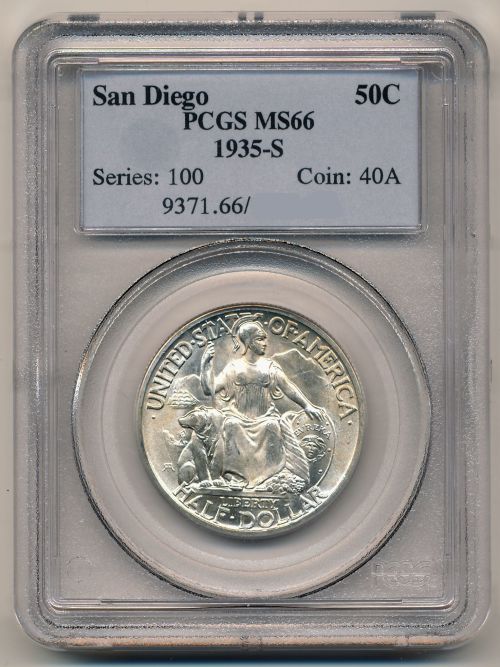 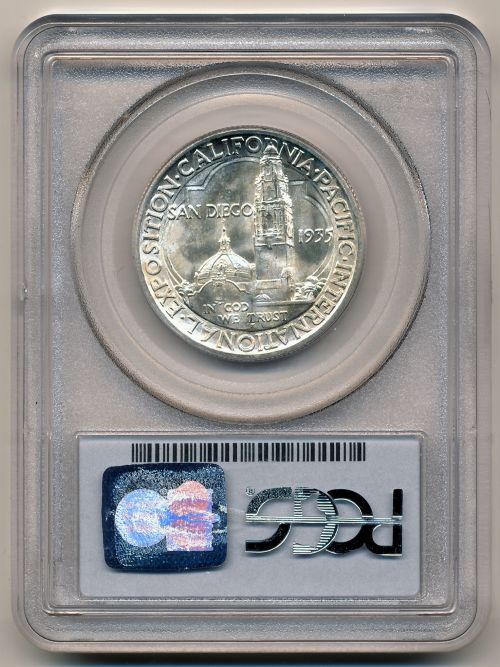
Collecting history one coin or medal at a time! (c) commems. All rights reserved.
|
|
Pillar of the Community
United States
7265 Posts |
A good design, here is my example.   |
|
Moderator
United States
15786 Posts |
October 26 - San Diego HalfI fondly recall visiting Balboa Park on many occasions during breaks from my High School and College education in Arizona ... alas I was not collecting commemorative coins at that time and did not make the connection with the images on this coin. 1936-D California-Pacific (San Diego) International Exposition Half Dollar - PCGS MS66/CAC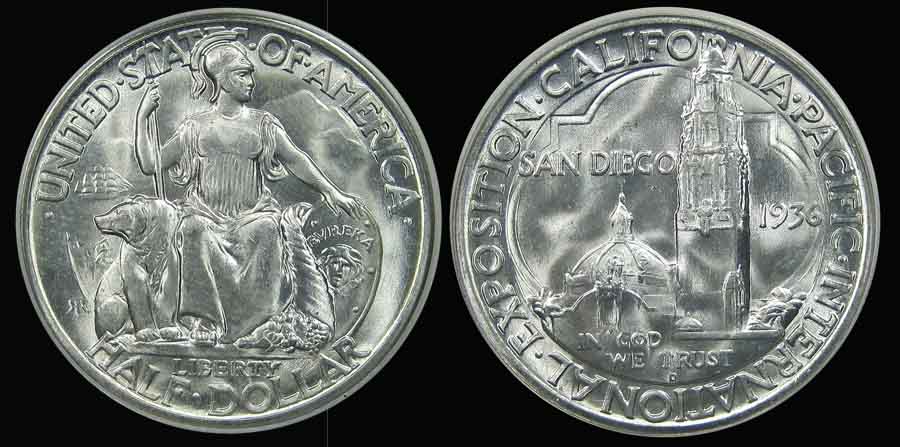 This coin exemplifies the highly lustrous surfaces available in both San Diego issues ... glowing from across a room. I suggest that new collectors of the series hold out for such an example. The coin is relatively inexpensive in gem MS state and no premium is generally associated with cherry-picking such a lustrous example. 1935-S California-Pacific (San Diego) International Exposition Half Dollar - PCGS VF20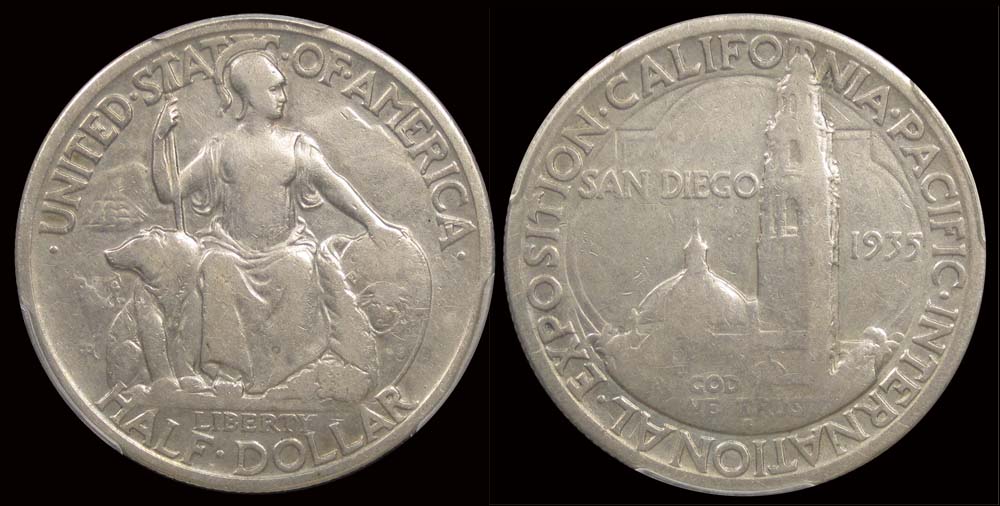 The white, non-toned surfaces on this circulated example lead me to conclude that it was likely a long term pocket piece. Wondering if perhaps the original owner carried it as a souvenir of their visit to the exposition? That connection with history greatly enhances my enjoyment of this tremendous series. Honestly circulated San Diego show up on occasion ... perhaps once every few years. PCGS has certified 6 examples (both dates combined) at XF or lower. The current lowball are two 1935-S San Diego certified as AG03. David
|
|
Valued Member
Canada
65 Posts |
A really nice coin.   |
|
Pillar of the Community
United States
5225 Posts |
Here's mine. I will hopefully be able to take a picture of the relevant local architecture here tomorrow and update my post. 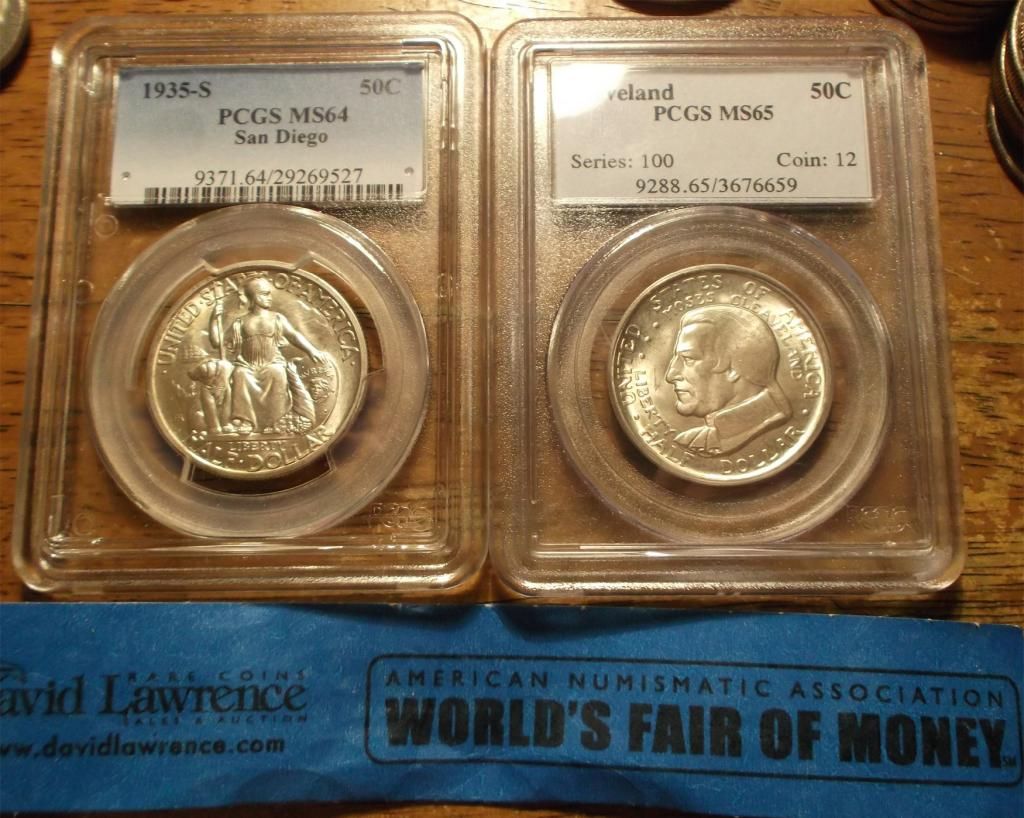 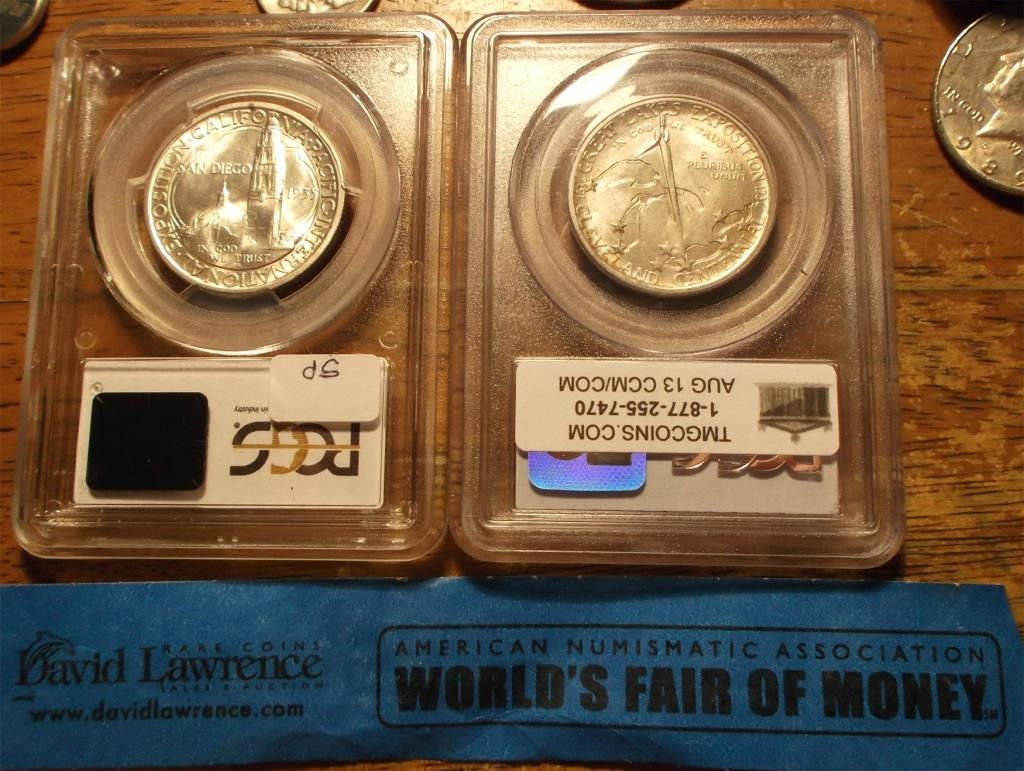 |
|
CCF Master Historian of USA Commemoratives
United States
12448 Posts |
Day Thirty-Four: 1935 Old Spanish Trail Why issued?1) To indicate the interest of the Government of the United States in commemorating the 400th anniversary of the expedition of Cabeza de Vaca and the opening of the Old Spanish Trail. 2) To help the El Paso Museum Committee raise funds to assist with the staging of anniversary events. Design // DesignerObverse:. A longhorn cow's head meant to be symbolic of Cabeza de Vaca which translates as "Head of a Cow." Such symbolism was used due to a lack of available portrait of the 16th century explorer. // L.W. Hoffecker Reverse: A yucca tree superimposed over a map of the states on the Gulf Coast within which is seen the alleged trail followed by Cabeza de Vaca during his exploration of the area. (Follow the link below for more accurate information about his travels.) // L.W. Hoffecker Net Mintage:1935: 10,000 Original Selling Price:1935: $2.00 Quick Fact: The Old Spanish Trail half dollar is one of the key coins within a type set of classic silver US commemorative coins. Its net mintage of 10,000 coins places it alongside the 1928 Hawaiian and the 1935 Hudson for the lowest mintage of a type coin. (A good number of individual year/mintmark issues within multi-year series had lower mintages, but 10,000 is the lowest mintage among silver commemorative types.) Here's a link to one of my prior posts about the Old Spanish Trail half dollar: https://goccf.com/t/180366Here's my example, it's a satiny, original surfaces piece with nice luster and a dusting of golden toning. 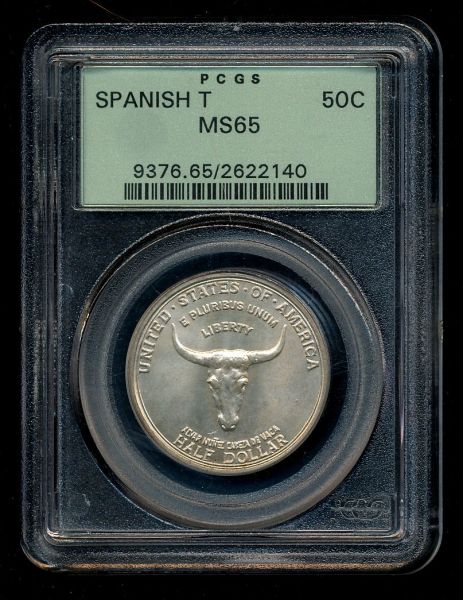 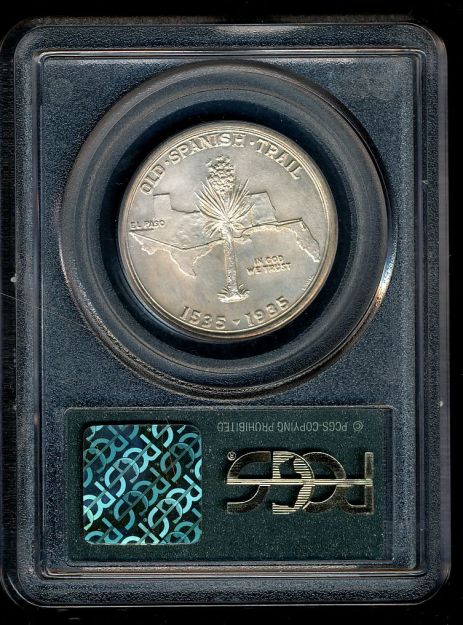
Collecting history one coin or medal at a time! (c) commems. All rights reserved.
|
|
Moderator
United States
15786 Posts |
October 27 - Old Spanish TrailOne of only three classic silver commemorative type coins with a mintage of 10,000 ... the Spanish Trail half dollar is today treasured in all conditions. Knowledgeable fans of the series recognize the collector angst of 1935 relative to this private venture of numismatist L. W. Hoffecker. 1935 Old Spanish Trail Half Dollar - PCGS MS66/CAC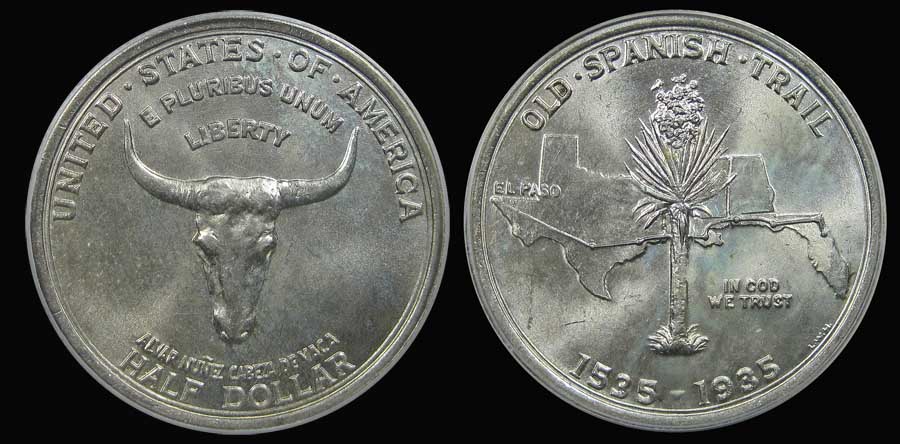 White, fully lustrous surfaces. I've long searched for a pleasing MS67 upgrade with no success. 1935 Old Spanish Trail Half Dollar - PCGS XF45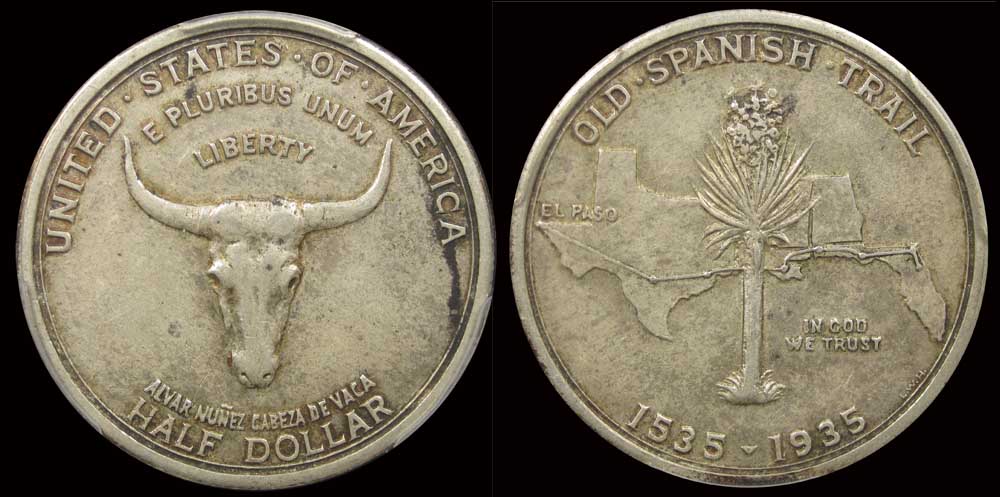 An amazing and rare coin that I am thrilled to have in my collection. Likely circulated in commerce long enough to gain the surface patina and toning. This coin is the first of five ' stoppers' for the circulated set that we will discuss ...coins that are likely to never be found ... in my judgment it is quite possible that a dedicated collector could search their entire lifetime and never find an honestly circulated Spanish Trail half dollar. There are only 2 total Spanish Trail certified at XF or lower by PCGS ... with only 3 additional examples certified in AU. The current PCGS lowball is an amazing VF30 example ... my XF45 example shown above is the only other Spanish Trail certified below AU. I originally acquired the coin certified as PCGS AU53 ... upon re-submittal the PCGS wizards got it right the second time. Such is the enjoyable numismatic challenge of pursuing this circulated type set ... market availability of some very rare coins David
|
|
Valued Member
Canada
65 Posts |
Here are some black cabinet I have acquired for study, to find out how good they are. 1st an Old Spanish Trail. Not a very good one...but could fool someone not familiar with this series.   And of an Uncirculated California Jubilee...looks almost real...if not for the rim, it could have fooled me.   |
|
Valued Member
Canada
65 Posts |
Sorry I forgot to mention. Both fakes are underweight. The California Jubilee is 11.28g and the Old Spanish is 10.58g
|
|
CCF Master Historian of USA Commemoratives
United States
12448 Posts |
Day Thirty-Five: 1936 Arkansas Centennial / Robinson Why issued?1) To commemorate the 100th anniversary of the admission of the State of Arkansas into the Union. 2) To help the Arkansas Honorary Centennial Celebration Committee raise funds to support its planned anniversary celebrations. Note: The law authorizing the new design for the Arkansas Centennial half dollar specified that the original purposes for the coin continue unchanged - - " only a supplemental design was approved. Design // DesignerObverse:. Right-facing portrait of then-current Arkansas Senator Joseph Robinson. // Enid Bell Reverse: An American (Bald) Eagle with outstretched wings standing atop a sun (meant to represent "Enterprise") in the foreground with a portion of the Arkansas flag behind it. The three stars visible below "Arkansas" have multiple symbolic meanings: 1) to represent the three flags that had flown over the state at the time of its Statehood (Spain, France and the United States); 2) 180 3 was the year of the Louisiana Purchase, from which Arkansas was created, and 3) Arkansas was the third state to be created from the territory gained by the Louisiana Purchase (Louisiana and Missouri preceded it). The single star above "Arkansas" is symbolic of the years Arkansas spent as part of the Confederacy. // Edward Everett Burr Note 1: The law authorizing the Robinson coin, as well as the original Arkansas Centennial half dollar, refers to the eagle side of the coin as the obverse; the portrait side is officially considered the reverse. Within US coinage series, however, the portrait side of coins (the "heads" side) is generally considered the obverse. So, I have followed that convention within this thread. Note 2: Henry Kreiss (designer of the Bridgeport and Connecticut half dollars) prepared the models for the "obverse" based on design sketches by Ms. Bell. Net Mintage:1936: 25,250 Original Selling Price:$1.85 Quick Fact: The Centennial Celebration Committee originally sought three new designs for their coin. Congress approved only one, however, and Senator Robinson was selected as the subject. Here's a link to one of my prior posts about the Arkansas-Robinson half dollar: https://goccf.com/t/118139Here's my example, it's a nice brilliant white example with very nice luster. 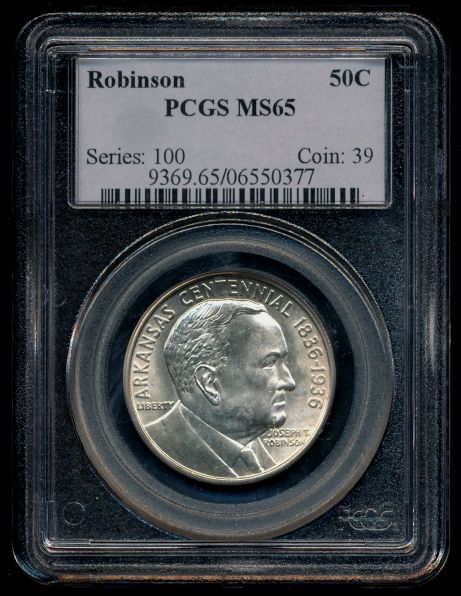 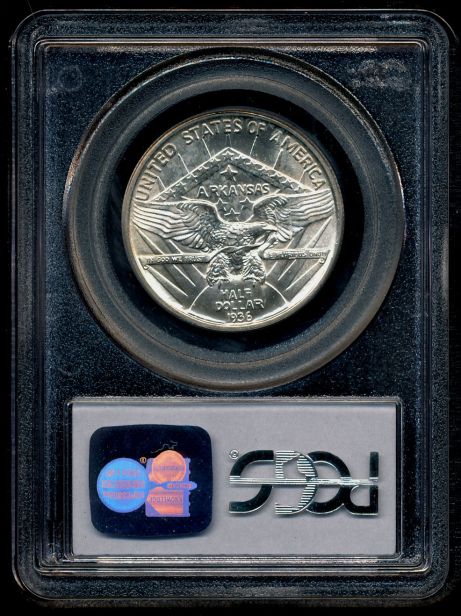
Collecting history one coin or medal at a time! (c) commems. All rights reserved.
|
|
Pillar of the Community
United States
7265 Posts |
I do like the appearance of this coin VS the Arkansas series.   |
| |
Replies: 427 / Views: 59,215 |







 First Page
 Previous Page


 Posted 10/24/2014 8:58 pm





