Hey Ahab8, You are in a great spot for making spectacular finds. I'm sure you have all the information about the North Virginia Colony and St George's Fort along the Kennebec River. I understand after George Popham, the second president of North Virginia was a nephew of Sir Walter Raleigh. Drawings of buildings were found in the archives of Simancas, Spain. The settlement was described as irregular in outline and covered an area of about 250 feet by 300 feet. A high stone wall, partly crenellated, surrounded the fort, with a set of seven-pointed bastions or bulwarks surmounted by cannon. Along the west and south walls was a moat, over which a drawbridge extended, and on the east and north were cliffs lining the river. Inside were 17 buildings from storehouse to bake house to Court of Guard, to President's House to Chapel. Down the middle of the fort ran a stream. George Popham wrote to King James that the Indians assured him a seven days march west and he would find a sea; and so George Popham assured the King it must be the Southern Ocean reaching to China. Much more is said about Popham's colony in "Jamestown and St. Mary's - Buried Cities of Romance" by Henry Chandlee Forman, Baltimore, John Hopkins Press, 1938. I found this book charming rather than historically accurate. No mention of outside dwellings is made and since Popham's site was abandoned in Summer, 1608, would your hunt site be associated with the first settlers, or some later, second wave of folks? Who came to that area next to settle outside the fort? Subsequent visitors were Father Pierre Baird from Port Royal in New France after 4 years, in 1612, and after 17 years, Samuel Maverick of Massachusetts who found in 1625 only old walls, roots, and garden herbs [which are a great way of locating early sites], as recalled by Maverick in 1660 in "A Brief Description of New England" (St George's Fort). Aside from permanent dwellings I understand seasonal fish salting and curing camps were set up at fresh water spots along the coast by Europeans, since the 1520s.




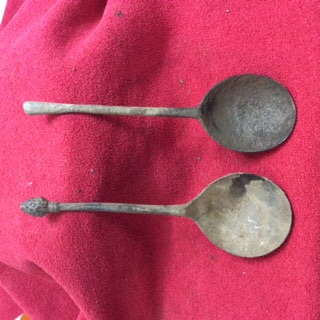
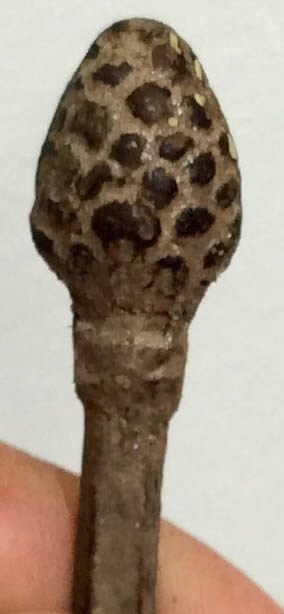


 Posted 09/21/2015 12:55 pm


 hope you get to go back soon and find more goodies





