| Author |
 Replies: 10 / Views: 2,020 Replies: 10 / Views: 2,020 |
|
|
Valued Member
Norway
74 Posts |
|
|
|
|
Valued Member
270 Posts |
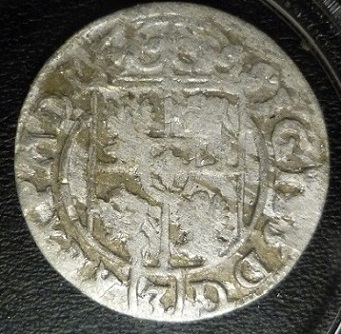
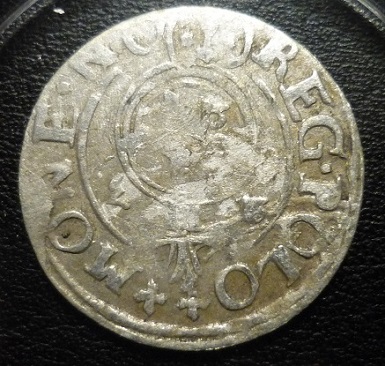
the first one appears to be a 1600's Polish coin
at this time Sweden was controlling poland and the surrounding countries 1/24th thaler
that's my best guess.
|
|
Pillar of the Community
United States
7067 Posts |
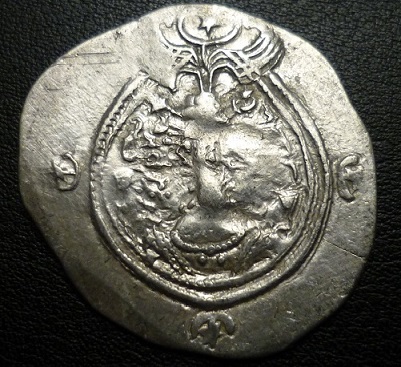
The second is Sassanian, possibly Khuso II, late sixth century.
|
|
Pillar of the Community
Belgium
2895 Posts |
MONEta NOvis REGis POLOniae new money of the kingdom Poland Center shield is coat of arms of the Vasa dynasty https://en.wikipedia.org/wiki/House_of_VasaSIGIS 3 DG REX P M D L SIGISMUNDO TERTIO DEI GRATIA REX POLONIAE MAGNUS DUX LITHUANIAE Sigismund III by gods grace king of Poland archduke of Lithuania https://en.wikipedia.org/wiki/Sigismund_III_Vasa3 polker Mint Bromberg Rotate second picture 180° then you will see a 2 and a 3 left and right above the globe : date = 1623 Same coins are indeed also made for Sweden. The legend would end : SVEclae |
|
Moderator
 United States
23731 Posts |
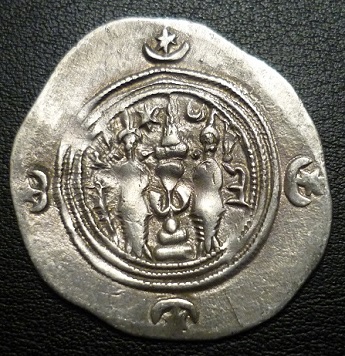
The second coin is an AR Drachm of Khusro II from the Sassanian empire and dates to circa 620 AD.
|
|
Pillar of the Community
United States
4932 Posts |
Anyone know what the symbols on the 2nd coin represent?
|
|
Moderator
United States
23731 Posts |
The symbol on the right is the mint mark and on the left is the date.
|
|
Pillar of the Community
United Kingdom
2624 Posts |
The symbols at North, east, south and west are the star and crescent, but being so early I thought were these being used as a symbol of Islam? A quick search showed...
The star and crescent symbol only became associated with Islam in the mid-20th century, following its use in the national flags of various successor states of the Ottoman Empire.
|
|
Moderator
United States
23731 Posts |
Half of this thread fulls under the Ancient/medieval section and we seem to be discussing that more than the other coin so I'm going to move this thread there. According to Robert Gobl the authority on Sassanian coins. In his book titled Sasanian Numismatics he states that the Crescent and star are rim decorations. They are astral symbols and have a cosmological meaning that has not been able to be understood. Here is an interesting article of Khruso II. (notice the different spelling in his name). https://en.wikipedia.org/wiki/Khosrow_II |
|
Pillar of the Community
Spain
629 Posts |
When Mohamed was alive two coins were acepted in Arabia; the silver sassanid drachm, and of course the bizantine solidus of gold. It´s not a surprise that these two coins were the starting point of the islamic coinage
|
|
Valued Member
 Norway
74 Posts |
Thanks for all information.
Interesting stuff.
|
| |
Replies: 10 / Views: 2,020 |
|











 Posted 11/15/2015 1:11 pm


