






 First Page


 Posted 11/18/2015 8:03 pm


Thanks, everyone, for the great comments. Down the line, I hope to "upgrade" some of the counterstamps by replacing the mavericks with a few more slam-dunk issuers that are more historically significant. So, it's still a work in progress.
In the process of collecting and studying counterstamped coins, it's become evident that ever so many of the issuers were machinists by trade or else had experience in metal work. This was typically done under the Masonic Order, a brotherhood of workers. Many a machinist would create his own stamp for use in his work, pursuing a patent and even creating his own Masonic cent ID or calling cards.
Along my paths of study, I've even found matching stamps on products. Here's one to illustrate:
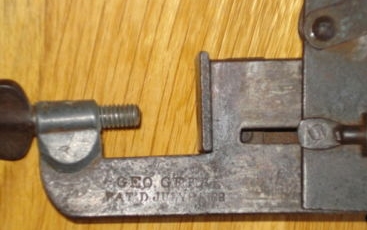
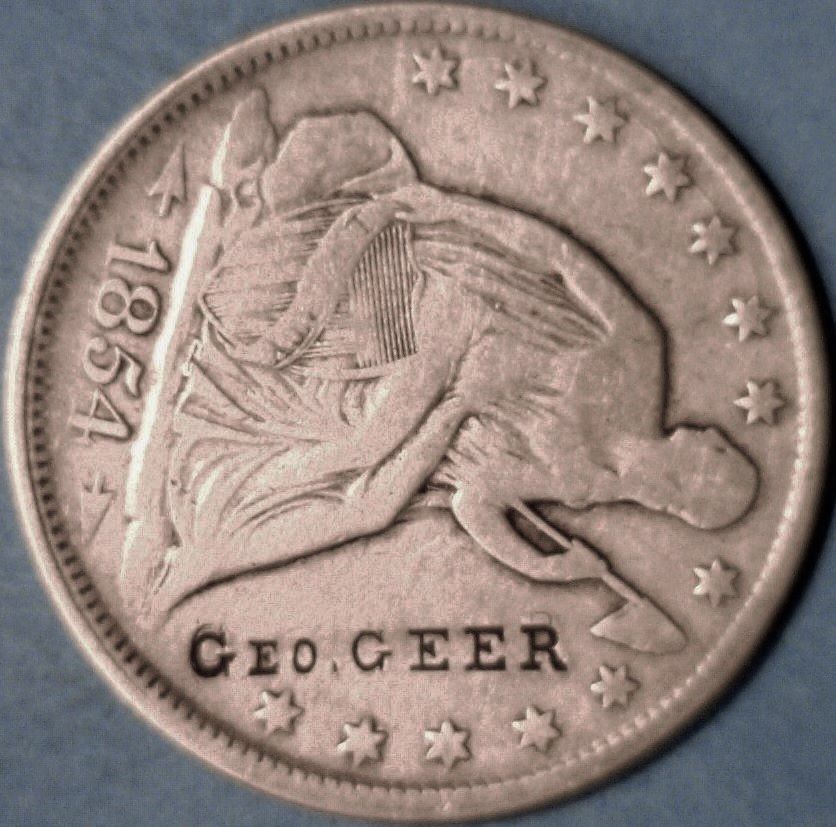
George Geer (no middle initial) of Meriden, Connecticut patented a cherry pitter in 1867. A search of patent records reveals that he also received a patent for a boot jack in 1874. While not an exact match, note the similarity of the name, GEO. GEER, used on both the cherry pitter and the 1854 half dollar. Unlisted as yet by Brunk or Rulau, this is the only example known to date.
Quote:
Is there some significance to the patent holders and the counterstamps? Seems like a lot of patents from these guys. Maybe a tradition or something when you get your first patent that I am unaware of?
Is there some significance to the patent holders and the counterstamps? Seems like a lot of patents from these guys. Maybe a tradition or something when you get your first patent that I am unaware of?
In the process of collecting and studying counterstamped coins, it's become evident that ever so many of the issuers were machinists by trade or else had experience in metal work. This was typically done under the Masonic Order, a brotherhood of workers. Many a machinist would create his own stamp for use in his work, pursuing a patent and even creating his own Masonic cent ID or calling cards.
Along my paths of study, I've even found matching stamps on products. Here's one to illustrate:
George Geer (no middle initial) of Meriden, Connecticut patented a cherry pitter in 1867. A search of patent records reveals that he also received a patent for a boot jack in 1874. While not an exact match, note the similarity of the name, GEO. GEER, used on both the cherry pitter and the 1854 half dollar. Unlisted as yet by Brunk or Rulau, this is the only example known to date.


 you have reached! Congrats and thank you for sharing. Amazing, 20 plus years to complete. My hat is off to you for sure!


