| Author |
 Replies: 23 / Views: 5,558 Replies: 23 / Views: 5,558 |
|
Pillar of the Community
United Kingdom
701 Posts |
I have an 1826 shilling with an oddity on the reverse that I need some help with. Although heavily worn it is clear to see that the strike on the reverse has resulted in it having a dividing line with 1 part better struck than the other. The only explanation I can think of is that the die split in 2 and gave a weak strike on 1 part   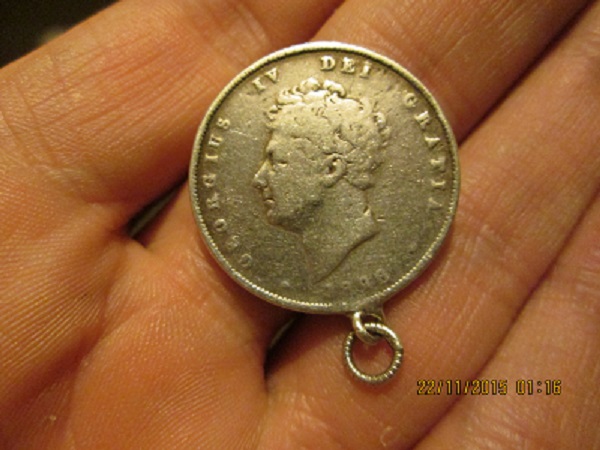 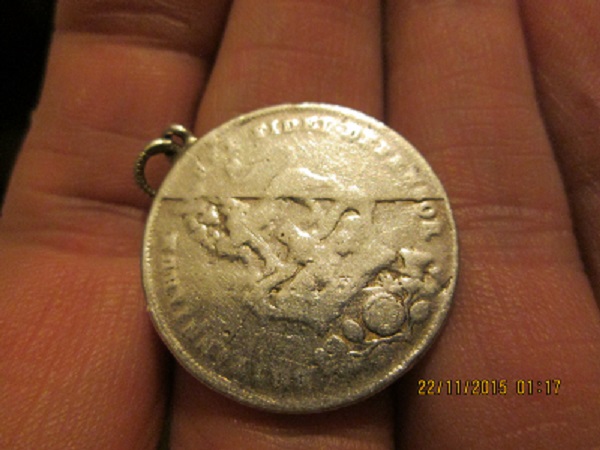 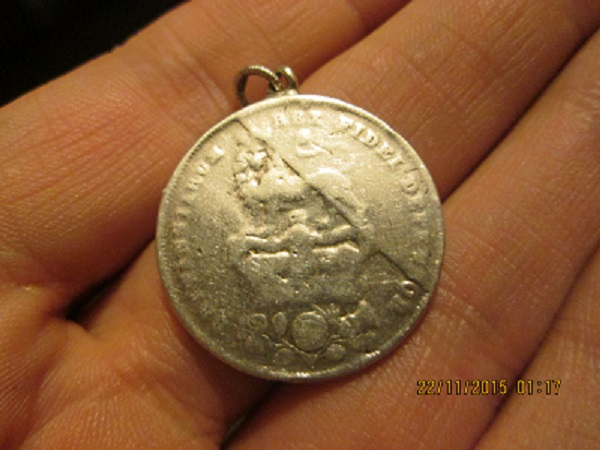 TIA |
|
|
|
Valued Member
Spain
239 Posts |
That's either a lamination error or a seriously huge Cud. I'm inclined to go with the former, that the lamination from the coin itself has peeled off after the striking process. |
|
Pillar of the Community
Canada
1463 Posts |
That's a plating error mate
|
|
Valued Member
Spain
239 Posts |
No it isn't because this coin isn't plated, they didn't plate silver coins until they changed the composition many years later. This is a classic lamination error
|
|
Pillar of the Community
 United Kingdom
701 Posts |
Thanks for your thoughts UKPH. Alan the coin is .925 silver, what do you mean by a " plating " error ? Sorry UKPH, I was writing as you posted. Can you elaborate a little on how this lamination happened please  Edited by tenbobbit
11/22/2015 2:21 pm
|
|
Pillar of the Community
United Kingdom
2624 Posts |
I am not sure, lamination errors are usually cracks in the metal... here the metal looks sound but one half of the coin is higher/lower than the other.
This just looks weird to me, I can't visualise how this occurred. At first it reminded me of when I used to make silver pin badges, these were disk like badges that were enamelled, but at the stage I worked on the I removed the casting marks and flattened them out using a fly press. If one was caught half in and half out it would look similar to this. The trouble being is if this damage occurred before the strike then the high part of the coin would have been more deeply struck and the lower part weekly struck. Here the opposite seems true.
The date is quite week on the other side of the coin but the other side hasn't got any sign of a similar line...
I am scratching my head but I would like to hear a proper explanation... I wouldn't care what name someone wishes to put to the error I would just like to understand the mechanics of it.
|
|
Valued Member
Spain
239 Posts |
It's a lamination error David, and it's caused when there are internal stresses or impurities in the metal. This causes part of the face to crack and depending on the severity it will fall off, although examples remain where the lamination has split but has stayed on the coin.
Not uncommon to have a lam error across a whole coin either, I have a couple of nice ones in my own collection, you can see them in the errors section on my webpage in my signature.
|
|
Pillar of the Community
United Kingdom
701 Posts |
Many thanks PennyHunter for the explanation, very informative  Nice collection by the way |
|
Valued Member
Spain
239 Posts |
Anytime! I love talking about errors and could probably do it all day haha. And thanks tenbobbit |
|
Pillar of the Community
Canada
4911 Posts |
I would have to disagree, I strongly believe that this coin was struck with a reverse die that was split with one side of the split depressed.
Feel free to call me Will.
|
|
Valued Member
Spain
239 Posts |
Please can you elaborate? Because I've never heard of that happening before and when a die splits a crack will show but it's not going to fall off the face of the die to cause a depressed area like you suggest.
Also if there were such a significant problem with an in-use die then they would change it immediately, and to get to this stage where half of the die has fallen off, it would suggest that they didn't check the die state for weeks and continued to strike coins that look like this, which would never happen. If this was the case you would see plenty of examples of this year like this, and while the quality control of the coins produced in the UK wasn't/isn't as good as it could be, this sort of problem would not have occured on a die itself.
|
|
Pillar of the Community
United Kingdom
2624 Posts |
UKPH, I do not doubt that you are more knowledgeable on error types than I am (it is not an area of particular interest or expertise for me) but for an error caused by "internal stresses and impurities" that seems to be a very straight line all the way across the coin. Tools are created with straight edges, and naturally one would assume that a tool of some sort caused the fault... because either in the case of a die split or a metallurgical fault I would expect it to follow the path of least resistance (not go in a straight line)
I would be more inclined towards the split die theory though because no crack can be seen on the coin, it seems to be entirely together, the feature looks from the photo to be a raised area but solid, not like a crack with bits of metal lifting.
I just don't find the explanations satisfying, not to say they are definitely wrong but I would like to hear something that makes me think "ahh, that makes sense... it is obviously what must have happened"
I will concede it looks similar to a couple of the lamination errors on your site UKHP, but none of yours are completely straight, they all curve or follow an untrue line.
Edited by DavidUK
11/23/2015 06:57 am
|
|
Valued Member
Spain
239 Posts |
David, no problem! I welcome any feedback, I don't class myself as an expert, I've just been looking at a lot of errors for a while now and feel comfortable enough to be able to give my 2 cents. To alleviate your concerns regarding the uniformity of a lamination error, I've attached a couple of pictures that show examples of laminations that not only have affected more than half of the coin but they've also delaminated and fallen off, leaving behind a 'depressed' area and the normal unlaminated area. 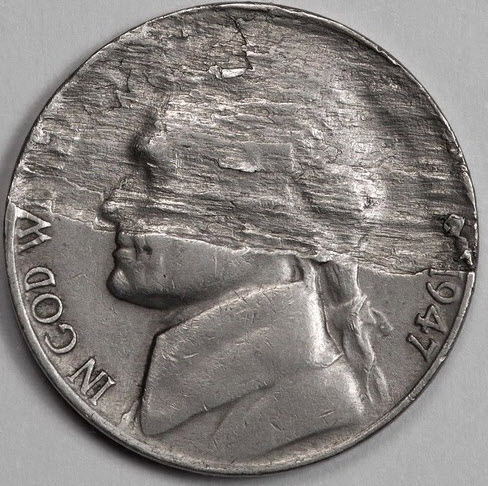 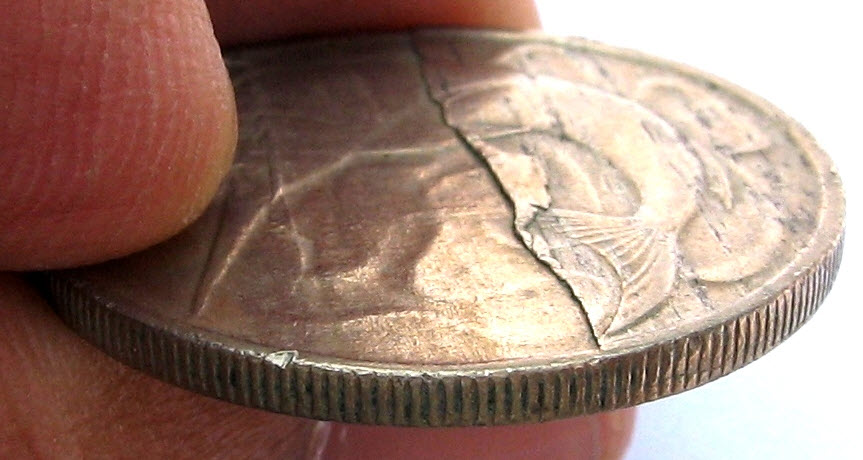 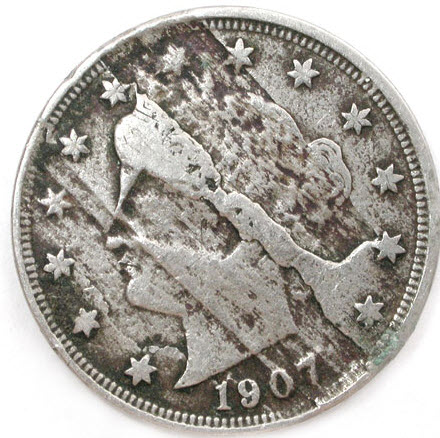 This also shows, some to more of a degree than others, where the laminations can follow a straight line. The impurity/stress causes the lamination to come off, as opposed to that particular part of the lamination being impure or under stress and therfore coming off in a disorderly fashion. Not to say that laminations always come off uniformly because as you have probably seen they don't. I know that a split die theory might sound OK but this is not the result of that problem. Split dies cause cracks in the planchet, they don't have lamination on them like coins so the surface wouldn't just 'come off' and leave half of the die depressed. Also lamination errors come in many forms, where some you still have the cracked lamination attached and peeling off and where they have fallen off completely, like in the OP. You also say none of my lamination errors are straight, but my 2 attached pennies show very linear lamination errors! 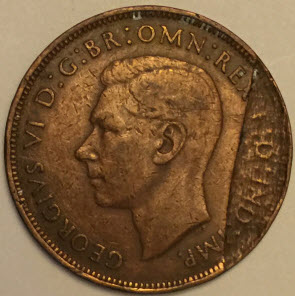 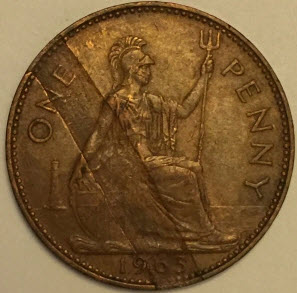 I think the biggest problem here is that the original picture has had the lamination error and then has been in circulation for god knows how long. This has caused the usually sharp break where the lamination has come off to go dull and look as if it is just a massive Cud. Edited by UKPennyHunter
11/23/2015 07:22 am
|
|
Pillar of the Community
United Kingdom
2624 Posts |
Those two pennies I did look at and the lines are clearly curved to my eye. (not jagged like the nickel but with a gentle curve) Though the phenomenon that caused the nickel to delaminate like that is bizarre, it does give weight to your argument because I wouldn't have expected such an occurrence. Maybe as you say the OP coin has lost the sharpness on the edge due to polishing and handling, and maybe you are right that it is a lamination error. For me though it just kills me to see loops soldered onto coins. This particular design of coin I have a fondness for since I found a 1825 example in my change when I was a boy, it is in nice condition with a pleasant patina and helped fuel an interest in coins. I tried to collect all the shilling types and dates before they were withdrawn from circulation and replaced with the small 5p's in the early 1990's. 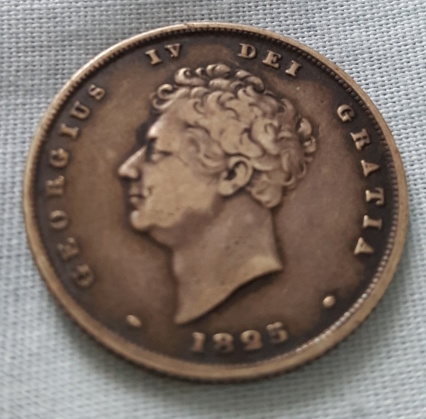 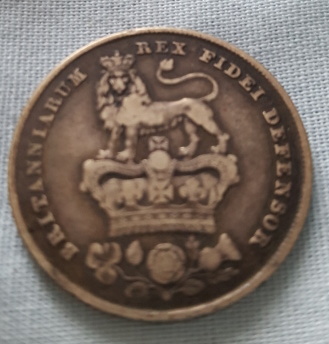 While not perfect I am sure you would agree that at face value you couldn't expect any better. Edited by DavidUK
11/23/2015 08:19 am
|
|
Valued Member
Spain
239 Posts |
Quote:
For me though it just kills me to see loops soldered onto coins. I whole-heartedly agree! I guess at the time it would have made for a nice present. I'm really jealous that you picked that up in change too, I wasn't around until after decimalisation so have never seen aynthing other than the coins we have today in my change. What a find and you're totally right, you really could not have asked for better! |
|
Pillar of the Community
United States
4963 Posts |
There's no doubt that this is a lamination, and a good one at that if the coin hadn't been soldered.  |
| |
Replies: 23 / Views: 5,558 |







 Posted 11/22/2015 12:27 pm





