| Author |
 Replies: 2,420 / Views: 165,806 Replies: 2,420 / Views: 165,806 |
|
|
|
Formerly nancyc
Australia
5385 Posts |
Canada 5c 1902 #9 15 15.49mm  life is a mystery to be lived not a problem to be solved
|
|
Pillar of the Community
Poland
3201 Posts |
MontCollector, I knew it looked familiar!  Indeed, some detail on the leaf is lost (a weak strike or the effect of the coin being in a mint bag?). Certainly wouldn't grade well  The lines by the date, I've seen those before on the 2015 and 2016-dated small coins, those must have originated at the mint. Anyway, here's a poor specimen of Prussian 1/2 silbergroschen:  
Edited by DL20K
01/16/2017 4:23 pm
|
|
Pillar of the Community
 United States
8137 Posts |
India 2 Annas (15.7 mm) 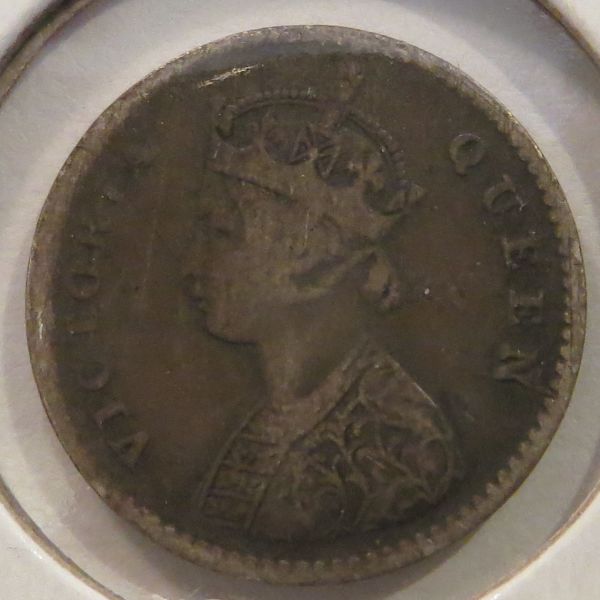 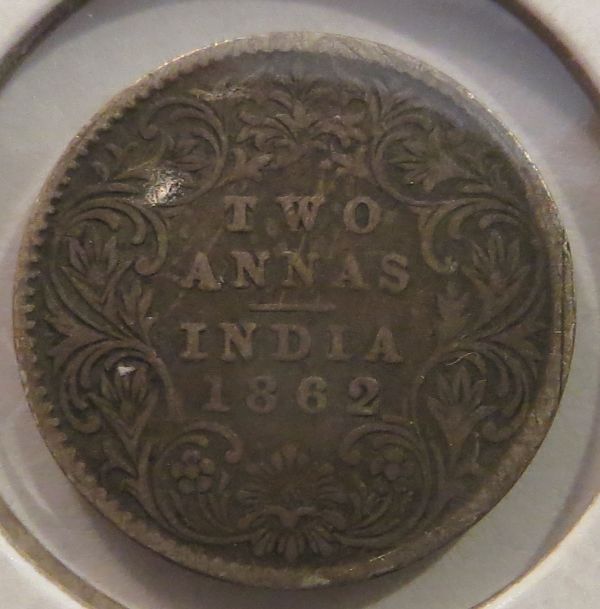 |
|
Pillar of the Community
Poland
3201 Posts |
Malaya 5 cents 1943:   |
|
Formerly nancyc
Australia
5385 Posts |
This one's a bit rough. Great Britain 1843 1½d #728 12mm  life is a mystery to be lived not a problem to be solved
|
|
Pillar of the Community
Poland
3201 Posts |
The Swedish 25 ore barely makes the cut at 17.2 mm:   |
|
Pillar of the Community
Australia
7096 Posts |
I forgot that I had this one, 0.7g and 12mm Silver.  |
|
Pillar of the Community
Belgium
1194 Posts |
In ancient times , there were many small coins , here a trihemiobole ( 3 x 1/2 = 1.5 obole) from Eion , a town in Greece near to Thessaloniki : BC 470/460 , 10mm , 1.19 gr.albert  |
|
Pillar of the Community
Poland
3201 Posts |
Another Swedish 10 ore coin:  |
|
Formerly nancyc
Australia
5385 Posts |
3 Different Q.Vic 3d's UK 3d 1874 Y.Hd #730 16.26mm 1938-87  UK 3d 1892 J.Hd #758 16.26mm 1887-93  UK 3d 1901 O.Hd #777 16.26mm 1893-1901  life is a mystery to be lived not a problem to be solved
|
|
Pillar of the Community
United States
6130 Posts |
Here are some of my most enigmatic and poorly understood coins which also happen to be tiny: Sogdian kingdom, Samarqand (Uzbekistan) Silver "obol" Ca. 100 - 600 AD 9-12mm, about 0.5-0.75g Obv: Highly abstracted male portrait Rev: Archer (Apollo?) holding bow, legend degraded to dots   Soghd was a silk road era kingdom centered on Samarqand (still inhabited, present day Uzbekistan.) They were usually subjugated to various empires, but nevertheless prospered as one of the few oases of civilization in the vast stretches of central Asia. They are believed to have originally been based on a Greek coin of one of the Antiochuses of the Seleucid empire (I have seen one that still retains a legend "Basilews Antioxoy" or King Antiochus). Most originate from just a handful of hoards, nearly all of which were found in the last 20 years; this grouping would have cost hundreds or thousands of dollars in the 1980s or early 90s. Interestingly, to compensate for their extremely thin fabric, these coins were given a slightly cupped shape to reinforce the edges that clearly were still prone to tearing or breaking. These coins are well known to Russian collectors; English literature on them is incredibly sparse. Nobody knows who they depict or even which century of the first millennium they were produced during. |
|
Moderator
 United States
197800 Posts |
Quote:
Here are some of my most enigmatic and poorly understood coins which also happen to be tiny: And they all fit into a single 2x2 holder.  |
|
Valued Member
United States
150 Posts |
|
|
Moderator
United States
197800 Posts |
Quote:
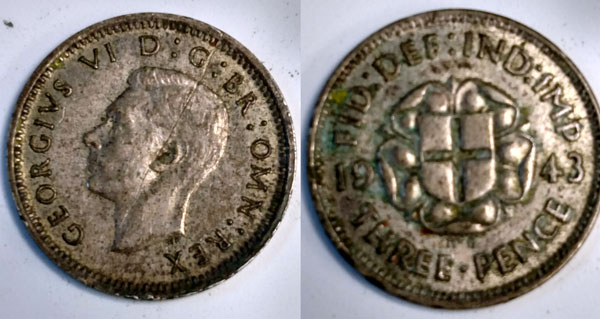
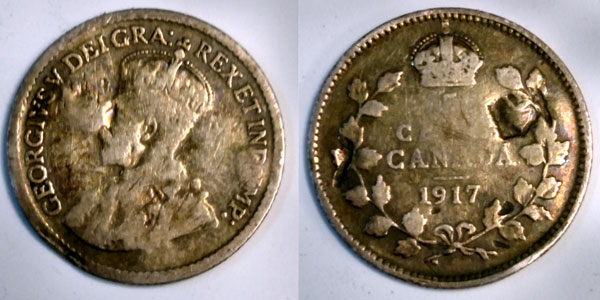
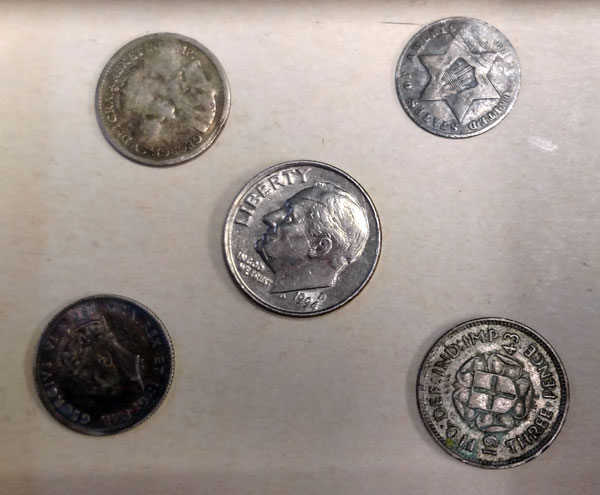
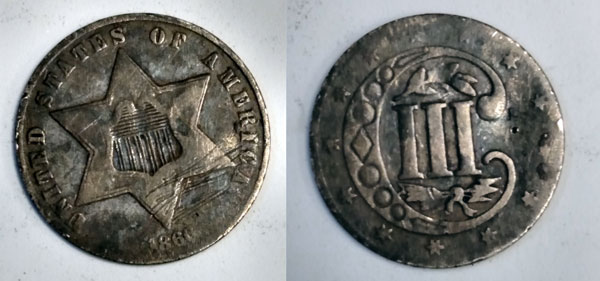
My tiny coins that I got from my grandpa. Priceless.  |
|
Formerly nancyc
Australia
5385 Posts |
A couple UK Fractional Farthings: Great Britain 1/3rd Farthing 1827 #703 16mm  Great Britain 1/3rd Farthing 1835 #721 16  life is a mystery to be lived not a problem to be solved
|
| |
Replies: 2,420 / Views: 165,806 |





 First Page
 Previous Page


 Posted 01/16/2017 4:22 pm