These "cracks" around the edge of a coin formed when the coin was first struck. Whether or not cracks formed depends partly on how heavily the coin was struck and partly on how "plastic" the metal was at the time, which in turn depends on the exact composition of the alloy and whether or not the blanks were heated prior to striking. Another variable that can affect the appearance of cracking is the original shape of the blank: a coin struck from a round ball of metal is more likely to crack than a coin struck from a blank that was flat to start with.
Minting techniques varied over time, as did metal composition. So it is not surprising that denarii from different periods show different levels of edge cracking.
In my experience, the earliest denarii, made of very high fineness silver (typically 95%) show little evidence of flan cracking, except of course for the serrated denarii where edge cracking was deliberately induced by carving notches into the blanks. After about the reign of Hadrian, the fineness started a gradual decline and the alloy became more dilute and more brittle; coins of Commodus and the Severan dynasty (Septimus Severus and his descendants) appear to be the worst, with their coins often showing severe flan cracking. But as time progresses and the alloy continues to decline in fineness, the appearance of flan cracks tends to diminish once again, with usually only one or two large flan cracks present if any, rather than multiple smaller ones.
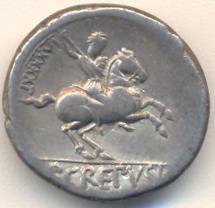
Denarius of the Republic period - no flan cracks
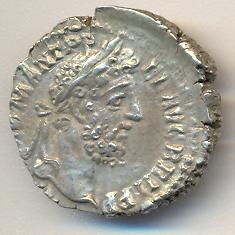
Denarius of Commodus - very rough edge caused my multiple small and medium-sized flan cracks

Denarius of Elagabalus - edge cracking still present but less severe
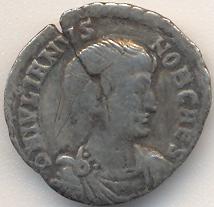
Siliqua of Julian II - single unusually large flan crack.
Don't say "infinitely" when you mean "very"; otherwise, you'll have no word left when you want to talk about something really infinite. - C. S. Lewis










 Posted 04/05/2016 09:01 am


 to the community.


