| Author |
 Replies: 716 / Views: 131,035 Replies: 716 / Views: 131,035 |
|
|
|
Pillar of the Community
 India
1996 Posts |
|
|
Pillar of the Community
India
1996 Posts |
|
|
Pillar of the Community
India
1996 Posts |
Here is a coin with bull facing right 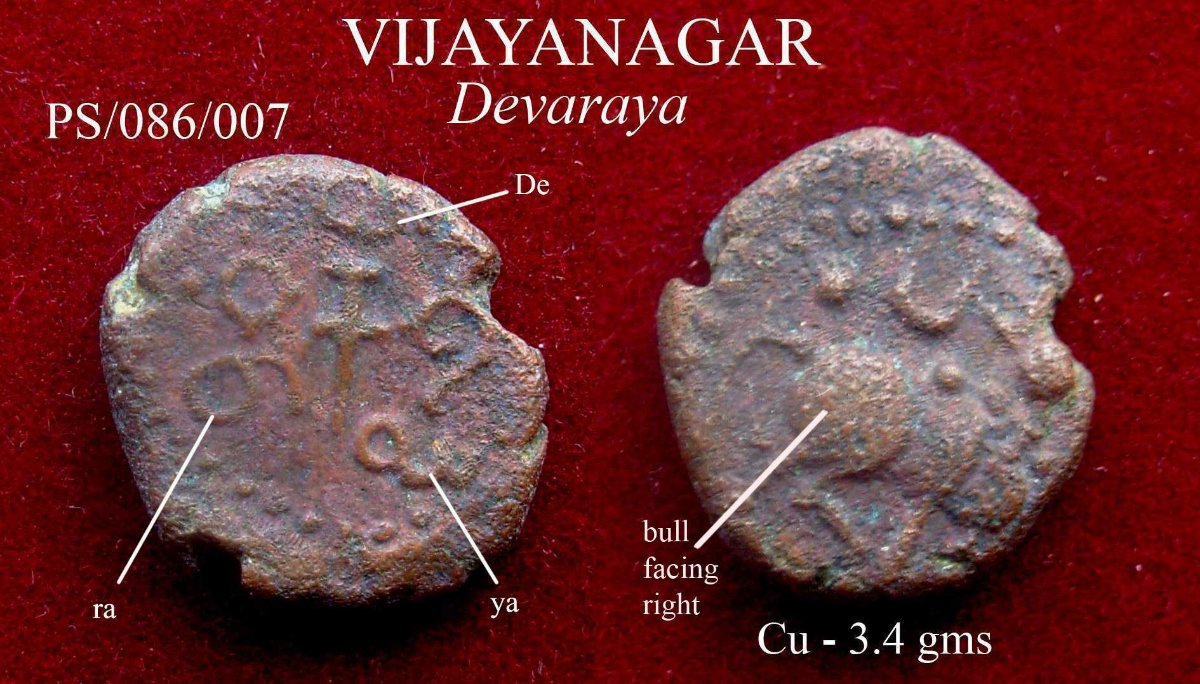 |
|
Pillar of the Community
United States
6130 Posts |
Still following intently  I have these two which are not from Vijayanagara, but rather from one of its predecessor states, showing the iconic "octopus man" (actually a king wearing a skirt-like garment) of the costal Chola empire:   Interesting how little the bull icon changed over the centuries. The coin on the left has what I have seen described as a sankh shell before the bull; the other has a letter that I have not been able to figure out yet. Sorry for derailing a bit, but I thought it was an interesting bit of context for these coins! |
|
Pillar of the Community
India
1996 Posts |
@Finn235:)Thanks for the post and your interest in Indian coins. South Indian coins are the "most toughest" to attribute among Indian coins. The coin on the left in your post shows a bull with a crescent above. In front of the bull you got sangh shell right.On the other side your observation about the "octopus man" also is correct. Regarding its attribution, T.Krishnamachari attributed this to Cholas. But his observation seems incorrect. SankaranRaman, a numismatist from Tamilnadu who specialises in Tamilnadu coins especially of Nayakas, says it is an issue of "Tirumala Nayak" of Madurai.(1623-1659.AD) 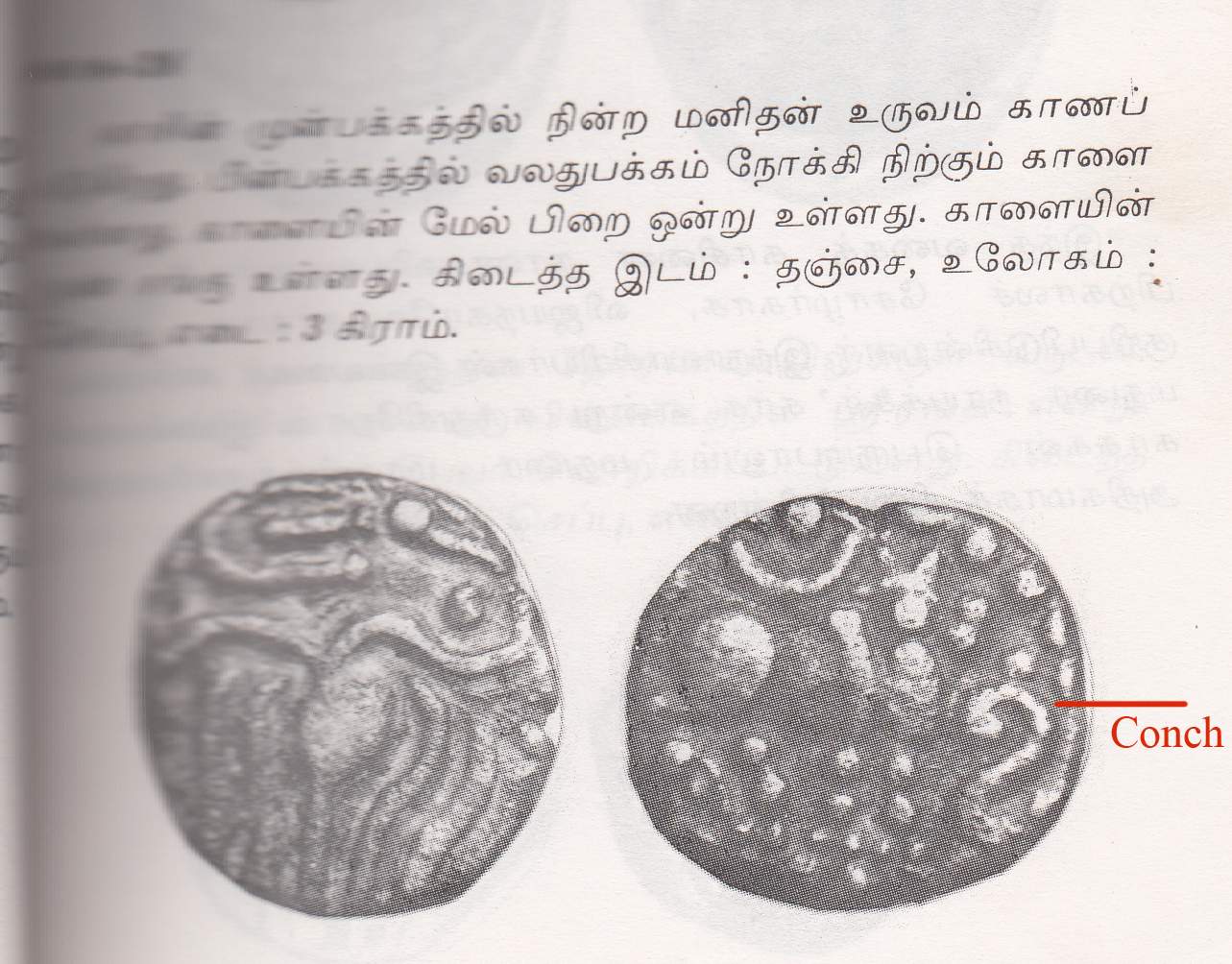 (I am sorry about the scan quality, but this is the max.I could do with that book). He states its provenance is Thanjavur, in Tamilnadu. There are some variants also to this coin that we come across at times. 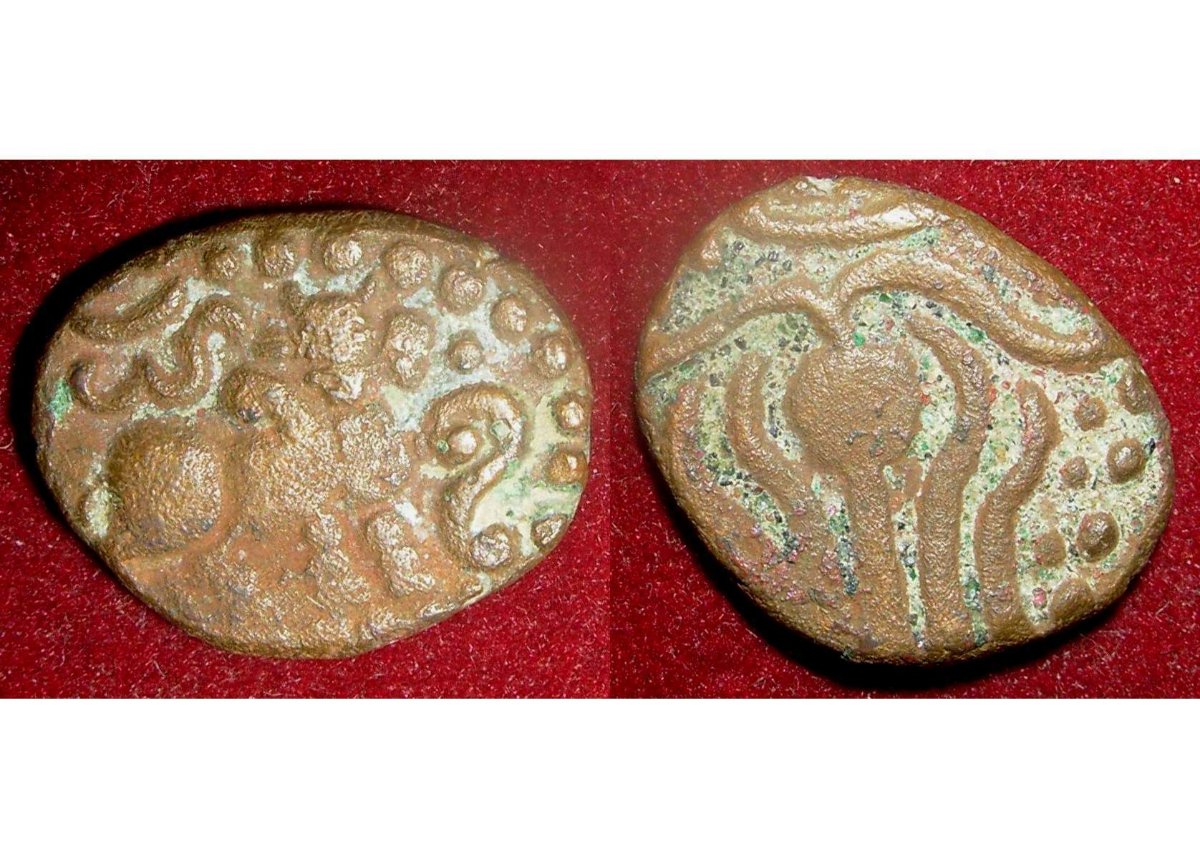 Here you can see a Kannada letter "cho" above the bull. This is attributed to "Chokkanatha Naykar (1659-1682.AD)by the same author. Coming to the coin on the right,there is a crescent above the bull to the right and the letter in front is "vee" written in nagari. This coin also is attributed to the Nayaka "Veerappa naykar"(1572-1595.AD)by SankaranRaman. 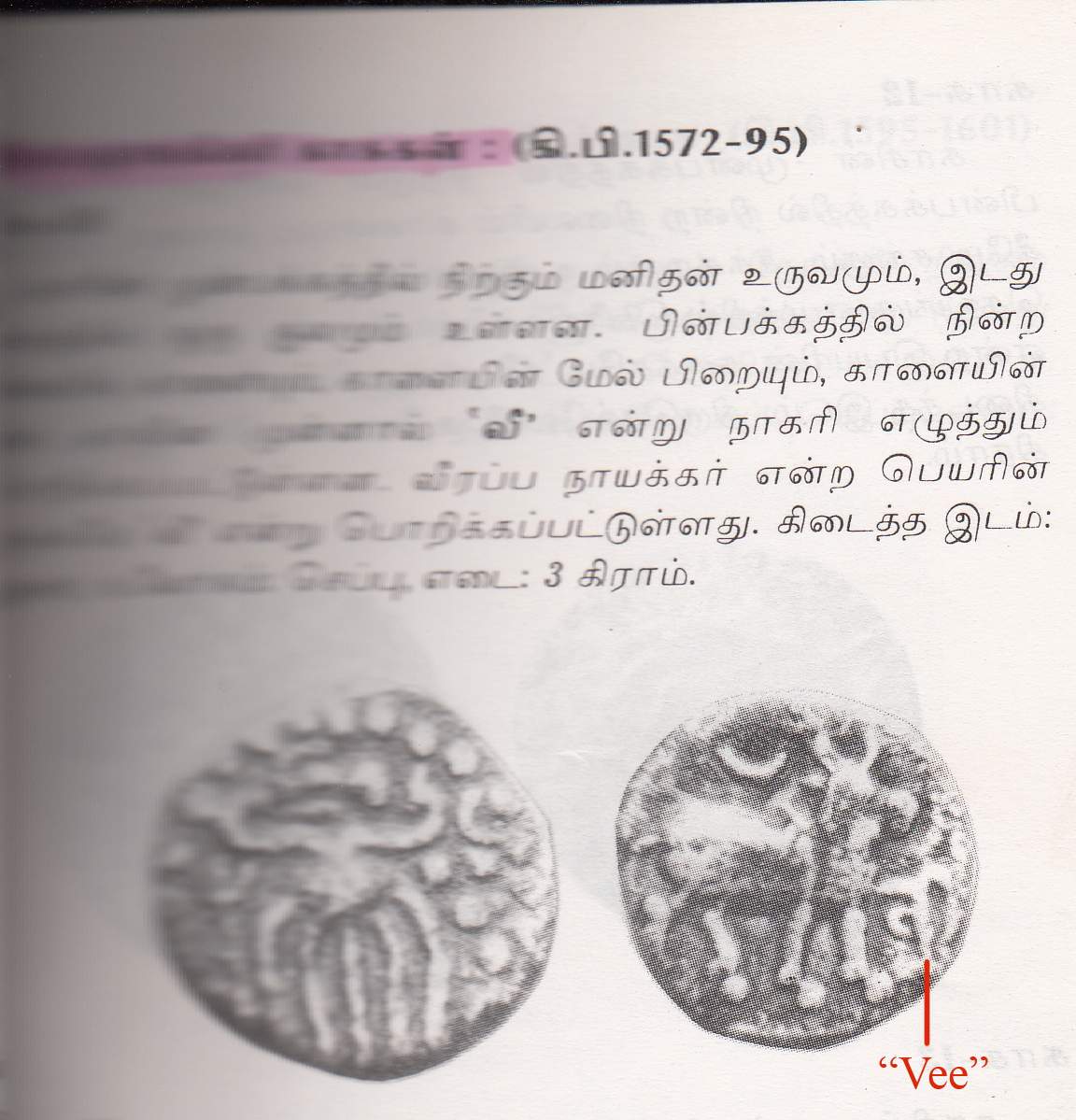 But some others attribute this to "Veera Pandya"(1335-1364 AD )of the later Pandya group.Please see this link http://ancientcoinsofindiaaruns.blo...er-maha.html Many SundaraPandya coins (having clear legend in Tamil script) have come to light with the "octopus man" symbol and the sitting figure that is often found on Chola coins around this period. 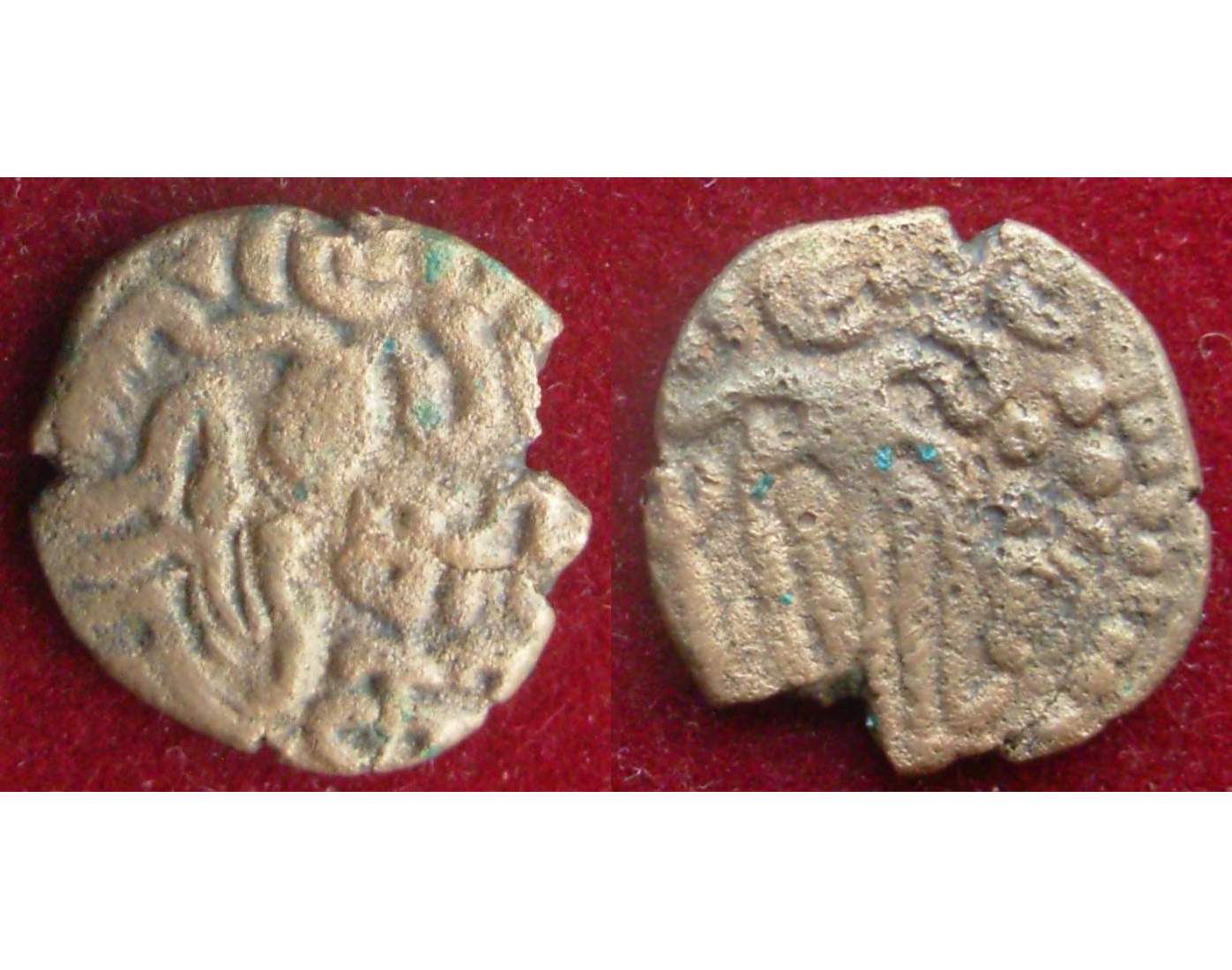 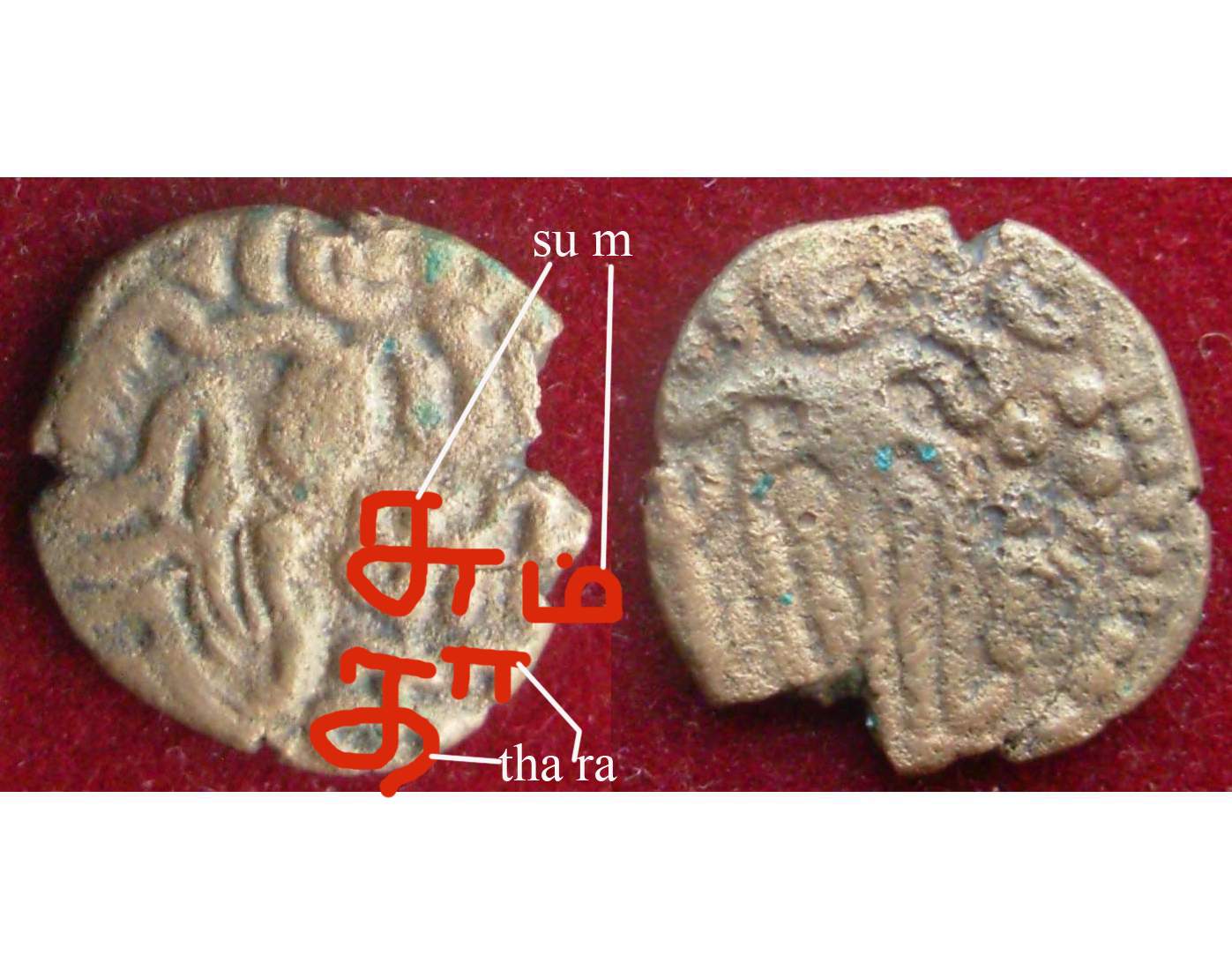 Thanks
Edited by drnsreedhar
06/13/2017 1:05 pm
|
|
Pillar of the Community
India
1996 Posts |
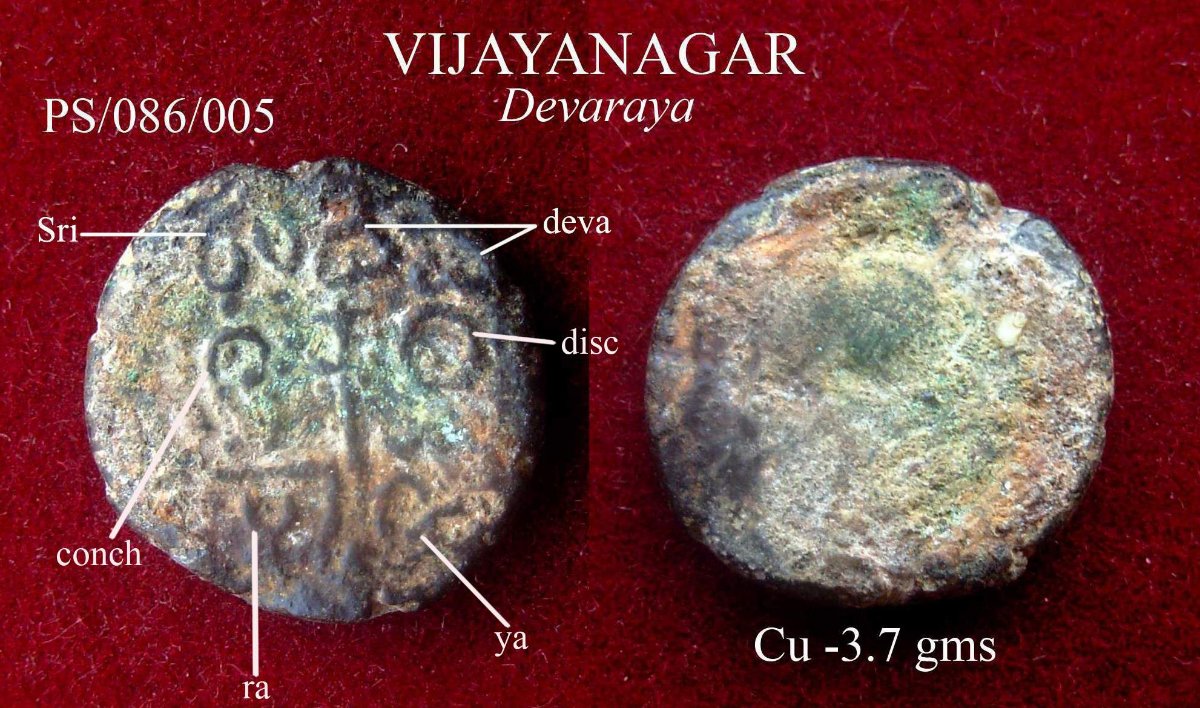
Another coin with bull to right.Conch is on the left and is with clockwise turn differing from PS/086/005 and 007. 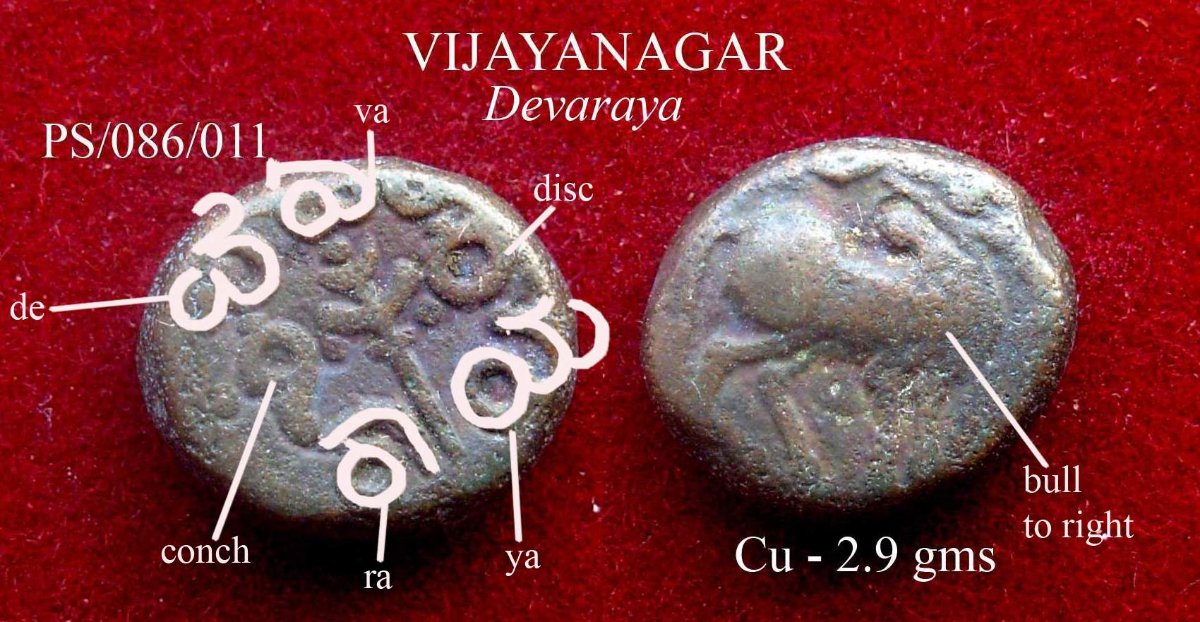 |
|
Pillar of the Community
India
1996 Posts |
|
|
Pillar of the Community
United States
6130 Posts |
Nice updates!
Sorry for not responding earlier, but thanks for the information on the two coins! I do agree that 16th century seems a bit late for drawing inspiration from a ~12th century coin.
|
|
Pillar of the Community
India
1996 Posts |
@Finn235:)Thank you[ for the post.
|
|
Pillar of the Community
India
1996 Posts |
|
|
Pillar of the Community
India
1996 Posts |
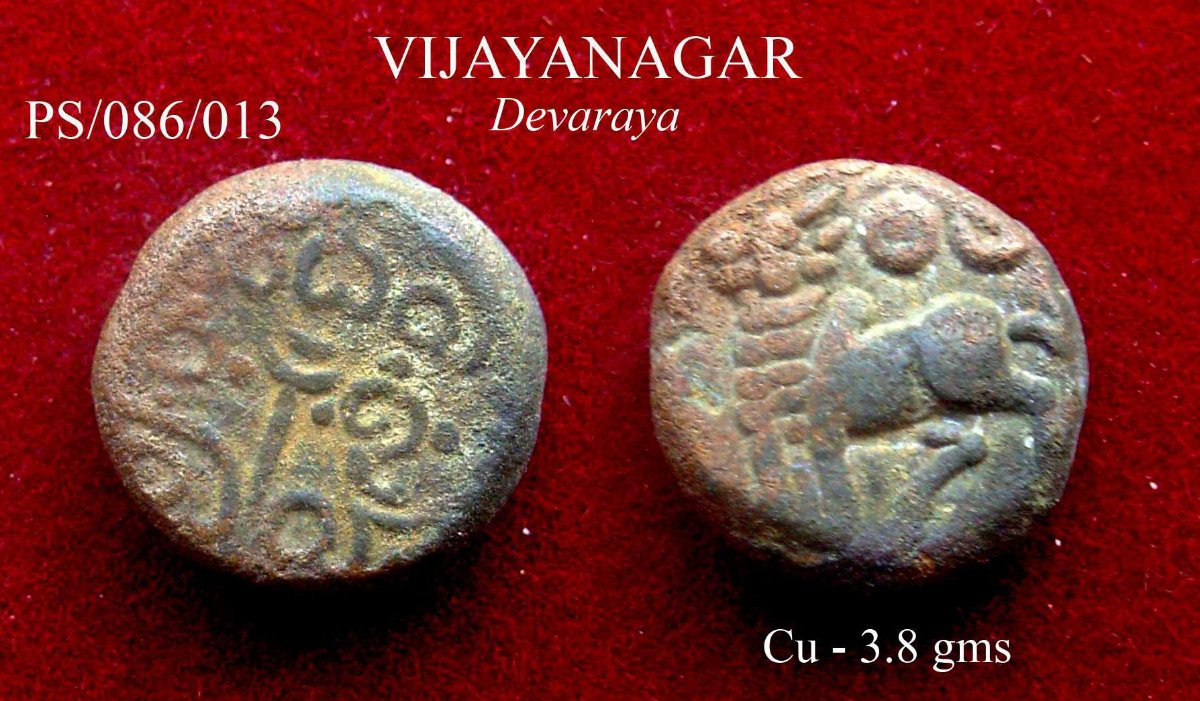
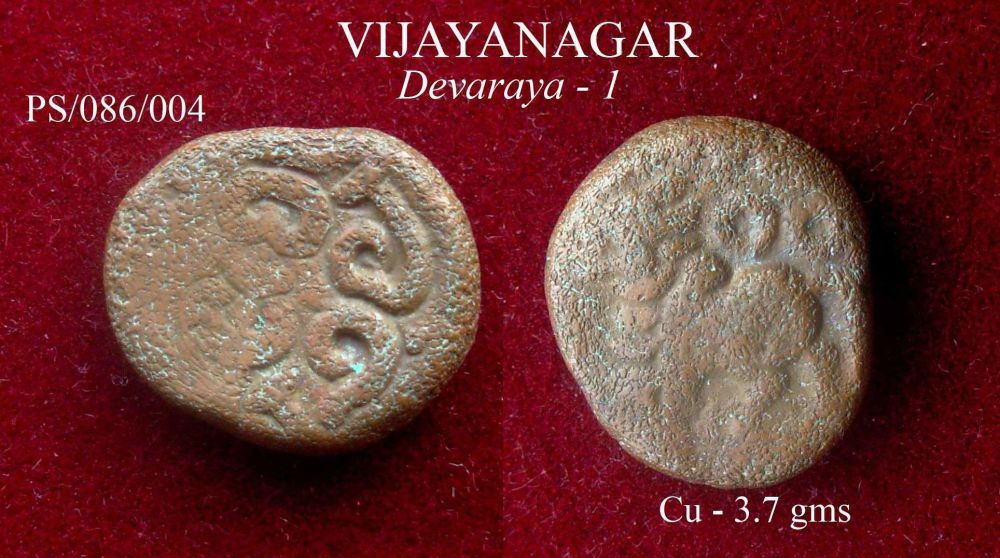
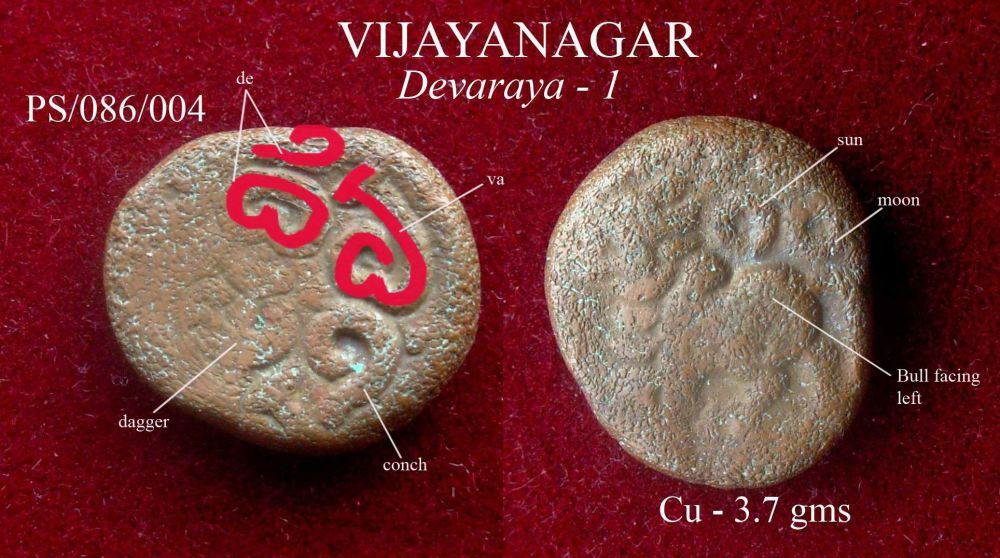
Devaraya-2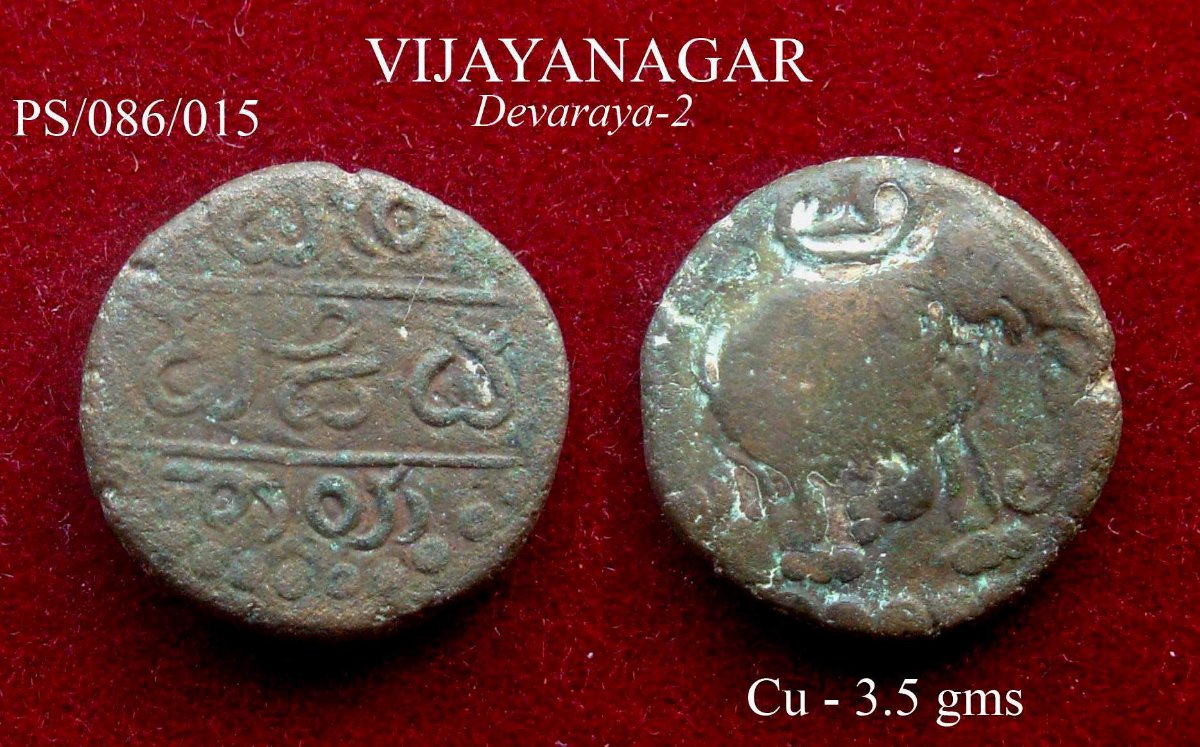
|
|
Pillar of the Community
India
1996 Posts |
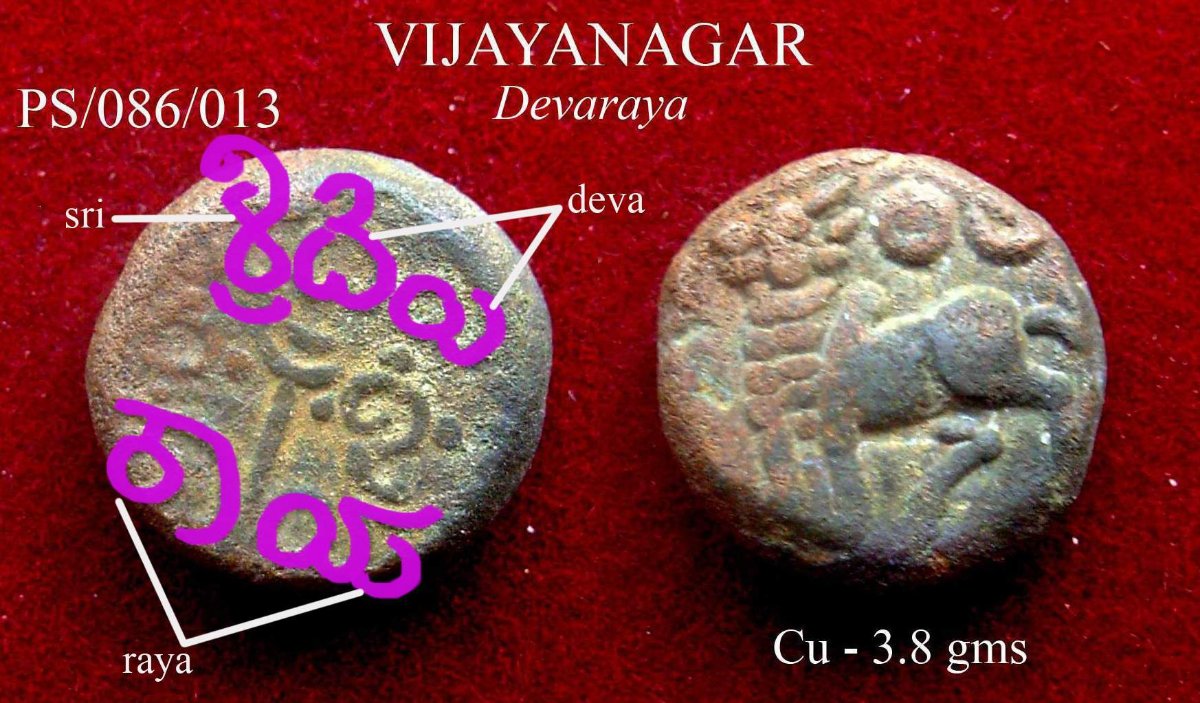
The coin above with overlay 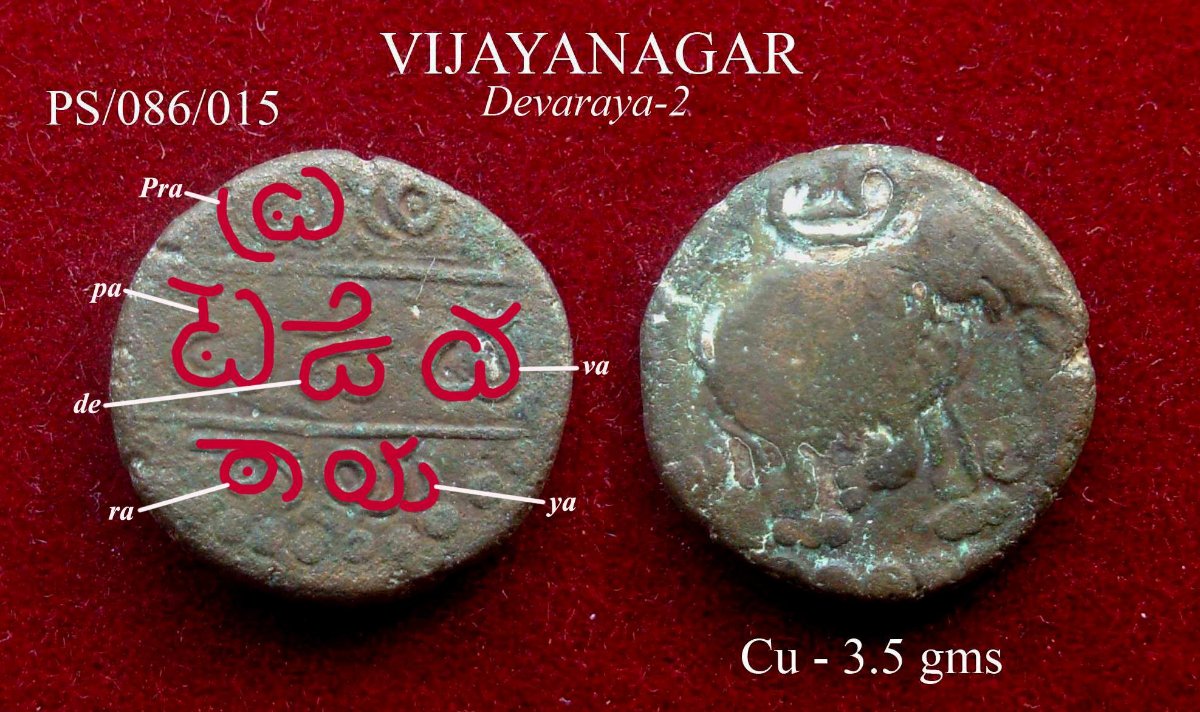 |
|
Pillar of the Community
India
1996 Posts |
Mallikarjuna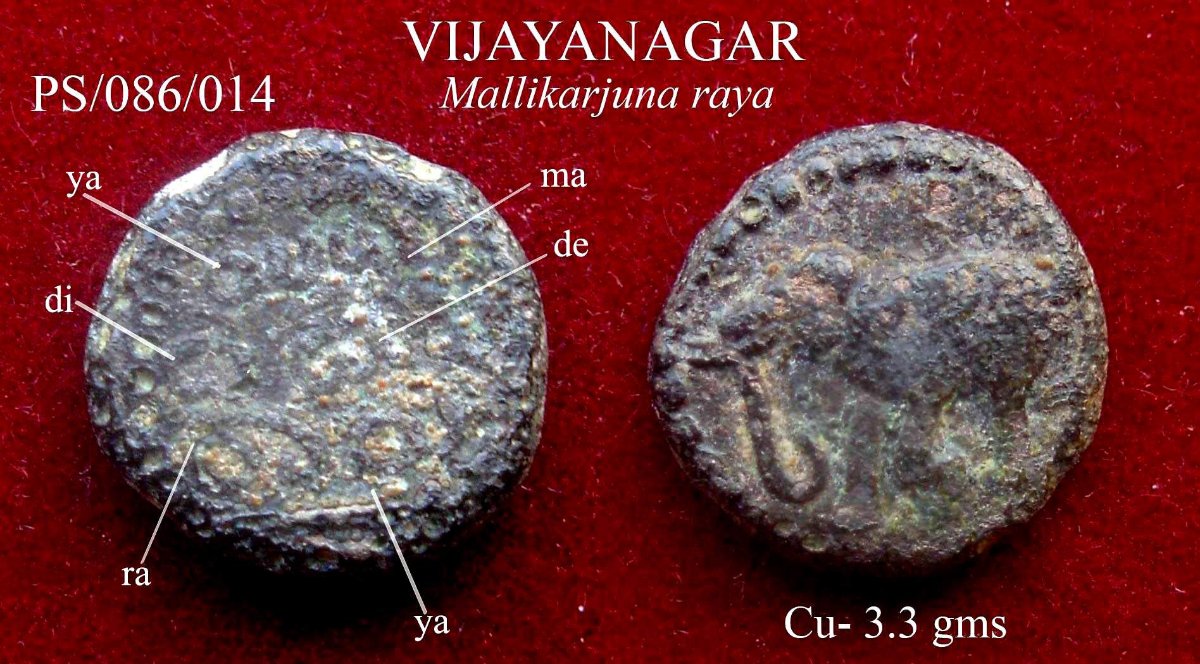 It is interesting to compare the coin of Devaraya-2 above with this coin.Devaraya coin has elephant to right with uplifted tail within circle of dots and Kanrarese "Aa" above and legend "Pratapa Devaraya" within circle of dots struck on the two sides.There is another object probably an animal struck below the right forelimb of the elephant.There is a head and its body clearly seen and faint traces of a tail (?) is also seen. That could be a baby elephant crudely represented or crushing some other animal. Mallikarjuna coin has elephant to left within circle of dots and legend "yamadi Devaraya" within circle of dots struck on the sides.
Edited by drnsreedhar
06/28/2017 12:58 am
|
|
Pillar of the Community
India
1996 Posts |
i have tried to overlay the legend on Mallikarjuna coin 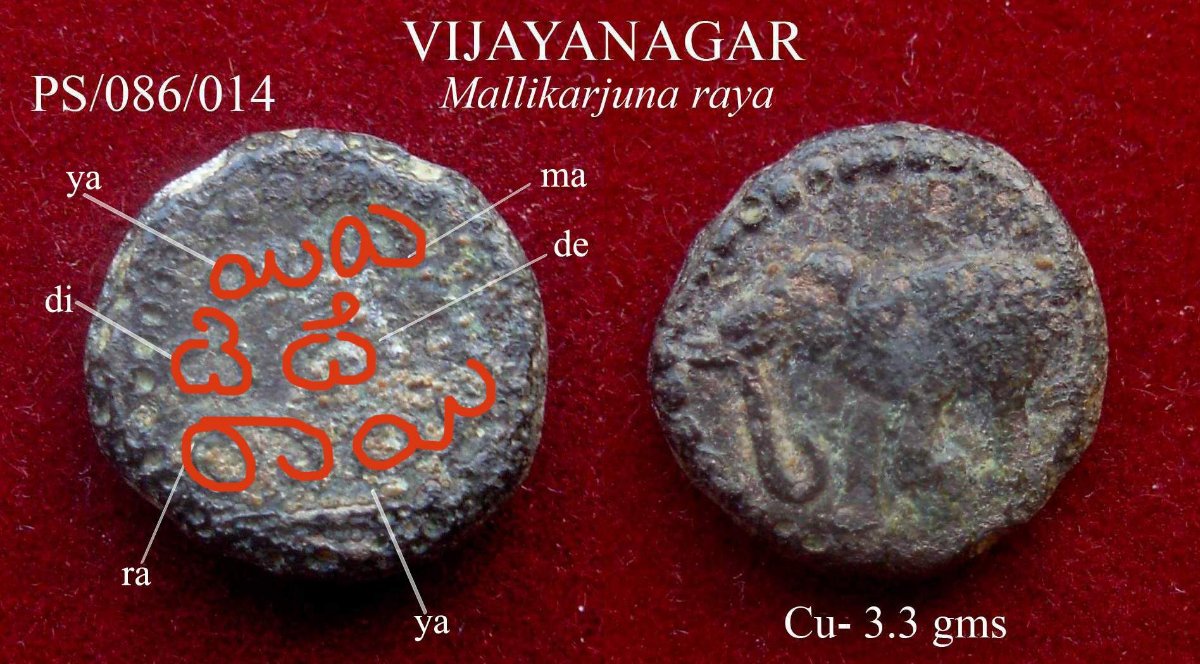 |
|
Pillar of the Community
India
1996 Posts |
Venkataraya (1586-1614.AD)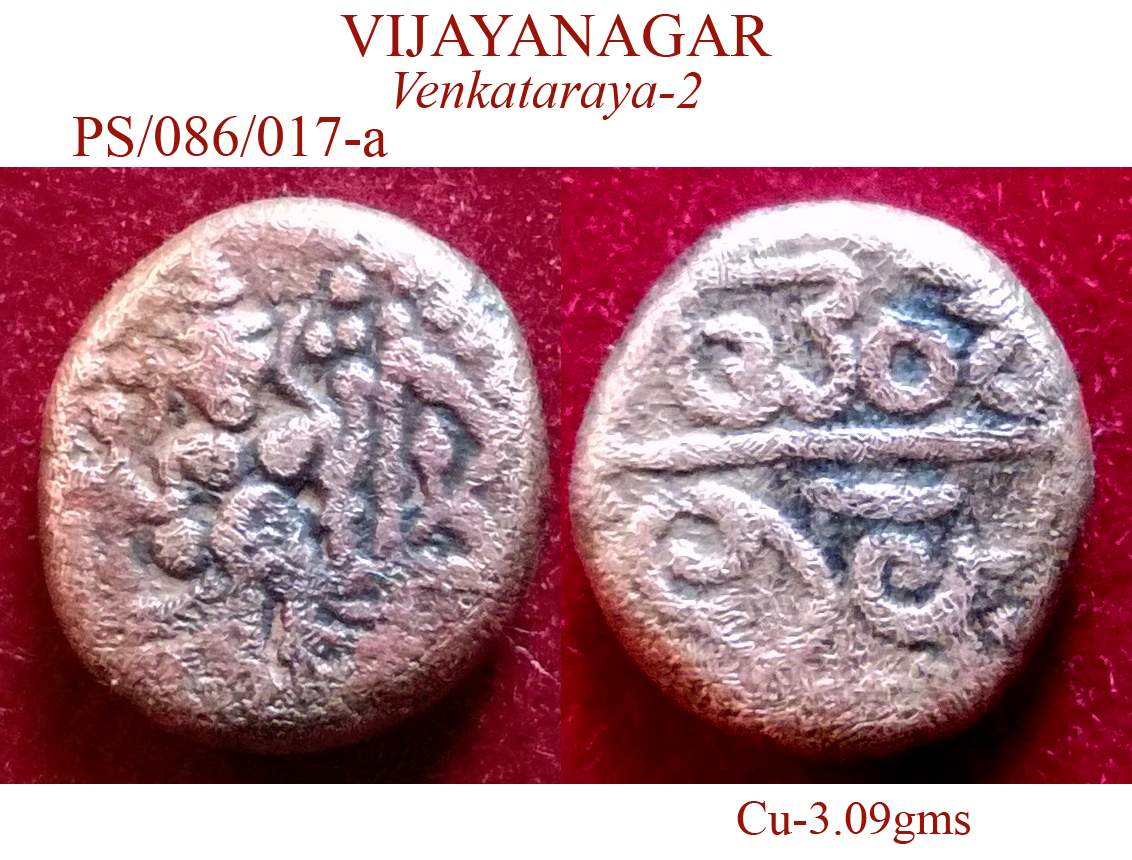
|
| |
Replies: 716 / Views: 131,035 |






 First Page
 Previous Page



 Posted 06/08/2017 02:18 am