| Author |
 Replies: 36 / Views: 5,742 Replies: 36 / Views: 5,742 |
|
Pillar of the Community
Canada
3733 Posts |
i didn't realize there were fakes ones out there, but here they are..could you imagine a bank teller trying to tell if these are fake or not.. 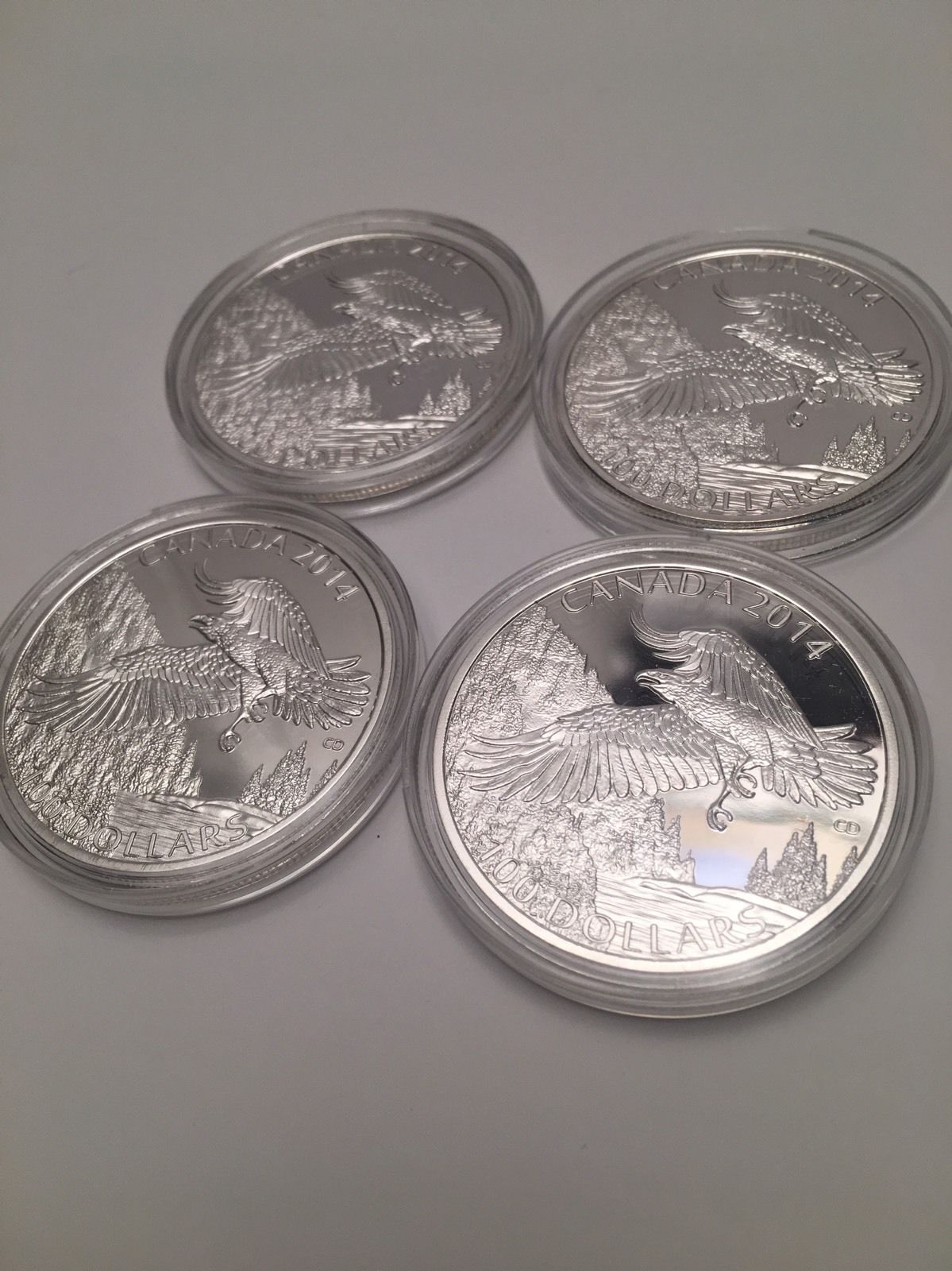 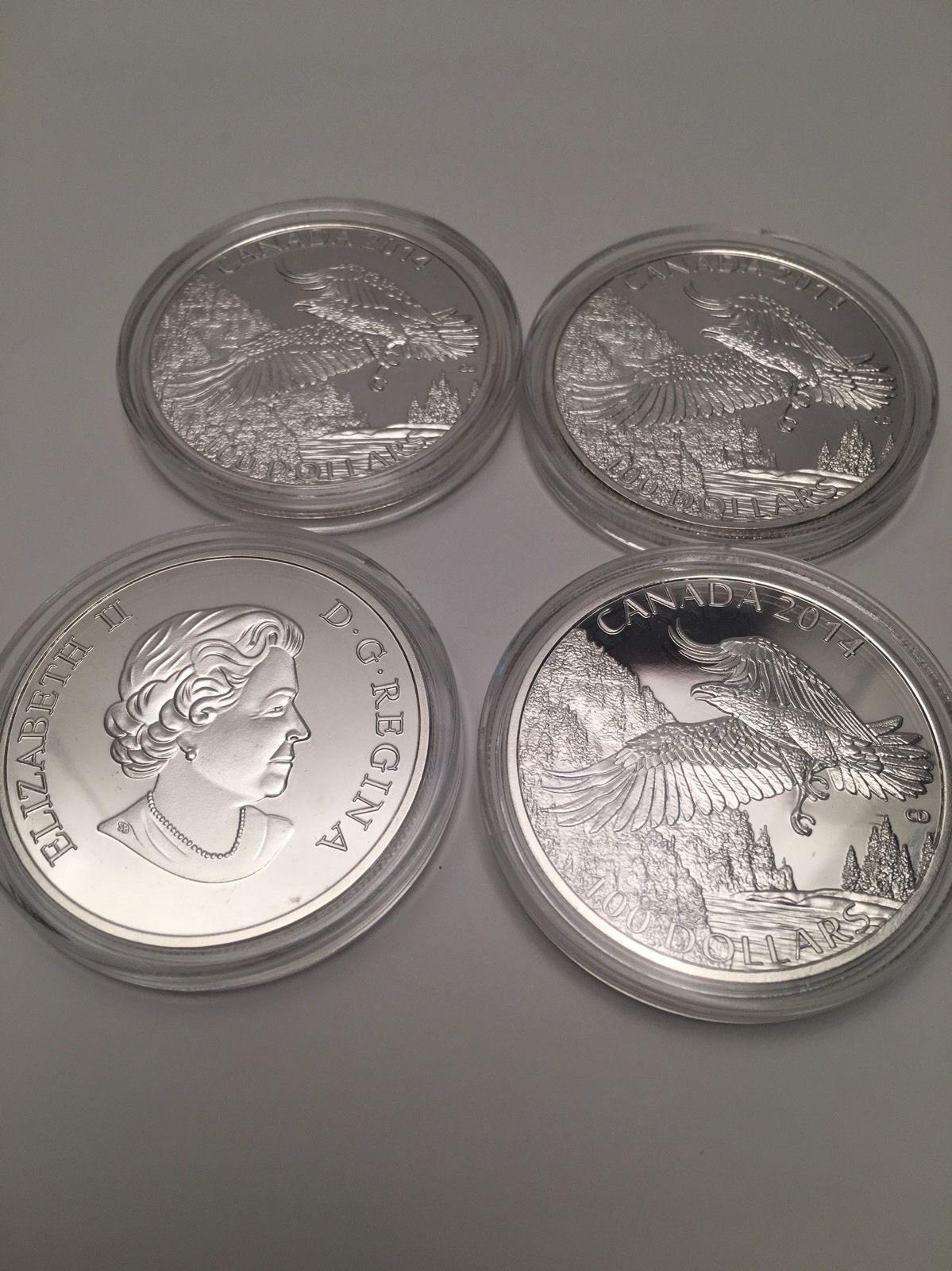 |
|
|
|
Pillar of the Community
 Canada
3733 Posts |
these are the first fakes I have noticed on ebay..i would have to go pull my out of the safe, but on first glance they look pretty good. has anyone got one close by to do a comparison..and yes I have reported them as counterfeit to bobby. |
|
Bedrock of the Community
Canada
21881 Posts |
There are all kinds of Chinese counterfeit NCLT coins out there. You just have to be careful when buying off of ebay. On most of them,they never get the Queens eyes right. The eyebrow is usually too heavy and the eyes are slanted. (No, I'm not going to make a remark). Also the hairlines are a lot heavier.  In this case on the Reverse, a genuine coin has the eagles talons closed and the beak is larger. There are other smaller differences but these are the easiest to spot.  |
|
Pillar of the Community
 Canada
9902 Posts |
Thanks for the markers JimmyD.
"Dipping" is not considered cleaning...
-from PCGS website
|
|
Valued Member
Canada
115 Posts |
This is a huge issue. I hope banks don't stop accepting nclt deposits like banks in Britain did last year. I know they did it for a different reason, but still concerning.
|
|
Pillar of the Community
Canada
1571 Posts |
It was just a matter of time before counterfeits surfaced
|
|
Valued Member
Canada
194 Posts |
Quote:
I hope banks don't stop accepting nclt deposits This won't be the reason banks stop taking NCLT coins because they're protected in much the same way as if you cashed a NSF cheque. You need an account with the bank to trade the coins and if the coins are found to be counterfeit, the bank will take the money from your account. |
|
Pillar of the Community
Canada
3690 Posts |
I'd suspect the banks will start implement stronger processes to protect themselves. That is, something like you must be a customer, the redemption must be deposited to an account and the funds held until the coins are verified and accepted by the RCM. That would drastically increases the risk to collectors who buy from secondary sources and therefore would virtually kill the trade of these coins. Can you image if someone in China or elsewhere was mass producing $100 bills and introducing them into our monetary system? There would be an instant response from police, lawmakers and the BoC. Strong countermeasures would be in place and the public notified. But, this story will probably never even make the news because the Mint wants to keep it quiet...like they tried to do with the gold smuggler guy. |
|
Valued Member
Canada
256 Posts |
As most of us know, through much discussion since XX for XX were introduced, most bank branches refuse to deal with these more than likely for this reason.
When I cashed these in, it was through a coin dealer who inspected each and everyone before they accepted them.
In hindsight I'm pleased I'm done with this series
|
|
Valued Member
Canada
256 Posts |
@CC-Ottawa "I'd suspect the banks will start implement stronger processes to protect themselves." They already have for a long time.
They refuse to deal with the potential "red tape" with these transactions whether you're a "valued" customer or not.
|
|
Valued Member
Canada
91 Posts |
I took some to the local TD bank (where we have an account) the last week of October and the process was...made an appointment, he documented everything and shipped it back to RCM. They acknowledged to the bank just last week and said they would be sending out a check to the bank. I was told Friday I should have the money by this Friday. |
|
Pillar of the Community
Canada
1571 Posts |
I had every $X for $X that was issued up until July 2016. I had no problem taking them to the bank the first few times but the last $200 coin was a bit of a headache at my bank. The issue was that the mint did not include $200 coins in the listing for $x for $x coins that was sent to banks. The following day, I got a call from the bank saying they would accept them. They did not hold them until verified and I traded for bills without making a deposit. I did not make an appointment, I just walked in a stood in line as if I was doing any other transaction. I'm also with TD. It really depends on the specific branch and if you're known to the bank employees
Edited by Redzapsid
11/16/2016 12:25 pm
|
|
Pillar of the Community
Canada
3690 Posts |
@Nubee. If you dealt with a coin dealer, you sold your coins, you didn't cash them in. There is a significant difference.
Different banks and even branches will deal with these differently and not all customers are as "valuable" as others. If counterfeits become common, the banks will all tighten their procedures.
Also, NSF cheques are completely different as they are covered in the account agreement that was established when the account was opened and/or as changed periodically by the bank. The outcome may be the same but as far as I know there is no agreement by a customer to reimburse a bank for a counterfeit deposit. Therefore, the bank can't simply take the money from your account unless there is a prior agreement in place.
|
|
Valued Member
Canada
256 Posts |
@CC-Ottawa "If you dealt with a coin dealer, you sold your coins, you didn't cash them in. There is a significant difference. "
I'm not sure I understand the difference. Coin dealer gives me $20 for $20 for $20 or a bank branch does (which my bank and several others would not do).
My point being, through my experience, that BANKS (and their branches) have already tightened up the process to the point many will not accept them (for whatever their reason).
|
|
Pillar of the Community
Canada
1027 Posts |
TD trust has never given me a problem with cashing my x for x coins at all.
Then again, they have my money.
|
|
Pillar of the Community
Canada
3690 Posts |
There are a couple of differences. Selling to a dealer, you can negotiate either a higher, lower or FV transaction. As well, the dealer then owns the coins and can resell them or exchange them. It's no different than sell them to your neighbour or a guy on kijiji. The coins stay in the market place until they are redeemed at a bank. The risk of owning the coin transfers from you to the buyer therefore the buyer will be more diligent. When you deal with a bank, the bank is simply an intermediary for the transaction between you and the RCM. You will never get anything more or less than FV and the coins will most likely be melted. The risk becomes a monetary loss to the Mint and bank simply will put procedures in place to ensure they have no risk. That will most likely NOT include stringently verify authenticity because at no point are they owners of the coins. They will leave that to the Mint. "Tighten" is a relative term. Yes some banks have good processes, and some don't. But the first time any bank accepts a significant amount of counterfeit x for x, IMO all of the banks will (further) tighten their procedures. We seem to be agreeing here except the inference that all BANKs (and their branches) behave the same way now. Clearly, they do not based on anecdotal evidence posted by others here today. My point is, if these counterfeits hit the banking system, then it will become even more difficult to simply cash them in and the Mint's marketing rhetoric will be exposed for the lie that it is. Edited by CC-Ottawa
11/16/2016 1:56 pm
|
| |
Replies: 36 / Views: 5,742 |









 Posted 11/15/2016 8:56 pm


