| Author |
 Replies: 814 / Views: 111,871 Replies: 814 / Views: 111,871 |
|
|
|
Moderator
 United States
195559 Posts |
|
|
Bedrock of the Community
 United States
11966 Posts |
I thought this was pretty cool looking... 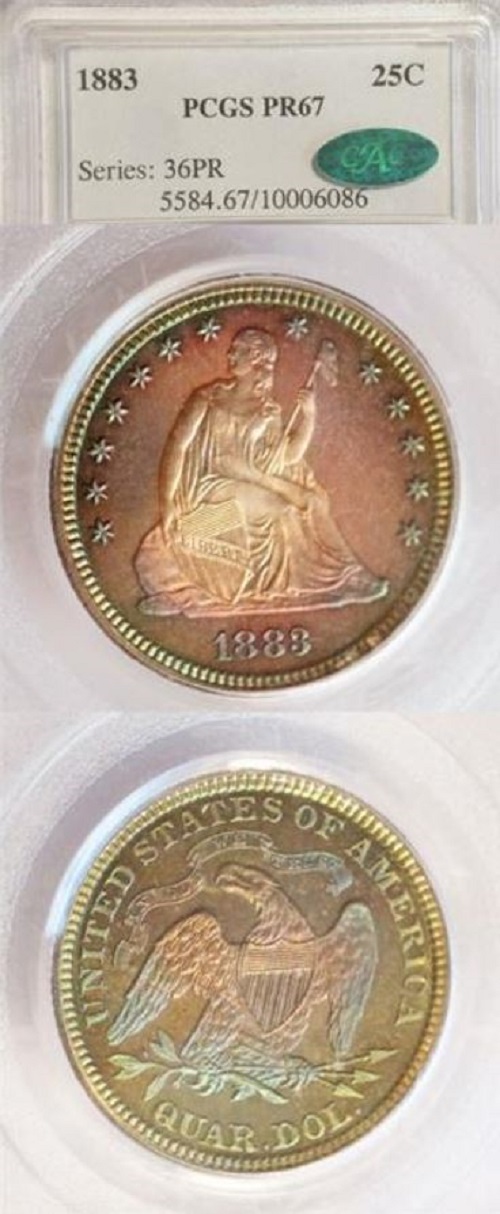 IN NECESSARIIS UNITAS - IN DUBIIS LIBERTAS - IN OMNIBUS CARITAS THE MAN IN THE ARENA, Theodore Roosevelt at the Sorbonne Paris on April 23, 1910: " It is not the critic who counts; not the man who points out how the strong man stumbles or where the doer of deeds could have done better. The credit belongs to the man who is actually in the arena, whose face is marred by dust and sweat and blood, who strives valiantly, who errs and comes up short again and again, because there is no effort without error or shortcoming, but who knows the great enthusiasms, the great devotions, who spends himself in a worthy cause; who, at the best, knows, in the end, the triumph of high achievement, and who, at the worst, if he fails, at least he fails while daring greatly, so that his place shall never be with those cold and timid souls who knew neither victory nor defeat." My coin website: https://fairfaxcoins.com |
|
New Member
United States
2 Posts |
I found the post from January regarding the Schlag recording from Vantage records. A digital version is available on my site. It's at the very bottom of this page: http://www.felixschlag.com/FelixSchlag Or directly linked here: (Offsite URL shortening not allowed-1) /yat9patf Not the best quality, but it works. |
|
New Member
United States
2 Posts |
|
|
Bedrock of the Community
United States
11966 Posts |
Thanks! and  IN NECESSARIIS UNITAS - IN DUBIIS LIBERTAS - IN OMNIBUS CARITAS THE MAN IN THE ARENA, Theodore Roosevelt at the Sorbonne Paris on April 23, 1910: " It is not the critic who counts; not the man who points out how the strong man stumbles or where the doer of deeds could have done better. The credit belongs to the man who is actually in the arena, whose face is marred by dust and sweat and blood, who strives valiantly, who errs and comes up short again and again, because there is no effort without error or shortcoming, but who knows the great enthusiasms, the great devotions, who spends himself in a worthy cause; who, at the best, knows, in the end, the triumph of high achievement, and who, at the worst, if he fails, at least he fails while daring greatly, so that his place shall never be with those cold and timid souls who knew neither victory nor defeat." My coin website: https://fairfaxcoins.com |
|
Moderator
United States
195559 Posts |
Quote:
I thought this was pretty cool looking... It certainly is!  |
|
Bedrock of the Community
United States
11966 Posts |
A Susan B. Anthony nickel. 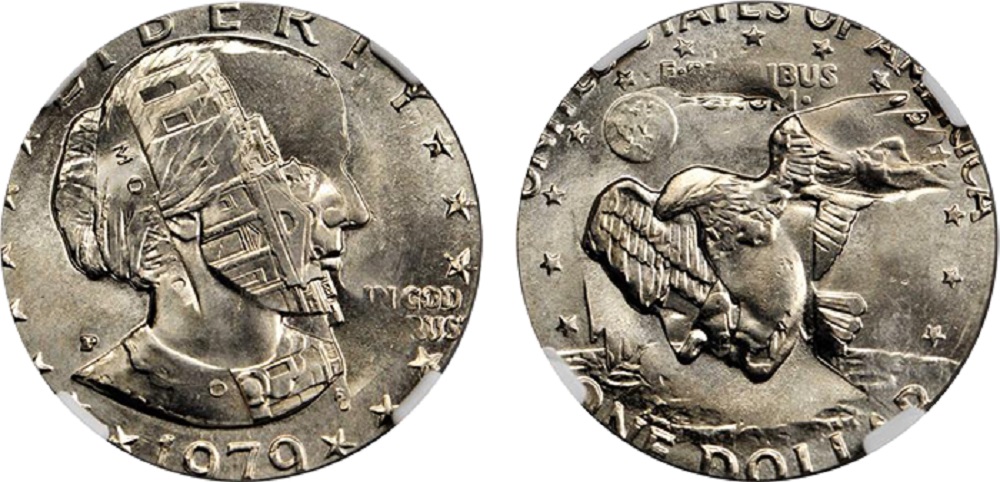 IN NECESSARIIS UNITAS - IN DUBIIS LIBERTAS - IN OMNIBUS CARITAS THE MAN IN THE ARENA, Theodore Roosevelt at the Sorbonne Paris on April 23, 1910: " It is not the critic who counts; not the man who points out how the strong man stumbles or where the doer of deeds could have done better. The credit belongs to the man who is actually in the arena, whose face is marred by dust and sweat and blood, who strives valiantly, who errs and comes up short again and again, because there is no effort without error or shortcoming, but who knows the great enthusiasms, the great devotions, who spends himself in a worthy cause; who, at the best, knows, in the end, the triumph of high achievement, and who, at the worst, if he fails, at least he fails while daring greatly, so that his place shall never be with those cold and timid souls who knew neither victory nor defeat." My coin website: https://fairfaxcoins.com |
|
Moderator
United States
195559 Posts |
Whoa!  |
|
Bedrock of the Community
United States
11966 Posts |
1861 confederate cent restrike by Bashlow from transfer of defaced dies in Goldine in the 1960s. 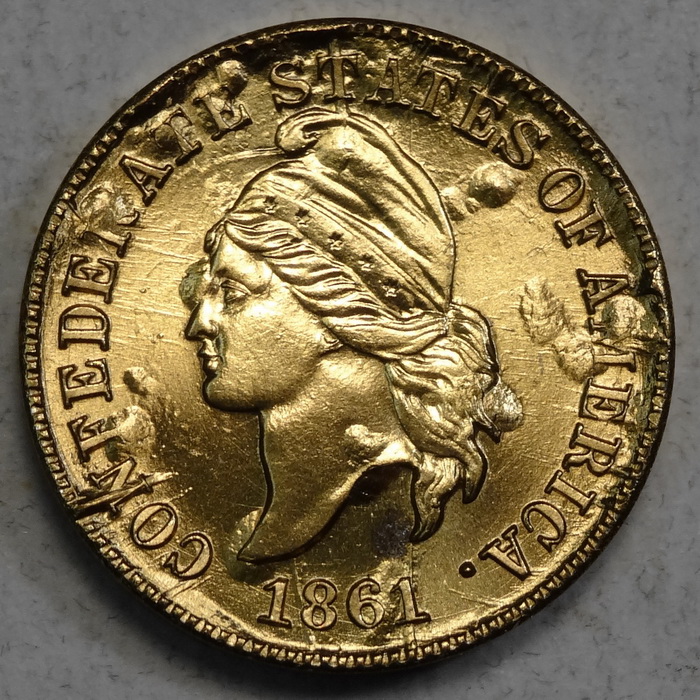 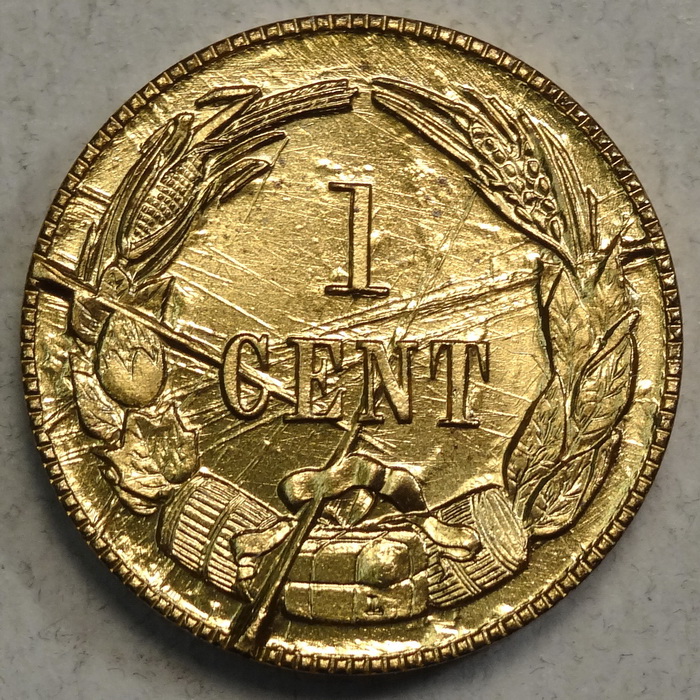 IN NECESSARIIS UNITAS - IN DUBIIS LIBERTAS - IN OMNIBUS CARITAS THE MAN IN THE ARENA, Theodore Roosevelt at the Sorbonne Paris on April 23, 1910: " It is not the critic who counts; not the man who points out how the strong man stumbles or where the doer of deeds could have done better. The credit belongs to the man who is actually in the arena, whose face is marred by dust and sweat and blood, who strives valiantly, who errs and comes up short again and again, because there is no effort without error or shortcoming, but who knows the great enthusiasms, the great devotions, who spends himself in a worthy cause; who, at the best, knows, in the end, the triumph of high achievement, and who, at the worst, if he fails, at least he fails while daring greatly, so that his place shall never be with those cold and timid souls who knew neither victory nor defeat." My coin website: https://fairfaxcoins.com |
|
Moderator
United States
195559 Posts |
That one is interesting.  |
|
Bedrock of the Community
United States
10284 Posts |
Looking at my prized 1913 S Type II Buffalo nickel, I thought I'd do a little write-up about this series. 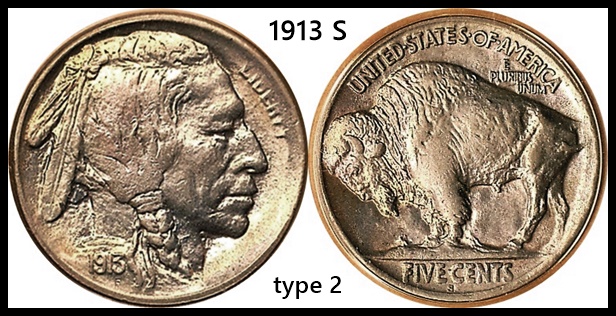 All taken from Wikipedia and IMDb with my 2 cents worth. All taken from Wikipedia and IMDb with my 2 cents worth.On the Buffalo nickel sculptor James Earle FraserIn a 1947 radio interview, Fraser discussed his design: Well, when I was asked to do a nickel, I felt I wanted to do something totally American, a coin that could not be mistaken for any other country's coin. It occurred to me that the buffalo, as part of our western background, was 100% American, and that our North American Indian fitted into the picture perfectly. The visage of the Indian which dominates Fraser's obverse design was a composite of several Native Americans. Breen noted (before the advent of the Sacagawea dollar) that Fraser's design was the second and last US coin design to feature a realistic portrait of an Indian, after Bela Pratt's 1908 design for the half eagle and quarter eagle. The identity of the Indians whom Fraser used as models is somewhat uncertain, as Fraser told various and not always consistent stories during the forty years he lived after designing the nickel. In December 1913, he wrote to Mint Director Roberts that "before the nickel was made I had done several portraits of Indians, among them Iron Tail, Two Moons, and one or two others, and probably got characteristics from those men in the head on the coins, but my purpose was not to make a portrait but a type." Fraser's design was adapted for a 2001 commemorative silver dollar. The mound is similar to the Type I reverse initially used in 1913. 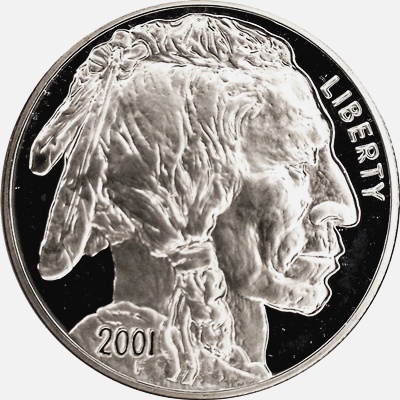 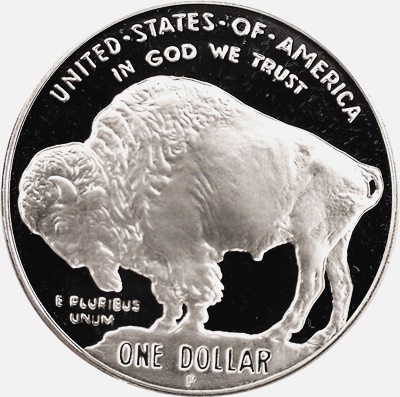 By 1931, Two Guns White Calf, son of the last Blackfoot tribal chief, was capitalizing off his claim to be the model for the coin. To try to put an end to the claim, Fraser wrote that he had used three Indians for the piece, including "Iron Tail, the best Indian head I can remember. The other one was Two Moons, the other I cannot recall." In 1938, Fraser stated that the three Indians had been "Iron Tail, a Sioux, Big Tree, a Kiowa, and Two Moons, a Cheyenne". 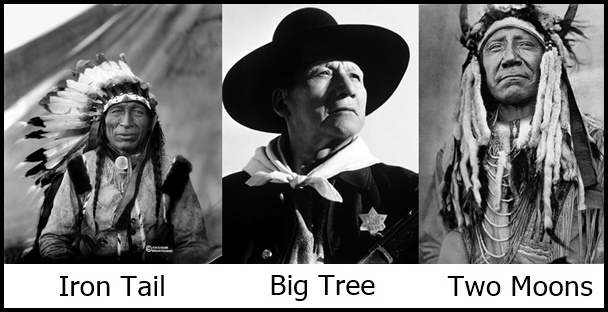 TheNickelGuy note: I'll add this in here, while Big Tree was very most likely not one of the three to be modeling as part of the portrait, he claimed to be the model for the rider in this sculpture too also by the same James Earle Fraser titled "End of the Trail" but this is most likely also not true.
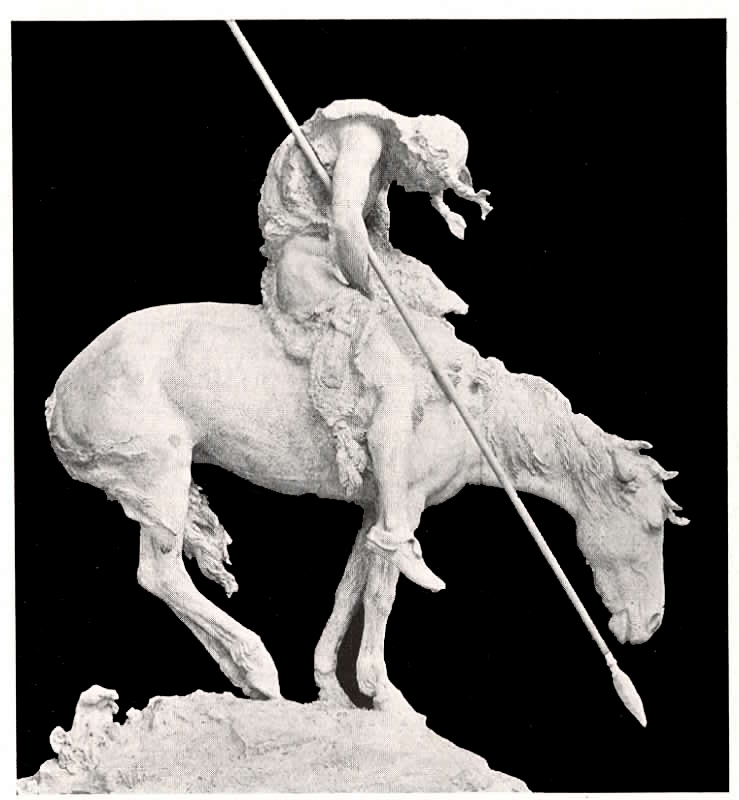
Lots of funny business here with these fellows trying to make a buck on a nickel. But you can't blame them for trying.
Chief John Big Tree was an actor, known for She Wore a Yellow Ribbon (1949), Drums Along the Mohawk (1939) and Devil's Doorway (1950). He even appeared on CBS's "I've Got a Secret" TV show on December 11, 1961. He died on July 6, 1967 in Onondaga Indian Reservation, New York. TNG
Despite the sculptor's efforts, he (and the Mint) continued to receive inquiries about the identity of the Indian model until his 1953 death. Nevertheless, John Big Tree, a Seneca, claimed to be a model for Fraser's coin, and made many public appearances as the "nickel Indian" until his 1967 death at the age of 92 (though he sometimes alleged he was over 100 years of age). Big Tree was identified as the model for the nickel in wire service reports about his death, and he had appeared in that capacity at the Texas Numismatic Association convention in 1966. After Big Tree's death, the Mint stated that he most likely was not one of the models for the nickel. There have been other claimants: in 1964, Montana Senator Mike Mansfield wrote to Mint Director Eva B. Adams, enquiring if Sam Resurrection, a Choctaw was a model for the nickel. Adams wrote in reply, "According to our records, the portrait is a composite. There have been many claimants for this honor, all of whom are undoubtedly sincere in the belief that theirs is the one that adorns the nickel." Reverse of the American Buffalo gold coins, struck beginning in 2006 According to Fraser, the animal that appears on the reverse is the American bison Black Diamond. In an interview published in the New York Herald on January 27, 1913, Fraser was quoted as saying that the animal, which he did not name, was a "typical and shaggy specimen" which he found at the Bronx Zoo. Fraser later wrote that the model "was not a plains buffalo, but none other than Black Diamond, the contrariest animal in the Bronx Zoo. I stood for hours ... He refused point blank to permit me to get side views of him, and stubbornly showed his front face most of the time." However, Black Diamond was never at the Bronx Zoo, but instead lived at the Central Park Zoo until he was sold and slaughtered in 1915. Black Diamond's mounted head is still extant, and has been exhibited at coin conventions. The placement of Black Diamond's horns differs considerably from that of the animal on the nickel, leading to doubts that Black Diamond was Fraser's model. One candidate cited by Bowers is "Bronx", a bison who was for many years the herd leader of the bison at the Bronx Zoo. Hope you found this interesting. Thanks TNG |
|
Bedrock of the Community
United States
10284 Posts |
Ironic that I looked into that link above after writing and copying and pasting and uploading pictures and find a connection between Chief John Big Tree and Felix Schlag the Jefferson nickel sculptor where Schlag sculpted a medal depicting Fraser and Big Tree as Big Tree poses for him for the Buffalo nickel. February 1968 Silver Medal of the National Commemorative Society, United States.  So what is the truth? I don't think we'll ever really know. I'll tend to stick with the portrait as being a composite fantasy "Indian Head" using a few different fellows charateristics for the profile of a strong Native American likeness. |
|
Bedrock of the Community
United States
11966 Posts |
Great information TNG Your 1913-S T2 nickel is stunning! Thanks for sharing  IN NECESSARIIS UNITAS - IN DUBIIS LIBERTAS - IN OMNIBUS CARITAS THE MAN IN THE ARENA, Theodore Roosevelt at the Sorbonne Paris on April 23, 1910: " It is not the critic who counts; not the man who points out how the strong man stumbles or where the doer of deeds could have done better. The credit belongs to the man who is actually in the arena, whose face is marred by dust and sweat and blood, who strives valiantly, who errs and comes up short again and again, because there is no effort without error or shortcoming, but who knows the great enthusiasms, the great devotions, who spends himself in a worthy cause; who, at the best, knows, in the end, the triumph of high achievement, and who, at the worst, if he fails, at least he fails while daring greatly, so that his place shall never be with those cold and timid souls who knew neither victory nor defeat." My coin website: https://fairfaxcoins.comEdited by numismatic student
06/10/2017 10:46 am
|
|
Moderator
United States
195559 Posts |
Excellent write-up. |
|
Bedrock of the Community
United States
11966 Posts |
Would love this for my type set... 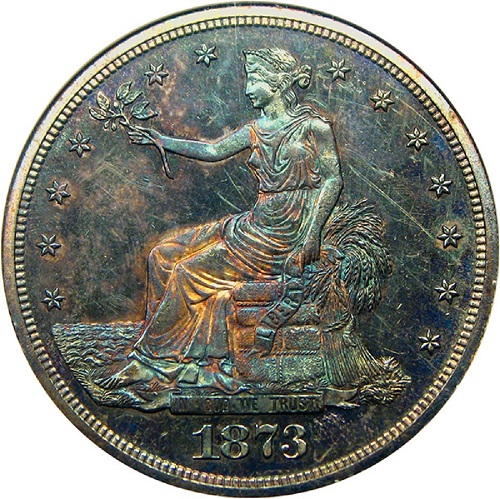 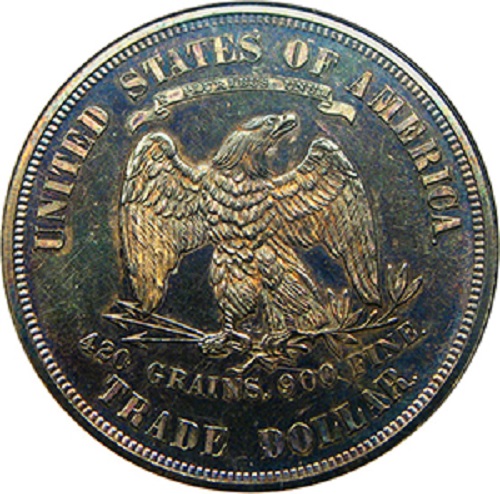 IN NECESSARIIS UNITAS - IN DUBIIS LIBERTAS - IN OMNIBUS CARITAS THE MAN IN THE ARENA, Theodore Roosevelt at the Sorbonne Paris on April 23, 1910: " It is not the critic who counts; not the man who points out how the strong man stumbles or where the doer of deeds could have done better. The credit belongs to the man who is actually in the arena, whose face is marred by dust and sweat and blood, who strives valiantly, who errs and comes up short again and again, because there is no effort without error or shortcoming, but who knows the great enthusiasms, the great devotions, who spends himself in a worthy cause; who, at the best, knows, in the end, the triumph of high achievement, and who, at the worst, if he fails, at least he fails while daring greatly, so that his place shall never be with those cold and timid souls who knew neither victory nor defeat." My coin website: https://fairfaxcoins.com |
| |
Replies: 814 / Views: 111,871 |
To participate in the forum you must log in or register.
Disclaimer: While a tremendous amount of effort goes into ensuring the accuracy of the information contained in this site, Coin Community assumes no liability for errors. Copyright 2005 - 2026 Coin Community Family- all rights reserved worldwide. Use of any images or content on this website without prior written permission of Coin Community or the original lender is strictly prohibited.
Contact Us | Advertise Here | Privacy Policy / Terms of Use
|
| Coin Community Forum |
© 2005 - 2026 Coin Community Forums |
| It took 0.59 seconds to rattle this change. |
 |
|








 First Page
 Previous Page


 Posted 06/04/2017 12:54 am


