| Author |
 Replies: 814 / Views: 111,888 Replies: 814 / Views: 111,888 |
|
|
|
Pillar of the Community
United States
8904 Posts |
|
|
Moderator
 United States
195559 Posts |
Quote:Victor D. Brenner's (designer of the Lincoln Penny) design for the $1 coin. Interesting what could have been, even though it looks similar to the seated and Trade dollars. |
|
Bedrock of the Community
 United States
11966 Posts |
The design looks kind of old fashioned entering the turn into the 20th century. Very different than the very simple Lincoln Cent design he is famous for. IN NECESSARIIS UNITAS - IN DUBIIS LIBERTAS - IN OMNIBUS CARITAS THE MAN IN THE ARENA, Theodore Roosevelt at the Sorbonne Paris on April 23, 1910: " It is not the critic who counts; not the man who points out how the strong man stumbles or where the doer of deeds could have done better. The credit belongs to the man who is actually in the arena, whose face is marred by dust and sweat and blood, who strives valiantly, who errs and comes up short again and again, because there is no effort without error or shortcoming, but who knows the great enthusiasms, the great devotions, who spends himself in a worthy cause; who, at the best, knows, in the end, the triumph of high achievement, and who, at the worst, if he fails, at least he fails while daring greatly, so that his place shall never be with those cold and timid souls who knew neither victory nor defeat." My coin website: https://fairfaxcoins.com |
|
Bedrock of the Community
United States
11966 Posts |
Here is a medal that Victor D. Brenner designed for the Art Institute of Chicago's Norman Wait Harris Prize. It is a massive 70mm. Seems to be channeling Hermon MacNeil's standing liberty design. Still feels classical rather than MacNeal's art deco feel. I think VDB was just more rooted in victorian classicism. 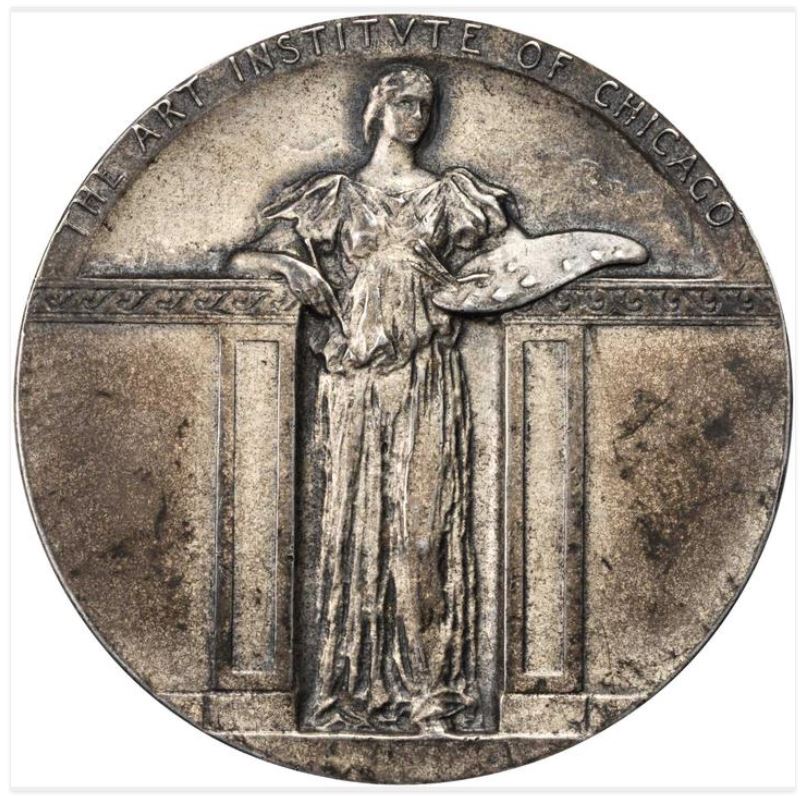 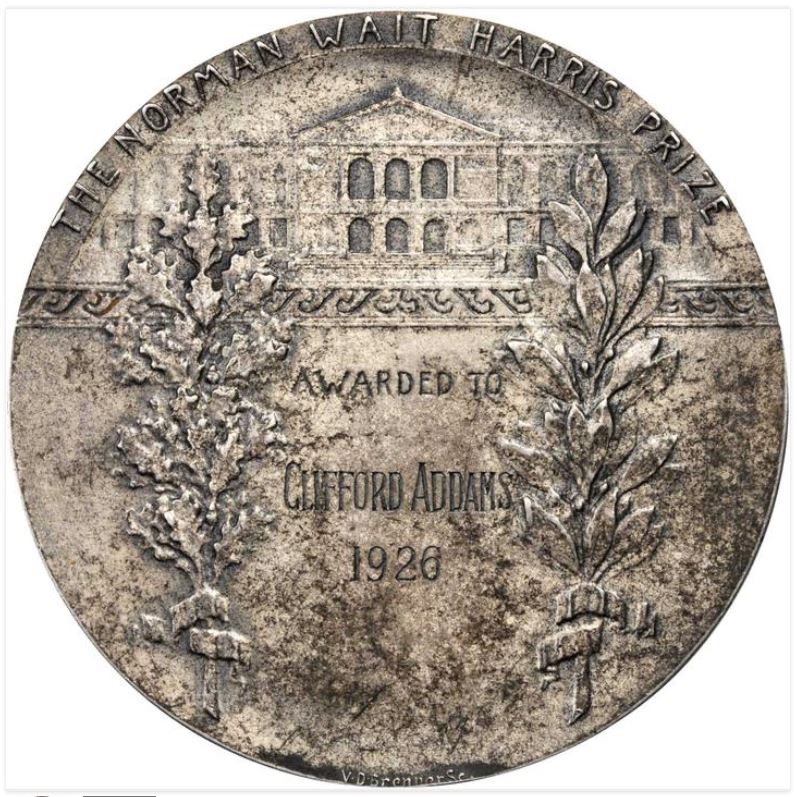 IN NECESSARIIS UNITAS - IN DUBIIS LIBERTAS - IN OMNIBUS CARITAS THE MAN IN THE ARENA, Theodore Roosevelt at the Sorbonne Paris on April 23, 1910: " It is not the critic who counts; not the man who points out how the strong man stumbles or where the doer of deeds could have done better. The credit belongs to the man who is actually in the arena, whose face is marred by dust and sweat and blood, who strives valiantly, who errs and comes up short again and again, because there is no effort without error or shortcoming, but who knows the great enthusiasms, the great devotions, who spends himself in a worthy cause; who, at the best, knows, in the end, the triumph of high achievement, and who, at the worst, if he fails, at least he fails while daring greatly, so that his place shall never be with those cold and timid souls who knew neither victory nor defeat." My coin website: https://fairfaxcoins.comEdited by numismatic student
08/07/2017 7:31 pm
|
|
Moderator
United States
195559 Posts |
Very nice!  |
|
Valued Member
United States
97 Posts |
That is an interesting piece and the 26 date would means it was most likely designed after the SLQ were put in circulation. The reverse has the Art Institute profile and I think that is an oak branch on the left. What is the right? Any idea of the significance of those two tree branches?
|
|
Bedrock of the Community
United States
10284 Posts |
My guess would be laurel a symbol of Victory
maybe Olive branch ( peace )?
Edited by TNG
08/08/2017 11:44 pm
|
|
Bedrock of the Community
United States
11966 Posts |
Silver certificates between March 1964 and June 24, 1968, were exchangeable at U.S. Assay Office facilities for silver bullion granules. The plastic box containing the granules does not resemble packaging used by the U.S. Mint. -Coin World 2011 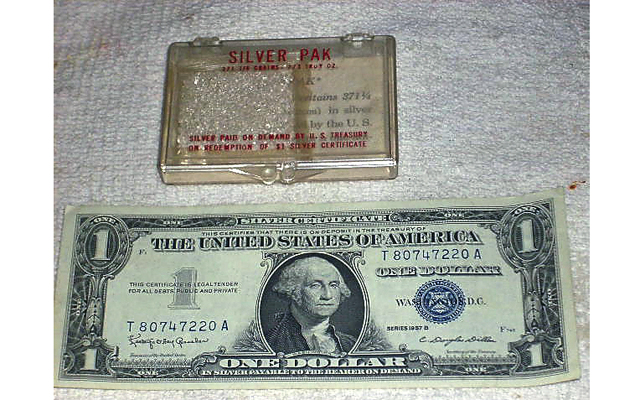 IN NECESSARIIS UNITAS - IN DUBIIS LIBERTAS - IN OMNIBUS CARITAS THE MAN IN THE ARENA, Theodore Roosevelt at the Sorbonne Paris on April 23, 1910: " It is not the critic who counts; not the man who points out how the strong man stumbles or where the doer of deeds could have done better. The credit belongs to the man who is actually in the arena, whose face is marred by dust and sweat and blood, who strives valiantly, who errs and comes up short again and again, because there is no effort without error or shortcoming, but who knows the great enthusiasms, the great devotions, who spends himself in a worthy cause; who, at the best, knows, in the end, the triumph of high achievement, and who, at the worst, if he fails, at least he fails while daring greatly, so that his place shall never be with those cold and timid souls who knew neither victory nor defeat." My coin website: https://fairfaxcoins.comEdited by numismatic student
08/10/2017 11:30 pm
|
|
Moderator
United States
195559 Posts |
Quote:
Silver certificates between March 1964 and June 24, 1968, were exchangeable at U.S. Assay Office facilities for silver bullion granules. Something new I learned today. |
|
Valued Member
United States
284 Posts |
This medal was designed in 1909 a few years before MacNiels SLQ and in the book "The Beaux-Arts of America" by Barbara A. Baxter, she states the following. 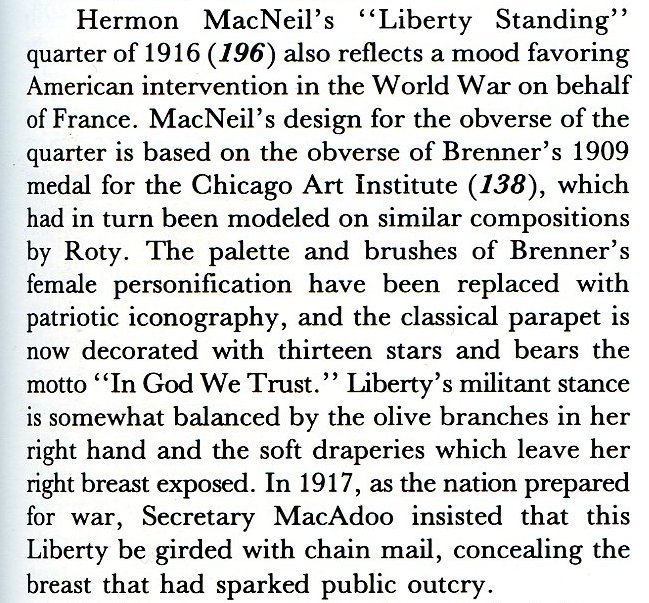 Here is another picture of the medal in bronze. 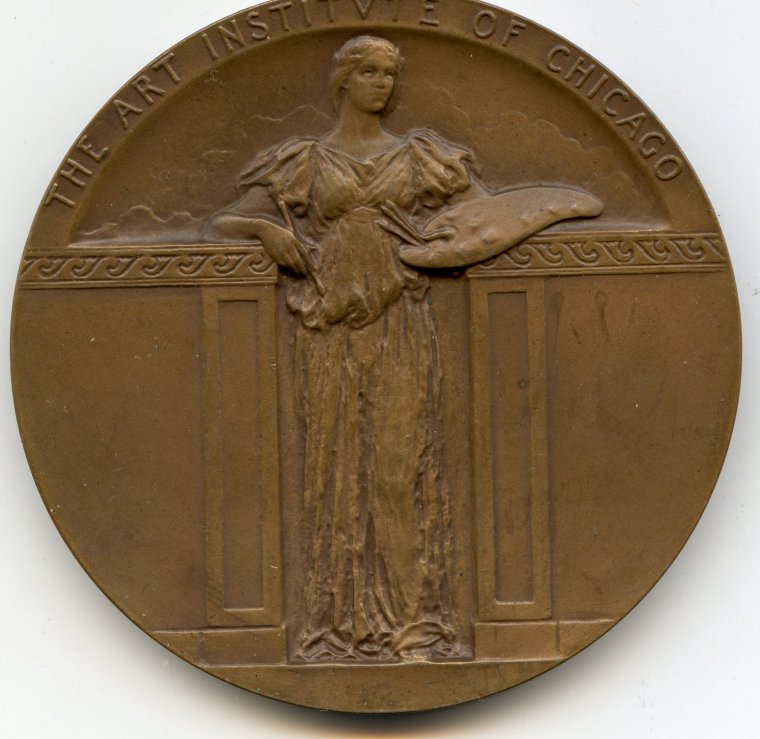 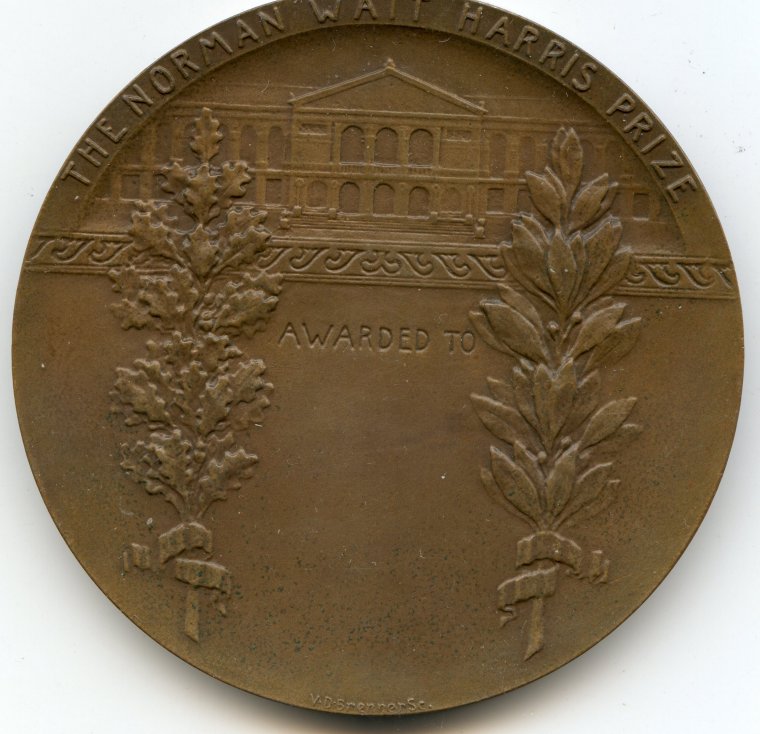 |
|
Bedrock of the Community
United States
11966 Posts |
Thanks for the helpful information Gary! IN NECESSARIIS UNITAS - IN DUBIIS LIBERTAS - IN OMNIBUS CARITAS THE MAN IN THE ARENA, Theodore Roosevelt at the Sorbonne Paris on April 23, 1910: " It is not the critic who counts; not the man who points out how the strong man stumbles or where the doer of deeds could have done better. The credit belongs to the man who is actually in the arena, whose face is marred by dust and sweat and blood, who strives valiantly, who errs and comes up short again and again, because there is no effort without error or shortcoming, but who knows the great enthusiasms, the great devotions, who spends himself in a worthy cause; who, at the best, knows, in the end, the triumph of high achievement, and who, at the worst, if he fails, at least he fails while daring greatly, so that his place shall never be with those cold and timid souls who knew neither victory nor defeat." My coin website: https://fairfaxcoins.com |
|
Moderator
United States
195559 Posts |
Quote:
Here is another picture of the medal in bronze. Very nice! |
|
Bedrock of the Community
United States
11966 Posts |
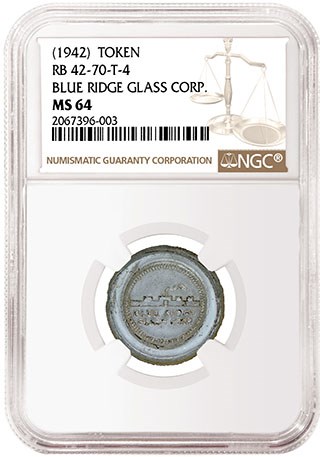 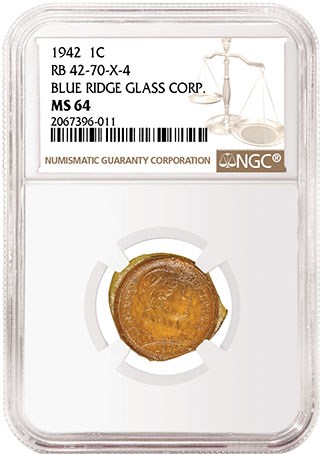 NGC Certifies 17 Experimental Glass Cents and Tokens Coin World July 25, 2017 Patterns struck during World War II by the Blue Ridge Glass Corporation Numismatic Guaranty Corporation® (NGC®) has certified 17 experimental cents and tokens struck in glass during World War II to test the unusual composition for coinage. Images of these rare pieces can be viewed at NGCcoin.com/GlassCents. 1942 experimental glass cent. Image courtesy NGCWith copper needed for the war effort, the United States Mint experimented in 1942 with a variety of alternative materials for cents. Pattern (or test) cents were struck in bronze, brass, zinc, zinc-coated steel, manganese, white metal, aluminum, lead, rubber, fiber, plastic and even glass. Ultimately, zinc-coated steel was selected for 1943 cents. The glass patterns were struck by Blue Ridge Glass Corporation of Kingsport, Tennessee, using blanks supplied by Corning Glass Works and dies prepared by US Mint engraver John Sinnock. The 1942-dated obverse was based on the then-circulating Columbia Two Centavos while the reverse featured a design proposed by Anthony Paquet in the 19th century. The group certified by NGC includes nine of these pattern glass cents, of which seven are intact and two are fragments. All are struck on amber-colored glass blanks. The grades of the intact specimens range from NGC MS 62 to NGC MS 64 while the fragmented pieces were attributed but not graded. Numismatists were previously aware of just two Blue Ridge glass pattern cents, one of which was a fragment. 1942 glass token. Image courtesy NGCAlso certified by NGC are eight glass tokens struck at the same time as the glass cents by the Blue Ridge Glass Corporation. Three of these tokens were struck with a die depicting the factory with the text of BLUE RIDGE GLASS CORP. above. The others feature more modest design elements. The tokens have been graded MS 64 to MS 66 by NGC except for two that are fragmented. The fragmented pieces reveal the reason glass coins were not practical for circulation—they would break too easily. Roger W. Burdette, author of the book United States Pattern and Experimental Pieces of World War II, noted that Blue Ridge Glass had some employees carry glass blanks in their pockets, but those blanks chipped, creating sharp edges. These experimental glass pieces have been cataloged by Burdette and will appear in the next edition of his book. NGC used Burdette's catalog numbers on its certification labels. The 17 experimental glass cents and tokens recently certified by NGC will be sold by Heritage Auctions on August 4, 2017, at the ANA World's Fair of Money in Denver. To view the sale, visit HA.com/1258 NGC has posted an image gallery of these rare and unusual experimental pieces. View them at NGCcoin.com/GlassCents. IN NECESSARIIS UNITAS - IN DUBIIS LIBERTAS - IN OMNIBUS CARITAS THE MAN IN THE ARENA, Theodore Roosevelt at the Sorbonne Paris on April 23, 1910: " It is not the critic who counts; not the man who points out how the strong man stumbles or where the doer of deeds could have done better. The credit belongs to the man who is actually in the arena, whose face is marred by dust and sweat and blood, who strives valiantly, who errs and comes up short again and again, because there is no effort without error or shortcoming, but who knows the great enthusiasms, the great devotions, who spends himself in a worthy cause; who, at the best, knows, in the end, the triumph of high achievement, and who, at the worst, if he fails, at least he fails while daring greatly, so that his place shall never be with those cold and timid souls who knew neither victory nor defeat." My coin website: https://fairfaxcoins.com |
|
Moderator
United States
195559 Posts |
Those are very interesting! |
|
Bedrock of the Community
United States
11966 Posts |
Took the kiddos to see a couple of depictions of Liberty in NYC. First, Frederic Auguste Bartholdi's Statue of Liberty and then Augustus Saint Gaudens' Statue of William Tecumseh Sherman led by Liberty on the southeast corner of Central Park. 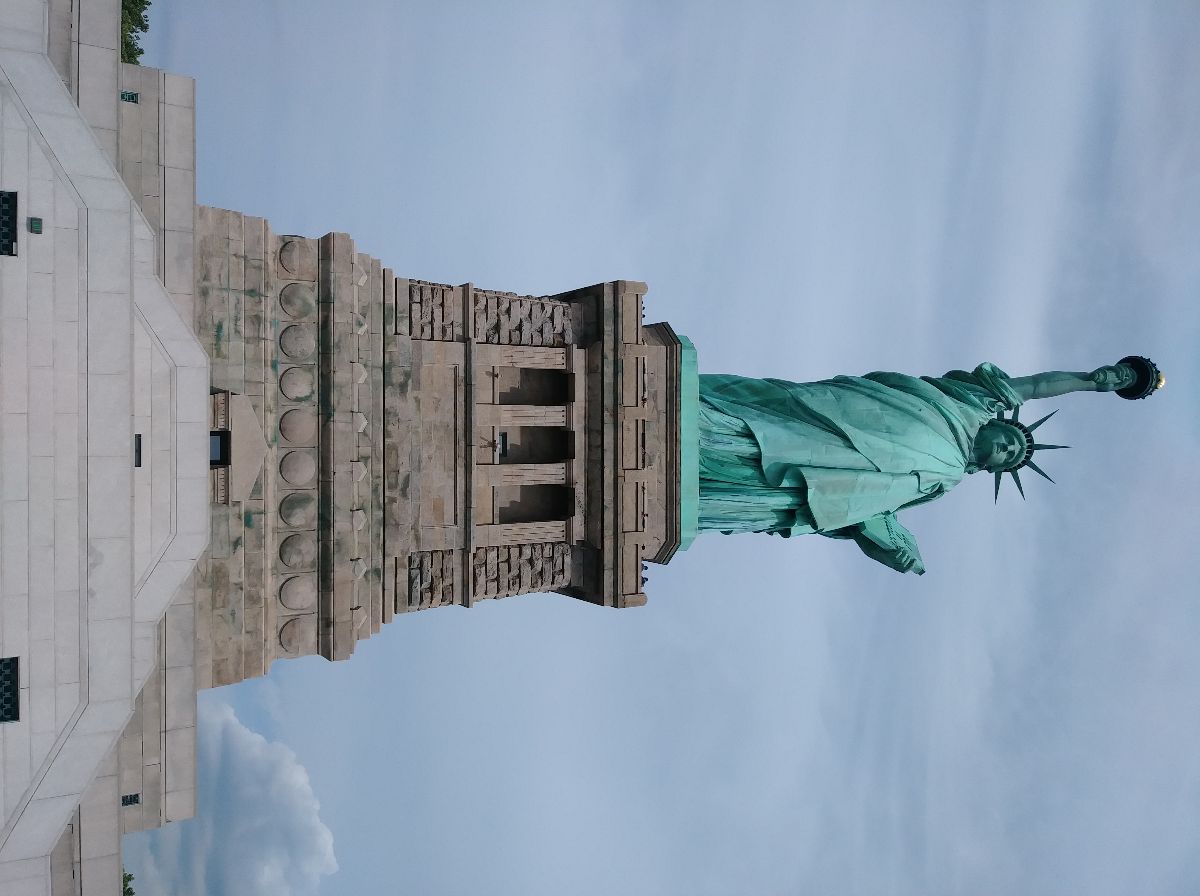 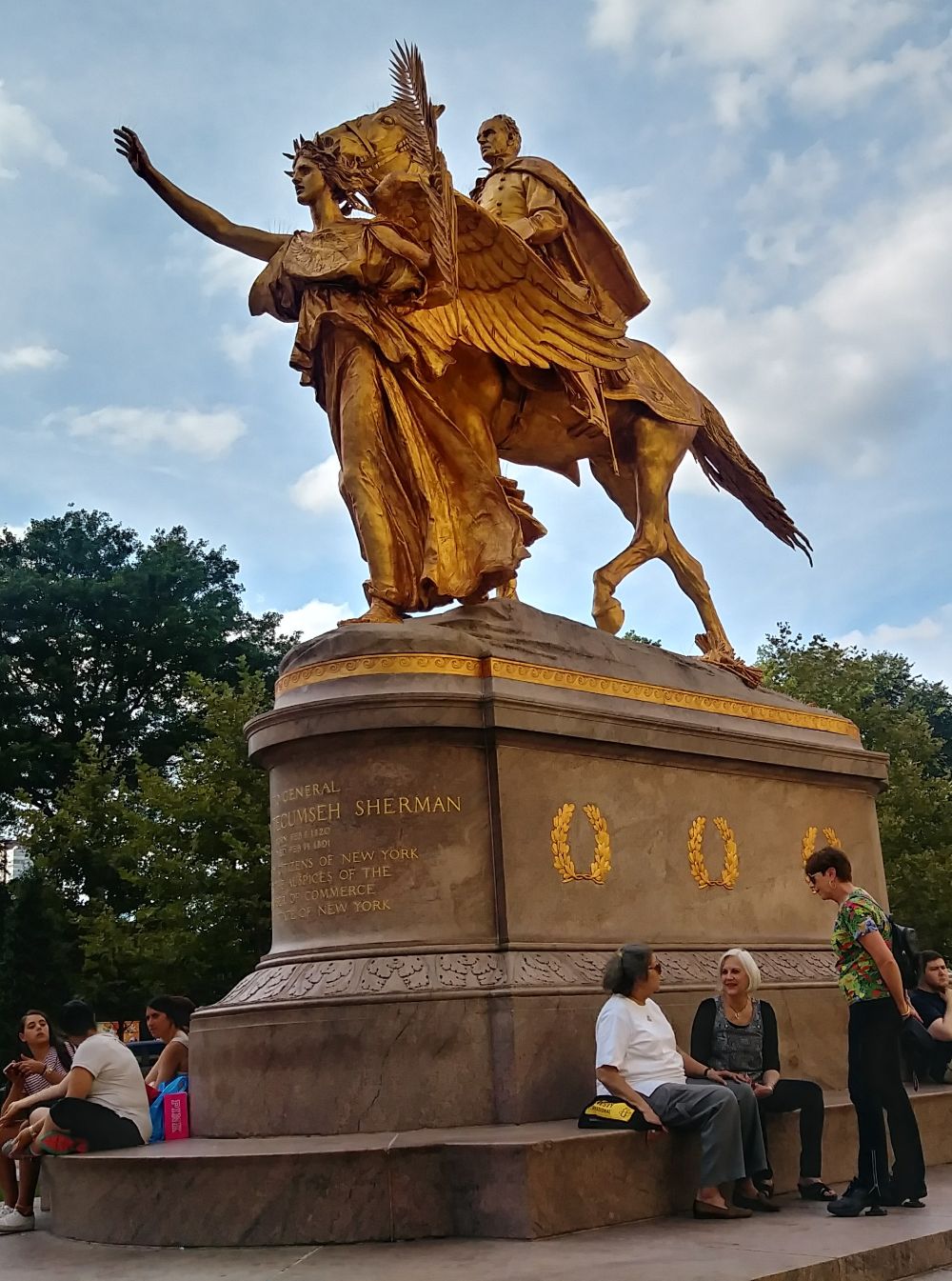 IN NECESSARIIS UNITAS - IN DUBIIS LIBERTAS - IN OMNIBUS CARITAS THE MAN IN THE ARENA, Theodore Roosevelt at the Sorbonne Paris on April 23, 1910: " It is not the critic who counts; not the man who points out how the strong man stumbles or where the doer of deeds could have done better. The credit belongs to the man who is actually in the arena, whose face is marred by dust and sweat and blood, who strives valiantly, who errs and comes up short again and again, because there is no effort without error or shortcoming, but who knows the great enthusiasms, the great devotions, who spends himself in a worthy cause; who, at the best, knows, in the end, the triumph of high achievement, and who, at the worst, if he fails, at least he fails while daring greatly, so that his place shall never be with those cold and timid souls who knew neither victory nor defeat." My coin website: https://fairfaxcoins.comEdited by numismatic student
08/18/2017 5:06 pm
|
| |
Replies: 814 / Views: 111,888 |
To participate in the forum you must log in or register.
Disclaimer: While a tremendous amount of effort goes into ensuring the accuracy of the information contained in this site, Coin Community assumes no liability for errors. Copyright 2005 - 2026 Coin Community Family- all rights reserved worldwide. Use of any images or content on this website without prior written permission of Coin Community or the original lender is strictly prohibited.
Contact Us | Advertise Here | Privacy Policy / Terms of Use
|
| Coin Community Forum |
© 2005 - 2026 Coin Community Forums |
| It took 0.52 seconds to rattle this change. |
 |
|








 First Page
 Previous Page


 Posted 08/07/2017 2:21 pm


