| Author |
 Replies: 480 / Views: 54,243 Replies: 480 / Views: 54,243 |
|
|
|
Bedrock of the Community
United States
79456 Posts |
You're very welcome and no problem! That was a very fast response! I like it.  Definitely a great thread with interesting coin compositions! Errers and Varietys.
|
|
Pillar of the Community
 United States
574 Posts |
@nautilator, Ok, I found the auction lot reference to there being 2.5% phosphorus in the phosphor bronze tokens but I'm not sure how accurate that information is at the is point. The reference is in lot 307 in the below link: http://www.exonumia.com/sale11/alla.htm"307. (PA: Philadelphia): Phosphor Bronze, Elephant. Interesting mark that was used to stamp planchets attached to bails of telegraph wire and spring wire, 'Phosphor Bronze' was a patented alloy of copper and tin, with 2.5 percent phosphorus. See Brunk for details. "(elephant)/Phosphor Bronze"/"Pat. May 23.71"/"Nov.14.71"/"Aug.20.72" on uniface 27 mm disk. VF. $50.00-60.00+" Edited by casualcoincollector
08/06/2018 04:27 am
|
|
Valued Member
United States
333 Posts |
The phosphor medal may be something to research down the line. It's certainly the first time I've seen phosphorus make its way into numismatics. I'm kind of surprised that nothing else is coming up looking for "phosphor bronze" tokens.
|
|
Pillar of the Community
United States
574 Posts |
It doesn't really surprise me that there doesn't seem to be much use of phosphorus in numismatics since pure phosphorus is pretty reactive and I would assume that it would be rather hard to introduce into it various alloys.
Edited by casualcoincollector
08/08/2018 04:32 am
|
|
Pillar of the Community
United States
574 Posts |
Here is a question for you guys. The Mexican New Peso small change starting in 1992 was made of Stainless steel that contains 16% ~ 18% chromium, 0.75% nickel, maximum 0.12% carbon, maximum 1% silicon, maximum 1% manganese, maximum 0.03% sulfur, maximum 0.04% phosphorus, maximum remaining of iron. As seen in the link below. https://en.wikipedia.org/wiki/Mexican_pesoNow my question is does anyone here happen to know if the silicon, sulfur, and phosphorus content of the stainless steel for these coins were added on purpose or are just natural impurities that were not refined out of the steel? I personally have been leaning toward natural impurities since the percentages are so low and the fact that all three of those elements can be natural impurities in steel but I honestly don't know. Anyway, if anyone here has any thoughts or insights on the matter please let me know. Thanks. Edited by casualcoincollector
08/12/2018 05:26 am
|
|
Valued Member
United States
333 Posts |
They say maximum so I'd just file that away as impurities. I wouldn't bother counting anything that's less than 1% anyway, even if it was intentionally added in.
|
|
Moderator
 United States
196278 Posts |
Quote:
They say maximum so I'd just file that away as impurities. That is my take. Anything listed as maximum is probably something they tried to remove rather than add. |
|
Valued Member
United States
333 Posts |
I got these three poker chips last week. Notice anything noteworthy about them? 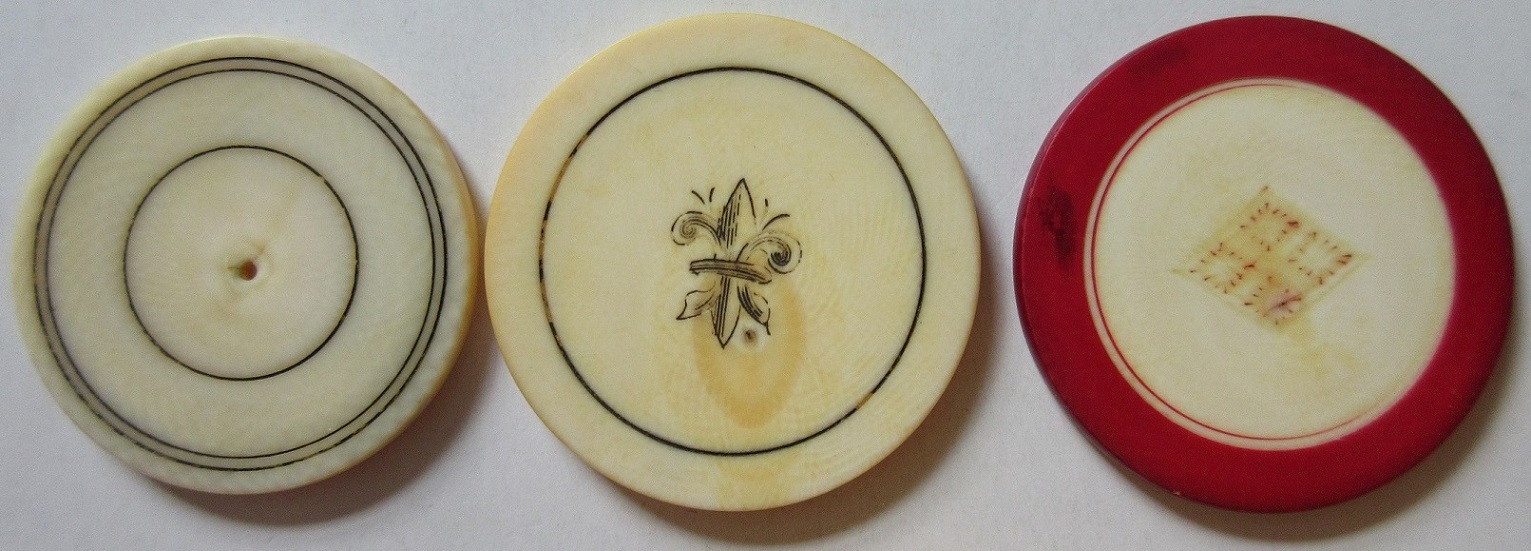 Edited by nautilator
08/21/2018 10:25 pm
|
|
Pillar of the Community
United States
574 Posts |
@nautilator,
Well, it looks to me like they could be made of some kind of animal ivory but I would have to examine them in hand to be sure. Regardless, they look pretty interesting. Thanks for posting them.
|
|
Valued Member
United States
333 Posts |
Yes, they're ivory. Actual ivory. Due to perpendicular cutting they have a fingerprint-like grain to them, and you can also see the nerve holes at the center of the tusk. I found that information from visiting a poker chip site, and it's so simple I am surprised that it isn't common knowledge. The Keelings Cocos tokens have no grain whatsoever to them, for example.
I'm relatively sure that chips like these are the only numismatic items made of ivory.
|
|
Pillar of the Community
United States
574 Posts |
That's pretty cool! Quote:
I'm relatively sure that chips like these are the only numismatic items made of ivory. In regards to ivory poker chips being the only numismatic items made of ivory. That really depends upon how broadly you want to define the term "numismatic items" since there is one other group of items that that comes to mind that are definitely made of true animal ivory and that is opera/theater tokens. Opera/theater tokens were Ivory tokens that were used by the social elite as tickets to access their boxes at the opera or theater. Some seen in the links below. https://www.collectorsweekly.com/st...ken-necklacehttp://millenniumgeneralassembly.bl...-passes.htmlEdited by casualcoincollector
08/23/2018 04:02 am
|
|
Pillar of the Community
United States
574 Posts |
Here's a new one that I acquired recently and one that I plan on adding to my circulating materials set. It's "A Dam Quarter" from Coulee Dam Washington. This token is supposedly a trade token from the 1940's and is made out of a slice of a granite core drilling taken from the Grand Coulee Dam site. I haven't been able to find much other information on this one. So, if anyone here has any additional information on this token or knows where I can find some, please let me know. Thanks. 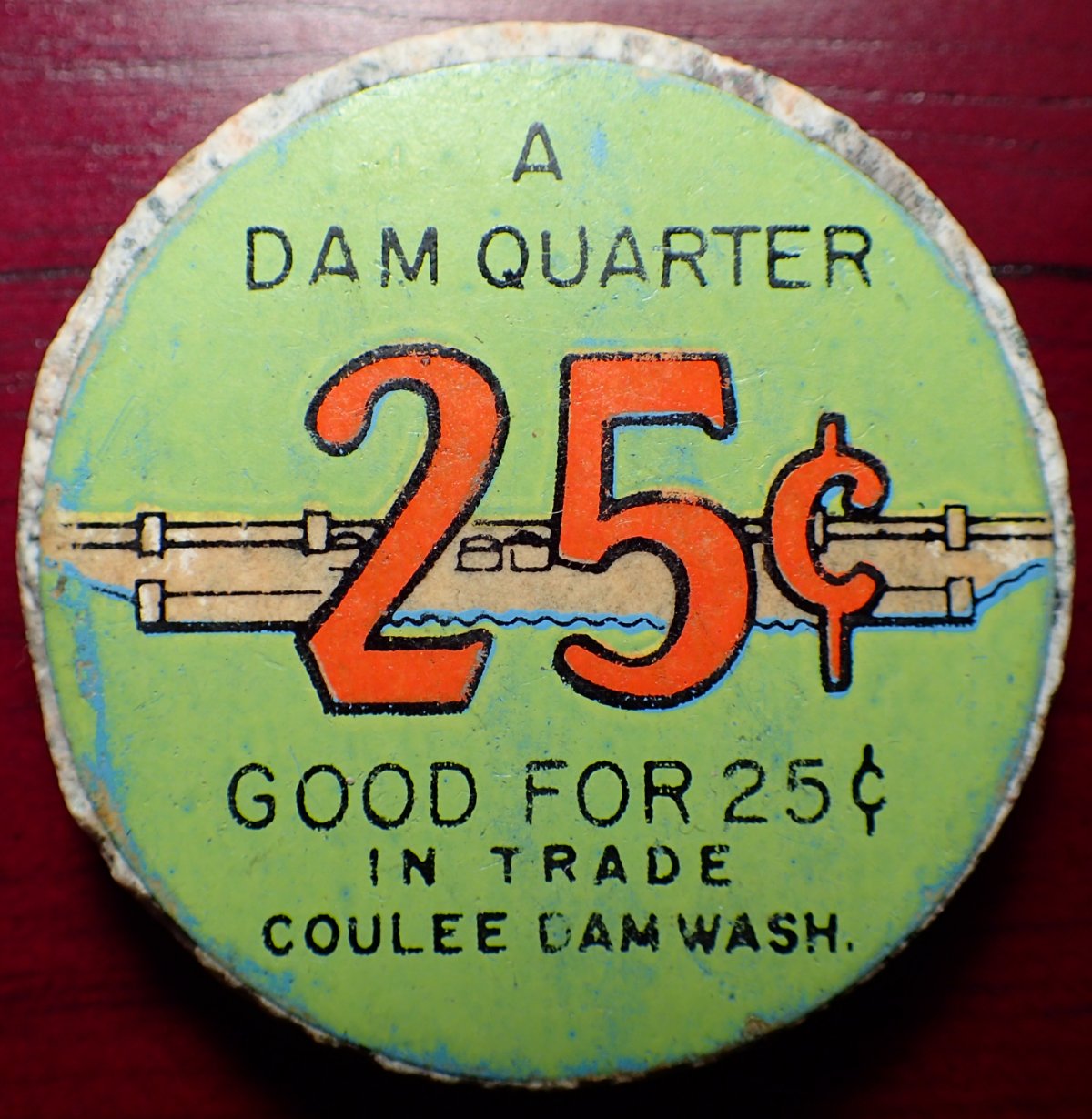 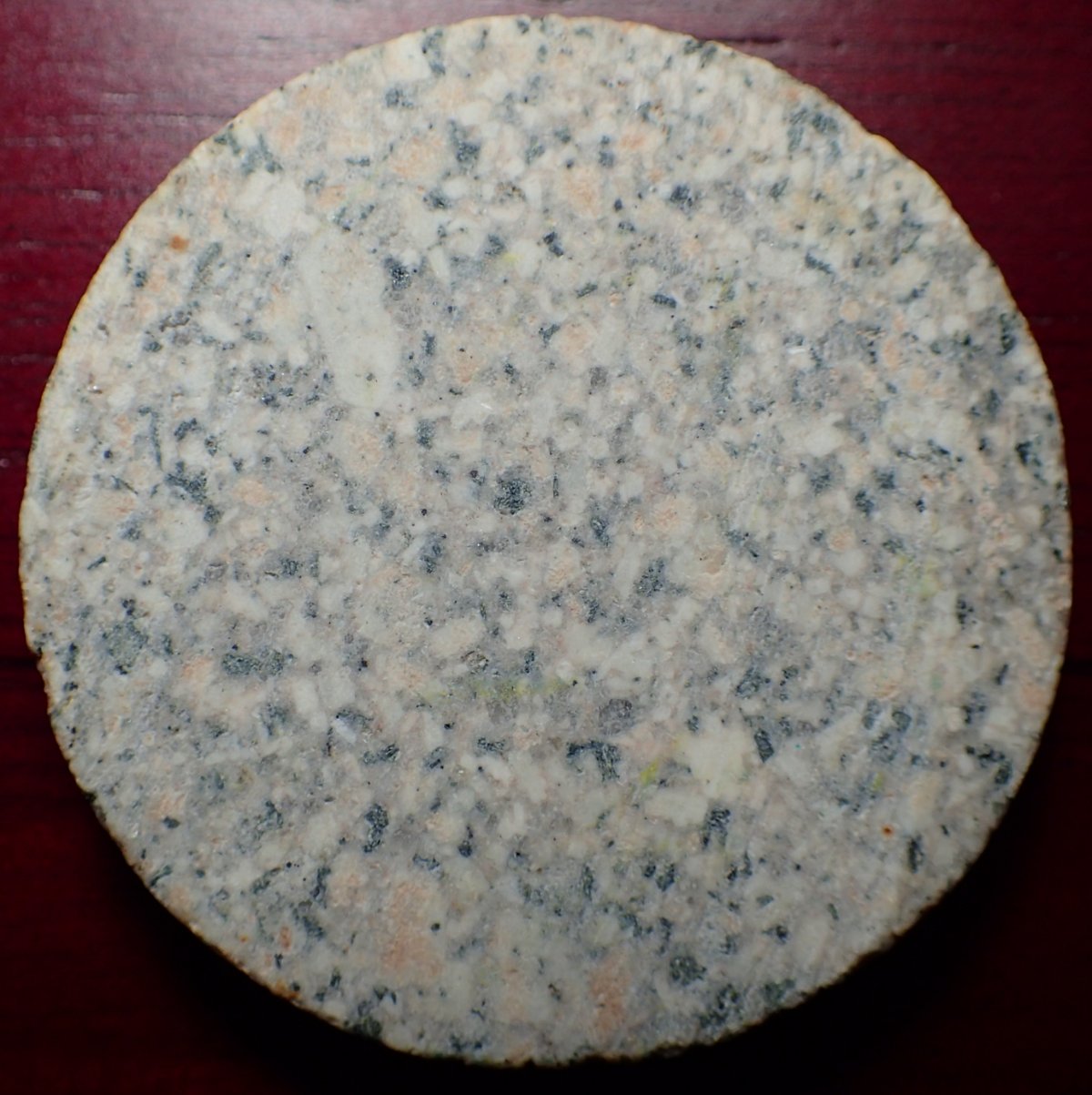 Edited by casualcoincollector
08/28/2018 6:21 pm
|
|
Moderator
United States
196278 Posts |
That is really cool. |
|
Pillar of the Community
United States
574 Posts |
|
|
Pillar of the Community
United States
574 Posts |
|
| |
Replies: 480 / Views: 54,243 |







 First Page
 Previous Page


 Posted 08/06/2018 04:18 am


