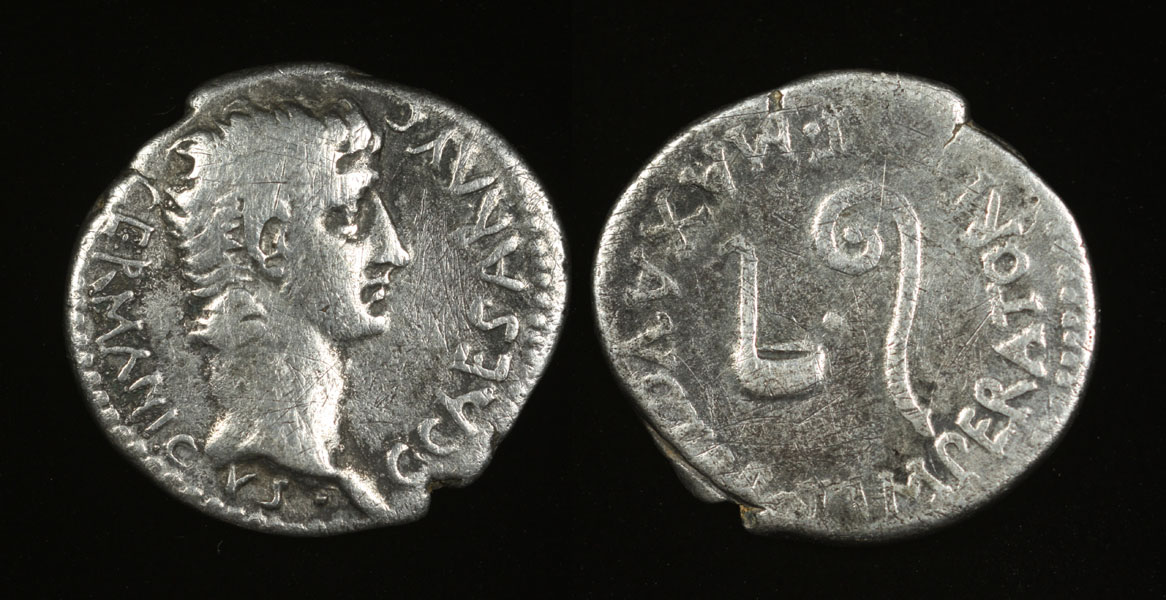
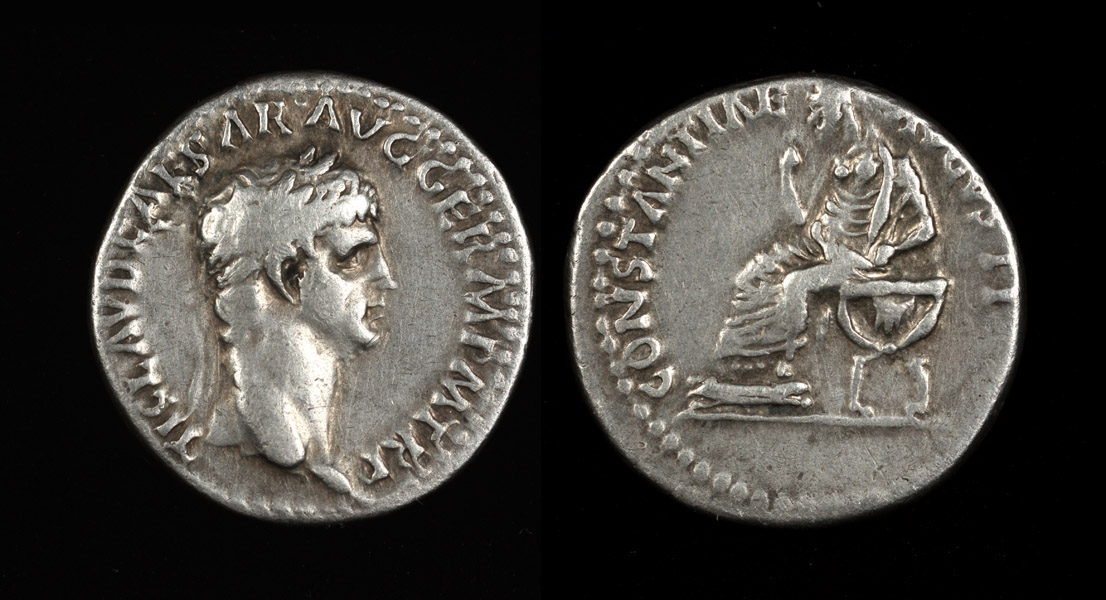
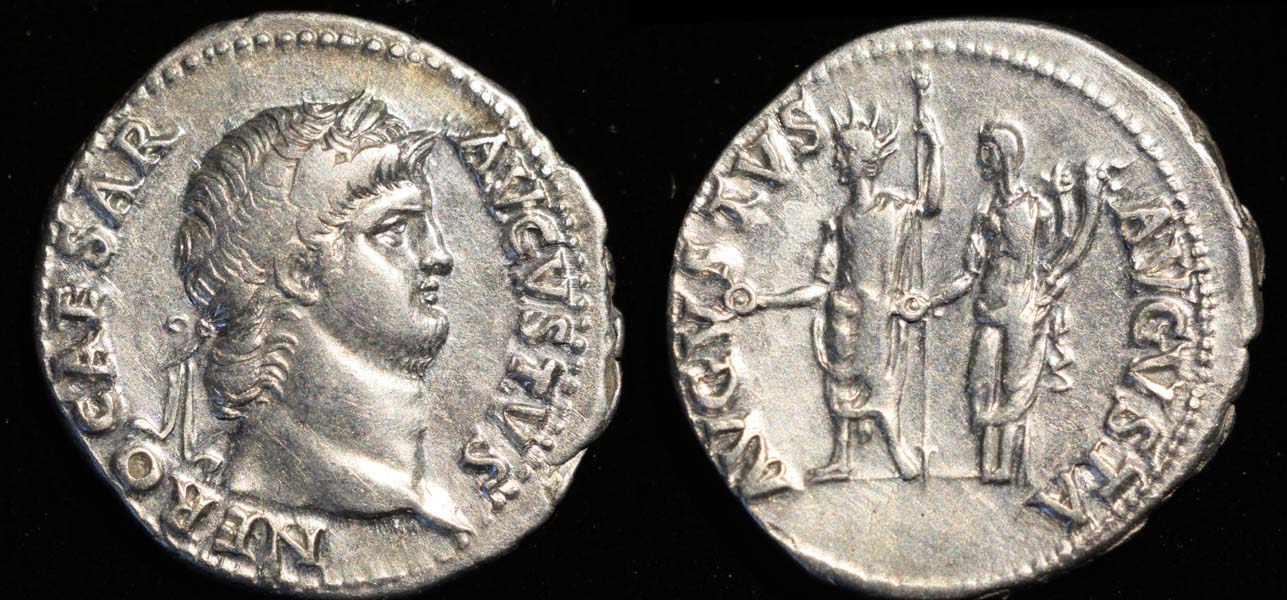
I certainly have no disagreement with the sense that one may complete a 12 Caesars set any way one likes. However, as I said before, I had set out to complete a set in silver, by which I had intended to mean a set of denarii. However, I was not aware the mint at Ceasarea, Cappadocia is listed in
BMCRE as one of the regular Imperial mints for this period, and was producing in silver, albeit drachmae. Since these are listed alongside the output of other mints at the time, it would seem that one can construct a set in silver which co-mingles denarii and drachmae. So my 12 Caesars set is 100% complete for Imperial silver, and 95.5% complete as a set of denarii. Therefore, it is ready to be shown to anyone interested in seeing it. As orfew once said, these things are always a work in progress, so who knows how this will change. Moreover, I have only selected one example of each emperor to show this time around, but others may get the spotlight down the road. Anyway, enough. Let's get to it.
The historical stories of the 12 Caesars have been told and retold in this forum and elsewhere. Those stories are what attract us to their coins in the first place. The convention of collecting the first 12 Caesars as a group is derived from the classic history by Suetonius which he limited to a history of the first 12 Caesars. In antiquity the number 12 had numerological significance as a number of completeness in human matters, and this sense carried over into all aspects of life in the ancient world, even among Christians and Jews as well as pagans. So a history of the first twelve emperors marked a milestone. Even today these 12 figures are mostly well known as historical personages, with certain exceptions, especially in this forum, so I will not endeavor to capsulize their life stories here. Instead I wish to take a more direct look at the particular coins I have selected to represent them.
I will introduce the emperors and their coins in groups of three.
Julius Caesar (44 BC)
(Crawford 480/19; RSC 8; BMC(republican) 4187
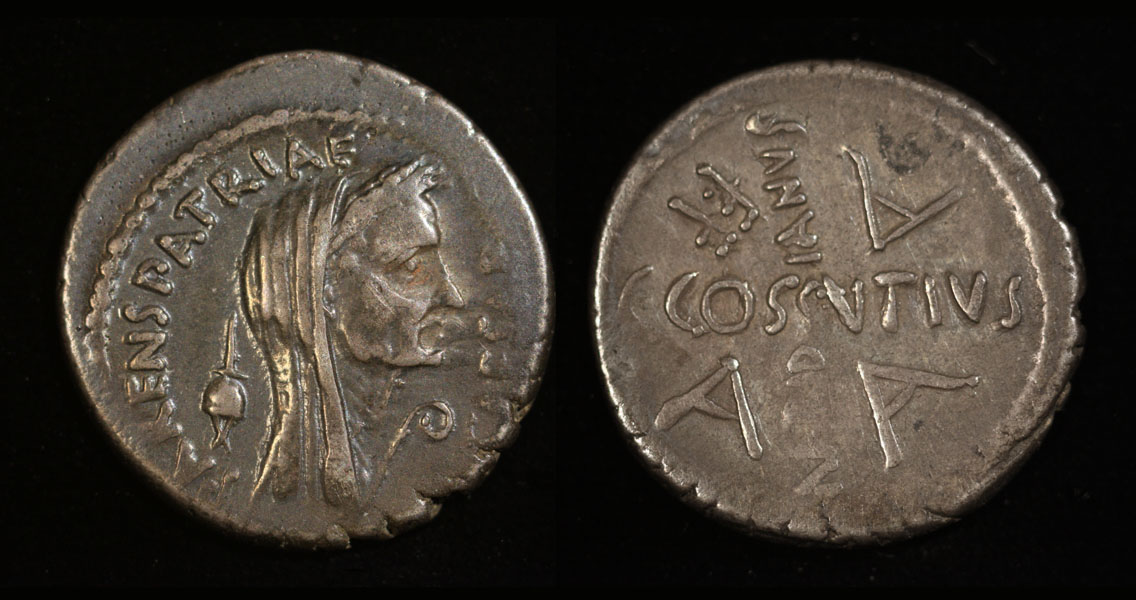
This is a coin of the moneyer C. Cossutius Maridianus issued very shortly after the death of Caesar in early 44BC. The obverse bears a portrait of Julius Caesar laureate and veiled. It is one of the first types to bear the title PARENS PATRIAE, ascending on the left. His name CAESAR ascends on the right. In the fields left and right respectively are an
apex, a pointed priestly cap the emperor was entitled to wear as one of the
flamines, and a
lituus, inspired by the staff shepherds used to redirect or rescue sheep, but used as a wand to mark out sacred space in the sky above the worshiping conclave.
The reverse has the name of the moneyer arranged in a crossword pattern, C.COSSVTIVS + MERID IANVS, with the letters A A A FF at angels in the 4 corners as if radiating from the center. These letters stood for the words
aere argento auro (the three metals bronze, silver, and gold)
flando feriundo (referring to the making of coins). Crawford puts this coin in the class of those that were propaganda for the
treviri monetales. The office of "moneyer" was an old honorarium in the Republic, and as a pathway to privilege had been fixed at three as early as 289 BC. That number had been increased to four by Julius Caesar in 44 BC as part of an effort to increase the number of minor magistrates in the imperial administration (promoting upward mobility and gratitude to the emperor). But after his death that number was not long in returning to the historical three.
Augustus Caesar/ Octavian (8-6 BC)
(BMCRE 502)
Minted at Lugdunum (Lyon)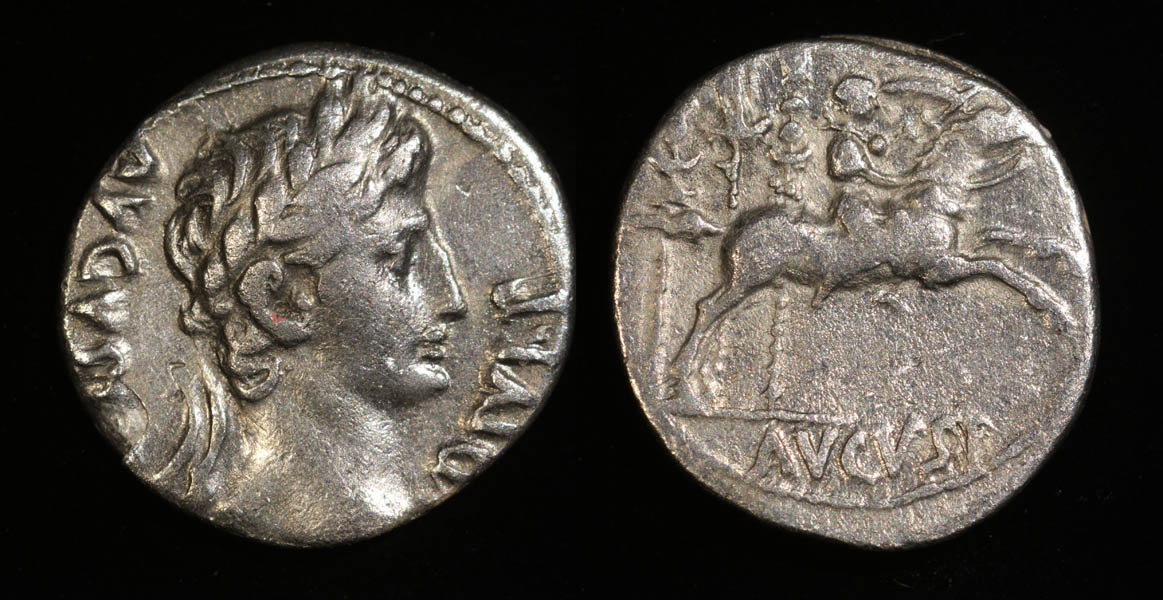
The obverse inscriptions read AVGVSTVS downward on left, and DIVI F upward on right. The use of the word
DIVI on later coins tended to be a posthumous reference to the deceased (and deified) imperial person, however, here it was intended as a familial reference to a deceased parent.
Rev.: C.CAES (off flan) above; AVGVS.F below in exergue.
The reverse features an image of G/Caius Caesar, an adopted grandson of Augustus (not Caligula), on horseback, brandishing sword and shield, riding past a pair of vexilla (signal standards) on either side of an aquila (eagle standard). Mattingly observes that this reverse type is particularly well suited to Gaul.
Tiberius Caesar (16-21 AD)
(BMCRE 36)
Minted at Lugdunum
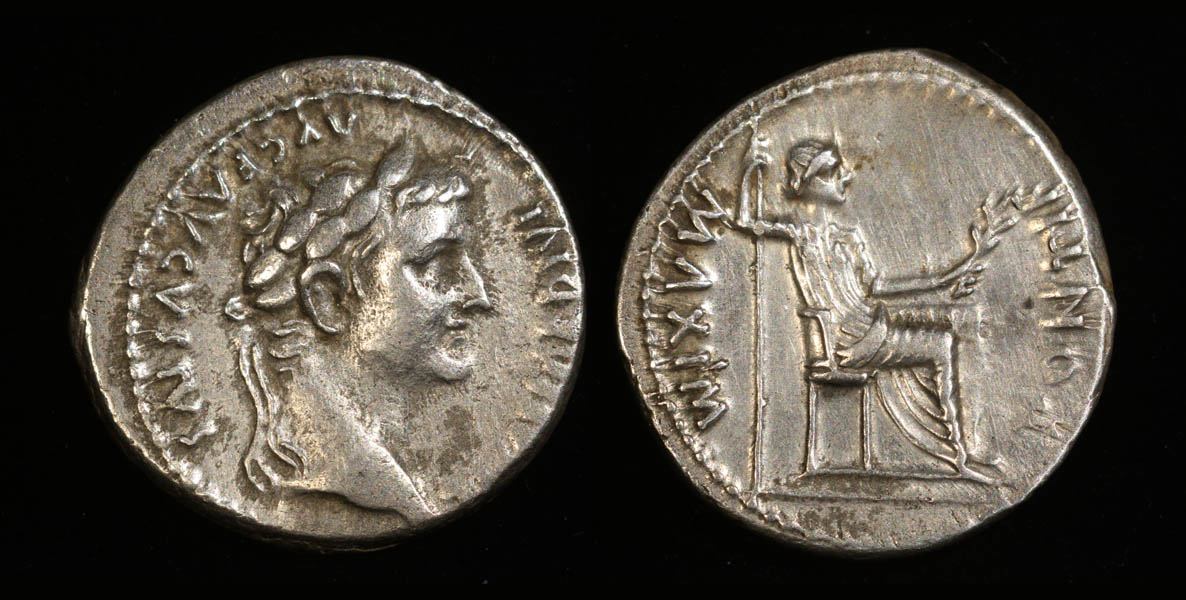
The so-called "tribute penny" was simply the most common style of denarius to be produced during the reign of Emperor Tiberius. Two other denarii were in production during the first year of his reign, but the seated "Livia as Pax" reverse alone continued in production at Lugdunum (Lyon) throughout his reign. Production at Rome was limited to bronze entirely. Beyond Lugdunum the mint at Caesarea Cappadocia alone also produced in silver, but those coins were drachmae, not denarii.
TI CAESAR DIVI AVG F AVGVSTVS
Bare laureate portrait bust facing right.
PONTIF MAXIM
Seated female figure (representing Livia as Pax) facing right, holding a scepter vertically in her right hand, and an olive branch ahead in her left.
Legs of chair plain; double line below.
There are three varieties to this reverse in the
BMC catalog, based on design details involving: the ornamentation of the chair, the nature of the long object being held, and the number of lines below the chair to depict the flooring. Others add a fourth detail as the appearance or not of a footstool. So the coins have been divided into four to six groups based on their common design details (depending upon the catalog system in use). The basic three styles group chronologically as Group 1: 16-21 AD; Group 2: 21-25 AD; Group 3: 26-27 AD.
This example features the lady seated in a plain, unadorned chair, holding a branch in her left hand and a vertical staff or scepter in her right. Her feet rest on the floor, and there are two parallel lines marking space below the chair. These are the salient characteristics of Group 1, which is undated on the coins but the earliest issue type.








 Posted 08/07/2017 6:43 pm


 Creative deviations from "sets" of any kind is encouraged as some of the best groups I've seen started out within boundaries and expanded to something entirely different and very enjoyable.