| Author |
 Replies: 860 / Views: 49,686 Replies: 860 / Views: 49,686 |
|
|
|
Bedrock of the Community
United States
78240 Posts |
Nice one, commems.  Errers and Varietys.
|
|
Moderator
 United States
105225 Posts |
excellent pair of coins commems |
|
Moderator
United States
194606 Posts |
Quote: Time to turn attention to the 1923 Monroe Doctrine Enunciation Centennial Half Dollar: Very nice! As always, nicer than mine... but, you were there when I bought mine, so that makes it nice to me.  |
|
Moderator
United States
194606 Posts |
Quote:
Next is a look at the 1925 California Statehood Diamond Jubilee Half Dollar: A classic. |
|
CCF Master Historian of USA Commemoratives
United States
12497 Posts |
The 1926-39 Oregon Trail Memorial Half Dollar is up next: The Oregon Trail half dollar is another classic-era commemorative coin that makes use of allegorical symbolism on each of its sides. On the obverse, a standing Native American figure - superimposed over a map of the continental United States - symbolizes the aboriginal population that roamed over the Wesi, undisturbed by outside elements, for many decades. The outstretched arm of the Native American is meant to symbolize a warning to those traveling (or considering traveling) west. The reverse presents an oxen-led wagon that symbolizes all the many settlers/pioneers who traveled the Oregon Trail searching for a fresh start/new life. 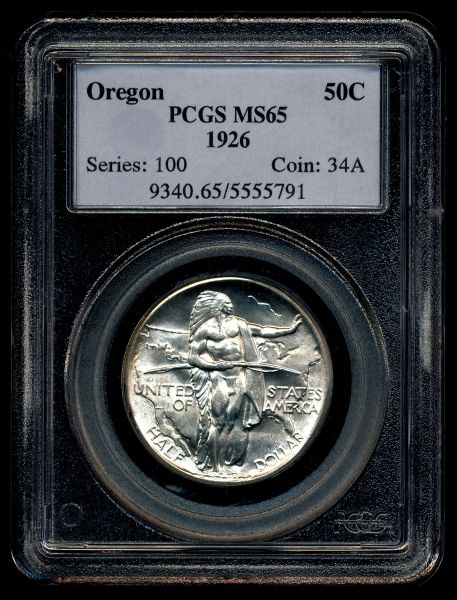 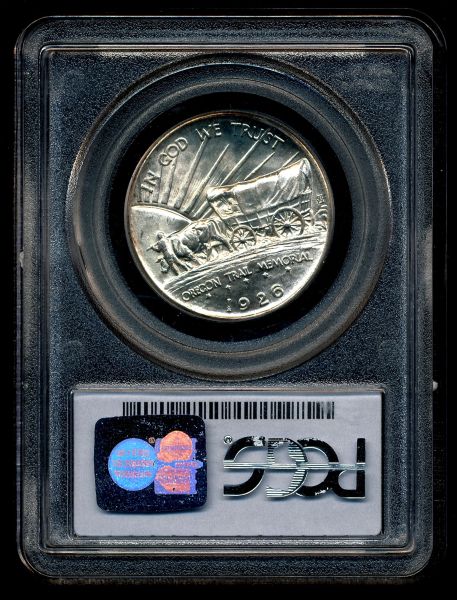 Note: I used current, popular obverse/reverse designations for the coin here, but the US Mint officially considers the wagon side (with date) to be the coin's obverse. Note: I used current, popular obverse/reverse designations for the coin here, but the US Mint officially considers the wagon side (with date) to be the coin's obverse.Collecting history one coin or medal at a time! (c) commems. All rights reserved.
|
|
Bedrock of the Community
United States
78240 Posts |
Nice addition, commems. Errers and Varietys.
|
|
Moderator
United States
105225 Posts |
very nice commems! |
|
CCF Master Historian of USA Commemoratives
United States
12497 Posts |
Up next, the 1927 Battle of Bennington / Vermont Independence Sesquicentennial Half Dollar: The Vermont half dollar incorporates allegorical symbology on its reverse and historical reality on its obverse. The reverse design is dominated by a catamount. The animal is used as a symbol to invoke thoughts of the Green Mountain Boys and their meetings at the Catamount Tavern in Bennington, Vermont to plan actions in support of Vermont's independence, specifically, and America's independence, generally. The coin's obverse presents a portrait of Ira Allen, the brother of Ethan. He was a member of the Green Mountain Boys, and is often considered the "Founder of Vermont." 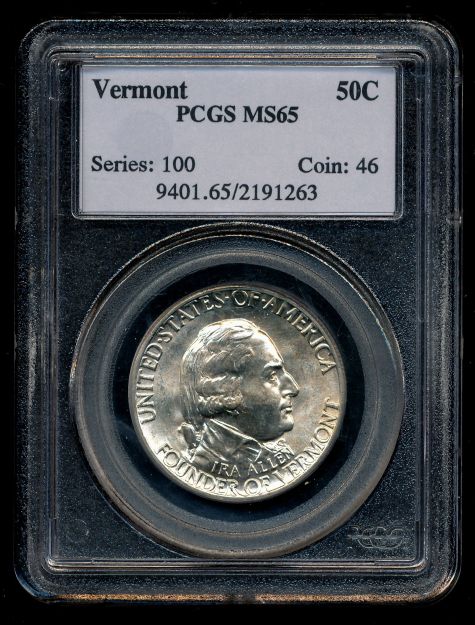 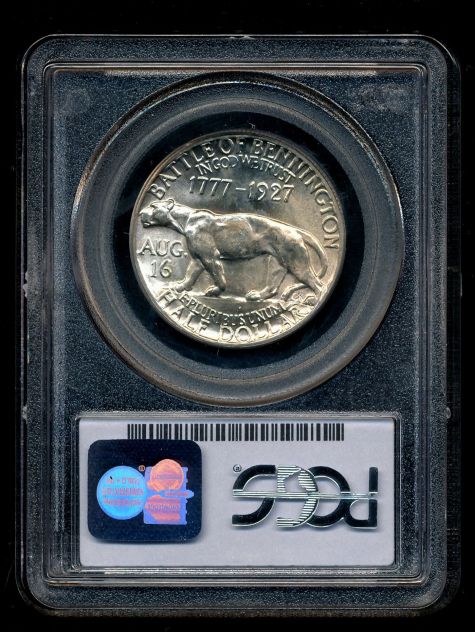 Collecting history one coin or medal at a time! (c) commems. All rights reserved.
|
|
Moderator
United States
194606 Posts |
Quote:
The 1926-39 Oregon Trail Memorial Half Dollar is up next: Another classic!  |
|
Bedrock of the Community
United States
78240 Posts |
Nice one, commems. Errers and Varietys.
|
|
Moderator
United States
105225 Posts |
|
|
Moderator
United States
194606 Posts |
Quote:
Up next, the 1927 Battle of Bennington / Vermont Independence Sesquicentennial Half Dollar: Missed this one yesterday.  Very nice! |
|
CCF Master Historian of USA Commemoratives
United States
12497 Posts |
Time to take a look at the 1928 Hawaiian (European) Discovery Sesquicentennial Half Dollar: The Hawaiian half dollar is another coin from the classic-era of United States commemorative coins that combines allegorical symbology and historical reality. The historical reality elements of the coin's design include a portrait of British Captain James Cook (obverse) who sighted and landed on the Hawaiian Islands in 1778 during his Third Voyage. The trip's true objective was to search for the fabled Northwest Passage through North America - spoiler, he didn't find it! On the reverse, Diamond Head volcano and Waikiki Beach are visible. In terms of allegory, the coin's obverse includes a compass that represents Captain James Cook's voyage that lead to his sighting/landing on the Hawaiian Islands (present-day name). The obverse design also presents eight small triangles/pyramids below Cook's portrait that represent the eight main inhabited Hawaiian Islands. The reverse presents an unnamed Hawaiian Chieftain - I maintain it is Kamehameha I (see Quick Bits #15 - The 1928 Hawaiian Chieftain) - with arm and hand extended to represent welcoming and peaceful intentions. The depiction of the Chieftain emerging from the trees is symbolic of Hawaii's rise in importance. Also seen are coconut palm trees meant to represent romance. 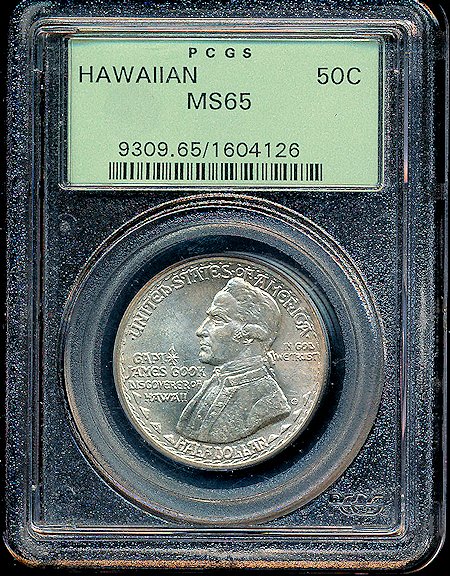 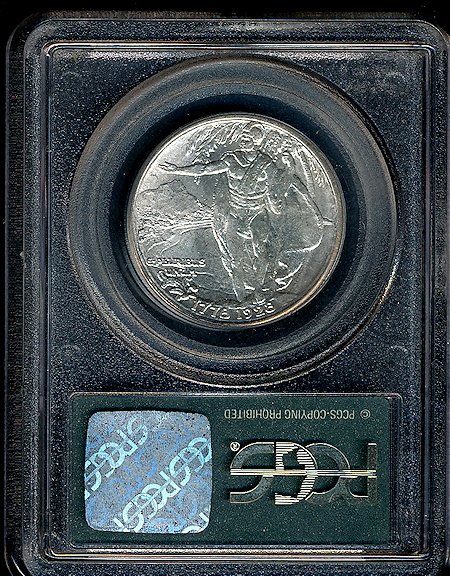 Collecting history one coin or medal at a time! (c) commems. All rights reserved.
|
|
Moderator
United States
194606 Posts |
Quote:
Time to take a look at the 1928 Hawaiian (European) Discovery Sesquicentennial Half Dollar: Excellent! |
|
Bedrock of the Community
United States
78240 Posts |
Another nice addition, commems. Errers and Varietys.
|
| |
Replies: 860 / Views: 49,686 |








 First Page
 Previous Page


 Posted 10/18/2025 8:59 pm


 Uncirculated American Silver Eagles


