| Author |
 Replies: 860 / Views: 49,691 Replies: 860 / Views: 49,691 |
|
|
|
Moderator
 United States
105225 Posts |
Very nice coin and tidbit of history.
I'm glad that British Captain James Cook didn't claim the island chain in the name of England. In 1898 (August 12th) the US claimed it as a territory of the United States, and formally annexed by the US Government. The Hawaiian Organic Act, which formally organized the territory, was approved by Congress in April 1900, and passed in July 1900.
|
|
CCF Master Historian of USA Commemoratives
United States
12497 Posts |
Up next, the 1935 Hudson, NY Sesquicentennial Half Dollar: This is a coin that blurs the line between mythology and allegory. The coin's obverse features the Hudson City Seal which includes Neptune - the Roman mythological god of the sea and other waters - riding a whale, along with a mythological mermaid. As a whole, however, the Seal is meant to be interpreted as an allegorical symbol of Hudson's maritime history/industry. 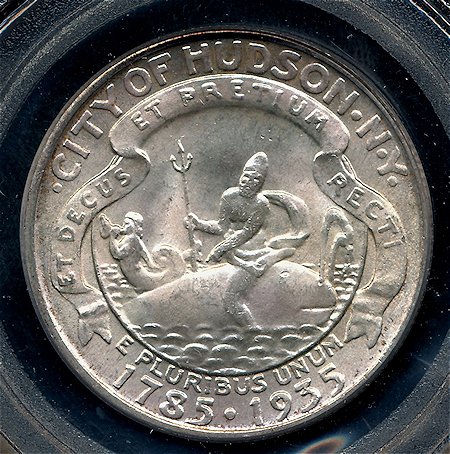 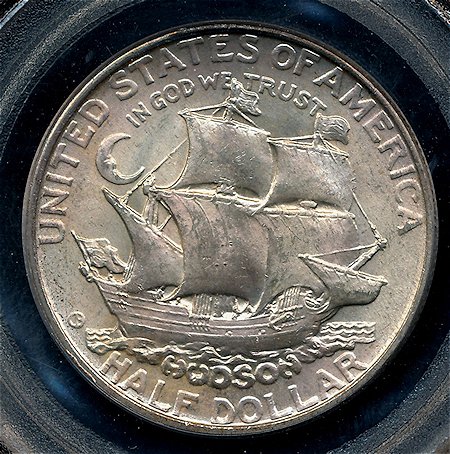 Collecting history one coin or medal at a time! (c) commems. All rights reserved.
|
|
Moderator
United States
194606 Posts |
Quote:
Up next, the 1935 Hudson, NY Sesquicentennial Half Dollar: This is a coin that blurs the line between mythology and allegory. Very interesting!  |
|
Bedrock of the Community
United States
78242 Posts |
Another great addition, commems!
Errers and Varietys.
|
|
Moderator
United States
105225 Posts |
very nice commems! |
|
CCF Master Historian of USA Commemoratives
United States
12497 Posts |
Here's the 1935 Connecticut Tercentenary Half Dollar: The Connecticut half dollar uses history in the context of allegorical symbolism on its obverse - the side's design features the fabled Charter Oak. Per legend, the tree is the reported hiding place of the Connecticut Colony's Royal Charter in 1687 - some historians have questions about this legend. In any case, the tree is used as allegory to represent freedom/liberty/independence based on its purported role in the colony's refusal to yield to the British throne. (Visit Commems Collection: US Classic for more of the story.) The coin's reverse depicts a bold, left-facing American Bald Eagle, an allegorical representation of the United States. 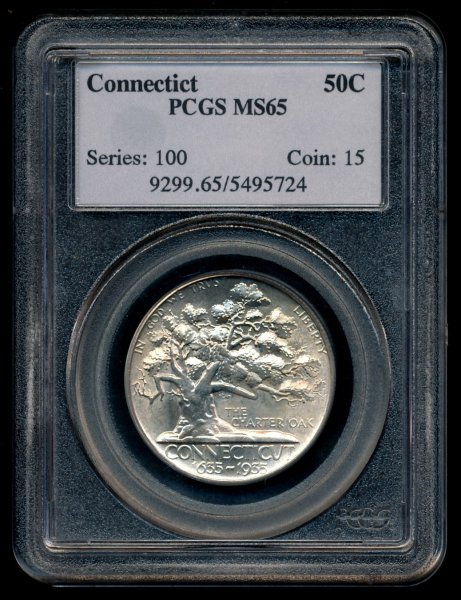 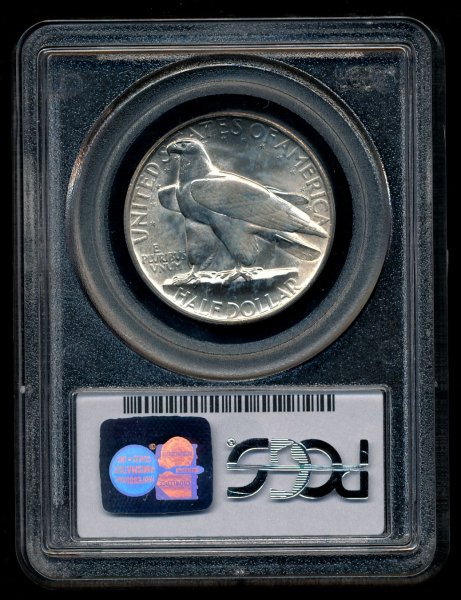 Collecting history one coin or medal at a time! (c) commems. All rights reserved.
|
|
Moderator
United States
194606 Posts |
Quote:
Here's the 1935 Connecticut Tercentenary Half Dollar: I believe this is one of my favourite classics. |
|
Bedrock of the Community
United States
78242 Posts |
Nice one, commems. Errers and Varietys.
|
|
Moderator
United States
105225 Posts |
|
|
CCF Master Historian of USA Commemoratives
United States
12497 Posts |
Next up, the 1935 Old Spanish Trail Half Dollar: In my mind, calling the designs of this coin "allegorical" is a stretch, but there are those that disagree so I've included it here. Some point to the use of a cow's skull to represent Spanish explorer Álvar Núñez Cabeza de Vaca on the coin's obverse as a use of allegory. As no known portrait of de Vaca was available as a reference for the coin, an image inspired by the literal translation of "Cabeza de Vaca" as "Head of a Cow" was used. Allegory? The reverse of the half dollar presents a Yucca tree superimposed over a map of the United States' Gulf Coast region. Together, the elements are said to represent the journey of Cabeza de Vaca and the difficulties/hardships he encountered. To my eyes, the coin simply uses literal, historically-related design elements vs. allegorical symbolism. What say you? 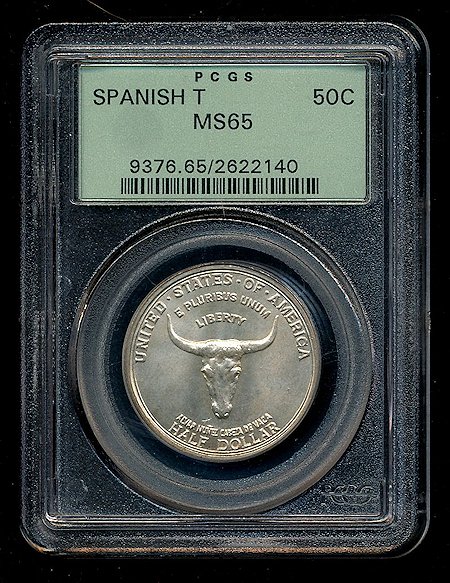 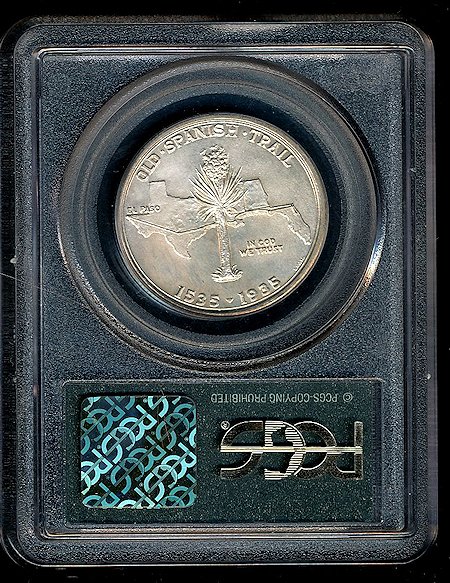 Collecting history one coin or medal at a time! (c) commems. All rights reserved.
|
|
CCF Master Historian of USA Commemoratives
United States
12497 Posts |
To all those who have so far engaged in my posts about the use of allegory within the classic United States commemorative coin series, "Thanks!"
Your support and positive feedback is much appreciated.
Collecting history one coin or medal at a time! (c) commems. All rights reserved.
|
|
Bedrock of the Community
United States
78242 Posts |
Nice addition, commems. Errers and Varietys.
|
|
Moderator
United States
105225 Posts |
very nice Commems - it looks like that trail paved (pun intended) the way for the I-10 freeway
|
|
CCF Master Historian of USA Commemoratives
United States
12497 Posts |
Time for a look at the 1934-38 Texas Independence Centennial Half Dollar: The primary design elements of the obverse are an eagle superimposed over a "lone" star - allegorical representations of the United States ("US") and of Texas, respectively. The coin's reverse design combines allegorical symbolism with historical reality. Allegory is seen through the presentation of Winged Victory, the goddess of victory. Her wings are fully spread and she is shown looking to her right (viewer's left), while kneeling and resting her left arm/hand on Texas' iconic Alamo (historical reference). In her right hand, she holds an olive branch, an allegorical symbol of peace. Texas achieved its independence from Mexico in 1836. 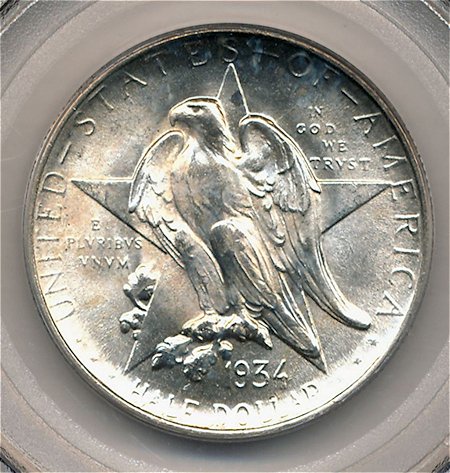 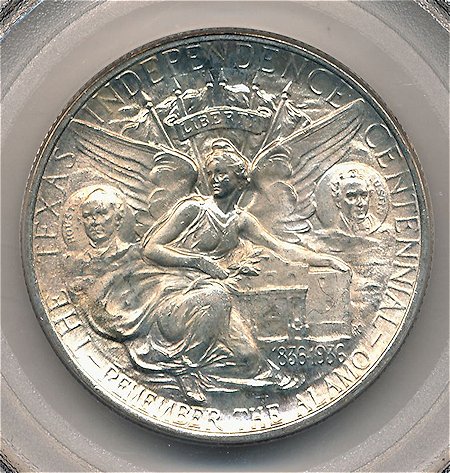 Collecting history one coin or medal at a time! (c) commems. All rights reserved.
|
|
Bedrock of the Community
United States
78242 Posts |
Nice addition, commems. Great information as well. Errers and Varietys.
|
| |
Replies: 860 / Views: 49,691 |








 First Page
 Previous Page


 Posted 10/23/2025 11:01 am


