| Author |
 Replies: 860 / Views: 49,696 Replies: 860 / Views: 49,696 |
|
|
|
Moderator
 United States
194606 Posts |
Quote:
Next up, the 1935 Old Spanish Trail Half Dollar: Nice example!  Quote:
In my mind, calling the designs of this coin "allegorical" is a stretch, but there are those that disagree so I've included it here.  Quote:
an image inspired by the literal translation of "Cabeza de Vaca" as "Head of a Cow" was used. Allegory? Very interseting!  Quote:
To my eyes, the coin simply uses literal, historically-related design elements vs. allegorical symbolism. What say you? For the most part, yes. I want to say that the "the head of a cow" is more Easter Egg than allegory.  |
|
Moderator
United States
194606 Posts |
Quote:
Time for a look at the 1934-38 Texas Independence Centennial Half Dollar: I look and like what I see! Quote:
The primary design elements of the obverse are an eagle superimposed over a "lone" star - allegorical representations of the United States ("US") and of Texas, respectively. Indeed! |
|
Moderator
United States
105236 Posts |
|
|
CCF Master Historian of USA Commemoratives
United States
12497 Posts |
Time for a quick look at the 1935-1939 Arkansas Statehood Centennial Half Dollar: The Arkansas Statehood half dollar makes use of allegory on each of its sides. The coin's obverse design is dominated by an eagle (an allegorical symbol representing the United States) perched on a rising sun with 13 rays; the rays are meant to symbolize the 13 Confederate States. Also presented is the top portion of the Arkansas State Flag. The coin's reverse features conjoined, left-facing portraits of an allegorical Lady Liberty wearing a Phrygian cap emblazoned with "LIBERTY" and a Quapaw Native American chief symbolic of the Native Americans that originally inhabited the area that became Arkansas. The modern allegorical representation of Liberty traces its roots to the Roman goddess Libertas who was the goddess of liberty and personal freedom. In Greek mythology, the counterpart of Libertas was the goddess Eleutheria who also represented freedom. For more on the coin's design elements, see: 1935-39 Arkansas Statehood Centennial, State Flag & Native Am. Influence. 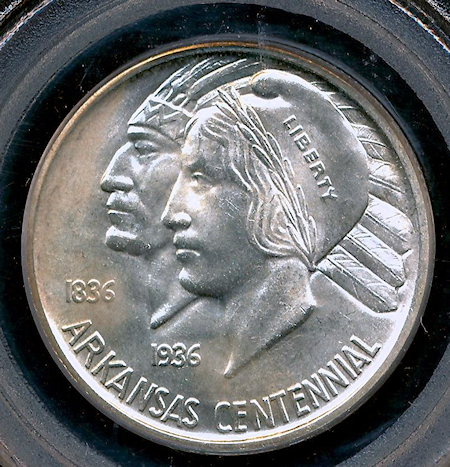 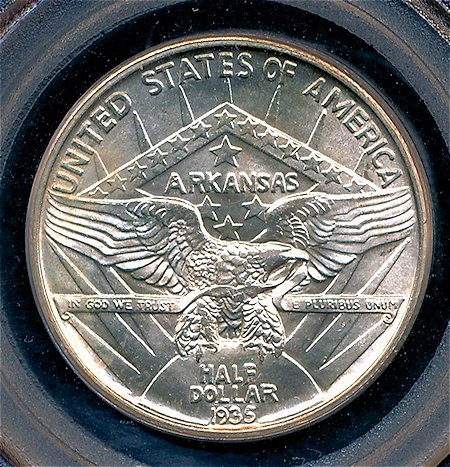 Collecting history one coin or medal at a time! (c) commems. All rights reserved.
|
|
Moderator
United States
105236 Posts |
|
|
Bedrock of the Community
United States
78242 Posts |
Good addition, commems. Errers and Varietys.
|
|
CCF Master Historian of USA Commemoratives
United States
12497 Posts |
Turning attention to the 1935-36 California-Pacific International Exposition Half Dollar: The coin combines mythology and allegory on its obverse. The primary element of the coin's design is a depiction of the Roman goddess Minerva, seated and holding a shield. Also included: a California grizzly bear, a sailing ship, a gold miner, a cornucopia/horn of plenty and mountains in the background beyond the water of the bay. The "Eureka" motto is also present, though relocated. Minerva is used as an allegorical symbol of California becoming a US state without first going through the preliminary stage of being a territory. According to Roman mythology, Minerva was born as a fully-grown adult vs. an infant and thus skipped the awkward "growing up" stage. As such, she is used as an allegory to represent California's skipping of the prelims and moving straight to the main event - Statehood. The other design elements included, symbolically represent various aspects of California's history. 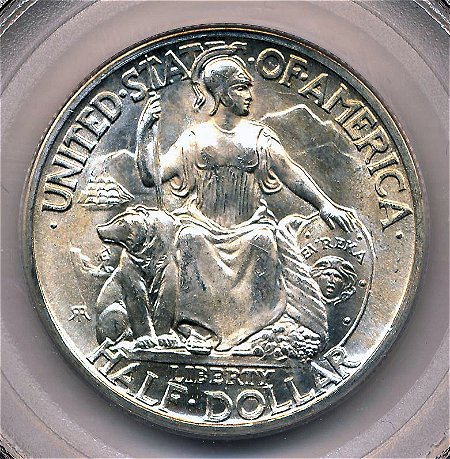 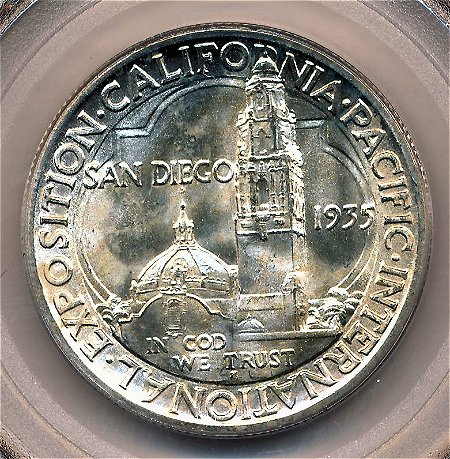 Collecting history one coin or medal at a time! (c) commems. All rights reserved.
|
|
Moderator
United States
105236 Posts |
That is a great looking coin commems. Thanks for the detailed description as well.
|
|
Moderator
United States
194606 Posts |
Quote:
Time for a quick look at the 1935-1939 Arkansas Statehood Centennial Half Dollar... Very interesting! |
|
Bedrock of the Community
United States
78242 Posts |
Nice coin, commems. Errers and Varietys.
|
|
CCF Master Historian of USA Commemoratives
United States
12497 Posts |
Next up, the 1936 Cincinnati Music Center 50th Anniversary Half Dollar: The Cincinnati half dollar is another example of a coin that presents historical realism on its obverse, and allegorical symbolism on its reverse. The obverse depicts Stephen Collins Foster, a prolific composer/songwriter that has been referred to as "the Father of American Music." He wrote over 200 songs during his brief lifetime, he died on January 13, 1864 at the young age of 37. (Note: He had no meaningful connection to Cincinnati's music scene.)The coin's allegorical elements appear on its reverse. The design depicts an allegorical female figure meant to symbolize the Goddess of Music. The goddess is depicted holding/playing an ancient musical instrument - the lyre - to connect her with music. 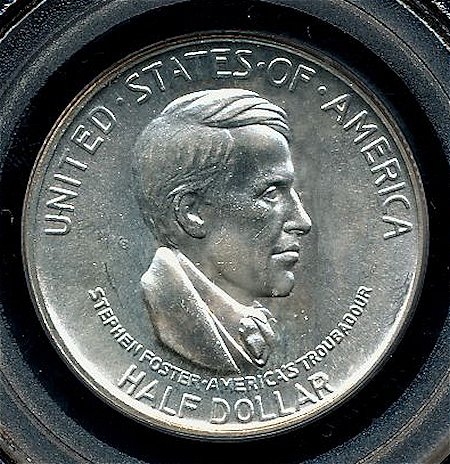 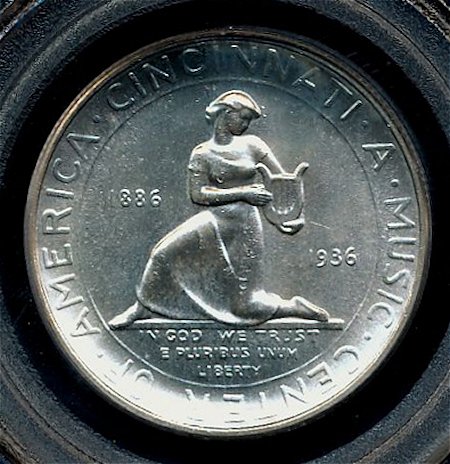 Collecting history one coin or medal at a time! (c) commems. All rights reserved.
Edited by commems
10/30/2025 2:10 pm
|
|
Bedrock of the Community
United States
78242 Posts |
Nice one, commems. Good information as well. Errers and Varietys.
|
|
Moderator
United States
194606 Posts |
Quote:
Next up, the 1936 Cincinnati Music Center 50th Anniversary Half Dollar: Excellent example! |
|
Moderator
United States
105236 Posts |
|
|
CCF Master Historian of USA Commemoratives
United States
12497 Posts |
In line with several other members of the classic era of US commemorative coins, the 1936 Bridgeport, Connecticut Half Dollar combines historical realism and allegorical symbolism. The "real" side of the coin is its obverse, which depicts a left-facing portrait of Bridgeport's most famous resident, Phineas Taylor (PT) Barnum. He was famous as a promoter, a publicist extraordinaire, a museum owner/operator, a circus owner/operator, an author and a touring temperance lecturer, among other related things. He was also a generous philanthropist, a land developer, a politician and an elected government official of the State of Connecticut and of the City of Bridgeport, CT. The allegorical reverse depicts what continues to the present day to be considered the most "modernistic" eagle displayed on a US coin. The eagle is used as an allegorical symbol of the strength and independence of the United States - of which Connecticut is part. 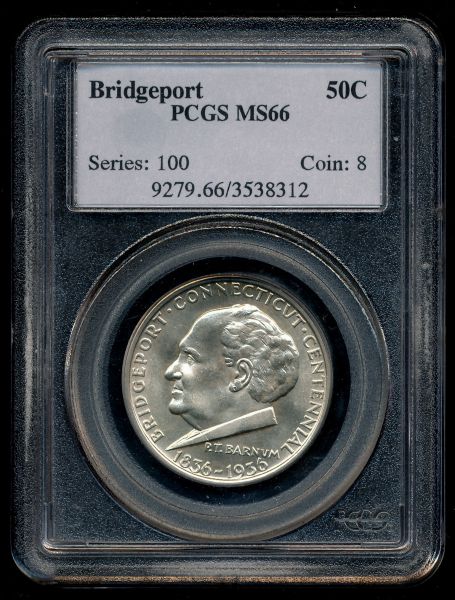 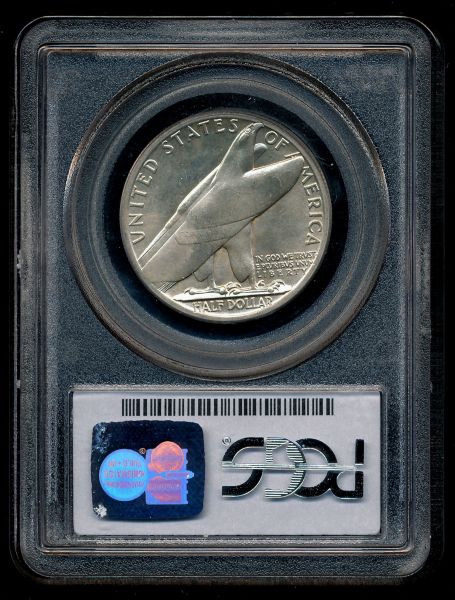 Collecting history one coin or medal at a time! (c) commems. All rights reserved.
|
| |
Replies: 860 / Views: 49,696 |








 First Page
 Previous Page


 Posted 10/27/2025 10:19 am


