| Author |
 Replies: 199 / Views: 36,589 Replies: 199 / Views: 36,589 |
|
|
|
Pillar of the Community
United States
5318 Posts |
Quote:
Nitrogen would also be required to ensure an inert environment. Speaking of inert, when are the TPGs going to start sealing coins in slabs containing nothing but noble gases? It seems like the perfect environment for coin longevity.  Edited by KurtS
05/27/2008 1:48 pm
|
|
Pillar of the Community
United States
936 Posts |
|
|
Bedrock of the Community
 United States
20043 Posts |
Kurt - That's a good question! Chris - Thanks for the links, keep 'em coming. I enjoy reading on the subject. Results for 9.6-166: Initial 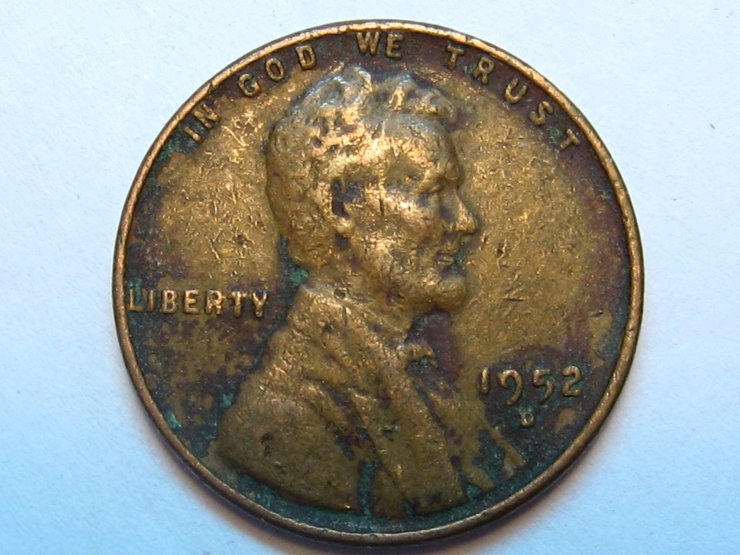 After 1 day: 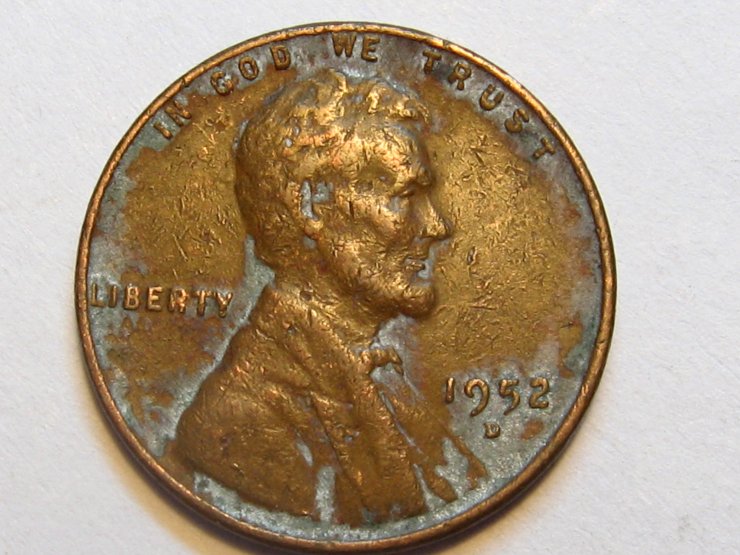 Initial Close-up: 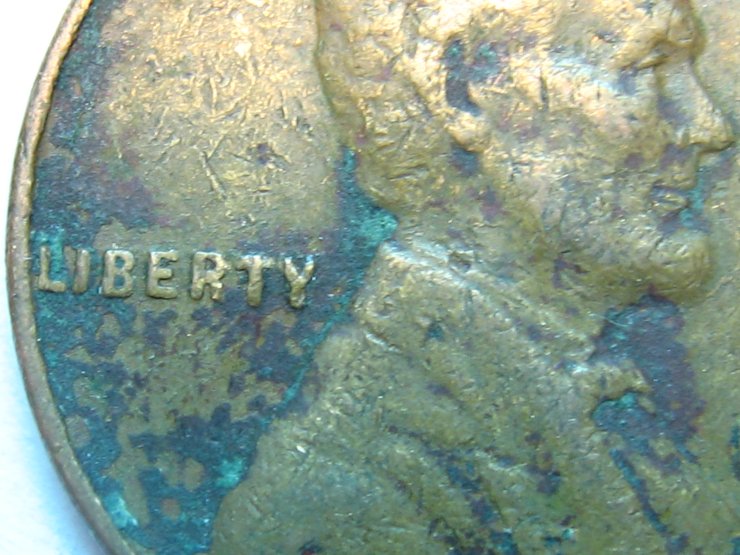 After 1 day: 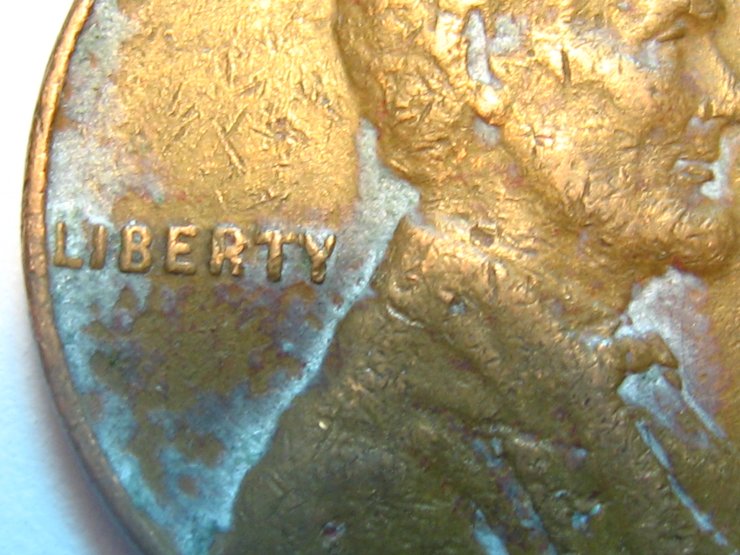 SUMMARY SUMMARYI don't think this was a good choice for a test specimen. I believe there's some organic residue hiding below/around the corrosion. The new Cu protection package didn't seem to have a protective effect to the patina at all. I may significantly increase the concentration in the next formula, as I started low. Definate lightening of the patina noted. Edited by BadThad
05/27/2008 5:29 pm
|
|
Bedrock of the Community
United States
20753 Posts |
Thad, I'm a little shocked at the statement of Verdigris. As a chemist you must be aware that Verdigris is Copper Acetate and not the usualy Green discoloration on Copper coins. Everyone should be told that not all green discolorations on Copper coins or anything containing Copper is usually NOT VERDIGRIS. Again, Verdigris is created by the exposure of Copper, Brass or Bronze (All are made of Copper) to an Acetate. Other greenish patinas on coins are usually Copper Oxide, Copper Carbonate, Copper Sulfide or Sulfate. Each type of such compounds may be dissolved or removed differently from the original coin or object by numerous different methods. Such discolorations are common on Copper tubing, grounding wires, other Copper products. The Copper Sulfites and Sulfates are highly soluable in distilled water for example. Copper Carbonates are usually not quite so soluable and the removal will naturally remove some of the original coins material.
The primary problems with items like Witch Hazel, Olive Oils, Peach,Tomato, Orange or Lemon Juices to remove such contaminations are the in the inconsistancies of those substances. Practically all such substances are run through a manufacturing process where the end results could be and usually is slightly different from one product by one manufacturer to another. This means that what may have worked for one person may be a dissater for someone else. Only a natural element is consistant. Man made products consistantly change and usually do due to proprietary product processes.
|
|
Pillar of the Community
United States
5318 Posts |
Ok, since we're on the subject...perhaps a chemist/biologist would care to explain something I've seen on copper coins. I spend a lot of time looking at coins under scopes, and often in the middle of some serious copper corrosion, there is a raised, damp spot. Is some compound pulling moisture from the air, or is this something possibly organic? Out of curiosity, I took a probe and removed one of these lumps and transfered it to a bright copper cent and added a little water. This lump was clear and gelatinous and over the course of a few days a wet layer spread over part of the coin. This once clear layer is now becoming green. This probably sounds like something from Andromeda Strain, but I'm not making this up. Is this a chemical, or some kind of fungus that lives on copper?  |
|
Bedrock of the Community
United States
20043 Posts |
Carl - Perhaps your definition of verdigris is a matter of semantics. If you read on the subject, basically any chemically reacted material present on yellow metals can generally be called verdigris. Example: http://en.wikipedia.org/wiki/Copper_carbonate Quote:
Verdigris is the common name for the green coating or patina formed when copper, brass or bronze is weathered and exposed to air or seawater over a period of time. It is usually a basic copper carbonate, but near the sea will be a basic copper chloride.[1] If ethanoic acid is present at the time of weathering, it may consist of copper(II) acetate. Nonetheless, my approach reacts with sulfate, carbonate and acetate anions. I don't much care of the exact verdigris chemical composition at this point, other than they are copper complexes. My trick is forming those free anions and preferentially reacting them so they go into (and stay) in solution. Lincoln Cent Lover!VERDI-CARE™ INVENTOR https://verdi.care/
|
|
Bedrock of the Community
United States
20043 Posts |
Quote:
Ok, since we're on the subject...perhaps a chemist/biologist would care to explain something I've seen on copper coins. I spend a lot of time looking at coins under scopes, and often in the middle of some serious copper corrosion, there is a raised, damp spot. Is some compound pulling moisture from the air, or is this something possibly organic?
Out of curiosity, I took a probe and removed one of these lumps and transfered it to a bright copper cent and added a little water. This lump was clear and gelatinous and over the course of a few days a wet layer spread over part of the coin. This once clear layer is now becoming green. This probably sounds like something from Andromeda Strain, but I'm not making this up. Is this a chemical, or some kind of fungus that lives on copper? Cupric anionic molecules are hygroscopic (water loving), they have a few water molecules of hydration. What you probably observed was indeed water. When you scraped some off and diluted it, all you did was solubilize the copper complex. Allow it to dry....this reformed the stable hydrated copper complex of the charactistic color you observed. There's a lot of chemicals that will be clear when in solution, but colored when "dry". |
|
Pillar of the Community
United States
5318 Posts |
Quote:
There's a lot of chemicals that will be clear when in solution, but colored when "dry". What a relief! My collection is safe from copper-eating microbes!  |
|
Bedrock of the Community
United States
20043 Posts |
LOL Kurt! I'm glad Carl brought this up, I have to thank him. I think I'll run a little experiment and purposely form carbonate, sulfate and acetate "verdigris" in the lab using some test mules.  I should have created some of these long ago for controlled testing. It takes a REAL nasty varible out of the experimental process. Thanks Carl! |
|
New Member
United States
38 Posts |
If you wanted to bury old gold coins would dipping them in olive oil, sealing the bag, then wrapping them in a 3mil trash bag before dropping 3 feet in a hole- would that be ok?
|
|
Bedrock of the Community
United States
20753 Posts |
Thad, not to be argumentive about terminology but even the Wikipedia has a contradition in this field. If you look up Verdigris there you would note it clearly states it is a Acetate derivitive. Seldom in our Chemistry classes we use that term for anything else except an Acetate product. Bases on our text books. Of course this could be a location thing since people everywhere use the same term for different items. You must remember that Wikipedia is great but not invaluable.
Your experiments in the removal or clearing of the greenish substance could and is pending on the actual substance your working with.
KurtS: As Tad explained don't worry about your greenish growth on Copper. This is very normal in some areas just due to the amount of SO or SO2 in the air. Theses gases are prevelant in areas where Sulfur Rich coal is burned and/or other products containing Sulfur. These gases readily dissolve with moisture to form a mild and in some instances a strong acid that attacks Copper. So as long as moisture is kept from your coins they are basically safe.
In some areas in the MidWest where Open Hearth Steel Mills once were prevelant, the basic areas are loaded with Sulfur products. As these mix with rain, commonly called acid rain, they attack Copper pipes, grounding systems and most other Copper products. Most Electric companies have gone to Lead Covered Copper for grounding systems to protect against this reaction.
Thad. How do you quote things. I've never found a place here for a quote.
|
|
Bedrock of the Community
United States
20753 Posts |
crhsb: I too like to read those type of items. However, be carefull of what some say. Remember there are people out there that just blab with no experience, just a lot of guess work. Note, for instance, the one link is specifically for the sale of a product it appears. If it doesn't work, OH well, to bad. I like this one about the Olive Oil. Olive oil not just for cooking Hobbyists use 'fruit juice' to remove verdigris posted 6/12/07 By Paul Gilkes Coin World Staff Olive oil has been used as a softening agent for ages to aid the removal of built-up verdigris or dirt accumulations on coins that are up to centuries old. Some collectors swear by it. Other collectors, and some conservators, swear at it, claiming the fatty acids that the olive oil contains can actually damage coins, particularly copper. Ironically, copper or copper alloy coins are usually the subject of the olive oil immersion process. However, in all fairness to Olive Oil they mention the pro's and con's both. The problem with stories like this is they always forget to mention that not all products such as Olive Oils are the same. Any product made in a manufacturing organization has a proprietary process for patent infringement purposes. Such methods could and usually do make things different so that an Olive Oil I use is usually different than one you may buy. May or may not have an adverse effect. |
|
Moderator
 United States
195559 Posts |
|
|
Bedrock of the Community
United States
20043 Posts |
jbuck - LOL!
Lincoln Cent Lover!VERDI-CARE™ INVENTOR https://verdi.care/
|
|
Bedrock of the Community
United States
20753 Posts |
Thad: Don't know if you've tried this yet but I've left greened cents in Mineral spirits for a few days. Most all green disolved.
|
| |
Replies: 199 / Views: 36,589 |








 First Page
 Previous Page


 Posted 05/27/2008 1:41 pm


