| Author |
 Replies: 10 / Views: 1,553 Replies: 10 / Views: 1,553 |
|
|
New Member
United States
4 Posts |
Are these Antoninianus Gordian 3 coins from ebay fake, or Resilvered? Thanks! I started collecting the late 3rd and 4th century Romans recently and upon arrival of a new ebay purchase of 6 Gordian 3 Antoninianus coins I am skeptical of their authenticity. I aware of silvered coins an the debate whether the Romans dipped the blanks in acid before striking them, to make the silvering pop out. Also, that in the 240's the Antoninianus silver content was %40 fine. However, when I tried to remove some bit of bronze disease and my fiberglass pencil slipped, I scratched the surface and it looks as if copper was underneath a thin silvering, as you can see in the pictures. The coin on the right already had been cleaned to the point where the base metal was showing. The question is, I have never seen a Gordian Antoninianus without the silvering. There must be ones that have worn, unless people have only found them in mint condition. Since this seems impossible, I am wondering if these coins, which were initially purchased from CustyRomans.com, are re-silvered antoninianus coins? In the picture there are 3 of the six and the middle seems to have very fresh looking silver! 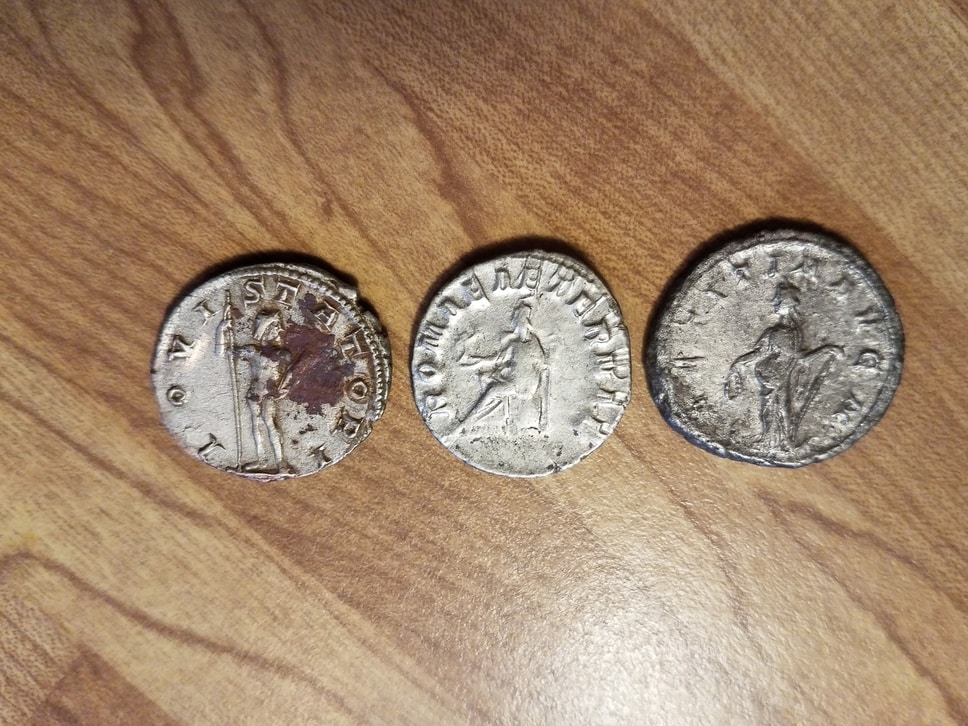 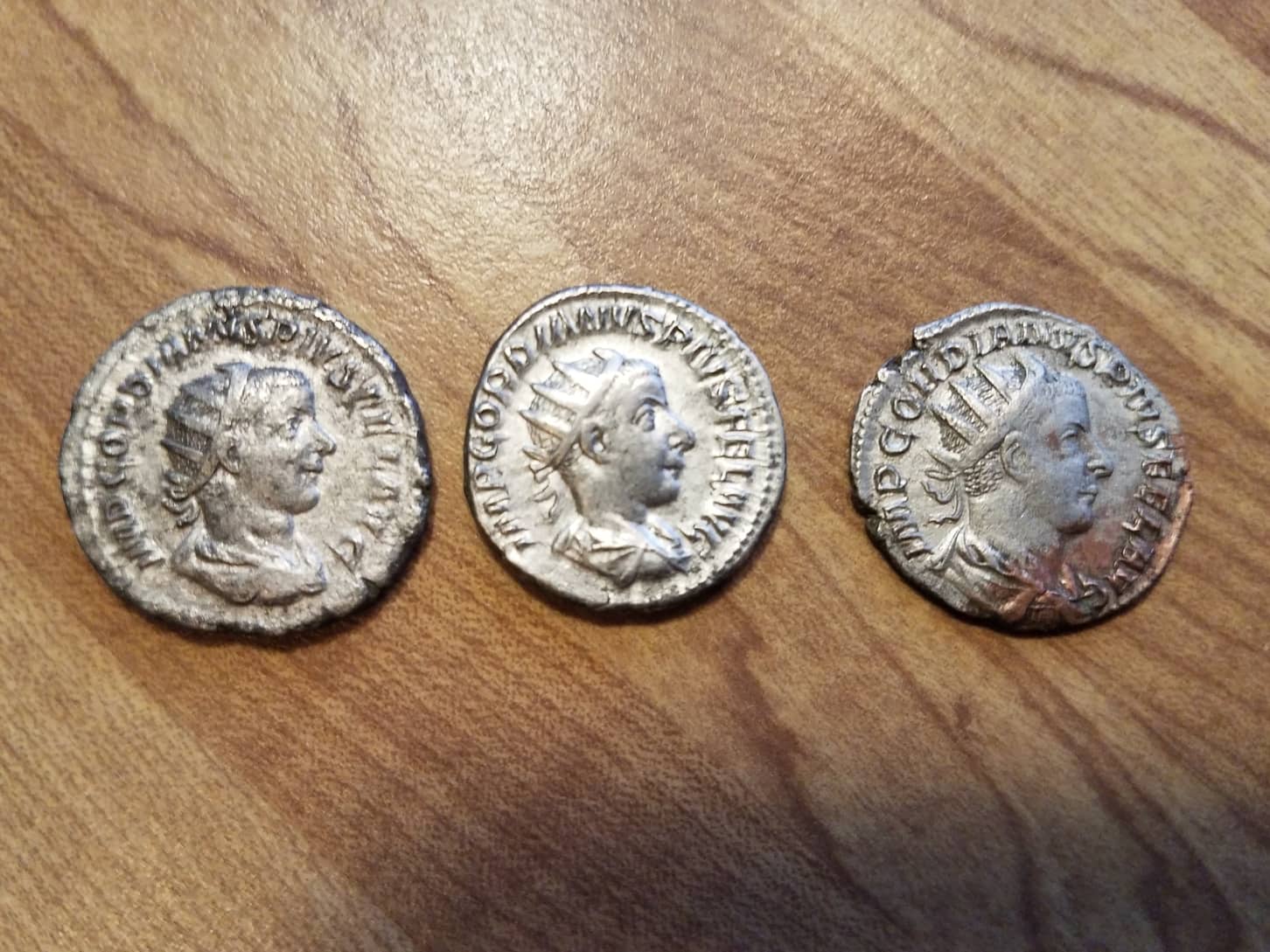 |
|
|
|
Pillar of the Community
United States
1122 Posts |
IMO these look fine. I'll wait for the big boys to chime in though. I only commented because I was in the market for one of these and must have looked at about 100 of them.
It's a pity Roman coinage suffered the same fate of most world currencies. The loss of intrinsic value.
Edited by travelcoin
03/01/2018 9:00 pm
|
|
New Member
 United States
4 Posts |
Thanks, I have seen silvered coins, and seen the silvering wear off and worn off. And I have not seen a great deal of Antoninianus coins, but I have never seen one were the silvering wore through. And the coins look a bit noncrispy, therefore it either seems Gordian 3 Antoninianus were minted on a die until that die was more than worn out, smoking, and the resultant now ancient coin with dull details was resilvered last month by an unscrupulous dealer, or the silvering was just THAT tough and thick that is survived 2000 years of soil and perhaps a few months of jostling around other coins. I must say thought, I have heard on the grapevine, that many gordian 3 coins look as if they were struck on worn dies.
|
|
Moderator
 United States
23731 Posts |
These are all look original and not re-silvered.
|
|
New Member
United States
4 Posts |
So, update. I cut into the rim using a magnifyer (carefully), and made a discrete cut with a razor blade tip. I saw a flash of copper in three of the six. Interestingly enough, those had a more brilliant silver finish. So would people even bother making counterfeits of gordian's? Or might they be ancient counterfeits?
|
|
New Member
Canada
31 Posts |
Romans had a technique to bring the silver to the surface of coins with lower silver content pretty much creating a bronze core. This may be what your seeing. Below is what appears to be a core of one such type. Possibly losing its silver from leeching into the ground. 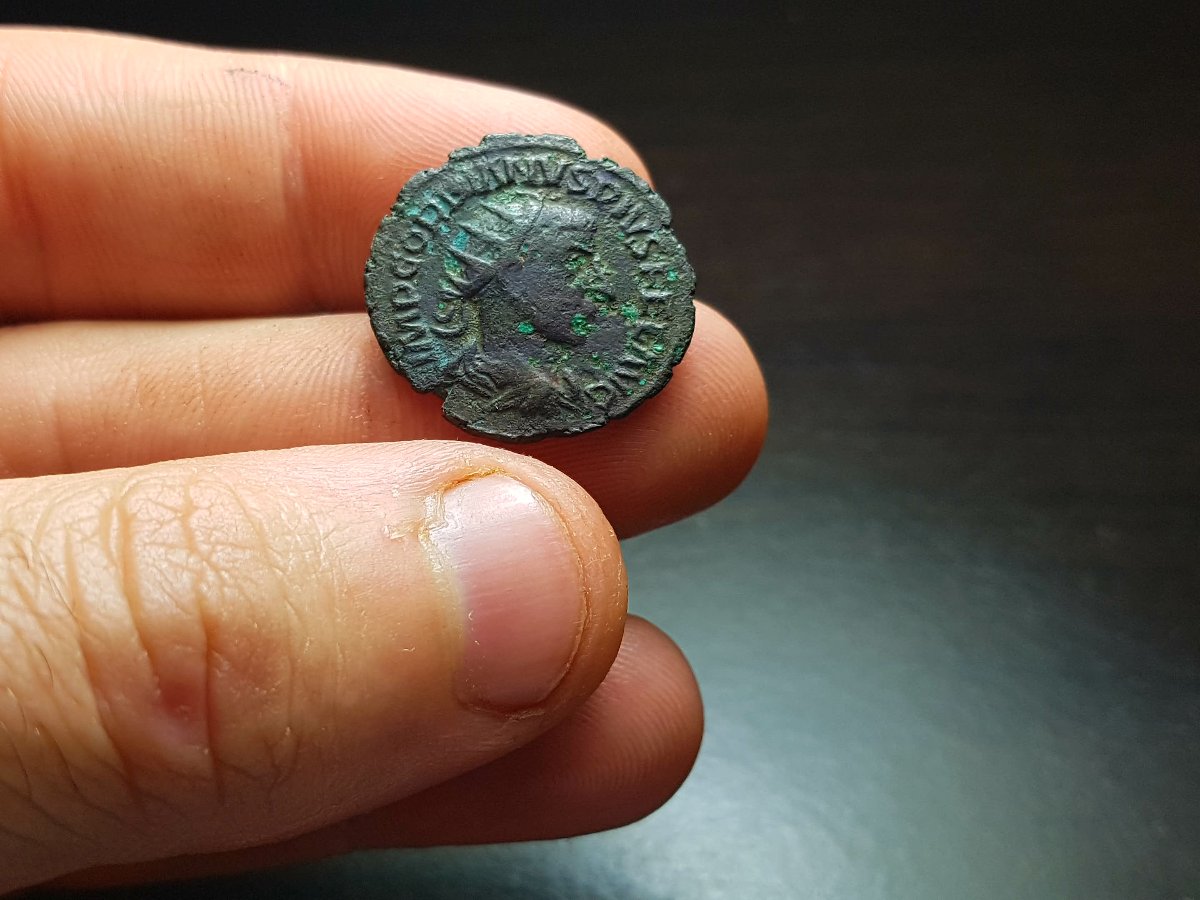 Edited by bsr045
03/02/2018 06:17 am
|
|
Bedrock of the Community
Australia
21792 Posts |
These coins are not silvered. They have not been interfered with in such a manner.
The antoniniani of Gordian 111 have a silver purity of around 42%.
The color of these looks to be about right.
It is not all that rare to find these coins with a green copper tinge, or even a very small verdigris pit. The greening can most often be seen inside radial flan cracks.
Even so, they are nowhere near as sensitive to bronze disease, as with bronze or copper coins.
The black stain on the first coin is most probably a silver / copper, oxide / chloride complex, and would not penetrate deeply into the coin, as with a verdigris pit.
|
|
New Member
United States
4 Posts |
So, what I am saying is that specifically for the two coins on the right, I used a hand lens and with the very tip of a razor blade, I made a discrete cut straight on into the rim of each one. You can't see the cuts with the naked eye, but with a hand lens it is obvious that the cut bisects a silver layer, but underneath that flashes a bright copper color; copper in other words, is underneath a silver layer for the 2 coins on the right.
|
|
Bedrock of the Community
Australia
21792 Posts |
It is possible to bring the silver to the surface with a 50% silver coin, but I don't think the Romans ever used this technique for their billon coins.
The Incas did use the technique for their gold jewelry.
The method involves leaching the copper out of the surface using acid, them hammering the remaining good metal.
Such a method of surface enrichment renders XRF testing useless for authentication purposes.
|
|
Moderator
United States
196424 Posts |
 to the Community! |
|
Pillar of the Community
United States
3496 Posts |
I never gave it much thought before but I think Valerian and Gallienus are first emperors that used the "silver wash" technique to enhance the appearance of their antoniniani.
The silver coin had variously been either reduced in size or debased since the late second century.
They were mere tokens of exchange.
|
| |
Replies: 10 / Views: 1,553 |
|










 Posted 03/01/2018 9:19 pm


