| Author |
 Replies: 9 / Views: 1,565 Replies: 9 / Views: 1,565 |
|
|
Pillar of the Community
 United States
906 Posts |
|
|
|
|
Pillar of the Community
United States
8946 Posts |
|
|
Pillar of the Community
 United States
906 Posts |
Seriously, who needs an encylopedia or any kind of reference material with this community? You people are awesome? I shant never use the term delamination again.  Lamination only from here on out, at least until I use the term delamination again ... DOH! So, I'm still a bit confused as to what this might be. I'm also confused about the term solid-alloy. Isn't that an oxymoron? |
|
Pillar of the Community
United States
8946 Posts |
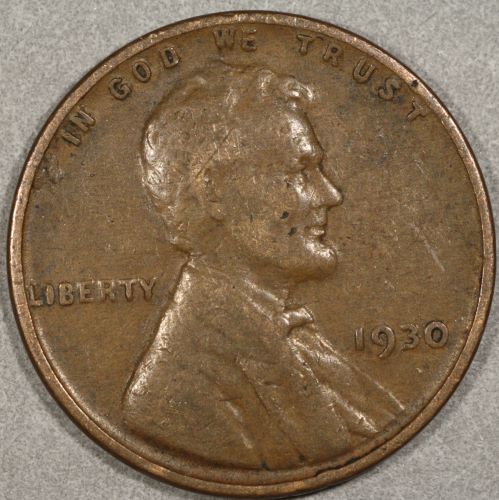
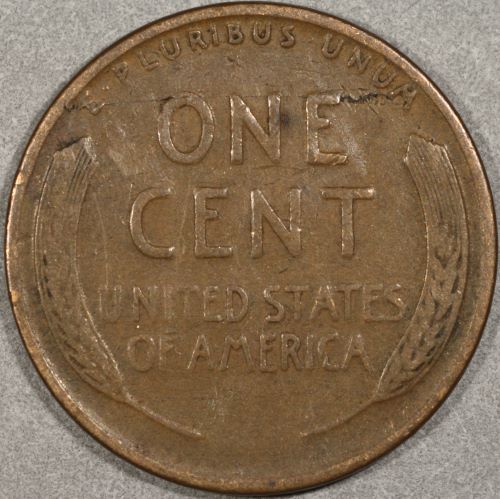
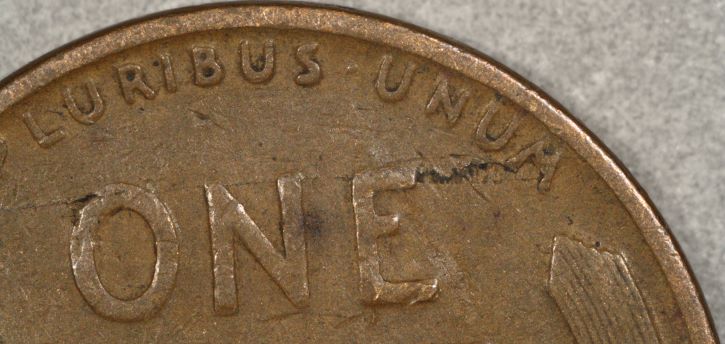
So think of it this way, they have to roll out the strips of metal on which the blanks are stamped from. What happens if debries get caught in the roll? A lamination or delamination occurs because those solids have to come out. It can come out in the form of cracks, strips or peels. Just look up "coin delamination error" in google images. Some of them are massive.
Solid alloy is just a term.
|
|
Pillar of the Community
United States
906 Posts |
So the blanks are multiple rolls of metal, potentially with impurities between the rolls? I wonder why that must be.
|
|
Moderator
 United States
34567 Posts |
Could be due to insufficient cleaning during one of the manufacturing steps.
"If you climb a good tree, you get a push."
-----Ghanaian proverb
"The danger we all now face is distinguishing between what is authentic and what is performed."
-----King Adz
|
|
Bedrock of the Community
United States
12477 Posts |
I call this a "lamination flaw." I don't like "delamination" because it implies an opposite result being more common. An alloy, in this case, is several metals, primarily copper, being combined into the stock from which the coin was struck. Yes, an alloy can be a very solid metallic object. The metal, as an alloy, was rolled to proper thickness (from a single sheet, not multiple) and blanks were then punched out of it to create the beginnings of coins. Mixing molten metals does not always create a completely homogenous blend. When it doesn't, then you find "lamination flaws." Quote:
What happens if debries get caught in the roll? That can create its own issues, but is not a common occurrence at all. Lamination problems are not caused by foreign debris. In Memory of Crazyb0 12-26-1951 to 7-27-2020
In Memory of Tootallious 3-31-1964 to 4-15-2020
In Memory of T-BOP 10-12-1949 to 1-19-2024
|
|
Pillar of the Community
United States
906 Posts |
Quote:
The metal, as an alloy, was rolled to proper thickness (from a single sheet, not multiple) That makes more sense. I wouldn't think that something as thin as a coin would require multiple layers. |
|
Pillar of the Community
United States
1007 Posts |
Look at it this way: an alloy takes multiple metals, melted down and mixed together to form a single liquid. This is the same thing as pouring milk into your coffee and mixing it. This is cooled, rolled and cut into blanks before coining. Usually it is just a single homogeneous thing but sometimes it isn't mixed properly, perhaps there is a small part where the metals were not totally combined. Right now the only circulation coin that is a simple alloy is the nickel, 75% copper mixed with 25% nickel. Pennies before mid-year 1982 were an alloy of 95% copper and 5% other metals (depending on the year). Dimes, Quarters, halves and dollars were an alloy of 90% silver and 10% copper for much of the time prior to 1964 although the ratio of silver to copper varied in the 18th and 19th centuries. Gold coins were an alloy of gold and copper. Clad coins have multiple layers, some of the layers are alloys themselves. The current dime, quarter and half as well as the Ike and SBA dollars are clads of 75% copper and 25% nickel (same as the nickel coin) surrounding a core of straight copper. The "Golden Dollar" series are a clad as well, with a copper core and outer surfaces a variety of metals including copper and zinc. Plated coins have a core of either an alloy or straight metal coated by a plating to provide a color or protection against the elements. The current penny (since 1982) is a zinc core plated by copper, and the 1943 penny was steel plated by zinc. Most small Canadian coins are also plated with a steel core. Edited by n9jig
12/09/2018 10:57 am
|
|
Bedrock of the Community
United States
20753 Posts |
Quote:
So the blanks are multiple rolls of metal, potentially with impurities between the rolls? I wonder why that must be. Low pay salaries of Mint employees maybe. |
| |
Replies: 9 / Views: 1,565 |
|









 Posted 12/08/2018 10:24 pm


