| Author |
 Replies: 8 / Views: 1,283 Replies: 8 / Views: 1,283 |
|
|
Valued Member
United States
212 Posts |
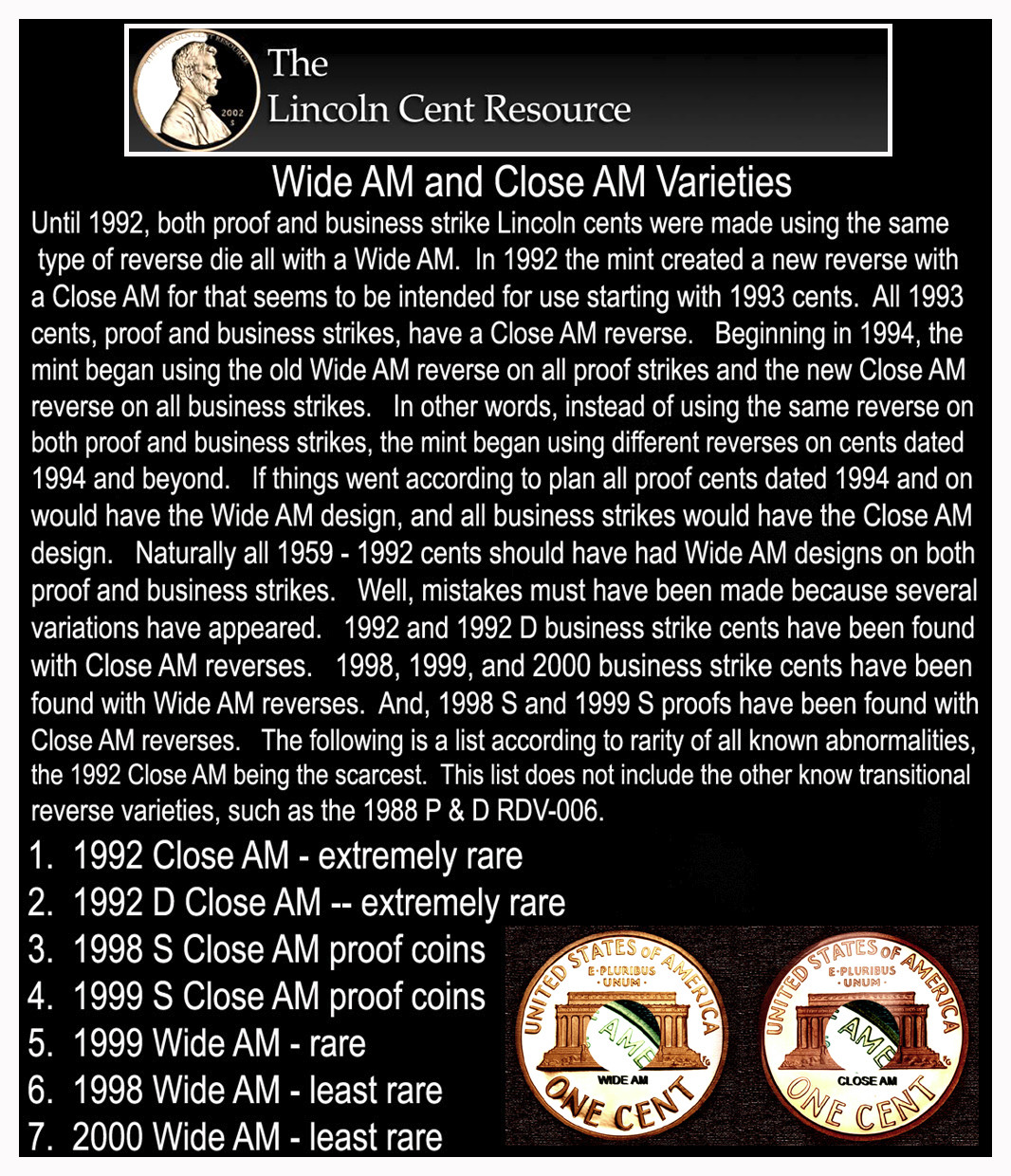
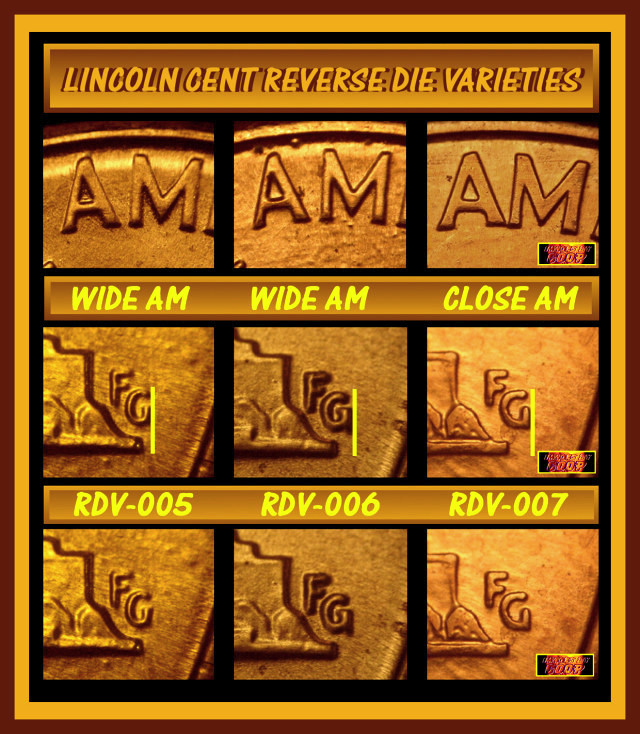
If they're normally wide apart in 1992 and the rarity is close, and it's the opposite in 1998-2000, what about the five years in-between? Like I have a 1994 with kissing-close A and M, but don't know if that's ordinary or rare. Edited by Kawliga
12/27/2018 03:23 am
|
|
|
|
Bedrock of the Community
United States
12477 Posts |
To be clear, this involves the misuse of proof dies on top of everything else. But, for business strikes, 1992 Close AM cents are rare (both mints). 1998-2000 Wide AM cents have been found (business strike) with '99 being the most rare. In proofs, the 1998-99 Close AM is prized, especially '98. I don't know of a 2000 Close AM proof being found. It's an entire transitional mess, to be honest, and keeping it straight is a task.  Quote:
I have a 1994 with kissing-close A and M, but don't know if that's ordinary or rare. That's normal for 1994. From 1993 on, the AM should be close for Business Strike coins. That's why the WAMs of 1998-2000 are interesting. Again, it is all caused by a mix up with proof dies. Why the proof dies were different, I have no idea.  In Memory of Crazyb0 12-26-1951 to 7-27-2020
In Memory of Tootallious 3-31-1964 to 4-15-2020
In Memory of T-BOP 10-12-1949 to 1-19-2024
Edited by spru
12/27/2018 03:49 am
|
|
Pillar of the Community
United States
5887 Posts |
Hello. Wide AM varieties and Close AM varieties have to do with proof dies, and this is explained by Spruett001 above. Here is what to look for and what is normal for the AM: (Dates listed below include mint marks of D and P, or no mint mark) 1992- Close AM is the variety; Normal coin has Wide AM1993-1997- Normal coin has Close AM 1998-2000- Wide AM is the variety; normal coin has Close AMHope this helps, happy hunting! -CH27 Collector of U.S. Coins, Varieties, and Colonial Coinage
|
|
Bedrock of the Community
United States
62064 Posts |
|
|
Bedrock of the Community
United States
17884 Posts |
Quote:Hello. Wide AM varieties and Close AM varieties have to do with proof dies, Except for the 1992 Close AM varieties. This was a case of dies that had been made and intended for use in 1993 accidentally being used early at the end of 1992. Standard practice is to begin making a stockpile of dies for the coming year in December. In some cases coin for the following year are also produced and stockpiled. Apparently at both Denver and Philadelphia one of the stockpiles 1993 rev dies was used paired with a 1992 obv to do some of the final production of the year. |
|
Valued Member
 United States
212 Posts |
A VERY belated thank you for these answers! (I forgot I made this post, sorry).
|
|
Valued Member
United States
264 Posts |
A lot of good information.
|
|
Pillar of the Community
United States
1335 Posts |
|
|
Valued Member
United States
212 Posts |
I just had to find this thread again because I already forgot the rule, ha! I suspect this is another one of those cherrypicker essentials I will never keep nailed down in my brain (along with which denominations-busines/proof-dates should or shouldn't have mintmarks and/or designer initials, never mind WHERE they should be positioned, LOL!). I DO finally have the 1982 Lincoln rules locked and loaded though (phew!).
|
| |
Replies: 8 / Views: 1,283 |
|








 Posted 12/27/2018 1:10 pm