| Author |
Replies: 83 / Views: 20,961 |
|
|
|
Moderator
 United States
189767 Posts |
Quote: I found another piece of the Johan Alewijn jeton discussed on a previous page... Excellent! 
|
|
Pillar of the Community
 United States
5797 Posts |
Fascinating thread. I'm in awe. Thank you for sharing such in depth research and knowledge. Such an interesting idea to look into what guided the creator of these dies. You can almost imagine them studying some of the artwork and other drawings to create these interesting tokens masterpieces!
Words of encouragement are one of the major food groups. We need to consume them regularly to thrive and grow.
Edited by Petespockets55 04/09/2019 8:23 pm
|
|
Pillar of the Community
 Belgium
1185 Posts |
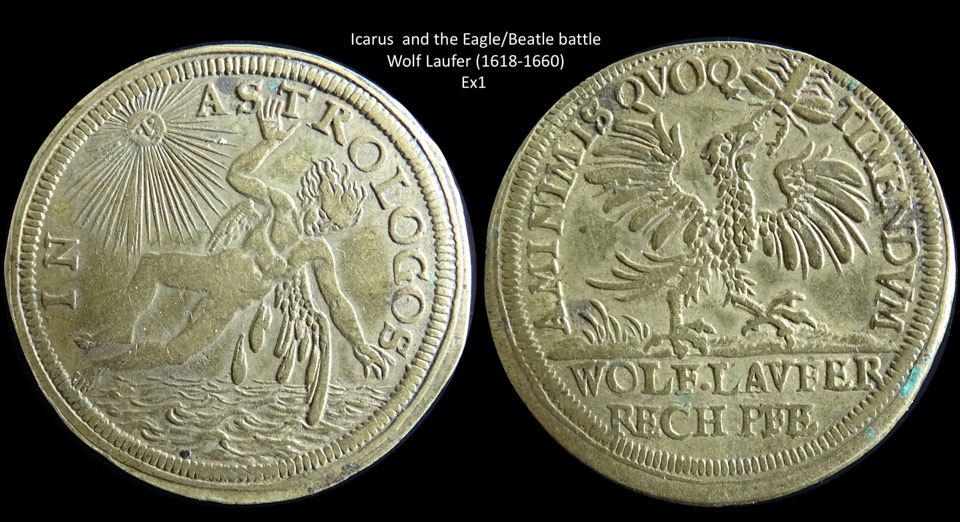
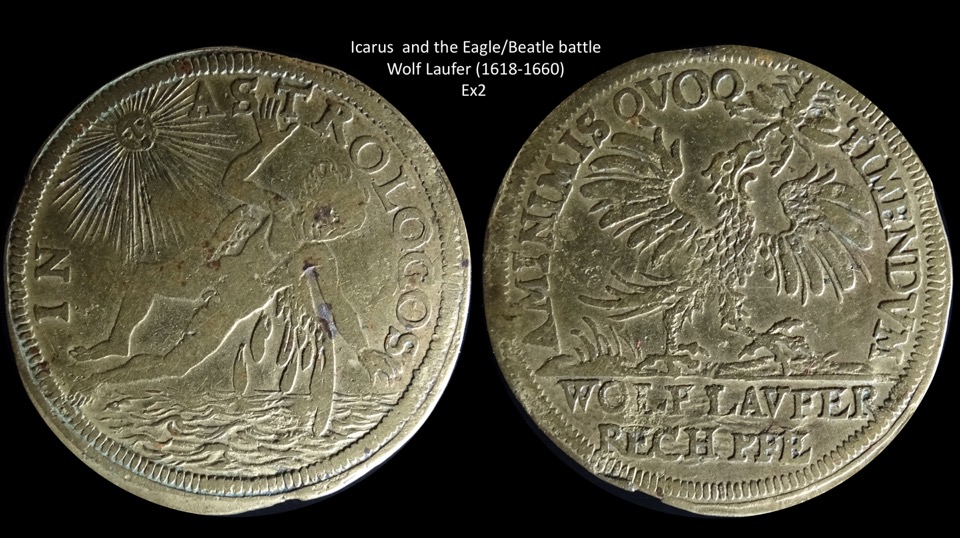
thanks Jbuck and Petespockets55 the digging is fun, and some of the mint masters indeed made small masterpieces one of my favorites is Wolf Laufer - he kicked off this thread with Icarus falling into the seas and the battle between the Eagle and the Beatle I am happy to have found recently another brass Icarus jeton, a bit more worn than the first (shown again for comparison) but still an attractive piece !  
|
|
Moderator
 United States
189767 Posts |
Very nice! 
|
|
Pillar of the Community
 Belgium
1185 Posts |
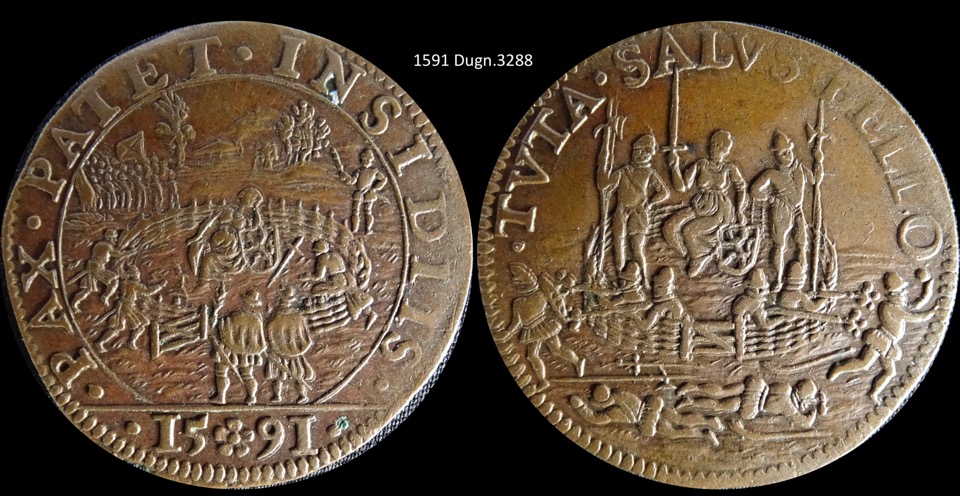
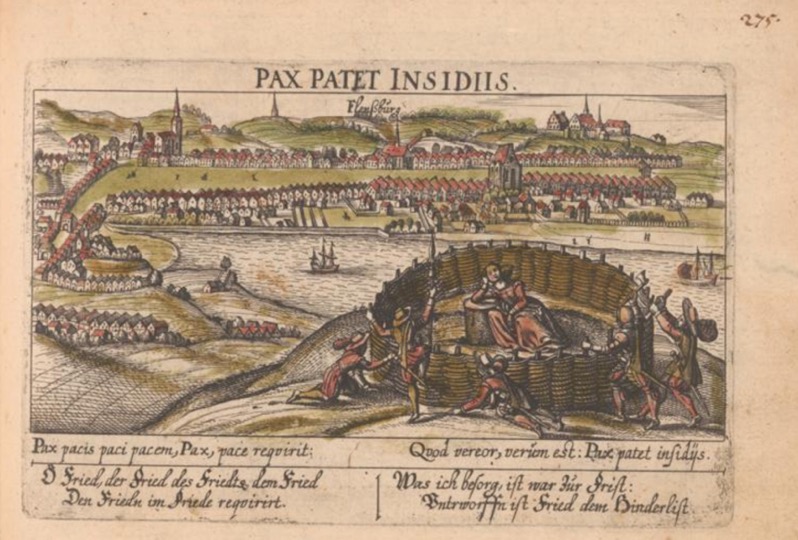
I may have something new, here the coin is the source of inspiration for an emblem book Rekenpenning from 1591 "rejection of peace negotiations by the States General" Dugn.3288, vLoonI.423, Tas272 obversethe vulnerable position of the Dutch Republic in the war against Spain, symbolized by the Dutch virgin, sleeping in the walled garden, offered an olive branch by Spanish diplomats while Spanish troops invade the country reversethe same virgin in a heavily guarded garden killing the enemy the motto Pax patet insidiis on the obverse means Peace is easily ambushed; Tuta salus bello on the reverse means it is better to wage warThe image of the sleeping virgin in the undefended Dutch garden with the motto Pax patet insidiis comes back in the nice engraving by Daniel Meisner in a German emblem book of 1624: Thesaurus philopoliticus, h. e. emblemata s. moralia politica  first print was in 1623, which is three decades after making the jeton https://de.wikipedia.org/wiki/Thesa...ilopoliticus
|
|
Moderator
 United States
189767 Posts |
Quote: I may have something new, here the coin is the source of inspiration for an emblem book Very interesting! 
|
|
Pillar of the Community
 Belgium
1185 Posts |
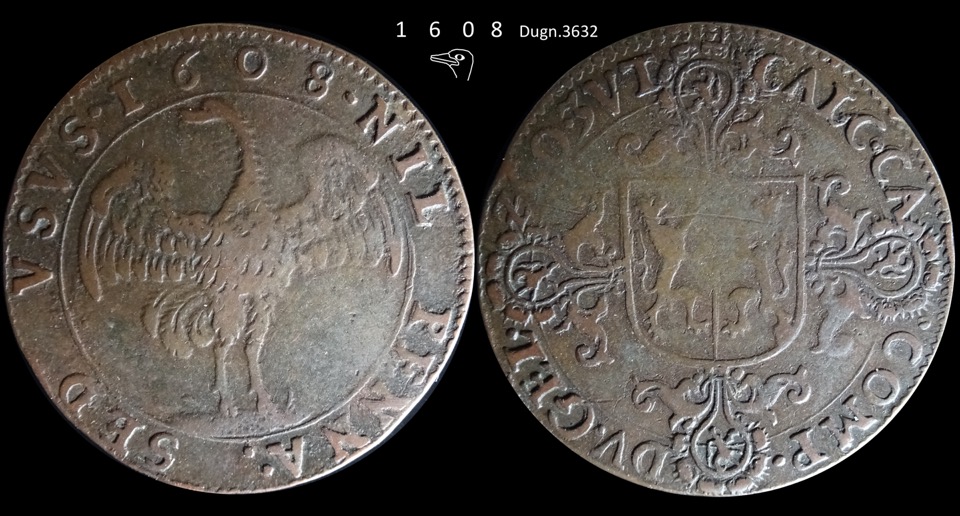
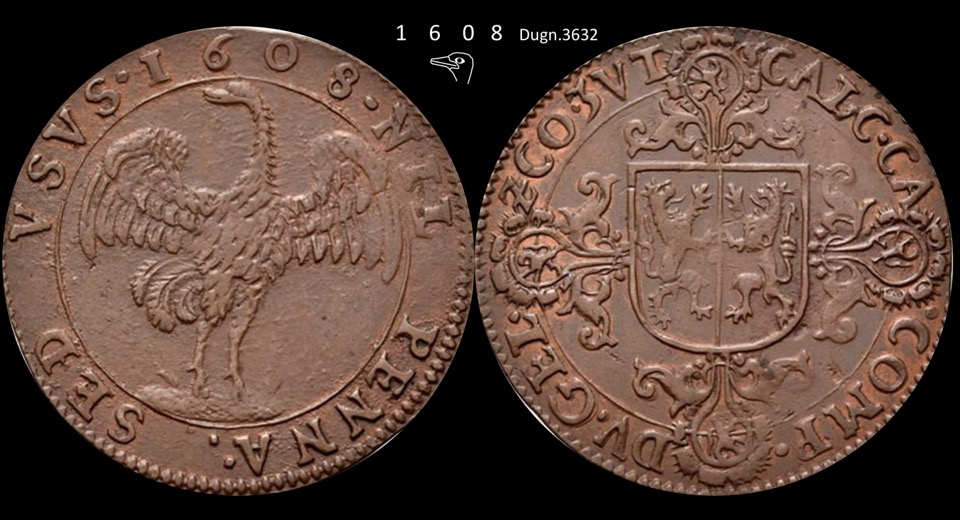
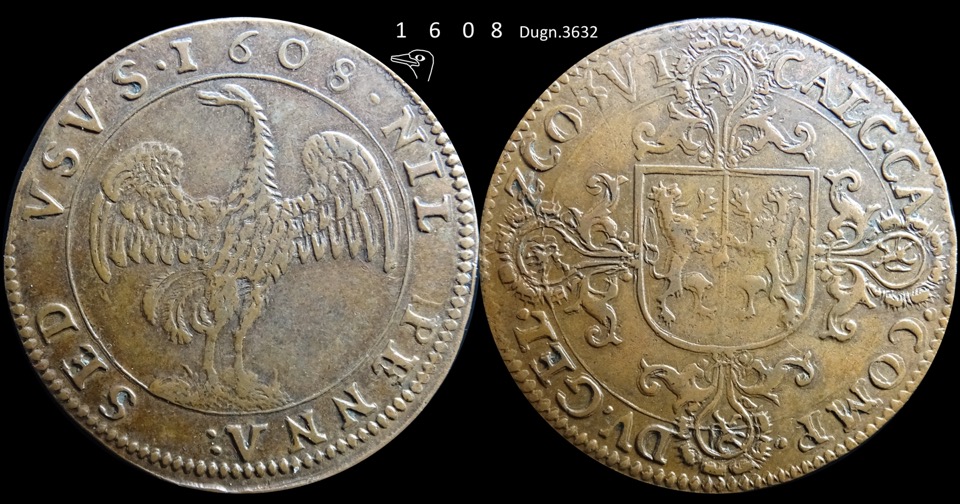
a small new surprise  in the jeton field 1608 Dugn.3632, vLoonII.39, Tas400 - Rekenpenning 'Schotschriften tegen de wapenstilstand' two new pieces (# 1 & 2) picked up recently for the nice ostrich jeton: the three pieces are shown here together # 1 & 2 are of the common type: OBV - beak below the 6 of the date and tip of right wing next to V of VSVS REV - CO.ZVT (count of Zutphen) at the end of the legend. # 3, shown before on page 3 of this thread has its beak below the 1 of the date tip of right wing next to D of SED a REV - CO.ZVI at the end of the legend.   added as edit reassessment of the legend on the reverse: a double strike effect gives the impression of an I, but actually the contours of a T are visible, so the Reverse seems common for the three pieces the variation that remains is the obverse: the relative position of the image in the center to the surrounding legend
Edited by 1c5d7n5m 05/26/2019 5:15 pm
|
|
Moderator
 United States
189767 Posts |
Looking good! 
|
|
Pillar of the Community
 Belgium
1185 Posts |
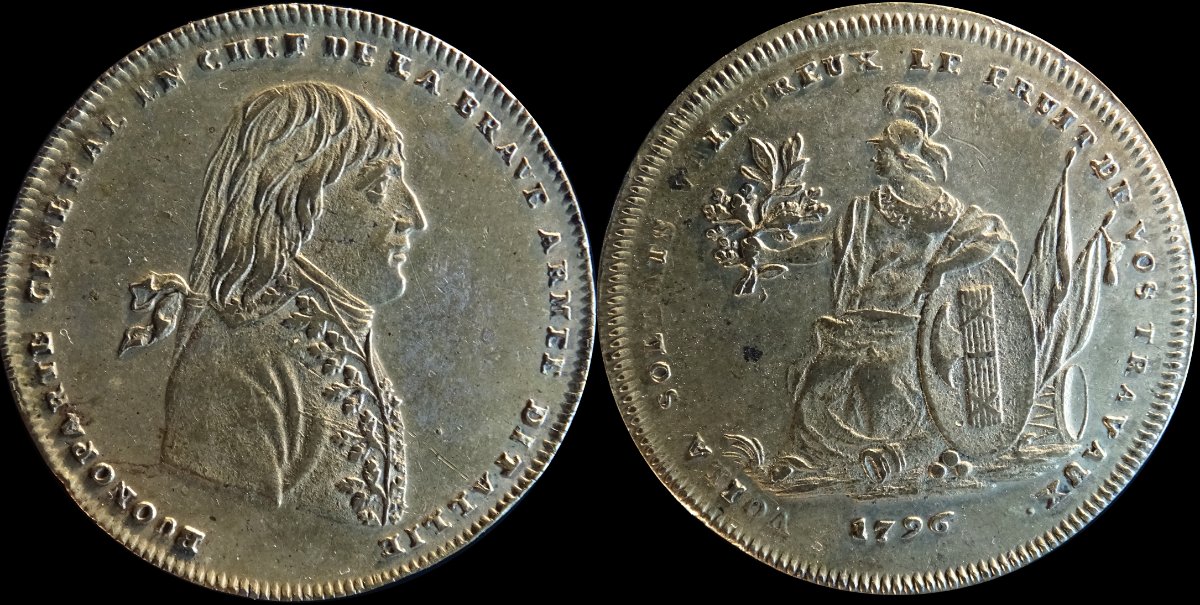
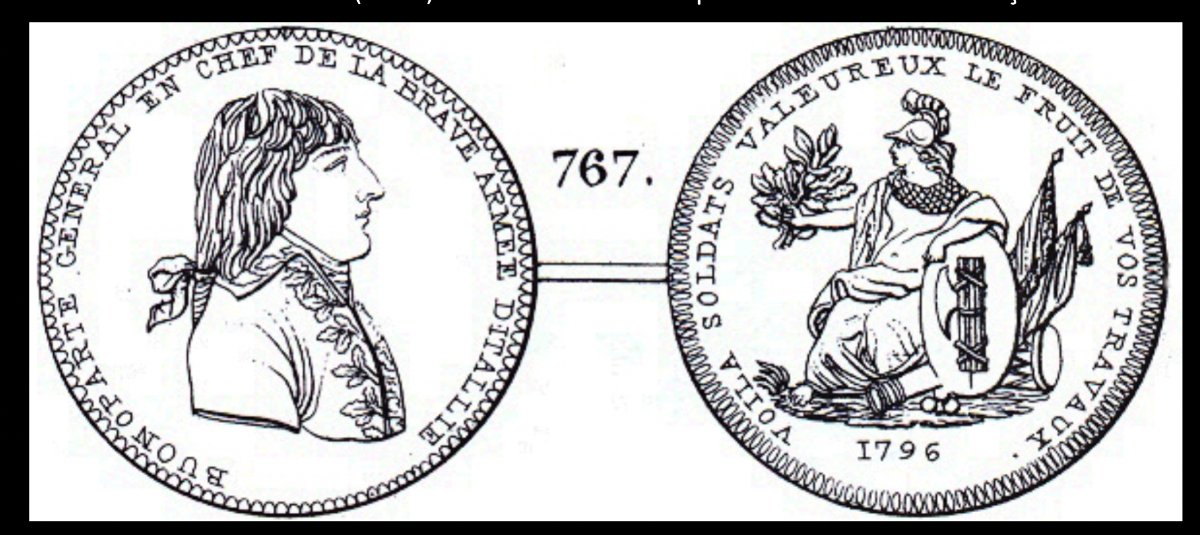
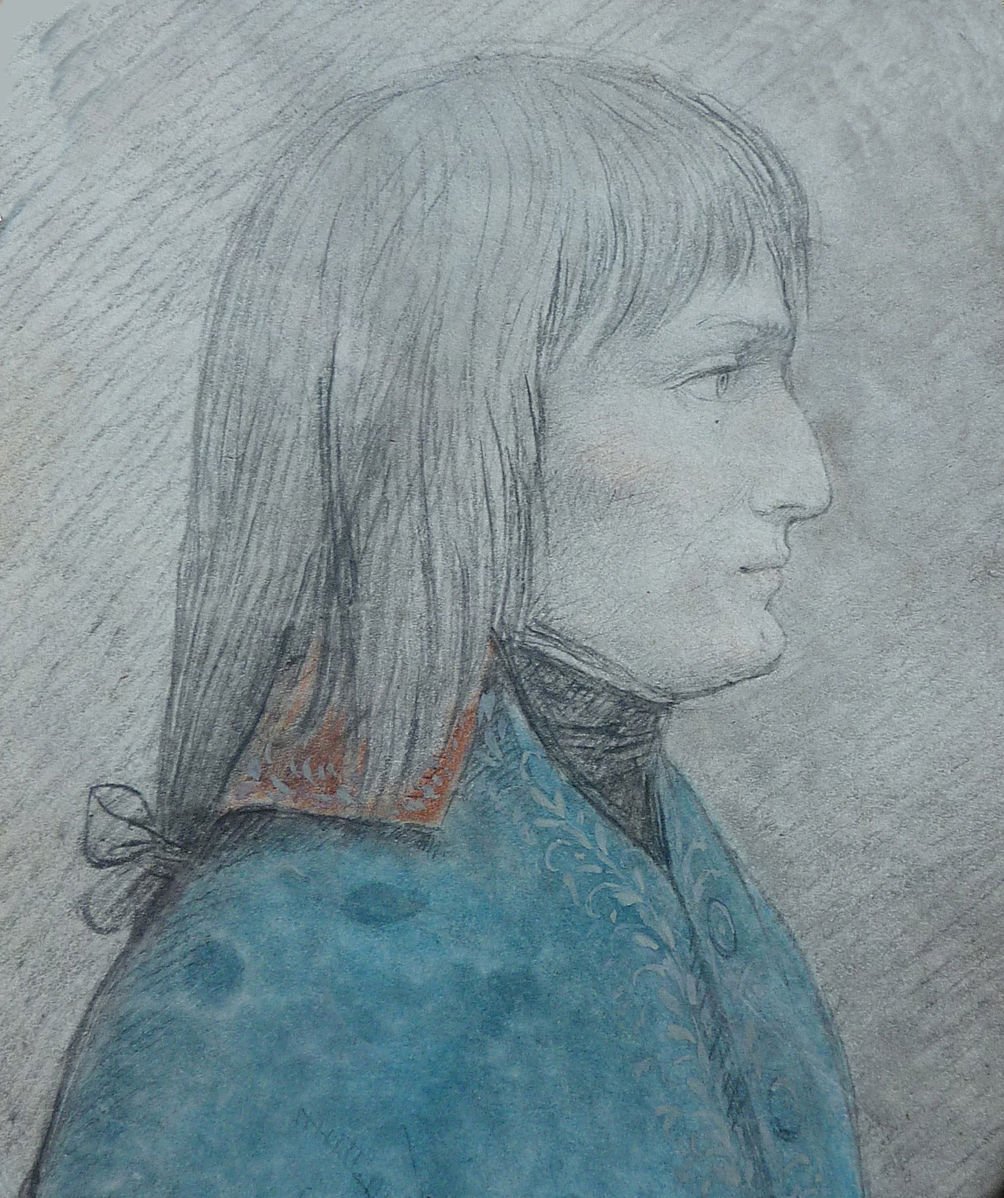
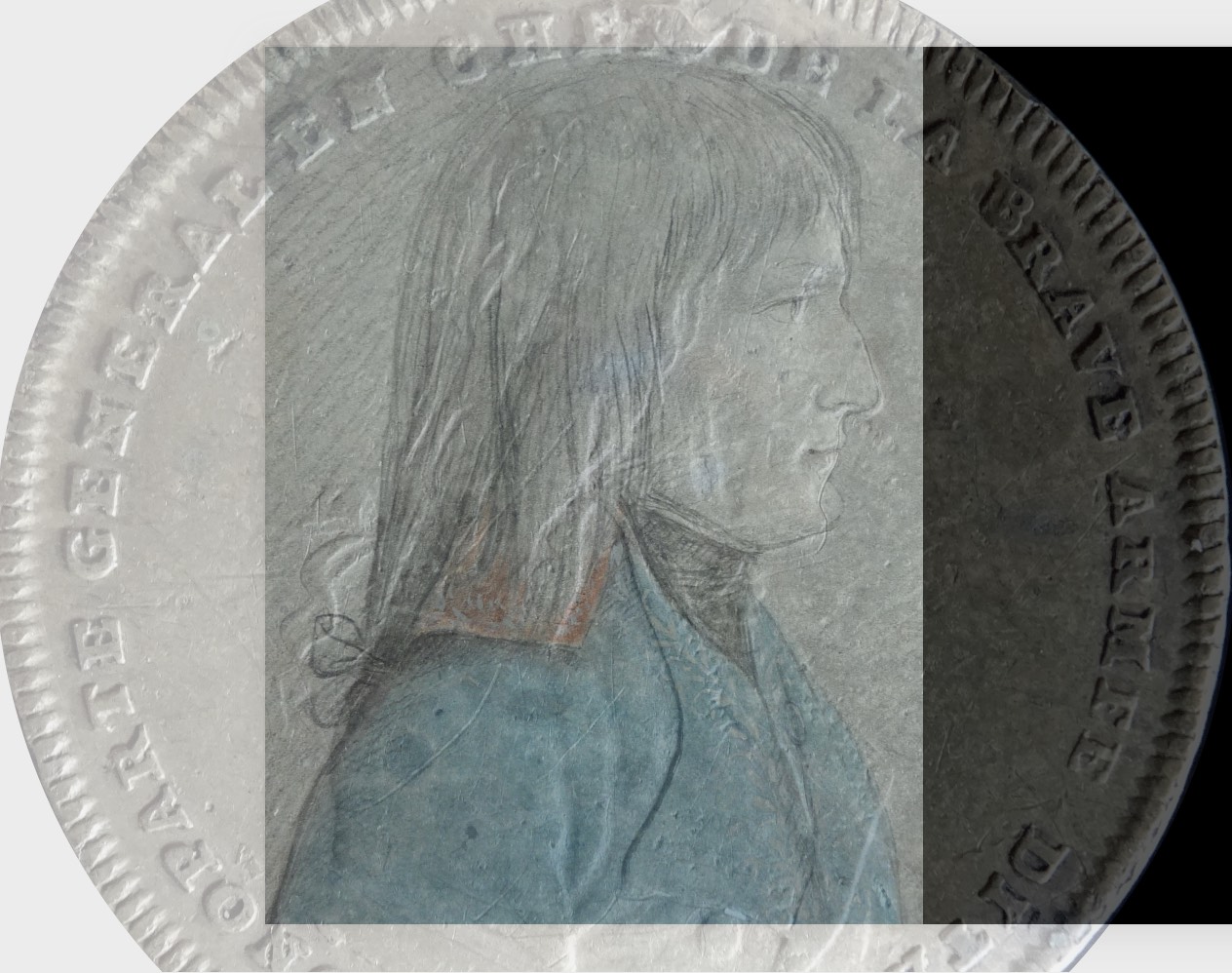
Early Medal (1796) of Napoleon Bonaparte inspired by a drawing from Giuseppe Longhi (1796)Napoleon Bonaparte is one of the most thoroughly studied celebrities of human civilization. According to J.D. Markham, over 300,000 different books about Napoleon have been written over the past 2 centuries, a staggering figure, when compared to other celebrities (heroe or foe) from the past. Similar to the staggering volume of written works, the portrait of Napoleon was depicted on a huge number drawings & paintings ( https://fr.wikipedia.org/wiki/Icono...apoleon_Ier) but also statues and medals. Despite an attempt (immediately after the fall of the emperor), to erase the memory of Napoleon from society, the medals depicting Napoleon became collector's items over the course of the 19th century. And their diversity is huge. Bramsen's reference work (Medailler de Napoleon Le Grand, 3 tomes, 1904) enlists more than 2000 different pieces, not counting the variants. This vast amount of items had a beginning: a relatively unknown and poorly characterized piece: a medal with a diameter of 33 mm and weight of ±10 grams produced from brass, red copper or silver metal with a portrait and text celebrating the already succesfull campaign of the young general Napoleon in Italy. A picture of this medal is shown below.  The medal is mentioned for the first time in the book of J.S. Hennin (1826 - Histoire Numismatique de la Revolution Française), number 767. The description and drawing show the portrait of Napoleon to the right on the front with the edge inscription: BUONOPARTE GENERAL EN CHEF DE LA BRAVE ARMEE DITALLIE The reverse shows Minerva sitting on a weapon booty, holding a laurel branch in her right hand, resting on a shield and a fascius. Below: 1796. The legend is : VOILA SOLDATS VALEUREUX LE FRUIT DE VOS TRAVAUX.  In the context of this CCF thread, I wondered if one could find a direct link to the artist who created this powerful portrait in 1796. A likely answer is shown on the French Wiki pages describing the campaign of Napoleon in Italy (1796-1797) or the iconography of Napoleon (see address below). Each page shows the same drawing of the portrait of Napoleon made by Giuseppe Longhi in 1796.  According to I. Olivier this portrait (18.5 × 14 cm - in pencil enhanced with watercolor) was made in Milan in the autumn of 1796 when the artist met the general in real. In his article, Olivier mentions that this drawing became soon famous and was imitated by many others in Europe; moreover because of false pieces from earlier dates, the 1796 portrait may be the first authentic image of the general. The remarkable resemblance between the portrait on the medals described by Hennin and Longhi's sketch is not limited to the general's face, but also to generals' hair (with ribbon) and the waistcoat with the embroidered edges. This near-perfect resemblance suggests that indeed the medals and the drawing are connected. The first image of a man who would climb from that moment in less than a decade to the most powerful position of his time. https://www.ukessays.com/essays/his...ry-essay.phphttps://fr.wikipedia.org/wiki/Campa..._(1796-1797)http://www.revue-circe.uvsq.fr/le-p...ur-lhistoire -thin-faux/ https://fr.wikipedia.org/wiki/Icono...Napoleon_Ier
|
|
Moderator
 United States
189767 Posts |
Good to see this topic revived. Very nice example! 
|
|
Pillar of the Community
 Sweden
2124 Posts |
Interesting! Thanks for sharing 
|
|
Pillar of the Community
 Belgium
1185 Posts |
thanks erafjel and jbuck ! in the picture below, the drawing and medal are superimposed quite convincingly the same portrait, the first of a very long series of portraits of one of the most significant persons of all times 
|
|
Moderator
 United States
189767 Posts |
Quote: in the picture below, the drawing and medal are superimposed Impressive! 
|
|
Pillar of the Community
 Belgium
1185 Posts |
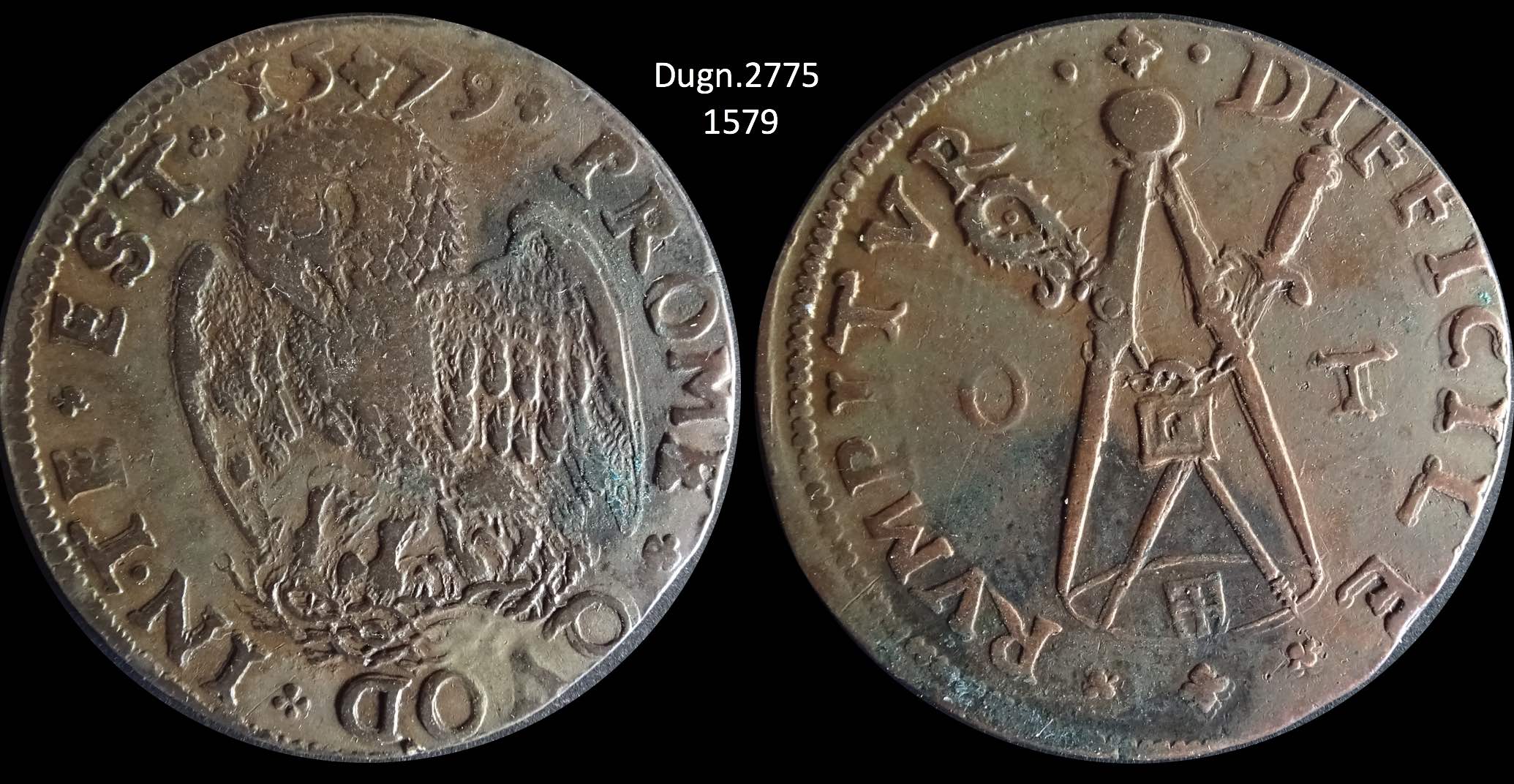
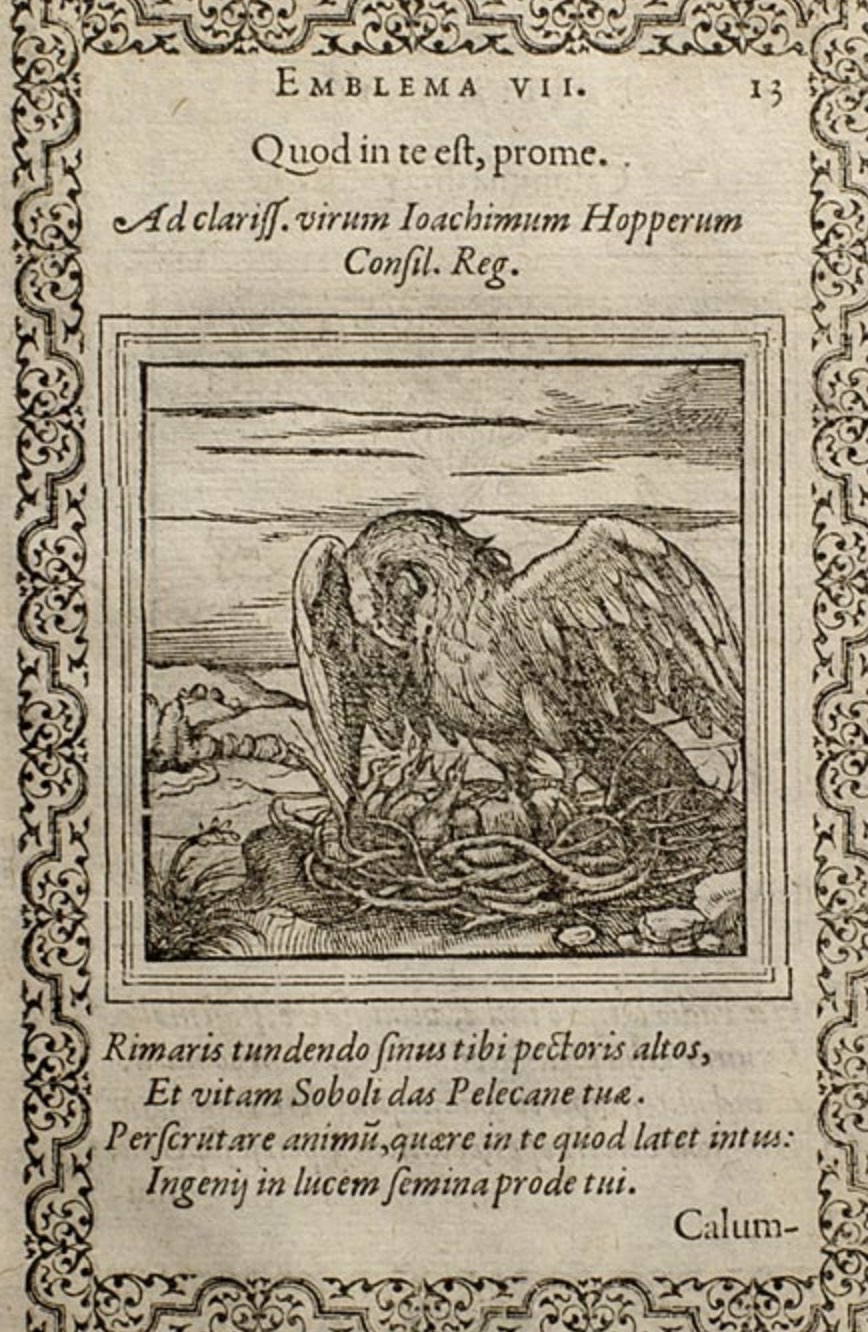
happy to say I found another example of an embleme (engraving and logo) published somewhat earlier than the medal (jeton): this example is a rare jeton from 1579 minted in the Dutch Republic Dugniolle 2775 - van Loon I 266 "Better understanding between protestants and catholics in the state of Utrecht"  The obverse shows a Pelican which wounds itself in the chest, droplets of blood feeding its chicks QVOD IN TE EST PROME 1579 The reverse pictures a compass, staff en sword secured by chain and lock; below coat-of-arms of Utrecht DIFFICILE RVMPITVR in the field the letters O - T (Ordines Trajecti) a superb piece of this kind was auctioned last year by Jean Elsen 148 lot1276 2021 the striking image of the altruistic pelican was inspired by an embleme book. In 1565 Hadrianus Junius (Adriaen Dejonghe) (1511-1575) published his Emblemata. Embleme no VII is entitled: Quod in te est, prome. (Show what you've got). https://www.emblems.arts.gla.ac.uk/...d2=sm658_a7r Rimaris tundendo sinus tibi pectoris altos, Et vitam Soboli das Pelecane tuae. Perscrutare animum, quaere in te quod latet intus: Ingenii in lucem semina prode tui. Dig deep into the hidden folds of your breast and search them out, And, like the Pelican, you will give life to your offspring. Examine your heart, search what lies within yourself: Bring the seeds of your talents out into the light. The embleme was dedicated to Joachim Hoppers (1530-1576): chief of justice and royal counsellor to Philip II in the Netherlands. Hoppers wrote historically important papers on religious disputes in the low countries, matters that dominated daily life in much of the 16th century.
Edited by 1c5d7n5m 01/24/2022 11:58 am
|
|
Pillar of the Community
 United States
5192 Posts |
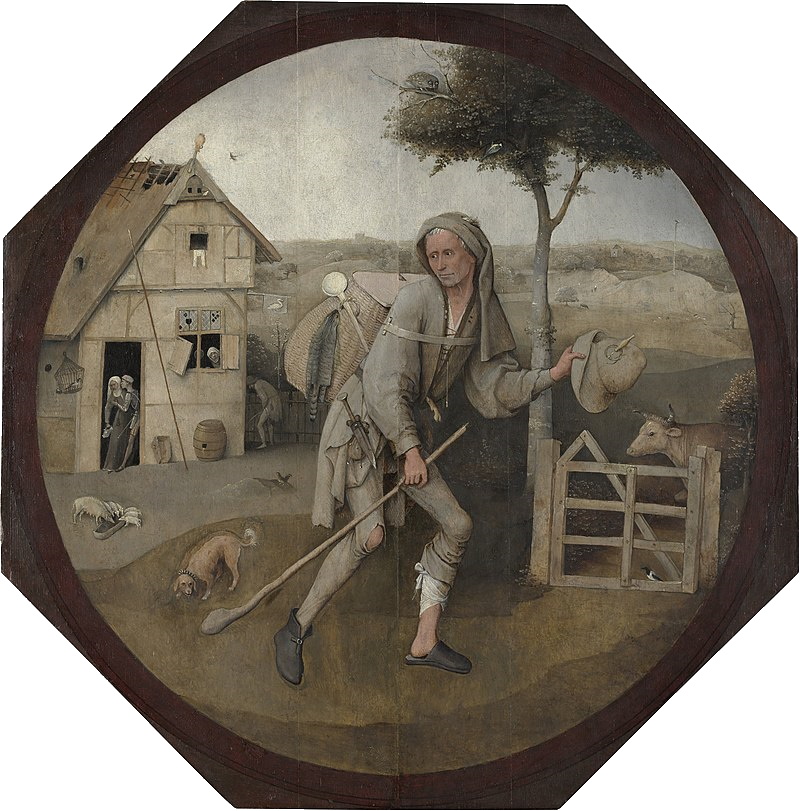
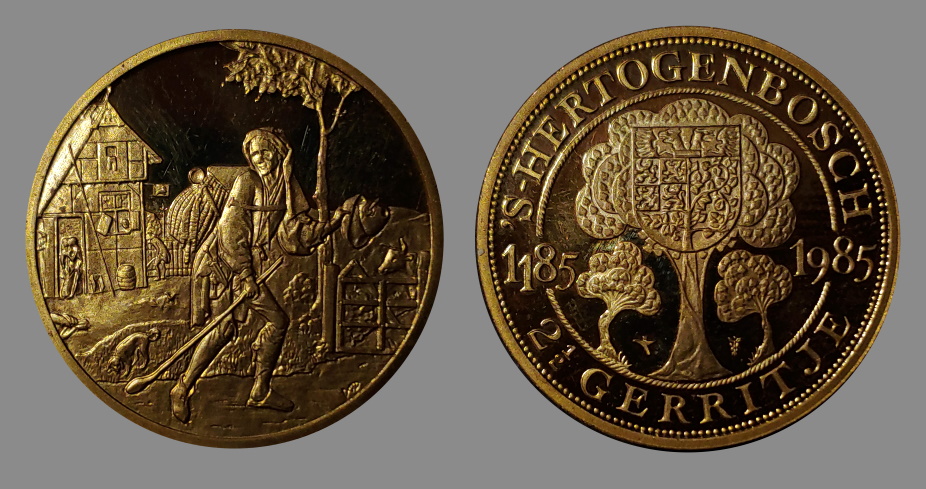
I already posted this in the Exonumia thread, but my 2½ Gerritje Bronze token, celebrating 800 years of City Rights of the town of 's Hertogenbosch, features the "Marskramer" ("The Wayfarer"), a well-known allegorical painting by local famous artist Hieronymus Bosch.  
|
| |
Replies: 83 / Views: 20,961 |