


Coin Community Family of Web Sites Join Thousands of Coin, Bullion, & Money Collectors
Join Thousands of Coin, Bullion, & Money Collectors Shop for APMEX Bullion on eBay!Coin, Banknote and Medal Collectors's Online Mall 300,000 items to help build your collection! Specializing in Modern Numismatics Vancouvers #1 Coin and Paper Money Dealer Royal Canadian Mint products, Canadian, Polish, American, and world coins and banknotes.


Username:
Password:
Save Password
Forgot your Password?


This page may contain links that result in small commissions to keep this free site up and running.

Welcome Guest! Registering and/or logging in will remove the anchor (bottom) ads. It's Free!

Acetone Video Recommendation For 1936 Shilling

To participate in the forum you must log in or register.
Author Previous TopicReplies: 4 / Views: 609Next Topic  
Pillar of the Community
captainmandrake1's Avatar
United States
878 Posts
 Posted 12/06/2023  4:44 pm Show Profile   Bookmark this topic Add captainmandrake1 to your friends list Get a Link to this Message Number of Subscribers
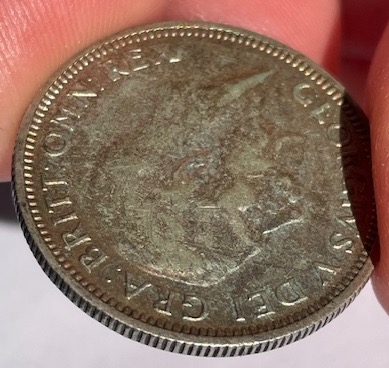
Looks like this shilling I recently bought has some greeny goo on it. Can anyone recommend a how-to video on working with acetone to clean it up.
Thanks!
Acetone-Video-Recommendation-For-1936-Shilling
Bedrock of the Community
Coinfrog's Avatar
United States
94367 Posts
 Posted 12/06/2023  5:30 pm  Show Profile   Bookmark this reply Add Coinfrog to your friends list Get a Link to this Reply
Acetone may not be the answer, but it is a harmless experiment - just let it soak for a couple of hours and see if there's an improvement. No video necessary.
Pillar of the Community
captainmandrake1's Avatar
United States
878 Posts
 Posted 12/07/2023  7:39 pm  Show Profile   Bookmark this reply Add captainmandrake1 to your friends list Get a Link to this Reply
Ok, thanks for the advice!
Moderator
Learn More...
Sap's Avatar
Australia
16808 Posts
 Posted 12/07/2023  10:09 pm  Show Profile   Bookmark this reply Add Sap to your friends list Get a Link to this Reply
Some things to be aware of with acetone:

- It's about as flammable as gasoline, so treat it like gasoline, as far as fire safety is concerned: no smoking, no naked flames or heat sources.

- Many people find the fumes from acetone unpleasant; prolonged exposure to acetone fumes is likely to give you a headache and a small minority of people are acutely sensitive to it and can become severely ill. Use in a well ventilated area, preferably outdoors if you do not have access to a lab-grade fume cabinet.

- Acetone is volatile - meaning it evaporates quickly, compared to water (which is, of course, the main reason for the first two points mentioned). This means that if you leave an opened bottle or jar exposed to the air, it will evaporate away quite quickly. Keep the bottle sealed unless you're actually using it. And if you're using it outdoors as suggested above, avoid direct sunlight.

- Acetone is a very good solvent. It's not a "universal solvent", but it will dissolve more "goo" than water or soap does. One of the things it's very good at dissolving is the oil from the sweat glands in your skin. Try to avoid touching the acetone with your bare fingers, as it will strip the oil out of your fingertips. This dissolved oil will then re-deposit onto anything the acetone later touches - like your coins.

- Acetone is also very good at depolymerizing certain plastics. Watching a tiny sprinkle of acetone "eat" an entire block of styrofoam and turn it into a little puddle of slimy goo is an effective demonstration of the power of acetone to depolymerize polystyrene. Do not use plastic or rubber jars, cups or bottles to hold the acetone unless you've already tested it to see that that particular piece of plastic is immune to acetone's effects. Best to avoid plastic and rubber items altogether; use glass, metal or ceramic items instead (but make sure such items are not coated or painted with something that the acetone will dissolve).

- While acetone is generally regarded as "safe" to handle (regarded as non-toxic and non-carcinogenic), acetone is more poisonous than alcohol, but doesn't give the pleasant effects often attributed to alcohol. So don't drink it, or allow any other lifeforms (pets, children etc) to drink it.

- Finally, disposal. Acetone is completely soluble in water, so the "old-fashioned" disposal method is to simply flush it down the sink with lots of water. Some jurisdictions frown upon flushing flammable solvents into the sewerage system, and some locations use plastic plumbing which could be damaged or degraded if concentrated acetone is poured through it. Acetone is volatile (as noted above), so an alternative is to simply pour it onto a concrete or similar (unpainted) surface and let it evaporate - though this too has drawbacks in terms of atmospheric acetone contributing to air pollution and global warming. Check with your local regulations regarding the best way to dispose of waste acetone, especially if you're generating more than a couple of litres of the stuff.
Don't say "infinitely" when you mean "very"; otherwise, you'll have no word left when you want to talk about something really infinite. - C. S. Lewis
Pillar of the Community
Learn More...
tdziemia's Avatar
United States
7934 Posts
 Posted 12/09/2023  11:11 am  Show Profile   Bookmark this reply Add tdziemia to your friends list Get a Link to this Reply
Really good practical suggestions!

If you use acetone frequently, the best storage solution is to keep an empty used acetone bottle (and cap) and write WASTE ACETONE on the label. Dump your used acetone there, and store the bottle in a cool dark place if possible. The bottles and caps are made of polyethylene or polypropylene which are plastics that are not affected by acetone. (Way back in the day, most college chemistry labs had polyethylene squeeze bottles of acetone on the lab bench for cleaning glassware, but not any more.)

When the container is full, consult with your local municipality on how to dispose of flammable solvents, and follow their recommendations. Where I live, there are recycling days a few times a year and you can drop off waste solvents, paint, etc. at specific dropoff locations. That's the best way to dispose of it.

If you use it very infrequently, allowing small amounts to evaporate outdoors is not a terrible idea, except that acetone is a greenhouse gas, and decomposes into other compounds which are also greenhouse gases.

Though from a practical viewpoint, burning a gallon of gas generates 20 pounds of carbon dioxide. Whatever acetone we emit will be peanuts compared to what any of us generates by driving.
  Previous TopicReplies: 4 / Views: 609Next Topic  

To participate in the forum you must log in or register.


Disclaimer: While a tremendous amount of effort goes into ensuring the accuracy of the information contained in this site, Coin Community assumes no liability for errors. Copyright 2005 - 2026 Coin Community Family- all rights reserved worldwide. Use of any images or content on this website without prior written permission of Coin Community or the original lender is strictly prohibited.
Contact Us  |  Advertise Here  |  Privacy Policy / Terms of Use

Coin Community Forum © 2005 - 2026 Coin Community Forums
It took 0.23 seconds to rattle this change. Forums