







 First Page


 Posted 01/29/2019 10:58 pm


I'm trying my best to follow this topic, but get some what confused at points.
If grams are right, My first thought was ok, why is it in question? Because of a yellow copper tint?
Ok that weight seems a bit off.
On the 20 meaning what? Also the acronym IMPD is new to me. I see in above link NGC suggested a 1942 cent struck on an Ecuador 20 Centavos planchet. Wondering if that's what your referencing?
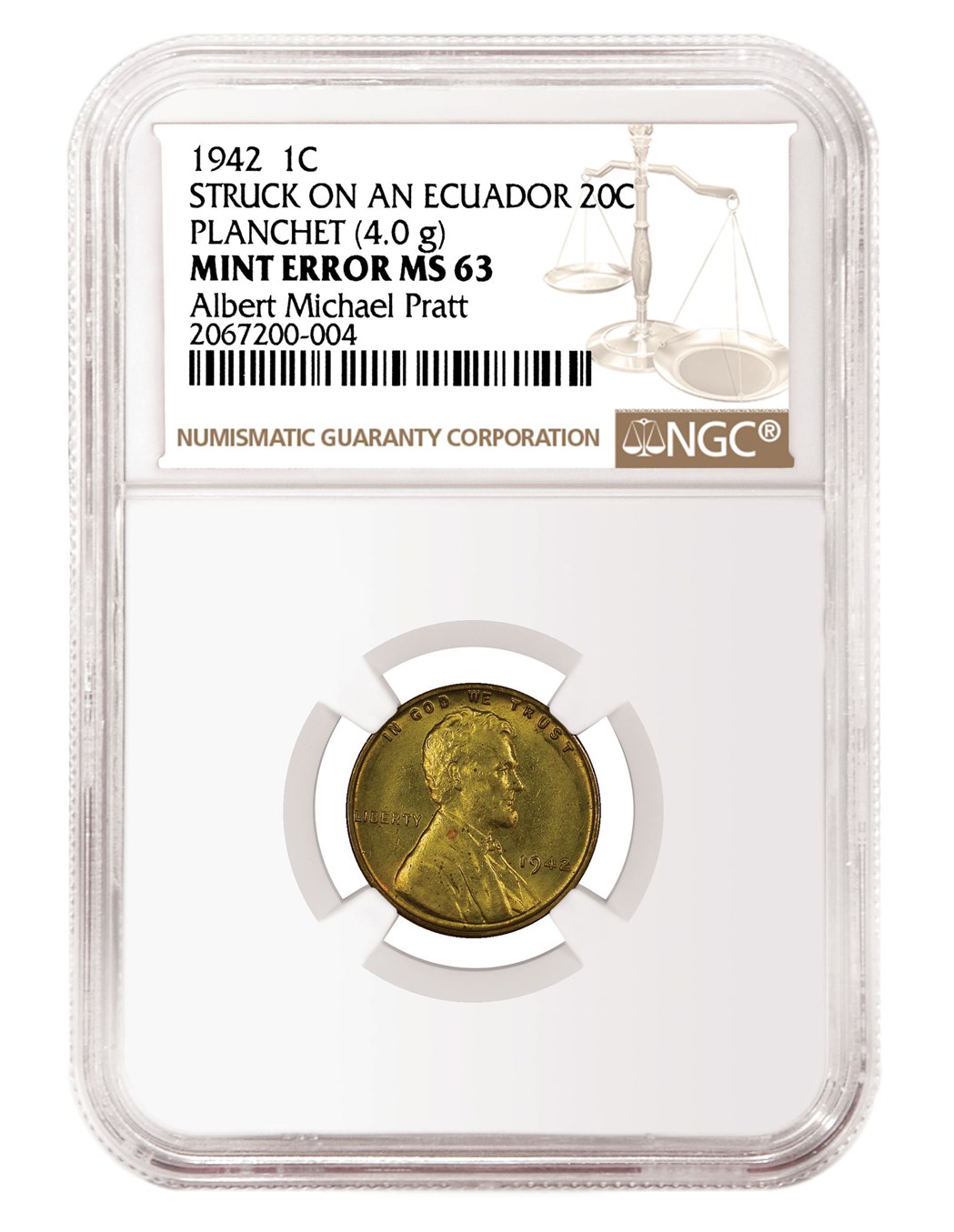
If so I question the NGC attribution or the reference I'm using. Seems the Philadelphia mint was busy producing coinage of numerous denominations for foreign countries this year. The Ecuador 20 Centavos as well as the Peru 10 Centavos (suggested) weight in at 4.0 grams, with a similar composition.
My issue is the diameter of both. The Ecuador 20 Centavos planchet, by the reference I use shows to be 21mm diameter. That would not fit in the 19mm collar meant for US cents. Same with the 10 Centavos for Peru at 20mm in diameter. It might have a better chance, but I'm thinking both would show cramped up collar symptoms after strike.
Just food for thought. Maybe blank originated from rolled thick US cent stock, or blank punched from wrong stock meant for foreign coinage. Harder to believe, but what the hey, check the diameter as an improper sized collar would need to be in the mix if a planchet or blank larger than 19mm meant for US cents was used.
After thinking a bit more, if a larger diameter blank was ran through the upset process sized for US cents, would it might make it through too the diameter needed?
I need to stop bouncing this ball as I'm starting to make myself dizzy. Thanks, Doug.
Quote:
been trying to do some research on this, just asking thoughts, grams are right and also has Lincoln line on reverse was looking at stalks and such to see if mayhaps a fake.
been trying to do some research on this, just asking thoughts, grams are right and also has Lincoln line on reverse was looking at stalks and such to see if mayhaps a fake.
If grams are right, My first thought was ok, why is it in question? Because of a yellow copper tint?
Quote:
well the reason I ask is because the grams on it is pretty high 3.9
well the reason I ask is because the grams on it is pretty high 3.9
Ok that weight seems a bit off.
Quote:
https://www.NGCcoin.com/news/articl...mint-errors/ for the 1942 error on the 20 and does show signs of IMDP on reverse
https://www.NGCcoin.com/news/articl...mint-errors/ for the 1942 error on the 20 and does show signs of IMDP on reverse
On the 20 meaning what? Also the acronym IMPD is new to me. I see in above link NGC suggested a 1942 cent struck on an Ecuador 20 Centavos planchet. Wondering if that's what your referencing?
If so I question the NGC attribution or the reference I'm using. Seems the Philadelphia mint was busy producing coinage of numerous denominations for foreign countries this year. The Ecuador 20 Centavos as well as the Peru 10 Centavos (suggested) weight in at 4.0 grams, with a similar composition.
My issue is the diameter of both. The Ecuador 20 Centavos planchet, by the reference I use shows to be 21mm diameter. That would not fit in the 19mm collar meant for US cents. Same with the 10 Centavos for Peru at 20mm in diameter. It might have a better chance, but I'm thinking both would show cramped up collar symptoms after strike.
Just food for thought. Maybe blank originated from rolled thick US cent stock, or blank punched from wrong stock meant for foreign coinage. Harder to believe, but what the hey, check the diameter as an improper sized collar would need to be in the mix if a planchet or blank larger than 19mm meant for US cents was used.
After thinking a bit more, if a larger diameter blank was ran through the upset process sized for US cents, would it might make it through too the diameter needed?
I need to stop bouncing this ball as I'm starting to make myself dizzy. Thanks, Doug.
Edited by Halo1st
01/29/2019 11:56 pm
01/29/2019 11:56 pm


