| Author |
 Replies: 7,432 / Views: 410,352 Replies: 7,432 / Views: 410,352 |
|
|
|
Pillar of the Community
 Sweden
2124 Posts |
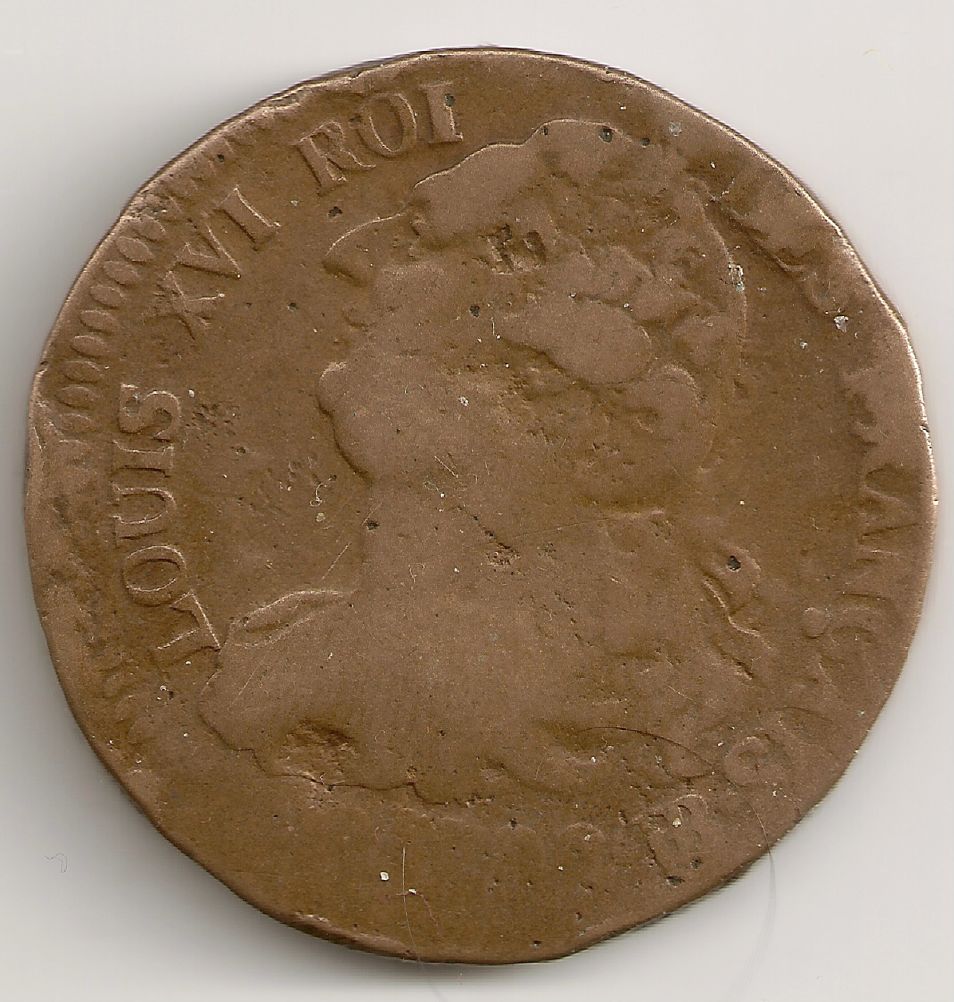
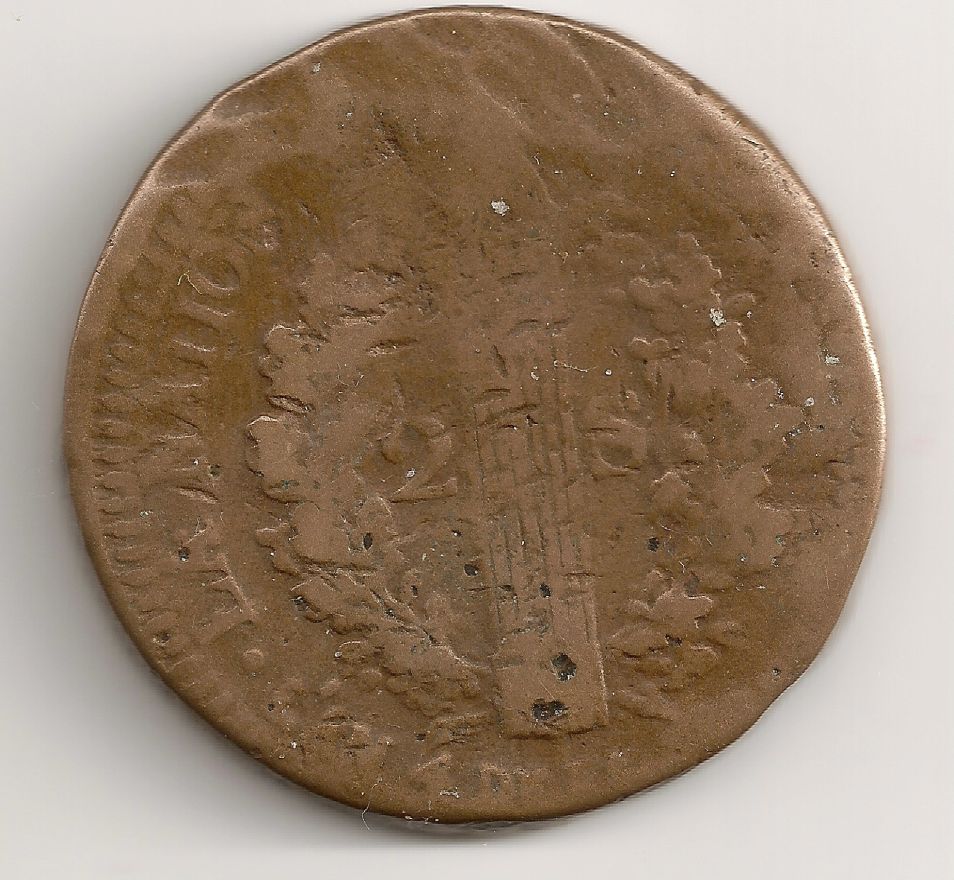
France 1792, ecu, Paris (A).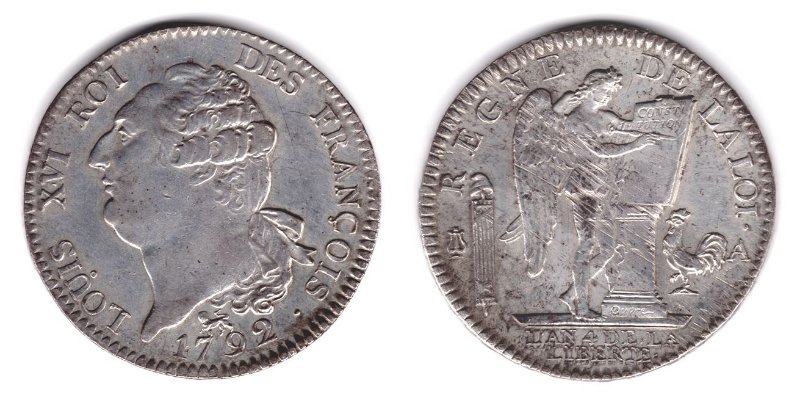 Entering 1792, France is still a monarchy, albeit constitutional instead of the absolute monarchy that reigned before the revolution of 1789. The king's portrait still adorns the coins (but with a portrait more life-like than the nearly 20 year old one that was used up until the revolution). And even though decimalization of the currency is discussed, the old livre-sous-denier system still reigns. Apart from the new portrait, the "constitutional" ecus also have a new reverse: Instead of the royal coat of arms, it shows the Genius of the Nation, writing CONSTITUTION on a tablet. The text reads REGNE DE LA LOI, "Reign by the law," that is, not by the king. A comment about the dating: L'AN 4 DE LA LIBERTe means "Year 4 of freedom" and refers to it being four years since the revolution (counting 1789 as the 1st year). This is different from the revolutionary calendar which starts its year 1 on 22 Sept 1792, the day of the new constitution for the republic (and the day after Louis XVI was deposed and became "citizen Capet"). It came into force towards the end of 1793, so coins from 1792-93 still used the Gregorian calendar. France 1792, 2 sols. Soho mint. 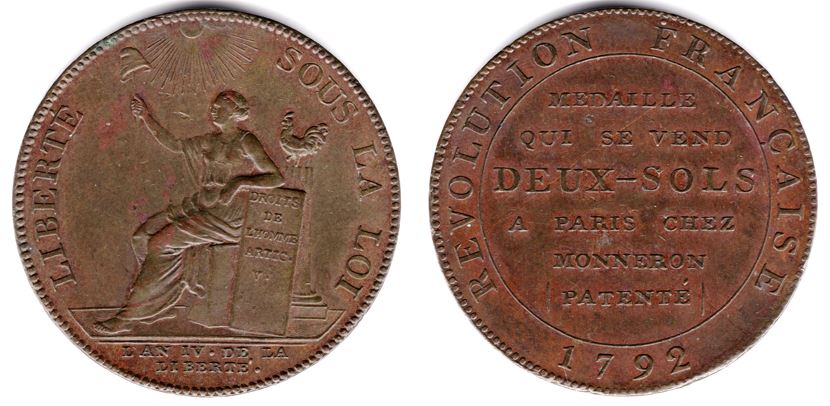 One of the many emergency coins that circulated in France 1791-92, due to the lack of small change. With a lack of copper in France, the Monneron brothers striked coins at the Soho mint in Birmingham (the same mint that five years later would strike cartwheel pennies). This was the time of the assignats, the paper money issued by the government and supposedly backed by seized church property. The public was keen, however, to exchange their assignats into Monneron's copper money, while the Monneron brothers thought they made a good deal, since the manufacturing cost for the coins was far less than their nominal value. But, when the assignats started to fall in value (the government could not resist the temptation to print more assignats than could be backed), and the Soho mint did not accept payment in assignats, the brothers got into trouble and eventually went bankrupt. The text is LIBERTe SOUS LA LOI - "Freedom under the law" - and REVOLUTION FRANÇAISE - to appeal to the revolutionary minded public, no doubt. The edge has the inscription LA CONFIANCE AUGMENTE LA VALEUR - "Confidence increases the value" - a bit of support for its value  .
|
|
Pillar of the Community
United States
2289 Posts |
1792 lady godiva half penny 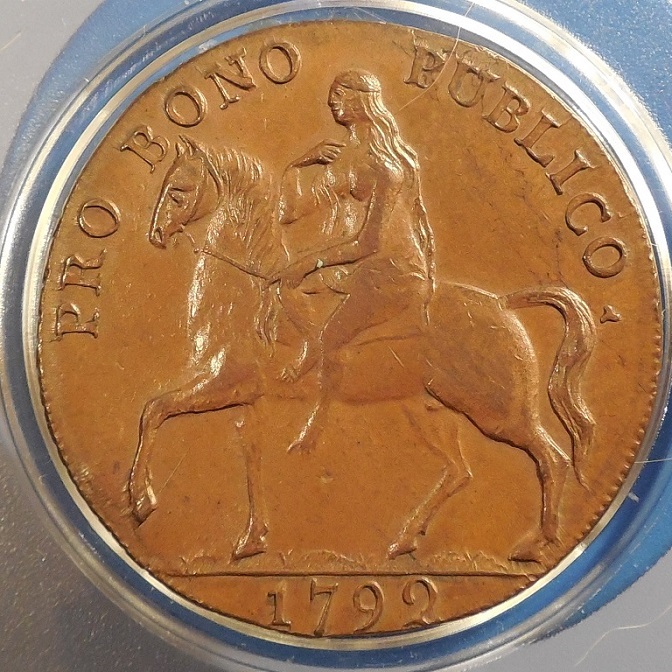 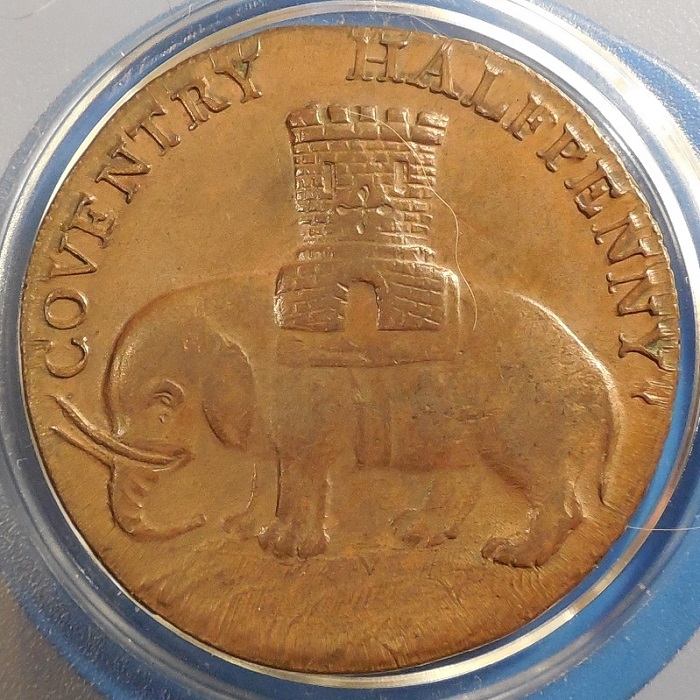 Edited by mikev50
09/05/2020 06:16 am
|
|
Pillar of the Community
United States
2645 Posts |
|
|
Pillar of the Community
United States
1186 Posts |
1792 Norfolk and Norwich British Halfpenny Token. 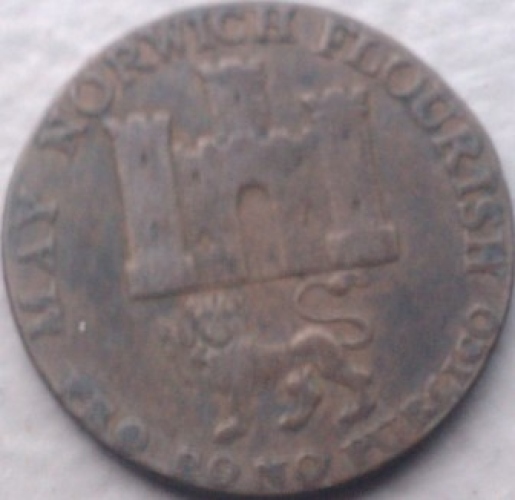 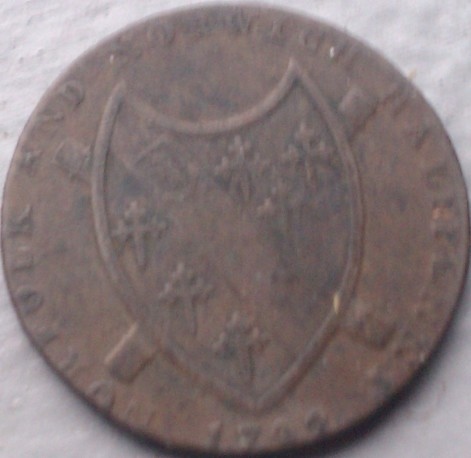 |
|
Bedrock of the Community
United Kingdom
19161 Posts |
I've also got a 1792 Coventry Halfpenny but it's nowhere near as nice as mikev50's! 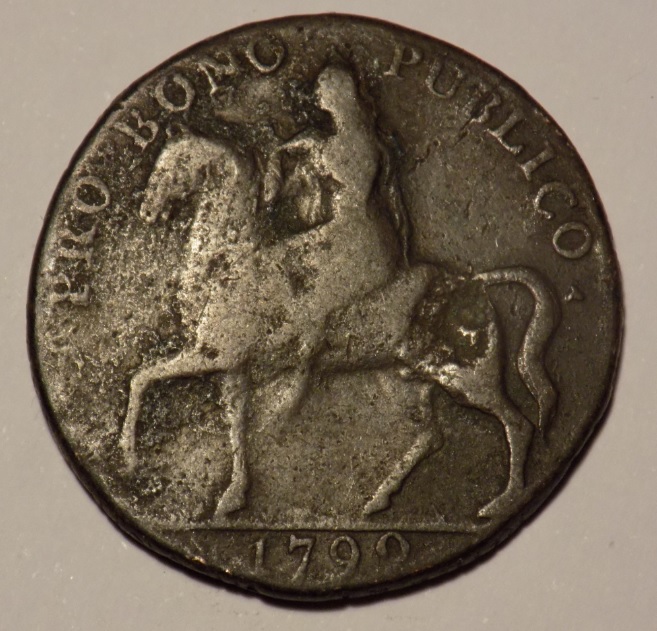 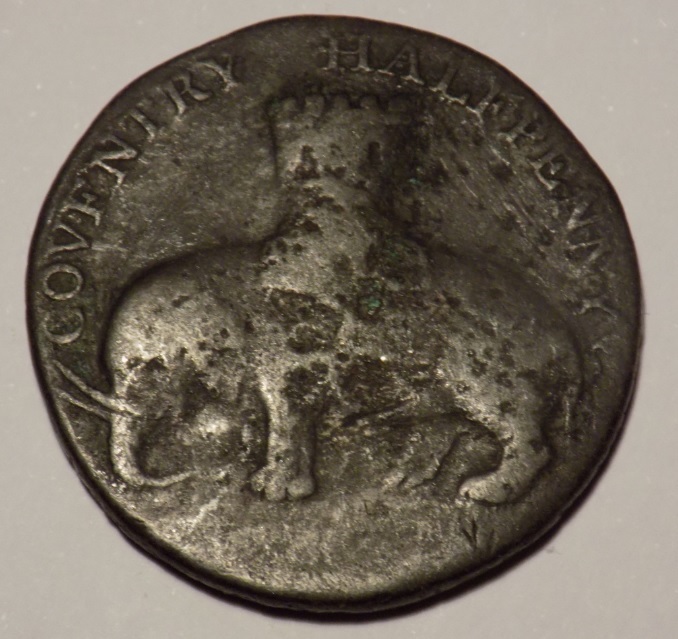 Coventry today would be unrecognizable to Lady Godiva, who lived in the 11th century and is pictured on the token, and supposedly rode naked through the city's streets to protest against her husband's oppressive taxation of the townsfolk. It would be equally unrecognizable to the issuers of this token, as sadly the city was devastated in an air raid during World War II. The main tourist attraction today is the dramatic modern Cathedral, designed by Sir Basil Spence and opened in 1962 to replace the 15th-century cathedral destroyed in the War. |
|
Pillar of the Community
United States
9395 Posts |
1792 -- Duchy of Saxe-Weimar-Eisenach, 3 pfennig:  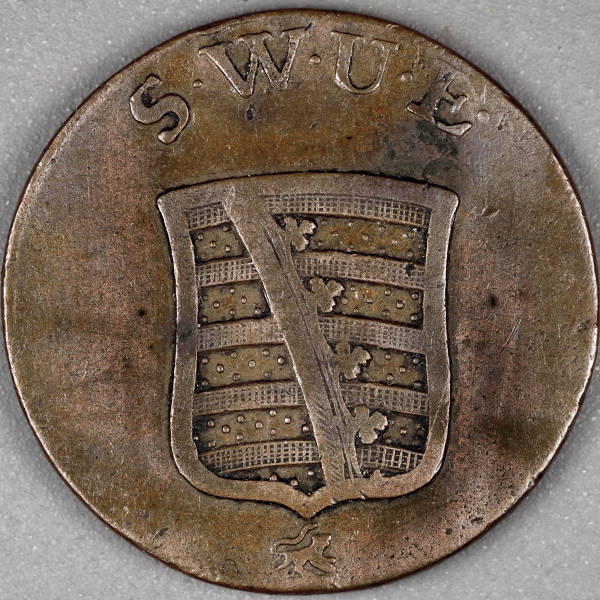 |
|
Pillar of the Community
United States
9395 Posts |
1792 -- Free City of Aachen, 12 heller:   |
|
Moderator
 United States
34572 Posts |
Here is a 12 Heller from the German Free City of Aachen dated 1792: 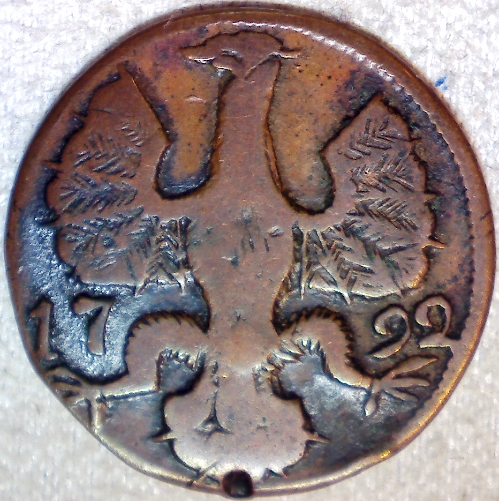 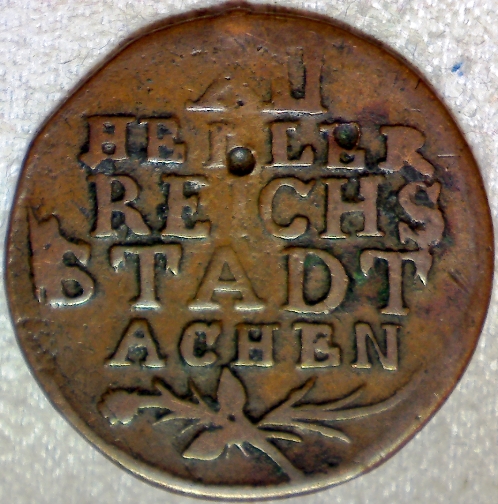 "If you climb a good tree, you get a push."
-----Ghanaian proverb
"The danger we all now face is distinguishing between what is authentic and what is performed."
-----King Adz
|
|
Bedrock of the Community
United States
12057 Posts |
Hot dog, German coins time is coming up!
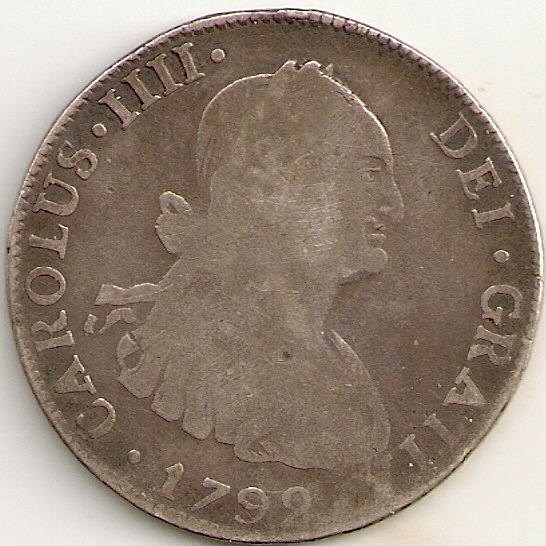
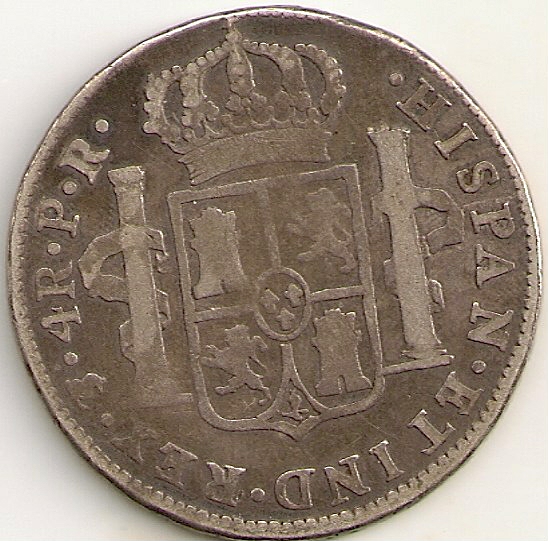
I love that 4 Reales, though. Very lovely original patina and even wear. A choice example.
And of course Conders always make me happy.
Member ANA - EAC - TNA - SSDC - CCT #890 "Most of the things worth doing in the world had been declared impossible before they were done." -- Louis D. Brandeis |
|
Bedrock of the Community
United States
12057 Posts |
1792 Halfpenny Token D&H Norfolk 14 (Norwich) EF-AU, lovely woodgrained planchet 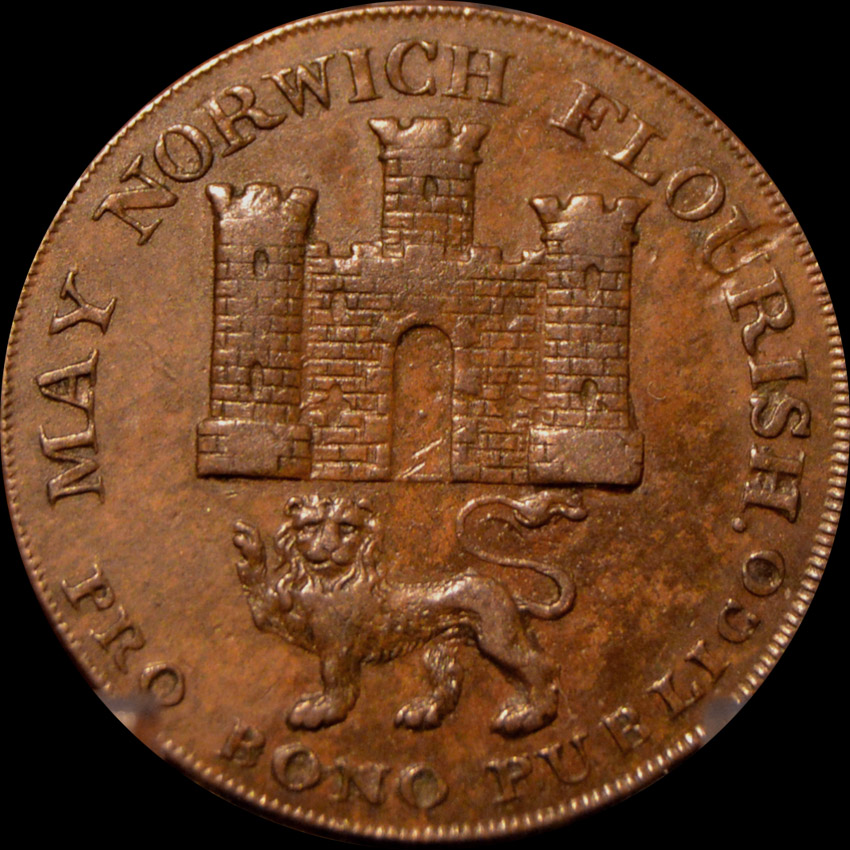 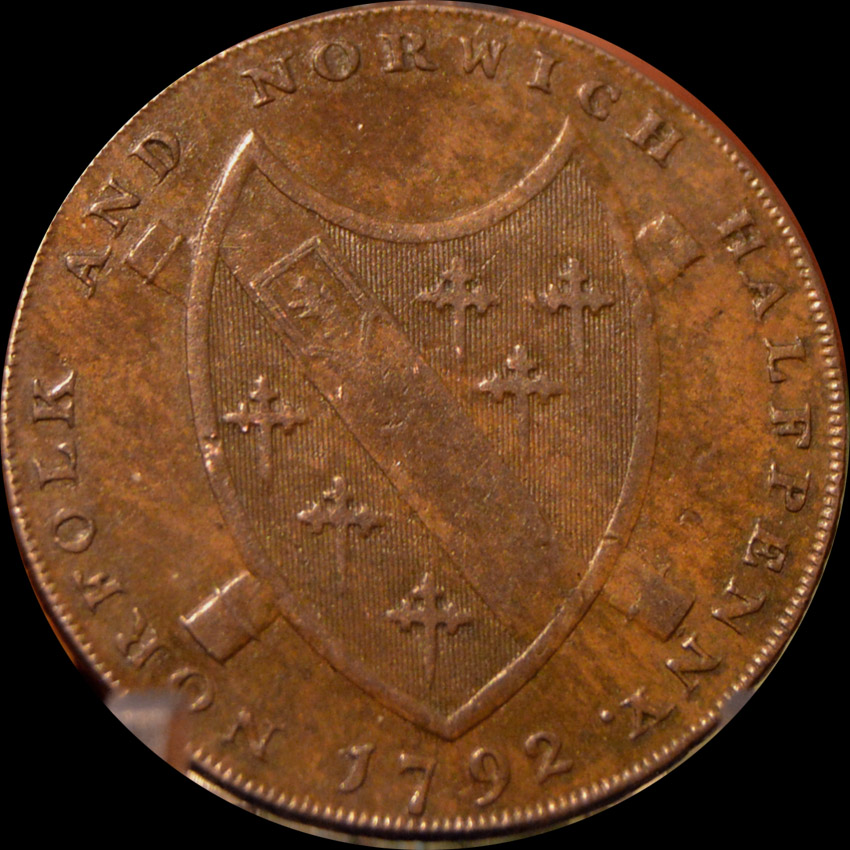 @Princetane, you speak the truth re: the bridge Conders. 1792 Halfpenny Token D&H Shropshire 12 (Coalbrooke) 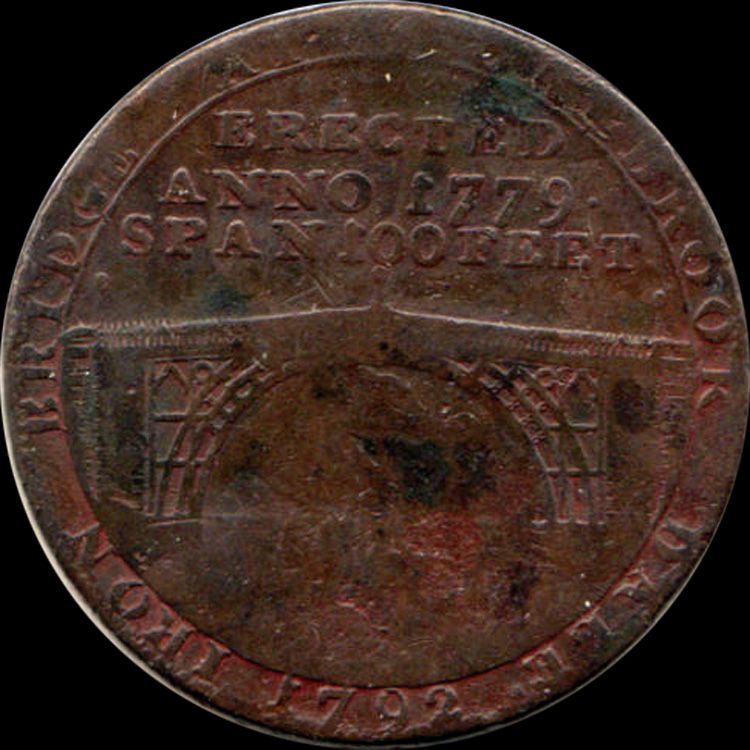 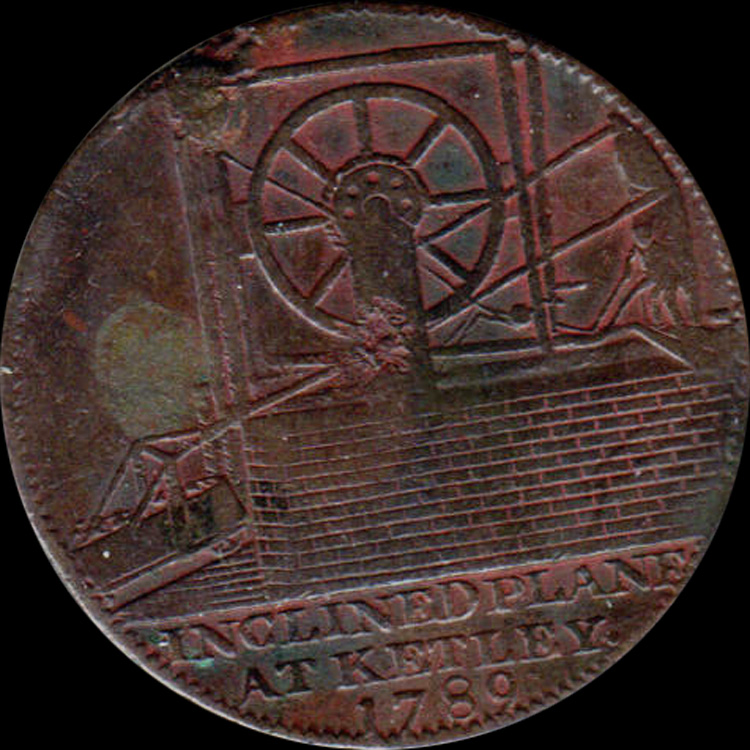 Member ANA - EAC - TNA - SSDC - CCT #890 "Most of the things worth doing in the world had been declared impossible before they were done." -- Louis D. Brandeis Edited by paralyse
09/05/2020 7:47 pm
|
|
Bedrock of the Community
United States
12057 Posts |
1792 Halfpenny Token D&H Dublin 362 Shameless (shameful?) imitation of the ubiquitous Camac, Kyan & Camac tokens, or possibly muled with/copied from the North Wales druid head Parys Mines monogram reverse with its similar legend and monogram. "R L(P?) & Co" Monogram instead of "H M Co" for Hibernia Mining Company / PRO BONO PUBLICO Rev: Ugly bird-headed old lady drooping all over a sad harp, "INDUSTRY HAS ITS SURE REWARD" Fine details, Corroded/environmental damage Of somewhat questionable artistic merit...possibly engraved by whomever did the hilariously bad "Linear Britannia" counterfeit George III halfpence in the 1770s-1780s, ROFL. I hope the engraver sought alternative employment after this effort. 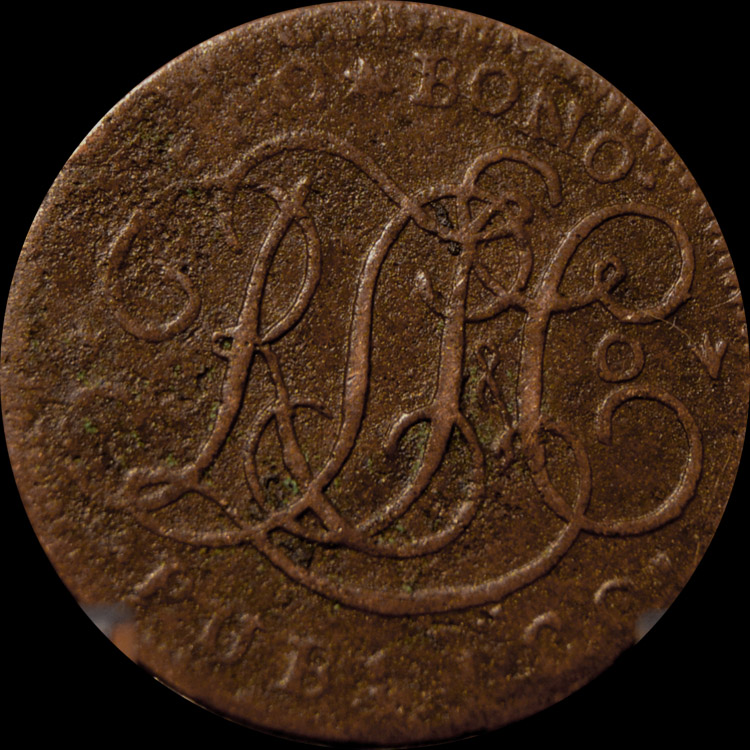 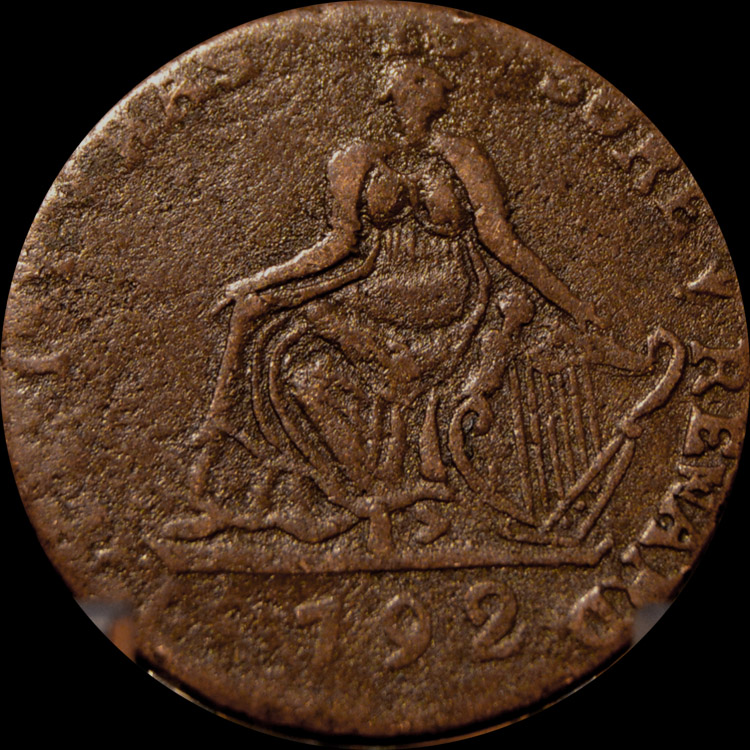 Member ANA - EAC - TNA - SSDC - CCT #890 "Most of the things worth doing in the world had been declared impossible before they were done." -- Louis D. Brandeis |
|
Bedrock of the Community
United States
12057 Posts |
An oddball denomination. 1792-C 1 1/2 Pfenning Brunswick-Luneburg-Calenberg (German States) 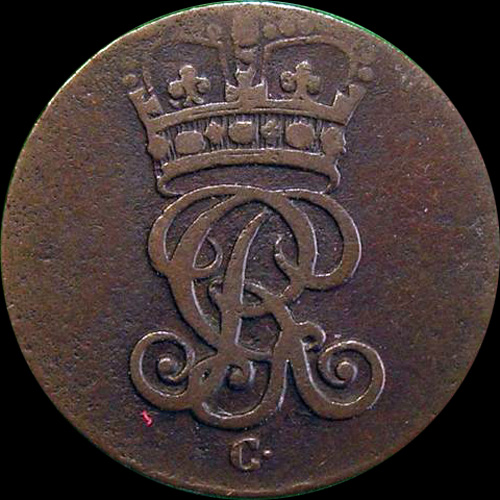 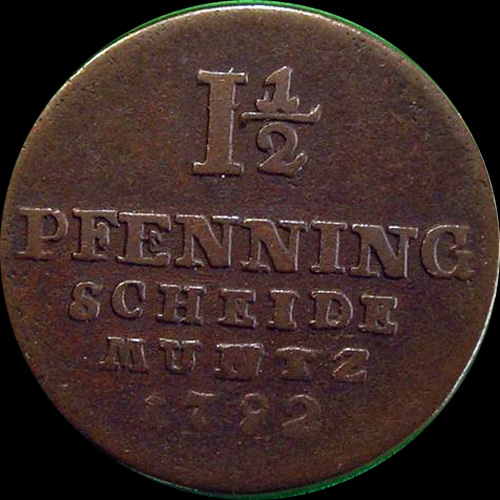 Member ANA - EAC - TNA - SSDC - CCT #890 "Most of the things worth doing in the world had been declared impossible before they were done." -- Louis D. Brandeis |
|
Bedrock of the Community
United States
12057 Posts |
My favorite 1792 is this "Silver Ducat" or medalet/commemorative token from Mannheim celebrating the 50th year of Karl Theodor's reign. For a good number of years, there was a widespread theory that the so-called "Silberdukaten" were patterns or trial strikes for gold Ducat coins, but nowadays the prevailing theory is that these coins/medals were struck in silver on purpose as gifts, favors, and rewards to be handed out or sold during special celebrations and events, and they are now often referred to as "Gedenkmünzen" (commemorative coins) instead. Karl Theodor (the Palatinate Elector) would die 7 years later, and there was much rejoicing throughout Bavaria, where he was widely viewed as both an indolent and ineffective leader -- he proposed, among other things, giving up half of Bavaria in exchange for territories in the Austrian Netherlands, and then, facing down the imminent march of the invading French armies, offering to subjugate Bavaria wholesale to the Holy Roman Emperor Francis II's Austrian Empire, which would have made Bavaria a glorified client/puppet state under Austrian rule. (Francis had the last laugh in 1815, though, didn't he?) 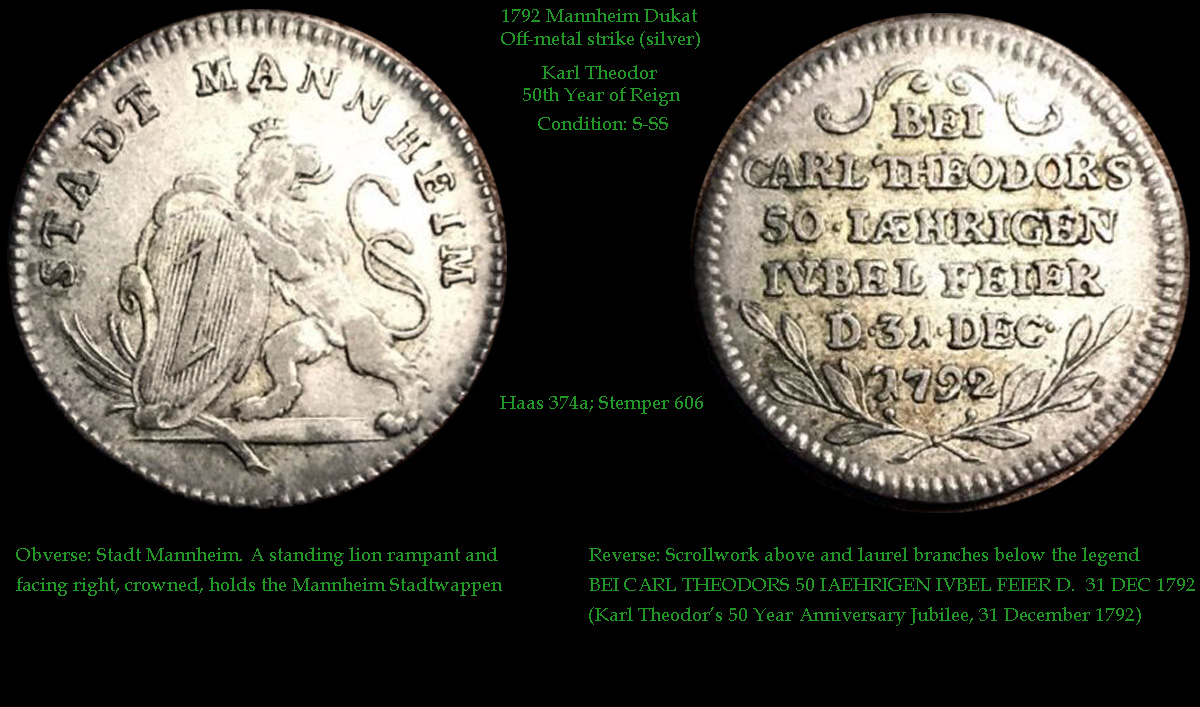 Member ANA - EAC - TNA - SSDC - CCT #890 "Most of the things worth doing in the world had been declared impossible before they were done." -- Louis D. Brandeis |
|
Pillar of the Community
United States
9395 Posts |
1791 -- Republic of United Netherlands / Utrecht, 1 duit:   |
|
Pillar of the Community
United States
8076 Posts |
Poland 1791 3 groschen (trojak) 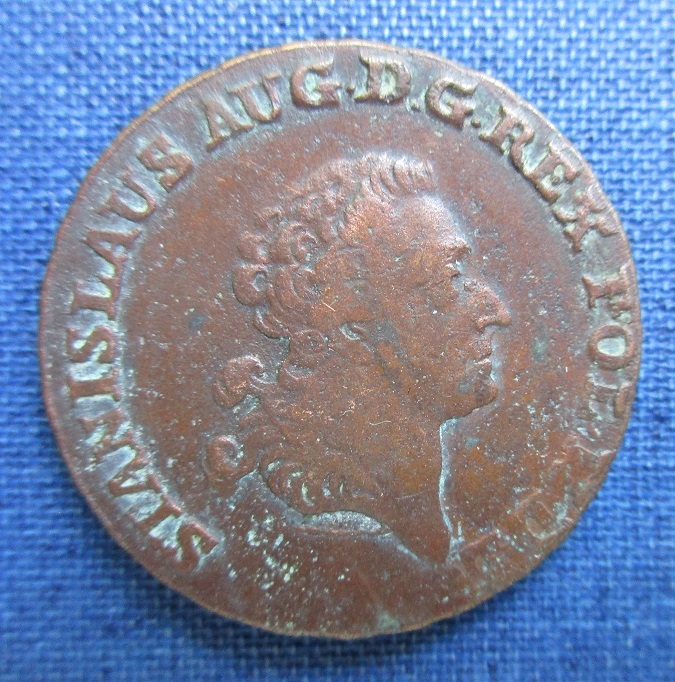 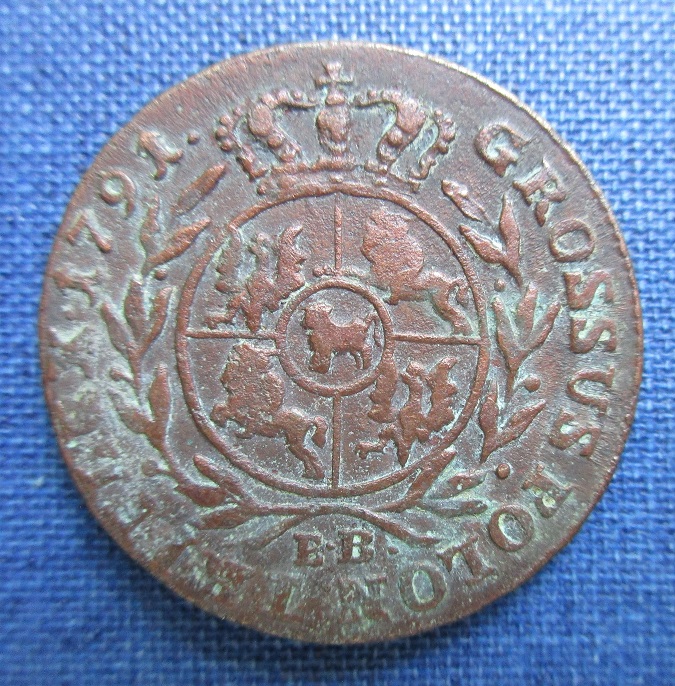 |
| |
Replies: 7,432 / Views: 410,352 |




 First Page
 Previous Page


 Posted 09/05/2020 06:15 am