I agree! Most of the coins I buy are already attributed ... I have a habit, though, of sharing this kind of thought process out here on CCF when someone posts a coin to identify that captures my attention, and I subsequently embarrass myself.
Since becoming active in CCF, I have been working on an OFEY from roughly 1474 to 1800, but constrained to themes I already collect. Since Poland has some large date gaps in the 18th century, I am looking for the missing dates in my other themes.
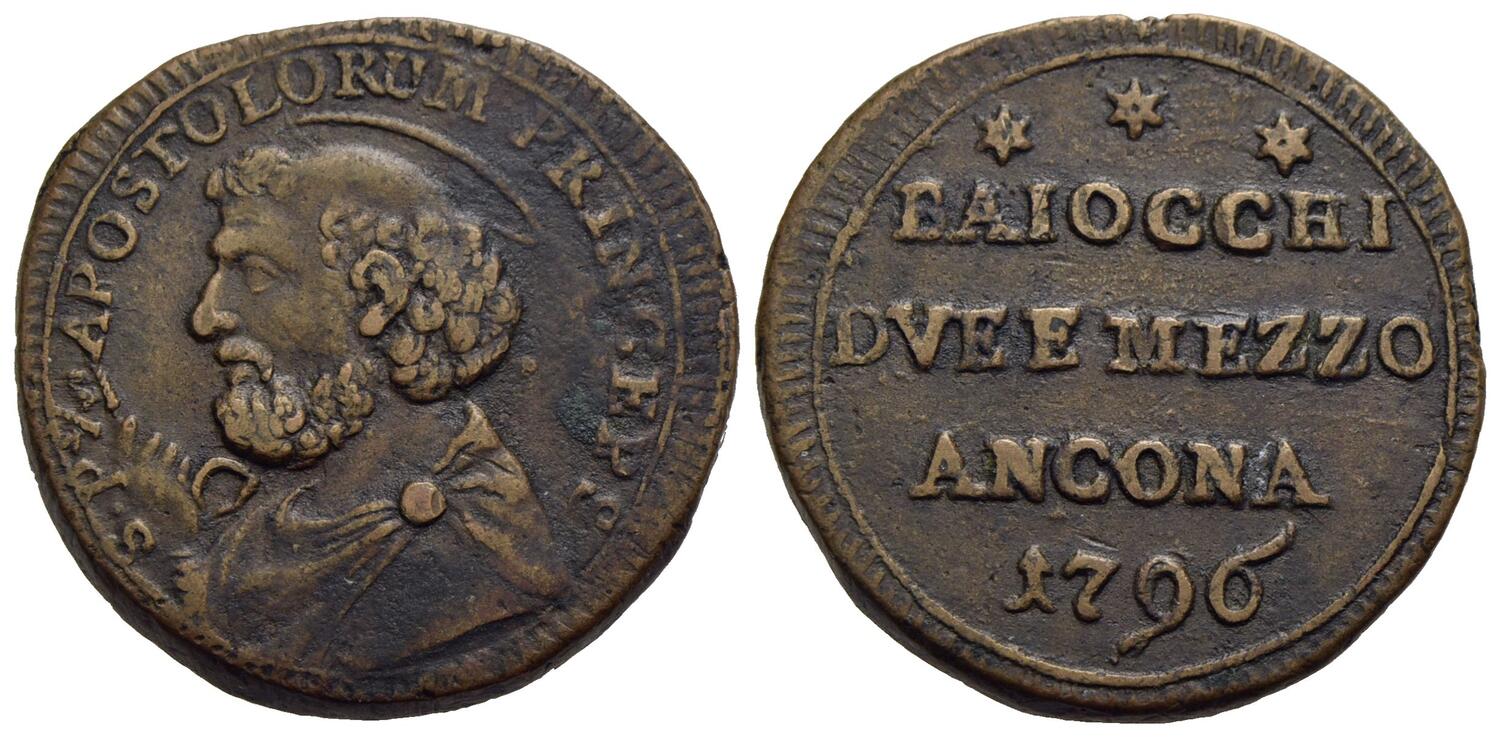
Here is a nice 1796 copper "Sampietrino" (2 1/2 baiocchi) from the Papal State of Ancona dated 1796. While I have several other representations of Saint Peter, this is my first Ancona coin (photo is still that of the auction house).
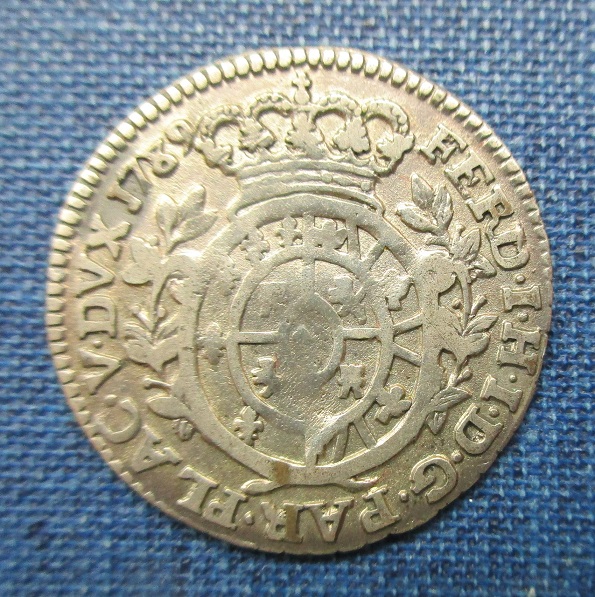
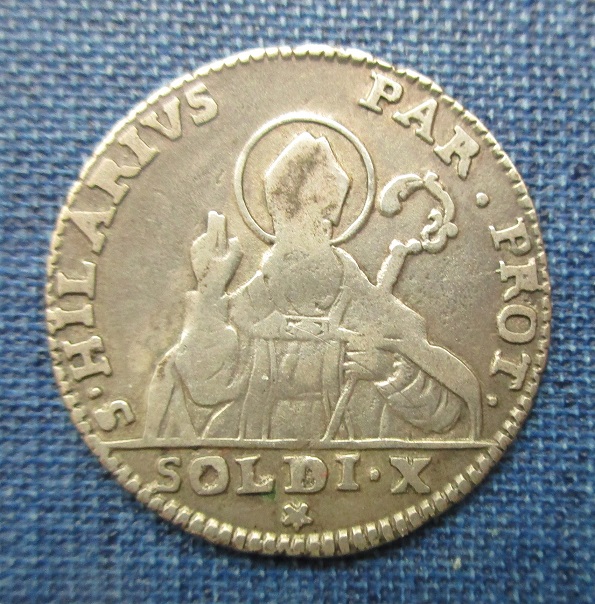
I was unaware that this person was shown on a coin. Saint Hilary (c.310-368) was an early bishop of the city of Poitiers in central France, and recognized as one of the great thinkers of the early church ("Doctor of the Church"). Why he shows up on a coin of Parma (Italy) is a mystery to me.
St Hilary is the patron saint of the city of Parma.
There is a story about Hilary returning from his exile in Phrygia, where he was sent in 356 by emperor Constantius II after having fiercly opposed Arianism. He returned via Parma in 360, and when passing through the city, a shoemaker saw his worn-out shoes and, out of pity, gave him a new pair. The next morning, the shoemaker found that the bishop's worn-out shoes had turned into gold.
Thanks for that helpful info! Parma is doubly blessed (or hedging their bets), as St. Thomas the apostle is also a patron saint (p. 8 of this thread: http://goccf.com/t/367831&whichpage=8)
There are a number of Swedish saints, virtually all from the Catholic period before the Protestant reformation in 1527.* Of those only two are generally known to the Swedish public: Eric the Holy and Bridget of Sweden.
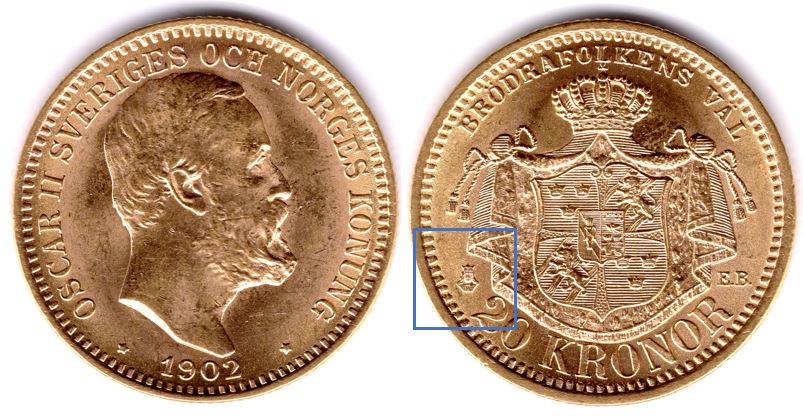
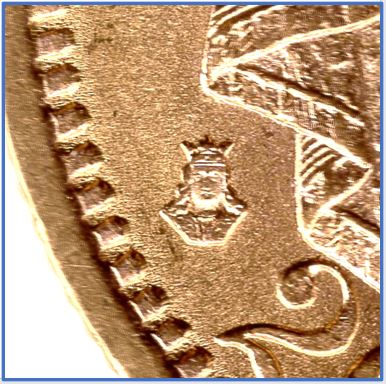
I have no pre-reformation Swedish coins, so I didn't think I could contribute with anything Swedish in this thread. Until, the latest posts about the patron saint of Parma, made me recall that St Eric, who is patron saint of Stockholm (and in fact, of Sweden), is used as a mint mark on coins until 1973 (for Stockholm, where the mint was located during the 19th-20th centuries)!
So, St Eric actually appears on numerous modern Swedish coins. Not like he dominates the design, but he is recognizable, like on this 1902 20 kr gold coin:
Eric was king of (at least part of) Sweden around 1156-1160. There are few reliable sources about his life - he may have led a crusade to the then pagan Finland and Christianized them, with a lot of brute force, but that is uncertain. What seems fairly certain is that he was killed by the Danish prince Magnus, one of his rivals for the throne, on Ascension Day 1160, after having attended Mass. He was beheaded outside the church (according to legend, a fountain sprang from the place). That and other alleged miracles, as well as the crusade, qualified him for being revered as a saint.
* There is, to my knowledge, only a single exception: The Swedish Catholic nun Elisabeth Hesselblad, dead 1957 and canonized as late as 2016.
@otto, thanks for bumping the thread to post that great coin!
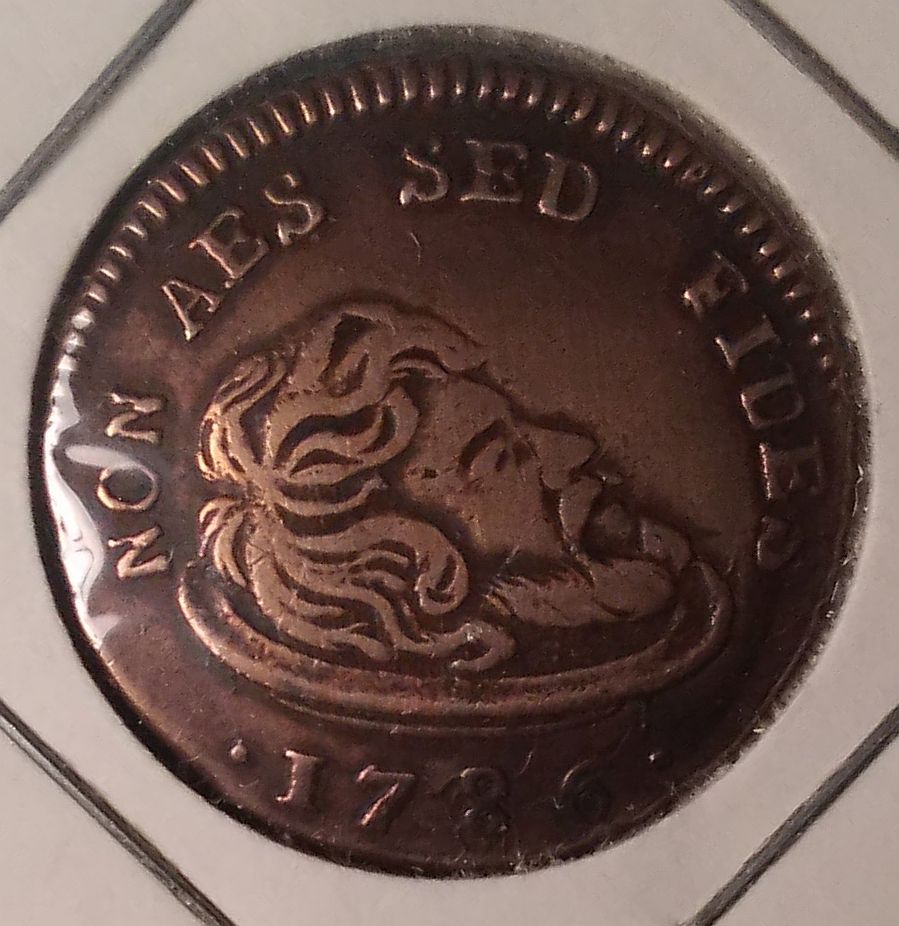
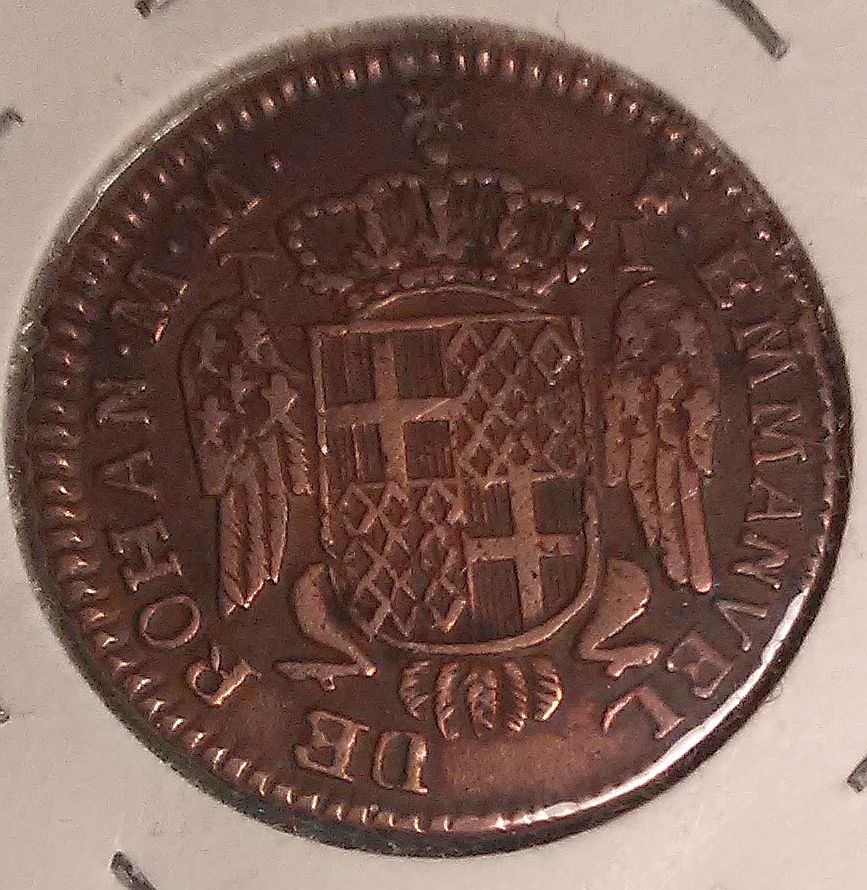
Earlier we covered John the Baptist under Florence/Tuscany, where he is patron saint, but this "post mortem" representation mostly occurs on coins of Malta and Breslau to the best of my knowledge.
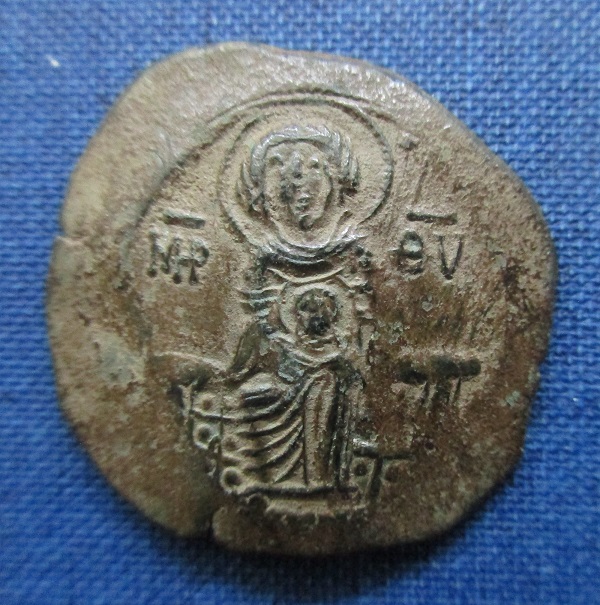
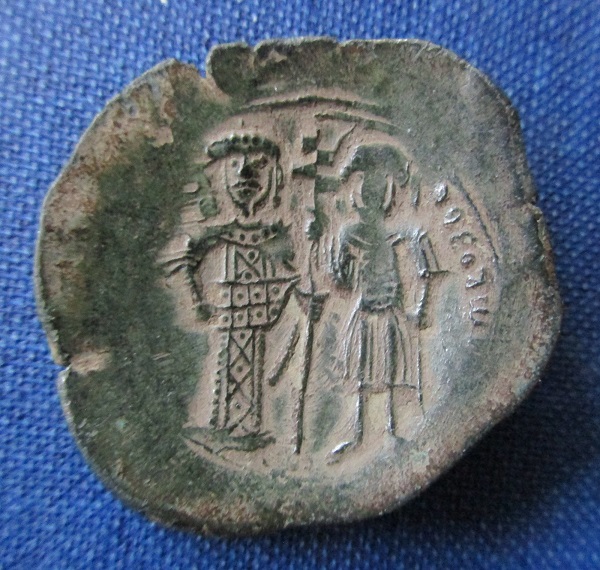
It's been a while since anything has been added to this thread, so I will post a couple of recent medieval acquisitions that fit the theme.
Byzantium, Empire of Nicaea, Theodore Lascaris (1202-1228). Billon trachy, Sear 2061. Obverse has a rather odd madonna with seated Mary holding a nimbate head of Christ. Reverse has Emperor Theodore (left) and Saint Theodore (right).
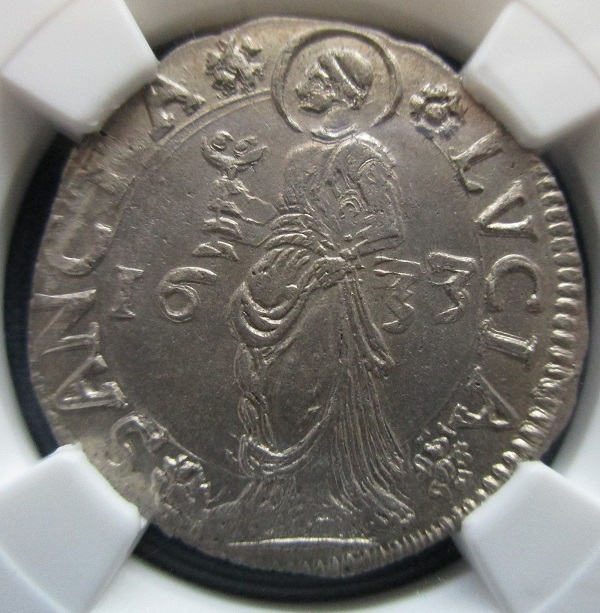
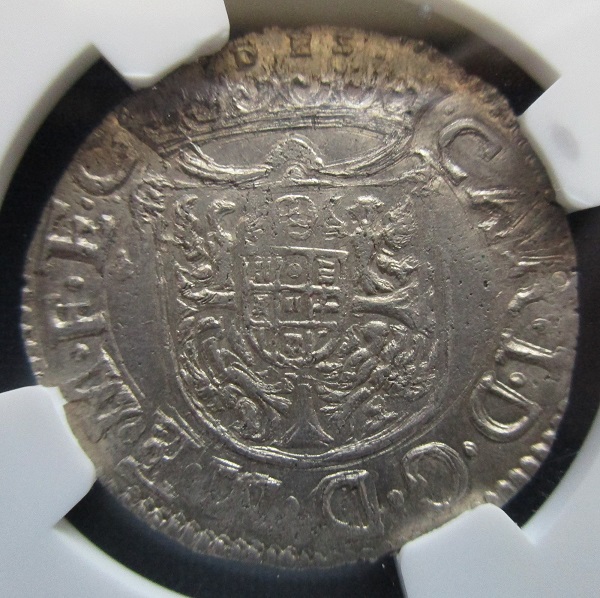
This one was on my list for a while, and, while I don;t go out of my way to buy slabbed coins, this nice example came up at a CNG auction, at a price that was not higher than raw examples I had found in my searching, so ... Duchy of Mantua (Mantova), 1 Lira 1633. The standing figure is Saint Lucy, and she is holding a cup or chalice containing her eyeballs. According to legend, she was tortured by having her eyes removed before she was killed (medieval Christians seemed to really like gruesome endings for their martyrs)
As a Swede I can relate to St Lucy, because even though the Church of Sweden is Lutheran and all veneration of saints was officially banned about 500 years ago, we have a strong tradition of celebrating Sankta Lucia (as she is called here) every December 13. Exactly why is lost in the mists of history, but it probably has to do with her role as bringer of light (Lucia in Latin = light) and that Dec 13 in the Julian calendar (in use in Sweden until 1753) was the day the the year "turned" and days became longer again. The Swedish winter is long and dark, and the length of the day at mid winter (nowadays Dec 21) ranges from 7 hours in the south to 0 hours in the north. So celebrating the return of the light was a big thing!
And it still is, although the religious connection is gone. Every Dec 13, people all around the country celebrate Lucia. "Lucia processions" are arranged in schools, in work places, in churches and in homes. A girl* dresses up in a white robe with a red ribbon around her waist, wearing a crown with candlelights (or electric lights these days). She is accompanied by other girls, dressed in the same way except they hold a single light in their hand instead of wearing a crown. There are also boys carrying lights in their hands, in white robes and wearing a special very high and pointy white hat, which can be decorated with stars (they are called "star boys"). The size of the procession can vary from a single Lucia to as many as you can engage and fit where the procession is held. A number of traditional songs are sung by all. Most kids participate in these processions in school (I was a star boy several times ), most adults nowadays watch a procession on TV.
This may sound exotic if you have never seen it (it probably is a bit exotic ...). You can find many recordings on Youtube, search for "lucia procession" or "lucia celebration". Here is one for you, with English subtitles:
vl6o4mG25Ec
* Traditionally it should be a blond girl, but these modern days gender and color matter less.
Disclaimer: While a tremendous amount of effort goes into ensuring the accuracy of the information contained in this site, Coin Community assumes no liability for errors. Copyright 2005 - 2026 Coin Community Family- all rights reserved worldwide. Use of any images or content on this website without prior written permission of Coin Community or the original lender is strictly prohibited. Contact Us | Advertise Here | Privacy Policy / Terms of Use








 First Page
 Previous Page


 Posted 09/13/2020 10:16 pm