| Author |
 Replies: 256 / Views: 27,567 Replies: 256 / Views: 27,567 |
|
|
|
Pillar of the Community
  United States
8056 Posts |
Since contributions are a bit sparse this weeek, I hope it's OK to do a post that takes a stab at explaining (a) who these saints are/were, and (b) why they appear on coins associated with specific places. I think there are members following the thread who will be able to add further insights. The purpose of this post is to give some historic/cultural context for the coins that are appearing, but if any of this drifts into dubious territory in the eyes of the mods, please feel free to edit.
A. Who Were They?
Saints were/are different kinds of Christians elevated to a special status by Christian communities and institutions for some extraordinary demonstration of their faith. All of Jesus' closest associates (except Judas) are venerated as saints: the 12 apostles and other close contemporaries such as Mary Magdalene, close relatives (Mary and her mother Anne, Joseph, John the Baptist), and a few other figures of the early Christian scriptures, like Paul and the evangelists (there is ample disagreement about who they are and when they lived, but that doesn;t matter for our purposes here).
But chronologically the first ones venerated as saints were the early martyrs, Christians who were put to death for practicing their faith and/or refusing to renounce it during historically documented persecutions including, but not limited to, those of the Roman emperors Nero, Decius, Valerian and Diocletian. Their deaths were remembered annually by the Christian communities where they lived, which is the origin of all those saints' feast days in the Christian calendar. This is a substantial list, starting with Stephen, whose martyrdom was so soon after Jesus' life, that it is mentioned in the New Testament. It includes men and women for whom there is historical evidence, but also many for whom there is no mention in early historical texts, or for whom there is conflicting information, or who historians feel were later legends.
When Christianity was adopted as a state religion (4th century), martyrs became fewer, though evangelizing to the Franks, Germans and Slavs over the next few centuries also exacted a toll. But, since the burgeoning cult of saints in the early church remained healthy, there was a need for more saints, so the concept morphed, and the category of confessor saints arose: particularly holy men and women, though not martyrs. This group included bishops, abbots and abbesses, mystics and hermits and scholars/theologians (like Jerome, Ambrose and Augustine). By the second millenium of Christianity, even devout royals were admitted this select crowd (and it is indeed a crowd: there are thousands of saints). Holy Roman Emperors Charlemagne and Henry II are saints. Kings Louis IX of France and Edward the Confessor of England are saints, as are Stephen and Ladislaus I of Hungary. In some cases, devout or charitable royal wives or widows became saints.
B. Why Are They Associated With Specific Places?
For these two latter categories, the connection between saint and place is easy to understand: the saints were "hometown" luminaries of the faith. Saint Donatus (posted by @spence for Arezzo), was the second bishop of Arezzo, Italy. St. Elizabeth was born near Bratislava (current Slovakia), married to Louis IV of Thuringia, and retired to Marburg after her husband's death, so she is venerated in all three places. Saint Rupert (who I expect we will see often under S for Salzburg) was the first bishop of Salzburg, so he is their patron saint.
But the linkage is often far less clear for earlier saints who wind up on coins far from where they lived. Why is Saint George the patron saint of England? Because Edward III chose him as such (possibly because this soldier saint appealed to chivalric ideals of that age; Edward founded the Order of the Garter around the same time). Why are Saints SImon and Jude the patrons of Goslar, Germany? Because Holy Roman Emperor Henry III who often stayed in Goslar, was born on their feast day, October 28. Saint Peter (the first bishop of Rome) appears on coins of cities in the Germanic world that were ruled by bishops rather than counts or Dukes: Cologne, Mainz, and many more.
Why did saints show up on medieval coins? Maybe for the same reason Roman gods had shared space with the Roman emperors on their coins in earlier age? Or as just another reminder of the large role of religion in all aspects of life in those times? Or, maybe in some cases a combination of civic pride and marketing (come see our saint!), since pilgrimage to saints' shrines was big business in the Midddle Ages (and is increasingly so today in places like Santiago de Compostela, Spain, and Canterbury)..
For anyone interested in a broad historical perspective on the development of the cult of saints in early Christianity, a very good book is "Why Can the Dead do Such Great Things," by Robert Bartlett, Princeton University Press 2013.
Edited by tdziemia
03/18/2020 08:17 am
|
|
Pillar of the Community
United States
8056 Posts |
Here is another St. Peter (he seems to be popular this week), on this mid-15th century heller from the duchy of Legnica-Brzeg (Leignitz-Brieg). 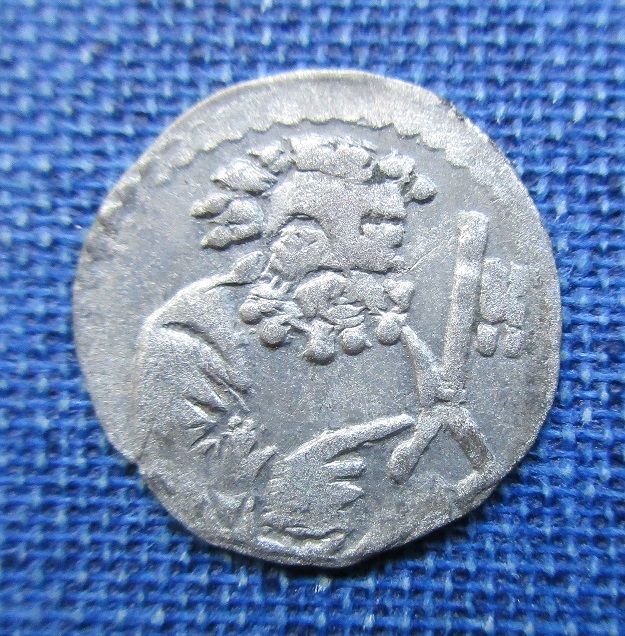 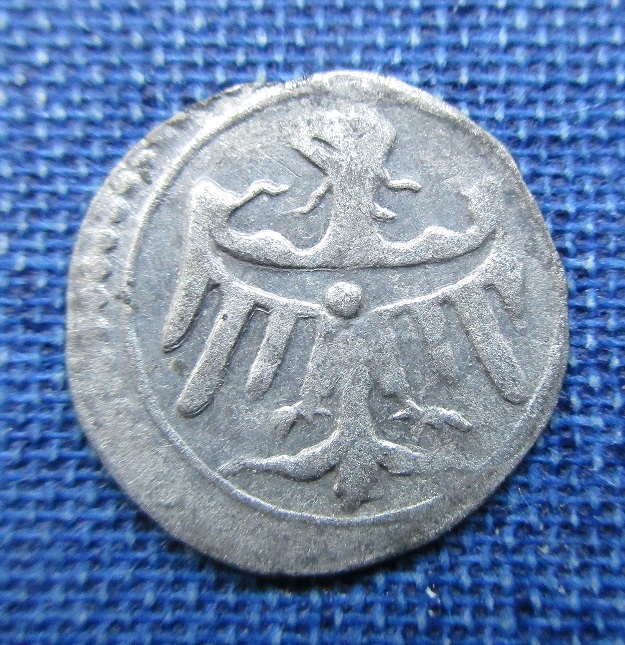 |
|
Moderator
 United States
34562 Posts |
Here are a couple dated coins of Cologne from the 1430s that also have St. Peter: 1437 AD: 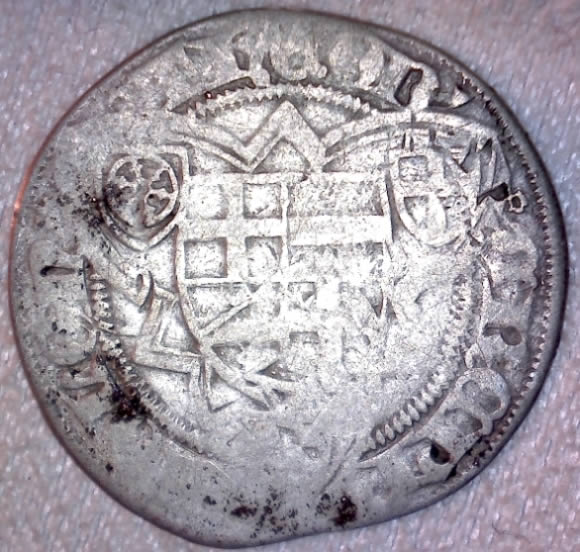 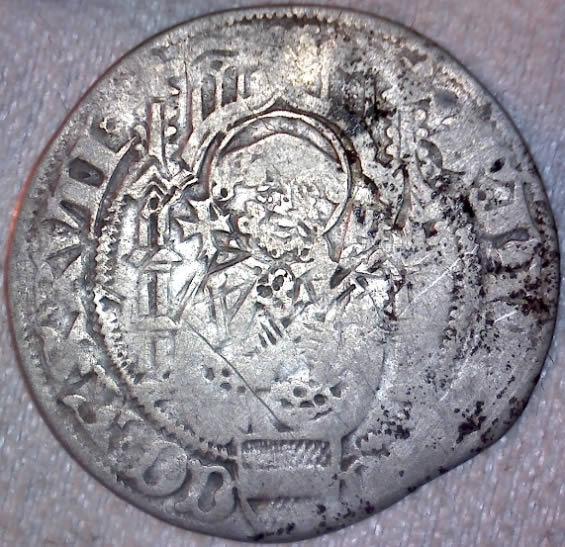 1438 AD: 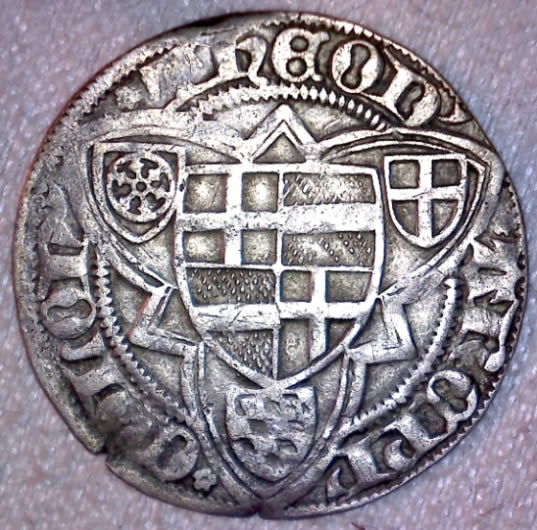 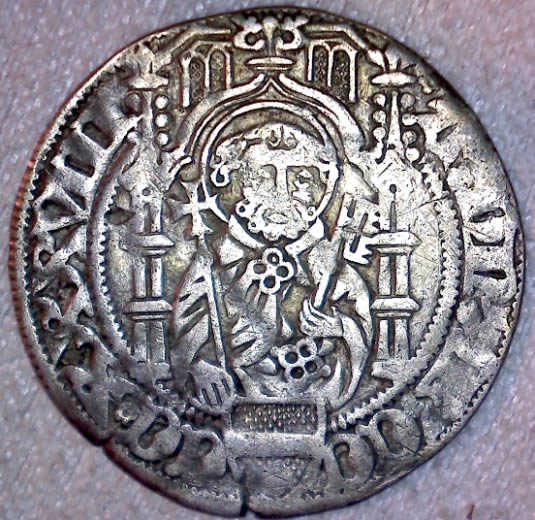 "If you climb a good tree, you get a push."
-----Ghanaian proverb
"The danger we all now face is distinguishing between what is authentic and what is performed."
-----King Adz
|
|
Pillar of the Community
United States
8056 Posts |
That 1438 in particular is a spectacular coin for its era.  Too bad we never get that far back on the "How Far Back ..." threads. I am guessing/hoping that when we get to P for Papal States, and V for Vatican city we will see more of St. Peter again. For now, his appearances rank third behind Mary and St. George. I have another saint of the Silesian Duchy of Legnica-Brzeg (Liegnitz-Brieg), on this undated groschen from the early 16th century, Saint Hedwig (Jadwiga in Poland) 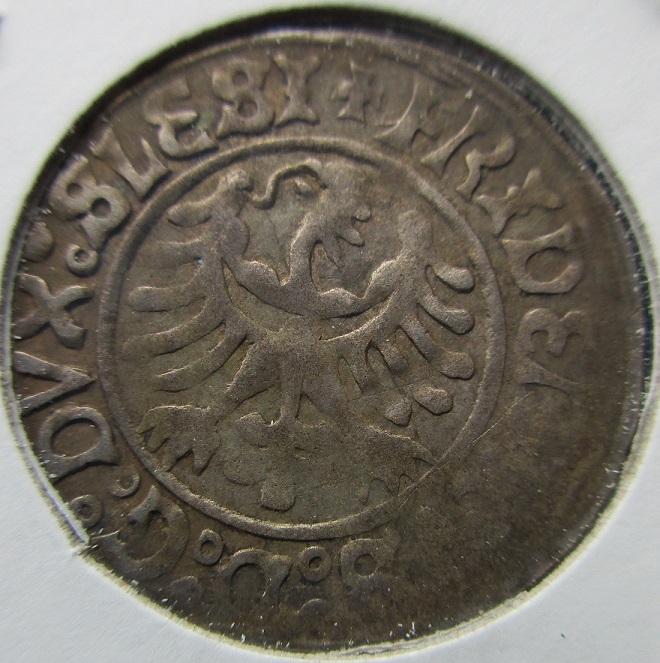 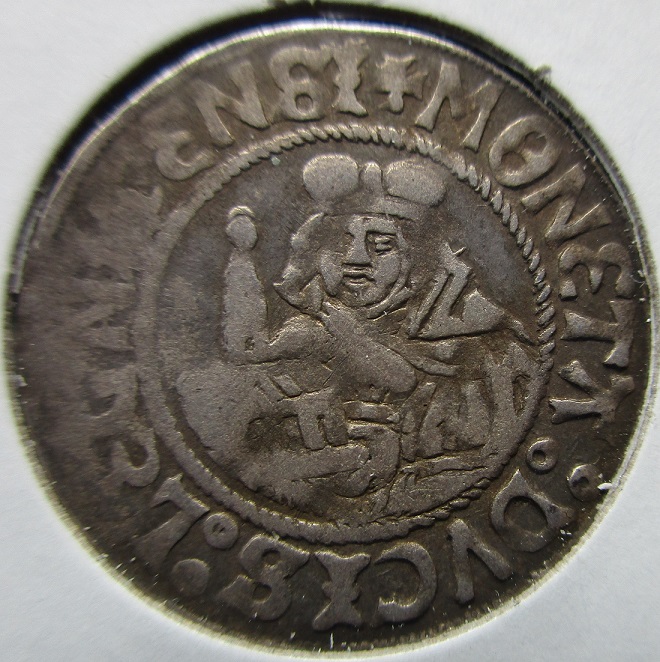 Edited by tdziemia
03/19/2020 8:24 pm
|
|
Moderator
United States
34562 Posts |
Quote:
Too bad we never get that far back on the "How Far Back ..." threads. Still workin' on it, but progress is painfully slow.  Added: Is St. Hedwig holding a small model of the cathedral? I'm pretty sure that I've seen that imagery before. "If you climb a good tree, you get a push."
-----Ghanaian proverb
"The danger we all now face is distinguishing between what is authentic and what is performed."
-----King Adz
|
|
Pillar of the Community
United States
8056 Posts |
Quote:
Is St. Hedwig holding a small model of the cathedral? I'm pretty sure that I've seen that imagery before. Yes. I've posted this coin before (thread on Silesia hellers), and on this thread, the coin I posted for Hessen with an image of St. Elizabeth of Thuringia is very similar in design. Which maybe raises some interesting questions of iconography of male vs female saints at this time?  I'm certainly not an expert in art history, though I think we've got some members with expertise in that area. Edited by tdziemia
03/19/2020 9:15 pm
|
|
Pillar of the Community
United States
8056 Posts |
This 12th century denier from Limoges' Abbey of St. Martial has an image of that saint (Numista lists it under S for St. Martial). I think it's my only coin minted in what is now France with a saint's image. 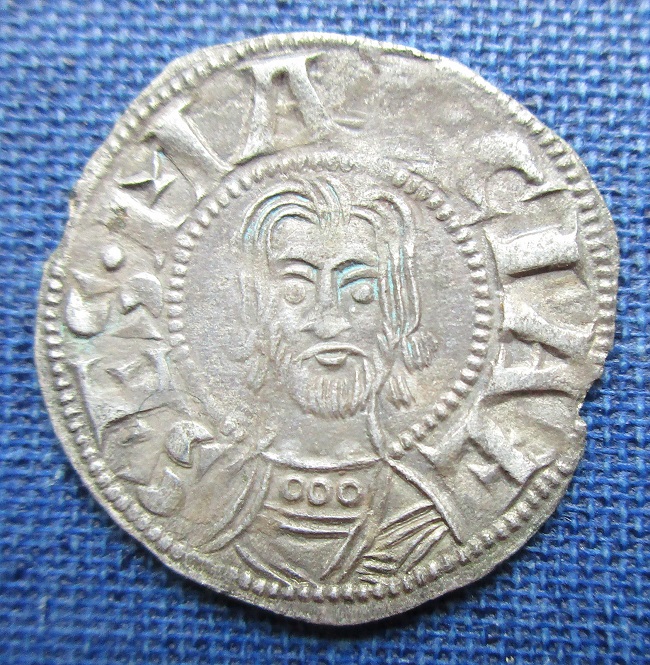 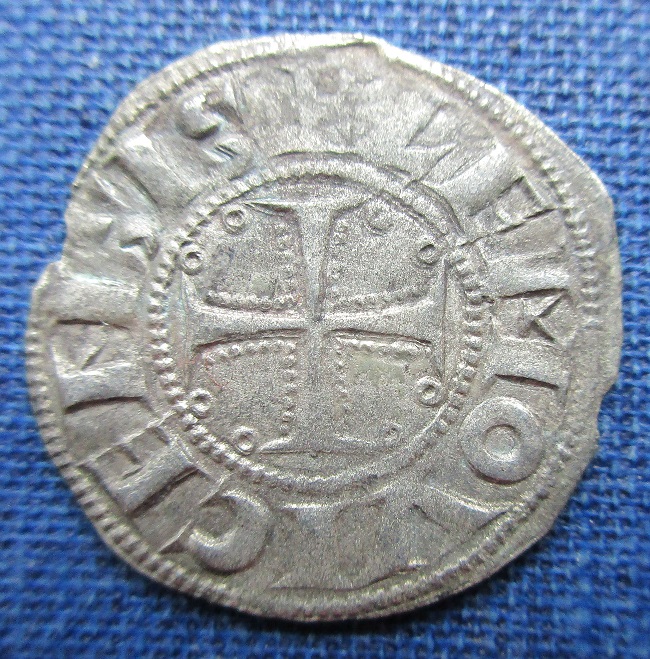 Edited by tdziemia
03/21/2020 11:14 am
|
|
Pillar of the Community
United States
8056 Posts |
I have a couple more before turning over to (hopefully) a more active week starting tomorrow. Here is a scudo from the Republic of Lucca, one of my favorites, showing the story of St. Martin of Tours cutting his cloak in half to share with a beggar. 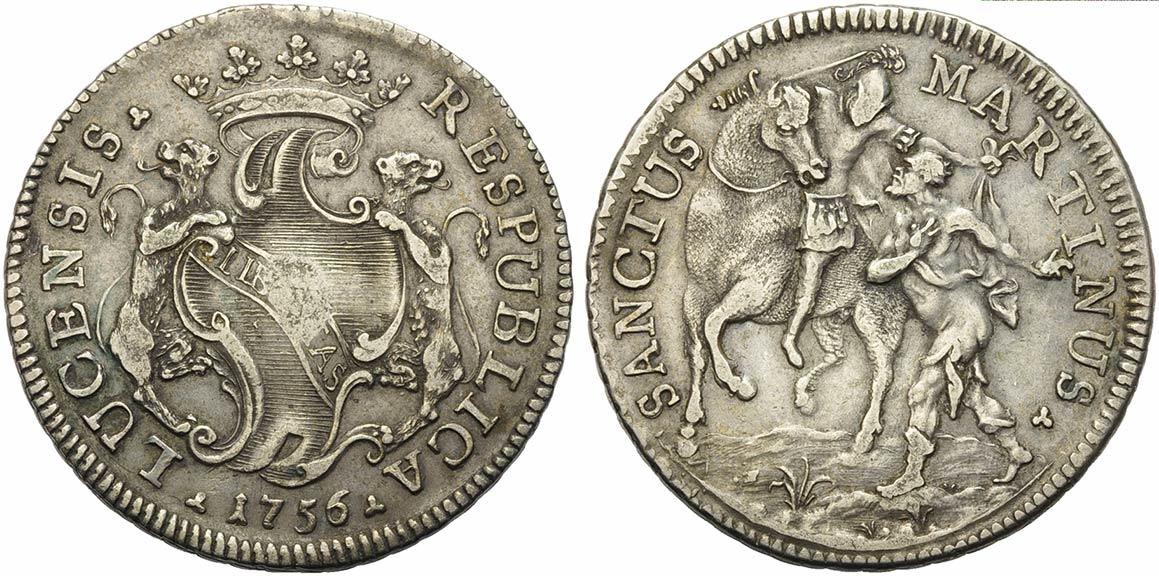 |
|
Moderator
United States
34562 Posts |
Yikes @ydz, that Scudo is amazingly well detailed. Well done. Here are a couple more dated Groschen from Cologne to close out my contribution of Saint Peters for this week: 1447 AD: 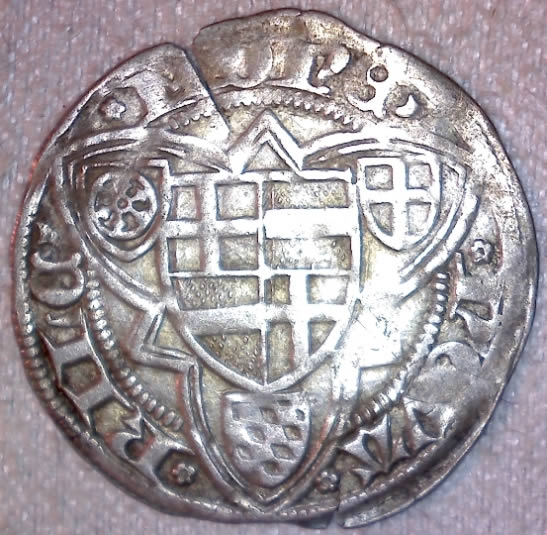 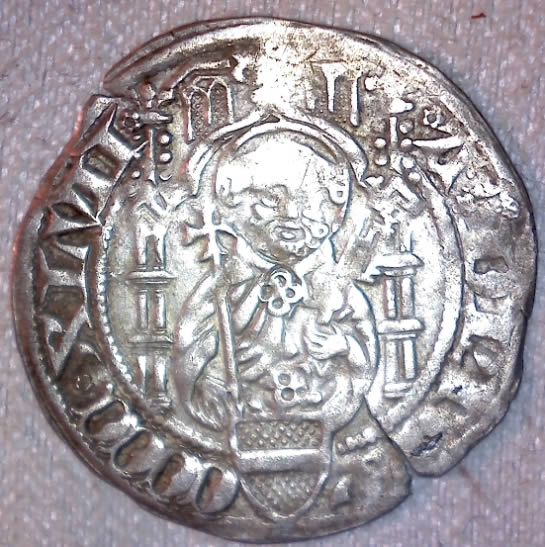 1449 AD: 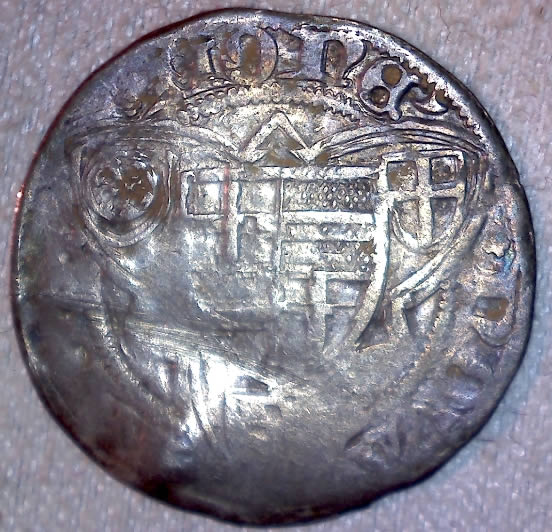 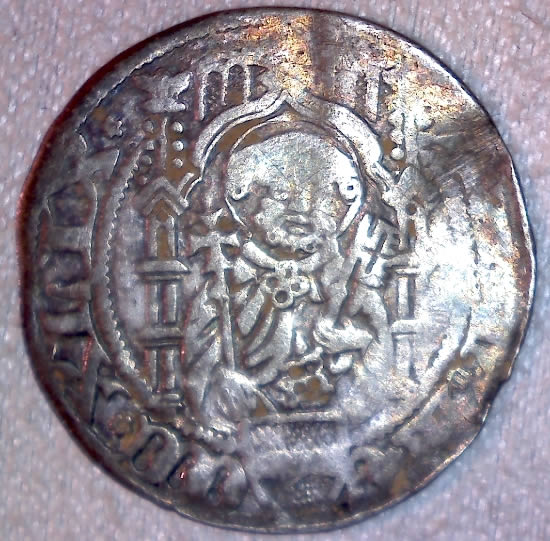 I look forward to seeing a whole new group of Saints next week! "If you climb a good tree, you get a push."
-----Ghanaian proverb
"The danger we all now face is distinguishing between what is authentic and what is performed."
-----King Adz
|
|
Pillar of the Community
United States
8056 Posts |
Quote:
that Scudo is amazingly well detailed. Well done Thanks. It's a type that shows up pretty regularly, but I paid handsomely to get that detail on the reverse. I am really impressed by your coverage of dated coins in the 1430s/40s, and glad we got to see some of them here. At some point I expect I will move my "earliest dated" back by 30 years with something similar. Edited by tdziemia
03/21/2020 2:03 pm
|
|
Pillar of the Community
United States
8056 Posts |
Saint Leodegar on a 1647 schilling of Lucerne. 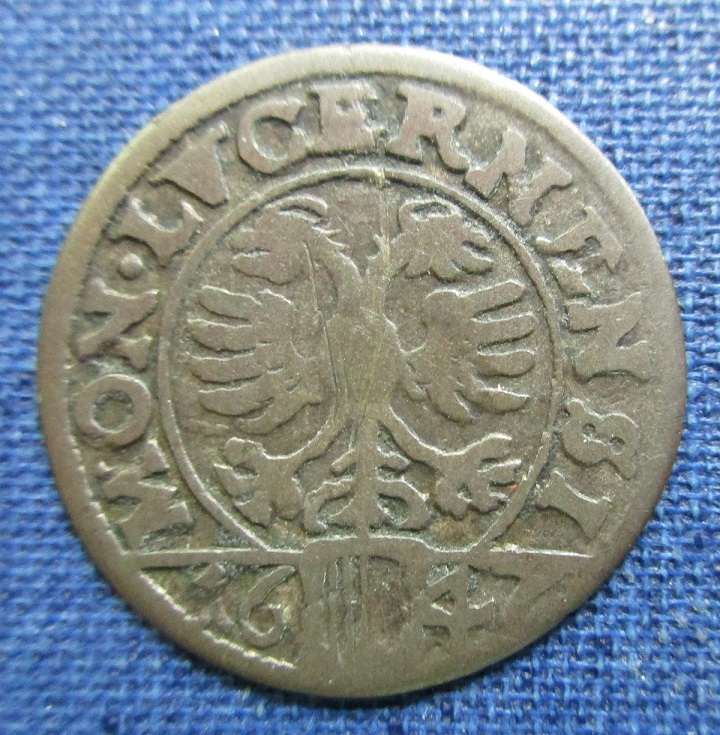 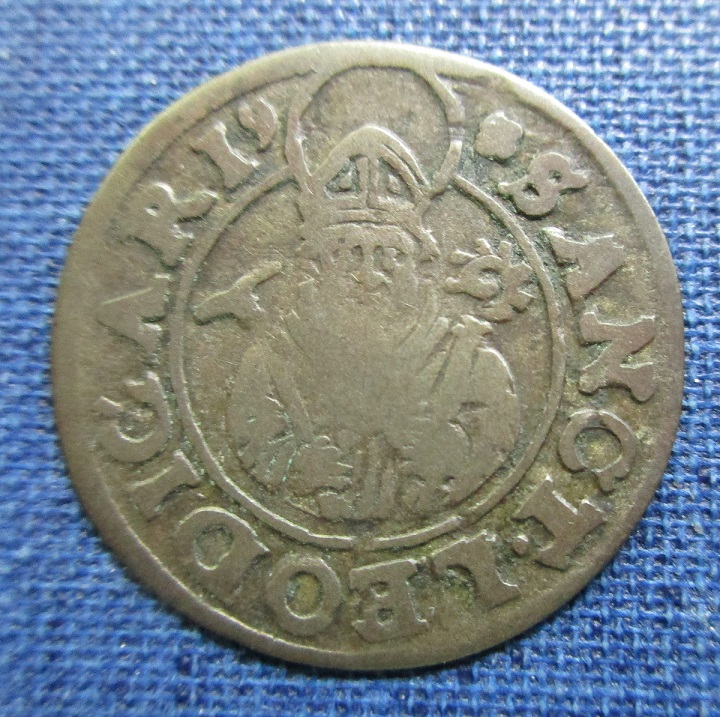 |
|
Pillar of the Community
United States
8056 Posts |
Last week was great for St Peter. Thanks to those contributions, here's where we stand:
Aachen - Charlemagne (2)
Andorra - Charlemagne
Arezzo - St. Donato
Australia - St. George (2)
Bavaria - Mary as Madonna (6)
Berne - St. Vincent
Bingen - St. Martin of Tours
Bohemia - St Adalbert and St. Wenceslas (2)
Brabant - St. Andrew, St. Michael, St. Peter, St. Philip
Bremen - St Wilehad, St. Peter
Brunswick (city) - St. Anne
Brunswick-Lunenburg-Calenberg - St. Andrew
Brunswick-Luneburg-Calenberg-Hanover - St. Andrew (3)
Canada - St. George (3)
Carmagnola - St. Constanmtius
Constance - St. Conrad
Corvey - St. Vitus
Ferrara - St. George (2), Mary Magdalene, St. Maurelius
France - Gabriel, Mary
Goslar - Sts Simon & Jude, St. Matthias
Gotha - St. Gotthard
Great Britain/U.K. - St. George (12)
Hessen - St Elizabeth of Thuringia
Hildesheim - St. Bernward, Mary as Madonna
Hungary - Mary, Madonna (19), John the Baptist
Iserlohn - St. Pancras
Kempten - Hildegard
Koln - St. Peter (6)
Leignitz-Brieg - St. Peter, St. Hedwig
Limoges - St. Martial
Lucca - St. Martin
Luzerne - St. Leodegar
Time for the next three letters of the alphabet, M-N-O. I know we have some CCF members with nice Mansfeld, Munster and Ottingen coins with saints' iages, and maybe a few more St. Peters from Mainz?
Here is a prospective liost of places in this part of the alphabet where you might find a saint:
Macerata - St Julianus
Magdeburg - St. Mauritius
Mainz - St. Alban, St. Peter
Malta - John the Baptist
Mansfeld - St. George
Mantua - St. Andrew, St. Barbara, St. Francis, Gabriel, St. George, St. Lucy
Mesocco - St. Blaise
Messerano - St. Theonestos
Milan - St. Ambrose, Sts Gervasius & Protasius
Modena - St. Geminianus, St John the Evangelist
Munster - Charlemagne, St. Paul
Munsterberg-Oels - St. Christopher, St. James
Murbach - St. Leodegar
Naples - Gabriel, Mary, Michael
Neuss - St. Quirinus
Nordhausen Abbey - St. Eustachius
Nuremburg - St. Lawrence, Mary, St. Sebald
Oldenburg - St. Lambert
Osnabruck - Charlemagne
Ottingen - St. Sebastien
Let's see 'em!
|
|
Pillar of the Community
United States
9395 Posts |
Saint Sebastian -- Countship of Ottingen, 1 batzen, 1517: 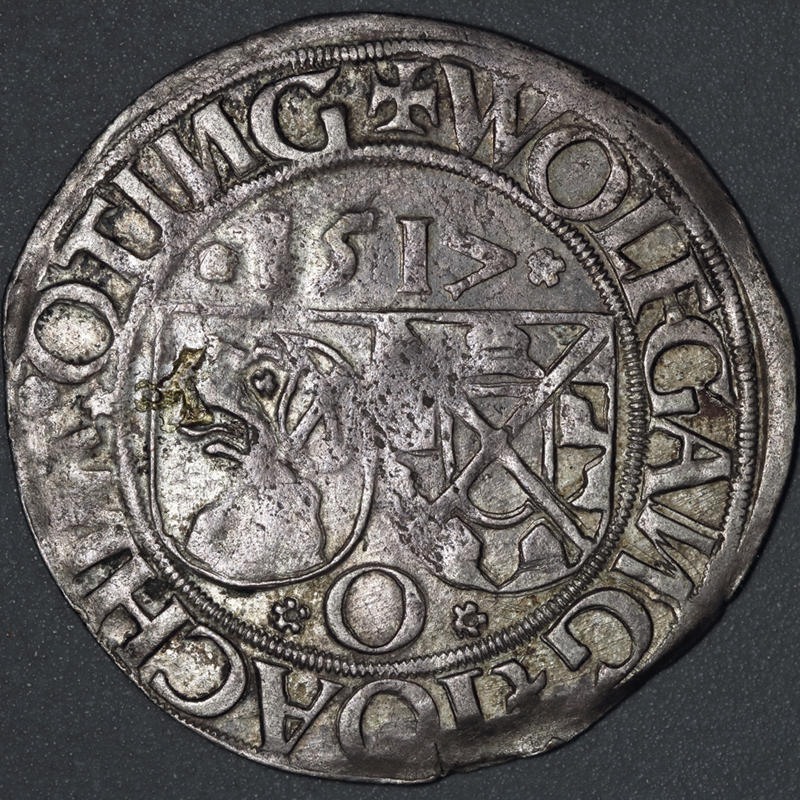 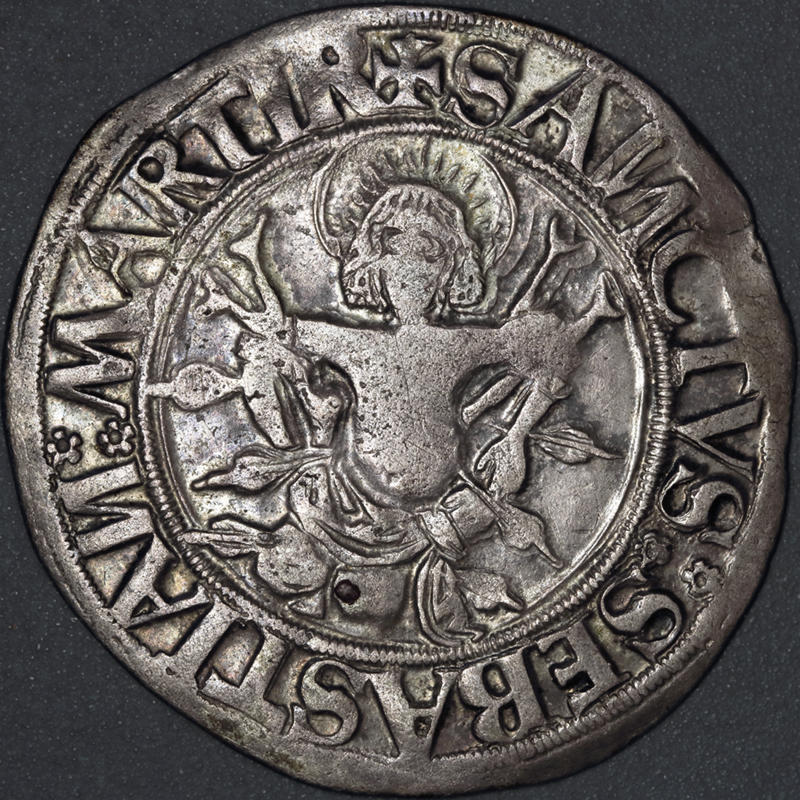 |
|
Pillar of the Community
United States
8056 Posts |
Nice! (I remembered you had one of these from the "How Far Back" thread). Here is St Ambrose on an undated grosso of Milan (1481-1494). So influential was this patron saint, that the short-lived Ambrosian Republic (1447-1450) was named for him 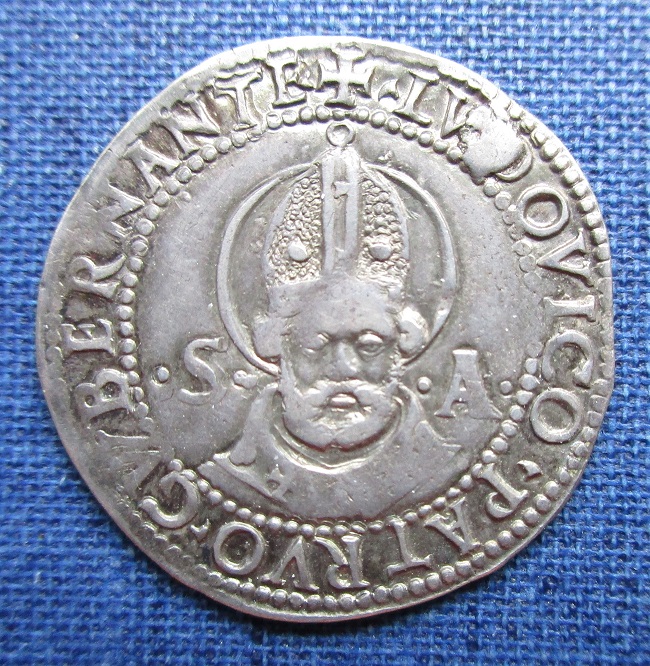 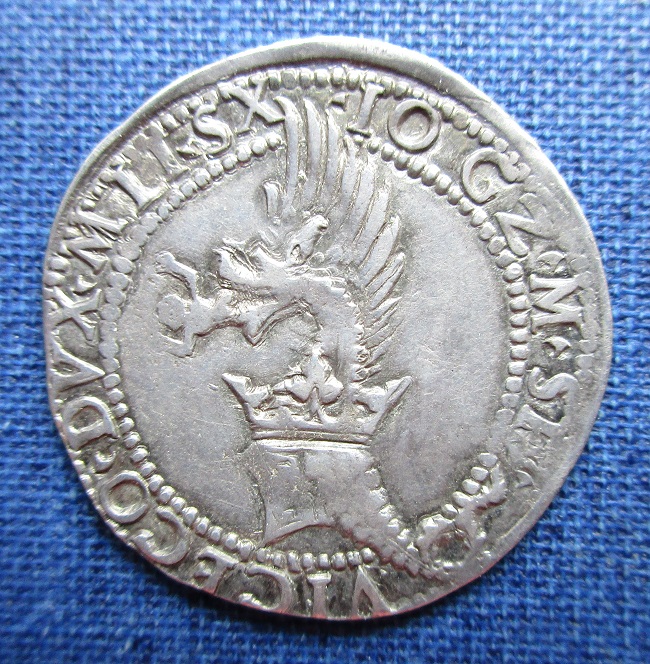 |
|
Pillar of the Community
United States
9395 Posts |
Saint Paul -- Cathedral Chapter of Munster -- 4 pfennig, 1714:   |
| |
Replies: 256 / Views: 27,567 |






 First Page
 Previous Page


 Posted 03/18/2020 7:06 pm





