I had originally intended a different topic for this edition of Quick Bits, but recent comments made by one particular CCF'er in two different posts of mine about the Roanoke half dollar have caused me to change my plans.
The comments posted were critical and dismissive of the use of the "
Raleigh" spelling on the half dollar vs. "Ralegh." So, it seemed like a good opportunity for education...here's a bit of the back story on the issue.
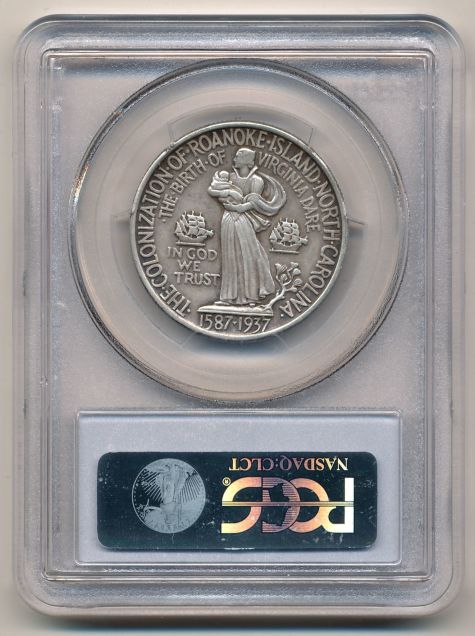
Baltimore-based William Marks Simpson was the designer/sculptor of the Roanoke half dollar. On his second version of the plasters for the coin, he used the "Ralegh" spelling of Sir Walter's surname on the obverse under his portrait. He argued that it was how Sir Walter himself signed his name for much of his life. While there exists sound evidence to support this assertion, the Commission of Fine Arts (CFA) directed Simpson to add the "i" so as to change the spelling to "
Raleigh." Simpson did so, and the Mint went on to strike the coin we see today.
Why did the CFA insist on the change?
1. The use of the "
Raleigh" spelling was the most common and preferred spelling in the United States (US) and the coin was, after all, a US half dollar.
2. The legislation that authorized the coin spelled Sir Walter's surname "
Raleigh."
An ActTo authorize the coinage of 50-cent pieces in commemoration of the three hundred and fiftieth anniversary of Sir Walter Raleigh's colony on Roanoke Island, North Carolina, known in history as the Lost Colony, and the birth of Virginia Dare, the first child of English parentage to be born on the American continent.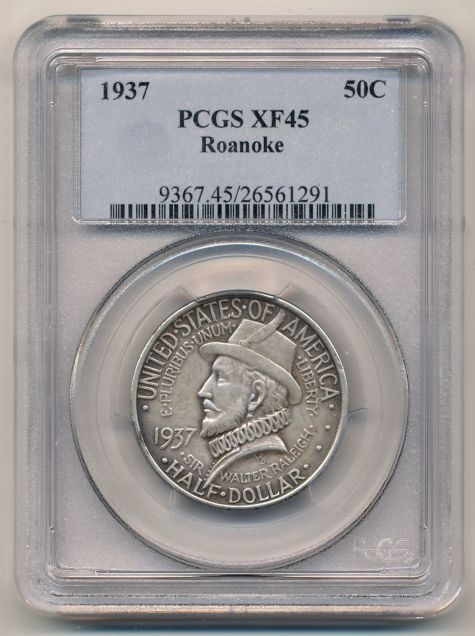
Further justification for the use of the "
Raleigh" spelling:
Evidence for the US preference of "Raleigh" vs. "Ralegh" can be found dating back to at least the late 18th century. Plans developed in 1792 for North Carolina's new capital city -
Raleigh - are labeled with "
Raleigh" not other spellings.
The historic site associated with England's original attempt to establish a colony was given the modern name of "Fort
Raleigh" by the early 1800s (if not before).
"Raleigh" was the spelling used by the coin's sponsor, the Roanoke Colony Memorial Association (RCMA) when it referred to the coin while it lobbied for its approval; the RCMA was formed in 1894 and had referenced "
Raleigh" for years. The coin was referred to as the Sir Walter
Raleigh-Virginia Dare commemorative half dollar.
IMO, the "
Raleigh" spelling was so ingrained in the US lexicon by the mid-1930s that had any other spelling been used on the coin, it would likely have led to cries of "Error!" by collectors.
I believe that using the "
Raleigh" spelling on the coin was the best and most logical decision. I am all for historical accuracy, but there is rarely just one version of history to consider - Sir Walter's surname on the Roanoke half dollar is just one case in point.
And to end with a bit of fun -
In his book titled
Sir Walter Raleigh, published by Princeton University Press in 1959, Willard Mosher Wallace lists 70 contemporary spelling's of Sir Walter's surname: Raleigh, Ralegh, Rawley, Raweley, Raulie, Rawlegh, Rawleigh, Rawleighe, Raleghe, Rawlye, Rawleie, Rawligh, Raileigh, Rauleigh, Raleighe, Raylie, Raghley, Raghlie, Rawleygh, Rawleyghe, Rawely, Ralighe, Raule, Rawlee, Rauley, Rawleye, Raulyghe, Rawlyghe, Ralleigh, Rawlighe, Rawleighe, Rauleighe, Raughlie, Rallegh, Rawlei, Rauly, Raughley, Raughly, Raylye, Rolye, Ralle, Raughleigh, Raleikk, Rale, Real, Reali, Ralego, Rahlegh, Raley, Raleye, Raleagh, Raleygh, Raleyghe, Ralli, Raughleye, Raulghe, Raulghe, Raweleigh, Raylygh, Reigley, Rhaleigh, Rhaly, Rauley, Wrawly, Wrawley, Raleich, Ralo, Ralle, Raulaeus and Raleghus.
Wow! That's quite a list! I can see how it would be easy to get confused! I wonder if Sir Walter could tell when folks were talking about him!











 Posted 08/22/2020 6:54 pm


 At that point, I'd just change my name!


