| Author |
 Replies: 114 / Views: 12,623 Replies: 114 / Views: 12,623 |
|
|
|
Bedrock of the Community
United States
10284 Posts |
|
|
CCF Master Historian of Commemorative Coins
  United States
12558 Posts |
I just noticed that I didn't include information about the design process used by Pennsylvania within my State Quarter post above, so I thought I would submit a quick addendum to correct the oversight. In January 1998, Pennsylvania Governor Tom Ridge created the Pennsylvania Commemorative Quarter Committee and asked the state's residents to submit their ideas for the Pennsylvania quarter. The Committee was tasked with reviewing the design suggestions received and presenting the five best to the Governor. The Committee had 14 members, selected "from major cultural, conservation, travel, and tourism organizations; a teacher; a high school student; the president of the state Numismatic Society; and the state treasurer." (US Mint release about Pennsylvania State Quarter). The Committee received over 5,300 design suggestions. It reduced this large number to five designs that it presented to Governor Ridge who forwarded them on to the Mint. The five designs were: 1. An outline map of Pennsylvania with the allegorical figure of Commonwealth at the center and a keystone. 2. The state bird (Ruffed Grouse) at the center, along with the state flower (Mountain Laurel) and the state motto "Virtue, Liberty and Independence." 3. The state flower flanking a keystone with the state bird surmounting the keystone. 4. A scene with William Penn (right) and a Lenni Lenapi Native American (left) shaking hands, with an outline map of Pennsylvania and a keystone in the background. 5. The state bird and state flower. The Mint, in conjunction with the Citizens Commemorative Coin Advisory Committee and the Fine Arts Commission, moved forward with designs 1 through 4, dropping number 5. It then sent final artwork for the four accepted designs back to the Governor/Committee for final selection. In July, 1998, Governor Ridge announced his selection (an enhanced version of #1 above). Coin production began in early 1999 and an official launch/release ceremony was held on March 8, 1999. Collecting history one coin or medal at a time! (c) commems. All rights reserved.
|
|
CCF Master Historian of Commemorative Coins
United States
12558 Posts |
@TNG: Very nice coin! Thanks for the post. I'm a big fan of Mercanti's work on the Wedge-Tailed Eagle series for the Perth Mint. I've been collecting the various versions of the one-ounce silver coins. Collecting history one coin or medal at a time! (c) commems. All rights reserved.
|
|
Moderator
United States
195823 Posts |
Fantastic!  |
|
Bedrock of the Community
United States
10284 Posts |
Thanks Commems & jbuckster, I have a few other dates. Odd it does not have a numerical grade though. Gem does suggest MS65 or better though.
Edited by TNG
07/08/2021 2:05 pm
|
|
CCF Master Historian of Commemorative Coins
United States
12558 Posts |
Another modern US commemorative coin design by John Mercanti is to be found on the obverse of the gold half eagle of the 2007 Jamestown 400th Anniversary program. The design presents Captain John Smith (at left) and Native American chief Powhatan in the midst of what appears to be a trade negotiation. A sailing ship of the time is seen in the background between the two figures. Smith was the English explorer who was central to the settlement of Jamestown in 1607 and who would go on to serve as the governor of the Virginia Colony in 1608 and 1609. Powhatan (aka Wahunsenacawh) was the leader of the Powhatan people whose 30+ tribal communities inhabited the area where the Jamestown settlement was founded (i.e., the Chesapeake Bay region of present-day Virginia). One of Powhatan's daughters was the famous Pocahontas; she married Englishman John Rolfe in 1614. Mercanti's "JM" initials are found at about the 5:30 clock position, embedded in the figure of Powhatan, along the inner circle/rim around the central design elements. What remains of the Jamestown Memorial Church tower is depicted on the coin's reverse; the tower is historic Jamestown's only remaining above-ground structure. The tower dates to circa 1680. The historic church was fully reconstructed (sans tower) prior to the 1907 300th anniversary celebrations of the Jamestown settlement by the Association for the Preservation of Virginia Antiquities (now known as Preservation Virginia); the tower remains and efforts continue on its preservation. Susan Gamble designed the reverse, US Mint Sculptor-Engraver Norman E. Nemeth was its engraver. As with the other programs in the modern US series, I purchased the uncirculated version of the coin for my collection - I like the satiny finish of the uncirculated coins (gold and silver) and appreciate the fact that they are far less susceptible to the development of the milky surfaces often seen on proof coins of the series. 2007 Jamestown 400th Anniversary Gold Half Eagle ($5.00)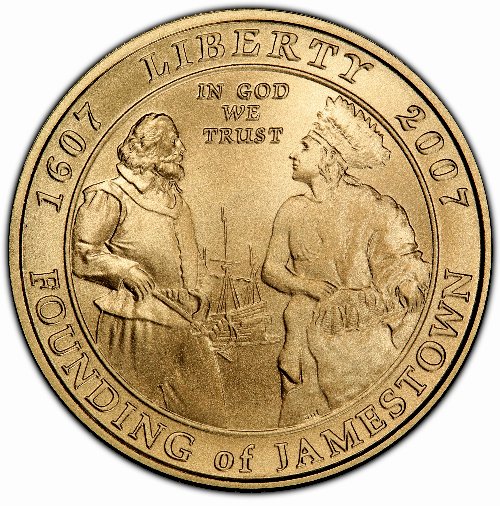 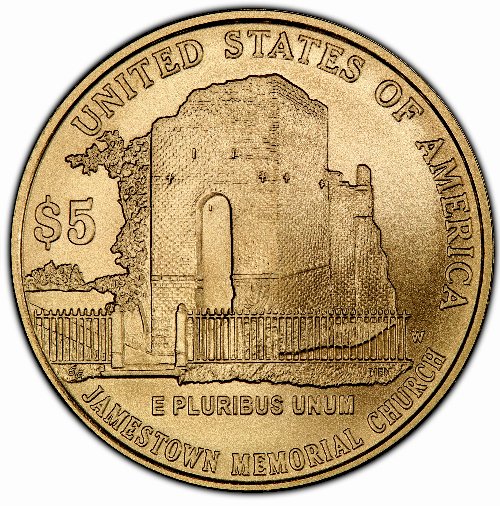 Collecting history one coin or medal at a time! (c) commems. All rights reserved.
|
|
Moderator
United States
195823 Posts |
Fascinating! |
|
Pillar of the Community
United States
9810 Posts |
Here is my contribution another 1984-W $10 Olympic Torch Runner. This one is a Proof in a PCGS holder PR68 DCAM. James Peed and John Mercanti designed this one, Mecanti working on the reverse alone. 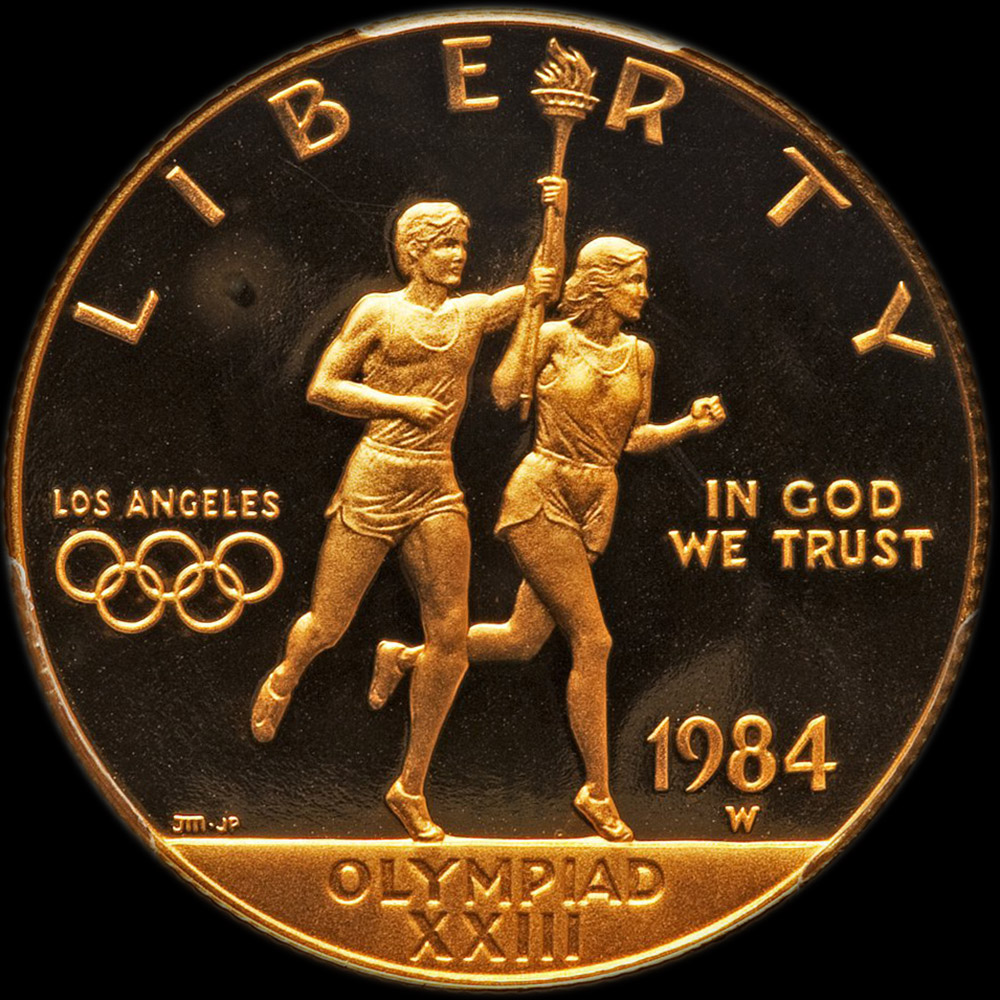 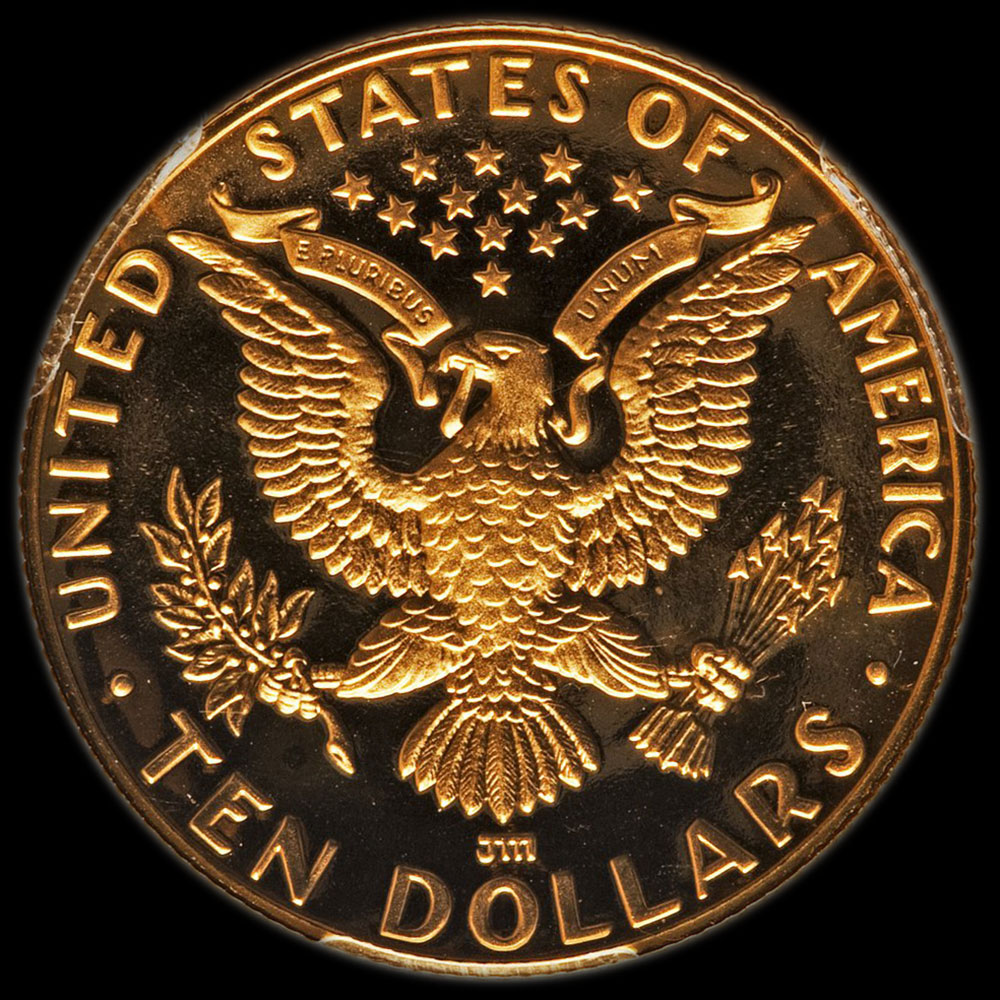 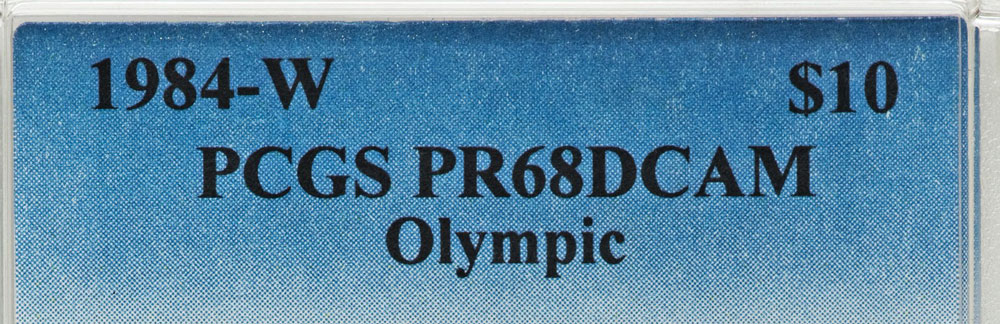 I always liked the symmetry of the 13 stars, 13 arrows, 13 leaves and 13 berries, all to represent the original 13 Colonies. commems already gave a better history on this coin than I could, in the very first post of the thread. "Buy the Book Before You Buy the Coin" - Aaron R. Feldman - "And read it" - Me 2013! ANA Life Member #3288 in good standing since 1981, ANS, Early American Coppers Member (EAC), Colonial Coin Collectors Club member (C4), Conder Token Collector Club member (CTCC), Civil War Token Society (CWTS) member, Liberty Seated Collectors Club (LSCC) & Numismatic Bibliomania Society member (NBS), USMex, Member in good standing, 2¢ variety collector. See my want page: http://goccf.com/t/140440 |
|
Moderator
United States
195823 Posts |
Very nice! |
|
CCF Master Historian of Commemorative Coins
United States
12558 Posts |
Mercanti was responsible for the reverse design of the 1991 USO 50th Anniversary silver dollar. The United Service Organizations (USO) came about as a result of a suggestion made by General George Marshall and the support of President Franklin Delano Roosevelt. It was chartered by the US Congress on February 4, 1941. The USO was set up to be a private organization that supported the recreational needs of US uniformed military personnel while they were on leave during active duty. The organization was also meant to boost the morale of those serving (think Bob Hope and his USO shows!). The USO brought together the Young Men's Christian Association (YMCA), the Young Women's Christian Association (YWCA), the Salvation Army, the National Catholic Community Services, the National Travelers Aid Association and the National Jewish Welfare Board under one cooperative umbrella. The USO continues its mission to the present day. (Side Note: A similar organization, the United Seaman's Service (USS) was created in 1942 to focus on the needs of US and Allied mariners who were not enlisted personnel.)To learn more about today's USO, visit https://www.uso.org/Mercanti's design depicts an American Bald Eagle perched on a globe oriented to present North and South America as well as Europe, Africa and a tiny portion of Asia; the eagle holds a ribbon in its beak, the ribbon features "USO" inscribed on it. Eleven stars are presented in an arc below the globe. Mercanti's "JM" initials are found below the inscription "FIFTY YEARS SERVICE" to the left of the globe and just above the topmost star; the inscription "TO SERVICE PEOPLE" is seen to the right of the globe. Combined together, the two inscriptions quote the USO's anniversary theme, "Fifty years service to service people." The coin's obverse design is fairly simplistic and has drawn criticism over the years. At its center, the design depicts a pennant with "USO" that is flanked by three stars to its left and right. The pennant's design is based on the USO Flag. In calligraphy above the pennant is written "50th Anniversary." Robert Lamb created the design, William C. Cousins developed the models from Lamb's artwork. Flag of the United Service Organizations (USO) I bought this one directly from the Mint (as I have with nearly all of the modern commemorative pieces in my collection), picking up the uncirculated version for $23 (the Pre-Issue discounted price) upon the coin's release 30 years ago! 1991 United Service Organizations (USO) 50th Anniversary Silver Dollar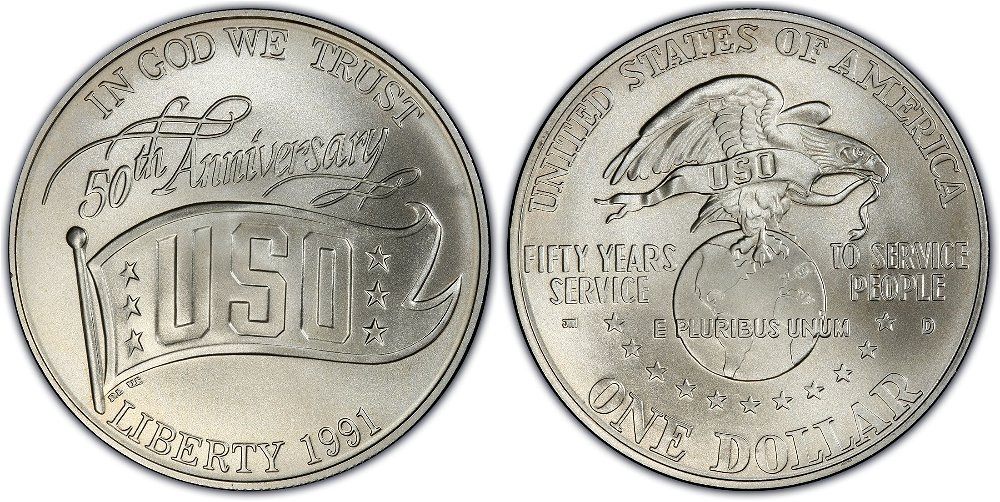 (Image Credit: Image courtesy of PCGS CoinFacts, https://www.PCGS.com.) (Image Credit: Image courtesy of PCGS CoinFacts, https://www.PCGS.com.)Collecting history one coin or medal at a time! (c) commems. All rights reserved.
|
|
CCF Master Historian of Commemorative Coins
United States
12558 Posts |
Among the Mint's 1992 releases, John Mercanti was assigned the obverse of the Christopher Columbus Quincentenary silver dollar. Sales of the coin generated surcharges that were paid to the Christopher Columbus Fellowship Fund for use by the Christopher Columbus Fellowship Foundation to financially support and "encourage and support research, study, and labor designed to produce new discoveries in all fields of endeavor for the benefit of mankind." The Fellowship Foundation was created by the US Congress within the same legislation that authorized the Columbus coin program. (Public Law 102-281)Mercanti's design presents a standing Christopher Columbus in the foreground. He is shown holding a pole with pennant in his right hand and a rolled-up scroll in his his left (a map?). Immediately behind him is a globe on a pedestal. In the background is seen the three sailing ships Columbus journeyed with during his first voyage in 1492-93 - from left to right, the Pinta, the Santa Maria and the Niña. A mountainous island is featured in the far background. (Side note: It appears the globe depicts Europe and Africa. If it is meant to be contemporary with Columbus and prior to his 1492 voyage, the globe would most likely be representative of the one created by Martin Behaim between 1490 and 1492 - the Erdapfel. As Columbus had not yet returned from his voyage, the Erdapfel did not depict the New World and simply had a largely empty ocean between Europe and Asia. The Erdapfel, which reflected knowledge gained via Portuguese explorers, did include Africa.)Mercanti's "JM" initials can be found just below the pedestal, to the right (viewer's perspective) of Columbus' left foot. The reverse design is an interesting blend of symbols of discovery separated by ~500 years - Columbus's Santa Maria on the left in a split-view with the US Space Shuttle Discovery. The design was the work of Thomas D. Rogers, Sr. The 0.900 fine silver dollar was part of a three-coin program that also included a copper-nickel (CuNi) clad half dollar and a 0.900 fine gold half eagle ($5.00). 1992 Christopher Columbus Quincentenary Silver Dollar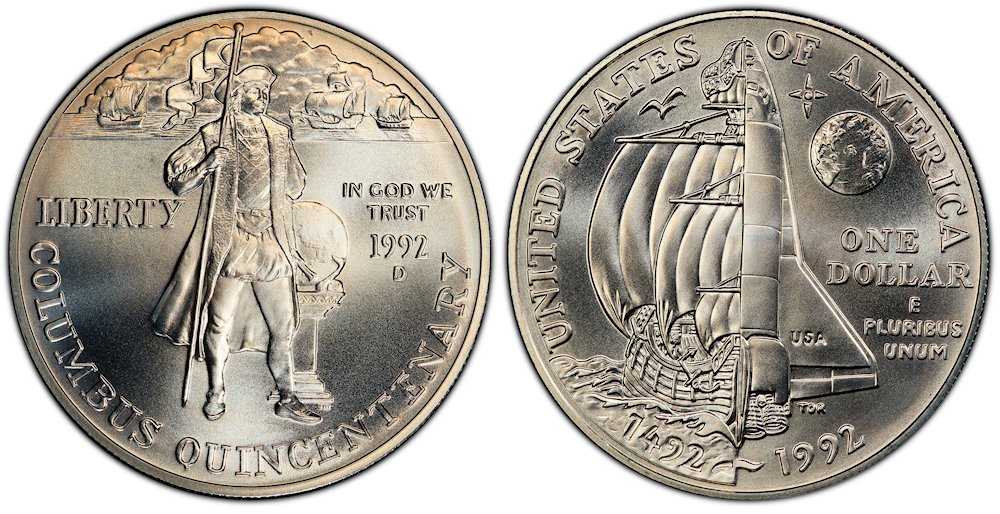 (Image Credit: Image courtesy of PCGS CoinFacts, https://www.PCGS.com.) (Image Credit: Image courtesy of PCGS CoinFacts, https://www.PCGS.com.)My collection includes uncirculated examples of each coin from the program; they were purchased individually vs. via a three-piece set. Collecting history one coin or medal at a time! (c) commems. All rights reserved.
|
|
Pillar of the Community
United States
9810 Posts |
I really like the design elements on that Columbus Quincentenary Silver Dollar, but I always thought those to be clouds in the distance behind the ships not a mountain range, as they are reminiscent of storms in the Caribbean seas. If they are indeed supposed to be a mountain range, then they did as well depicting them as whomever designed the early Clark & Gruber Pikes peak gold Eagles and Double Eagles. They look about as realistic. 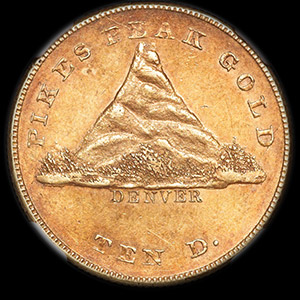 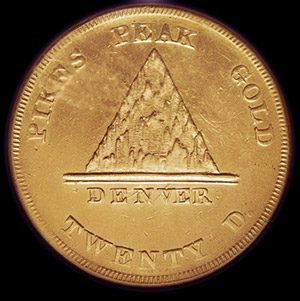 Compared to what Pikes Peak really looks like: 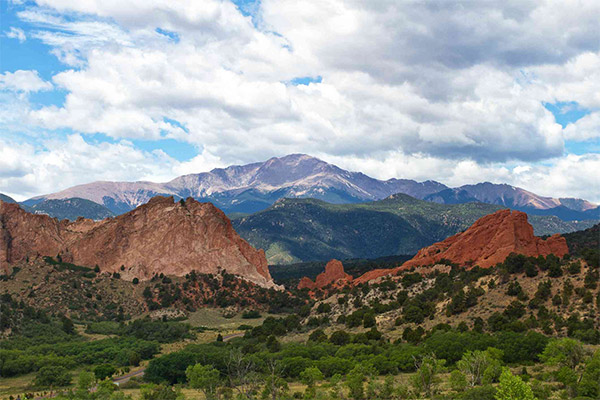 I also really like how the dollar reverse pulls our past and historical beginnings with exploration into space travel and the future all in one neat design. That is one of the best looking reverse coins we've had in a long, long time IMO of course. "Buy the Book Before You Buy the Coin" - Aaron R. Feldman - "And read it" - Me 2013! ANA Life Member #3288 in good standing since 1981, ANS, Early American Coppers Member (EAC), Colonial Coin Collectors Club member (C4), Conder Token Collector Club member (CTCC), Civil War Token Society (CWTS) member, Liberty Seated Collectors Club (LSCC) & Numismatic Bibliomania Society member (NBS), USMex, Member in good standing, 2¢ variety collector. See my want page: http://goccf.com/t/140440 |
|
Moderator
United States
195823 Posts |
Excellent! |
|
CCF Master Historian of Commemorative Coins
United States
12558 Posts |
The 1994 US Capitol Bicentennial commemorative silver dollar has long been one of my favorites of the modern series - I love the detail included in the depiction of the US Capitol Dome on the obverse. (I think it helps that I consider the US Capitol to be a beautiful building and an architectural masterpiece!) John Mercanti, however, was not the designer of the coin's obverse - that privilege was given to William C. Cousins. Mercanti handled the coin's reverse design, which is a rendering of a segment of one of the four stained-glass skylights positioned within the grand stairways of the Capitol's Senate and House wings. At the time of the coin's release, Mercanti commented, "achieving a faithful representation of the original window took more hours and patience than any other coin in my experience." ( The Numismatist, November 1994, p. 1519.) (Side Note: The four windows/skylights referenced above were created by the brothers John and George Gibson for the US Capitol between 1858 and 1861. They are currently awaiting restoration and have been temporarily been removed and replaced in the Capitol with painted acrylic panels that mimic the original designs.)The reverse design presents a 13-star US Shield at its center, with a Bald Eagle with spread wings surmounting it; the Shield is encircled by a laurel wreath. Three arrows are being clutched by the eagle's right talon, while its left holds the traditional olive branch. From behind the Shield extend four US Flags, two on each side. The flags are more stylistic then faithful renderings, however, as none include the correct number of stars for the time/year the original skylights were created. At the time, the US Flag had 33 stars, but the design within the skylight presents just 12 stars (or fewer) on each flag; Mercanti maintained the flags as originally presented without updating for increased accuracy. Below the Shield is found a pair of olive branches. I spent a fair amount of time searching the internet for a color image of the stained-glass skylight adapted for the coin's reverse design, but the effort proved fruitless. I then remembered that the Mint produced a special edition set that featured a proof version of the silver dollar and included a small booklet titled, The Capitol: An architectural history. So, I pulled out my set and immediately found the image for which I was looking! US Capitol Stained-Glass Window Featuring US Shield, Bald Eagle and US Flags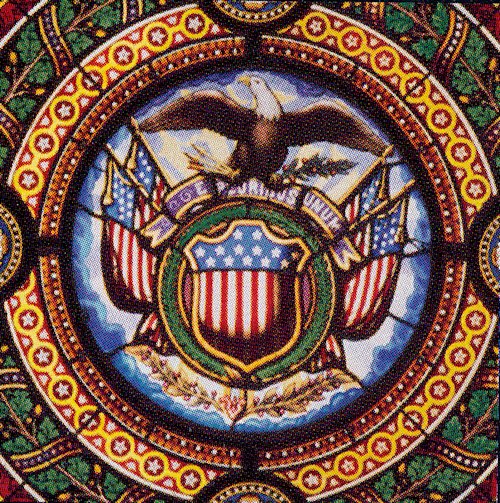 I also imaged the proof coin from the set to present here vs. my uncirculated coin. IMO, the cameo contrast makes the design elements "pop" off the surfaces of the coin and make for an attractive piece. 1994 US Capitol Bicentennial Silver Dollar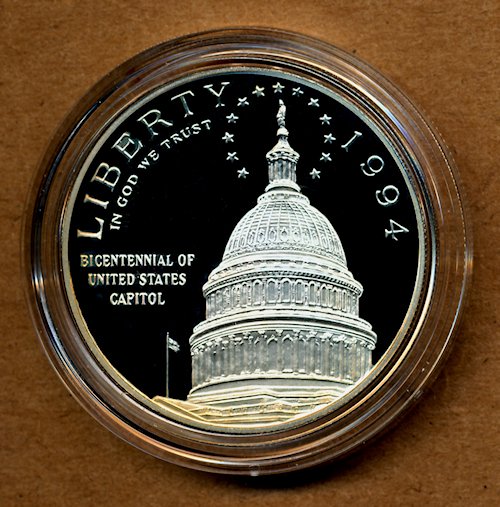 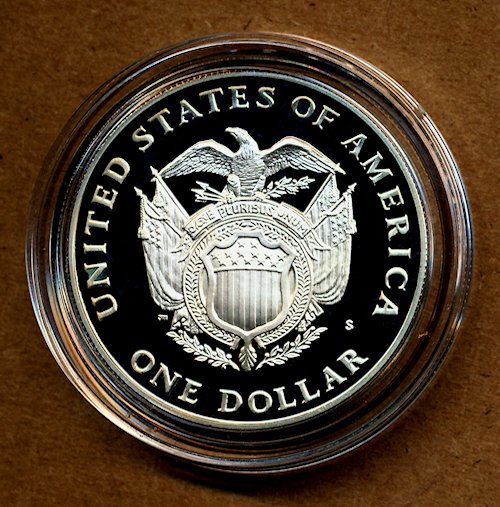 Collecting history one coin or medal at a time! (c) commems. All rights reserved.
|
|
CCF Master Historian of Commemorative Coins
United States
12558 Posts |
As part of legislation that enabled the Thomas Jefferson silver dollar and the US Capitol silver dollar, Congress authorized the three-coin US Veterans commemorative program which consisted of three silver dollars - Vietnam Veterans, Prisoner-of-War and Women in Military Service for America. John Mercanti was involved with the Vietnam Veterans silver dollar, creating the coin's obverse design. The Vietnam Veterans Memorial Wall ("Memorial") honors the "men and women of the Armed Forces of the United States who served in the Vietnam war." (Public Law 96-297) It was proposed in Congress via a Senate Joint Resolution in November 1979 and became law in July 1980. The primary component of the Memorial is its black granite wall that lists the names of the 58,318 Americans who died while serving their country as part of the Vietnam War. The names are listed on the Wall chronologically by date of death; there are alphabetized index books at the site to aid in finding specific names. The Memorial was dedicated on the National Mall in 1982; it is located northeast of the Lincoln Memorial toward the west end of the Mall. The main elements of Mercanti's design are the Vietnam Veterans Memorial Wall and an outstretched hand that appears to be helping a family member or friend to locate the name of a veteran who gave his/her life in the war. Though multiple names are clearly visible in the depiction, no specific name is identified as the soldier being searched for. The Washington Monument is seen in the background. John Mercanti's "JM" initials are seen near the rim at about the 3:30 clock position. The coin's reverse, which depicts three Armed Forces medals awarded for service during the Vietnam War (l to r, Armed Forces Expeditionary Service (AFES), Vietnam War Service (replaced the AFES medal in 1965) and Vietnam Campaign); it was designed by Thomas D. Rogers, Sr. 1994 Vietnam Veterans Memorial Silver Dollar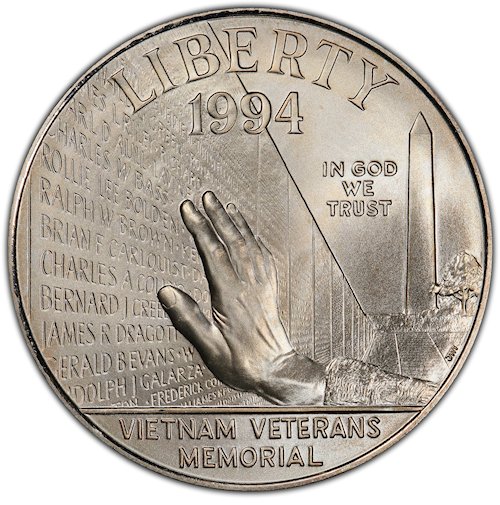 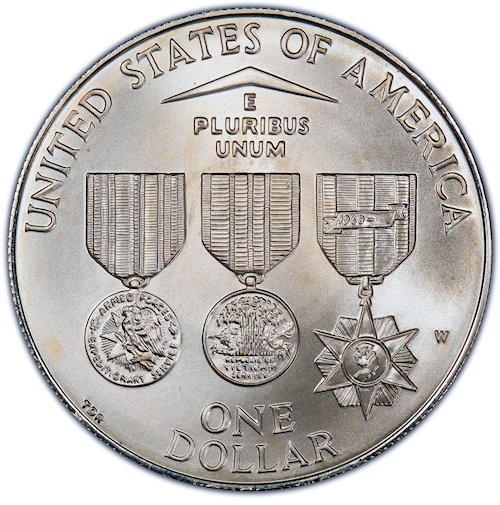 (Images Credit: PCGS CoinFacts, https://www.PCGS.com (Images Credit: PCGS CoinFacts, https://www.PCGS.com. Collecting history one coin or medal at a time! (c) commems. All rights reserved.
|
| |
Replies: 114 / Views: 12,623 |








 First Page
 Previous Page


 Posted 07/07/2021 10:55 pm


