First Page


 Posted 06/11/2021 11:01 pm


@Ty2020b. I agree this coin is perfect to elaborate.
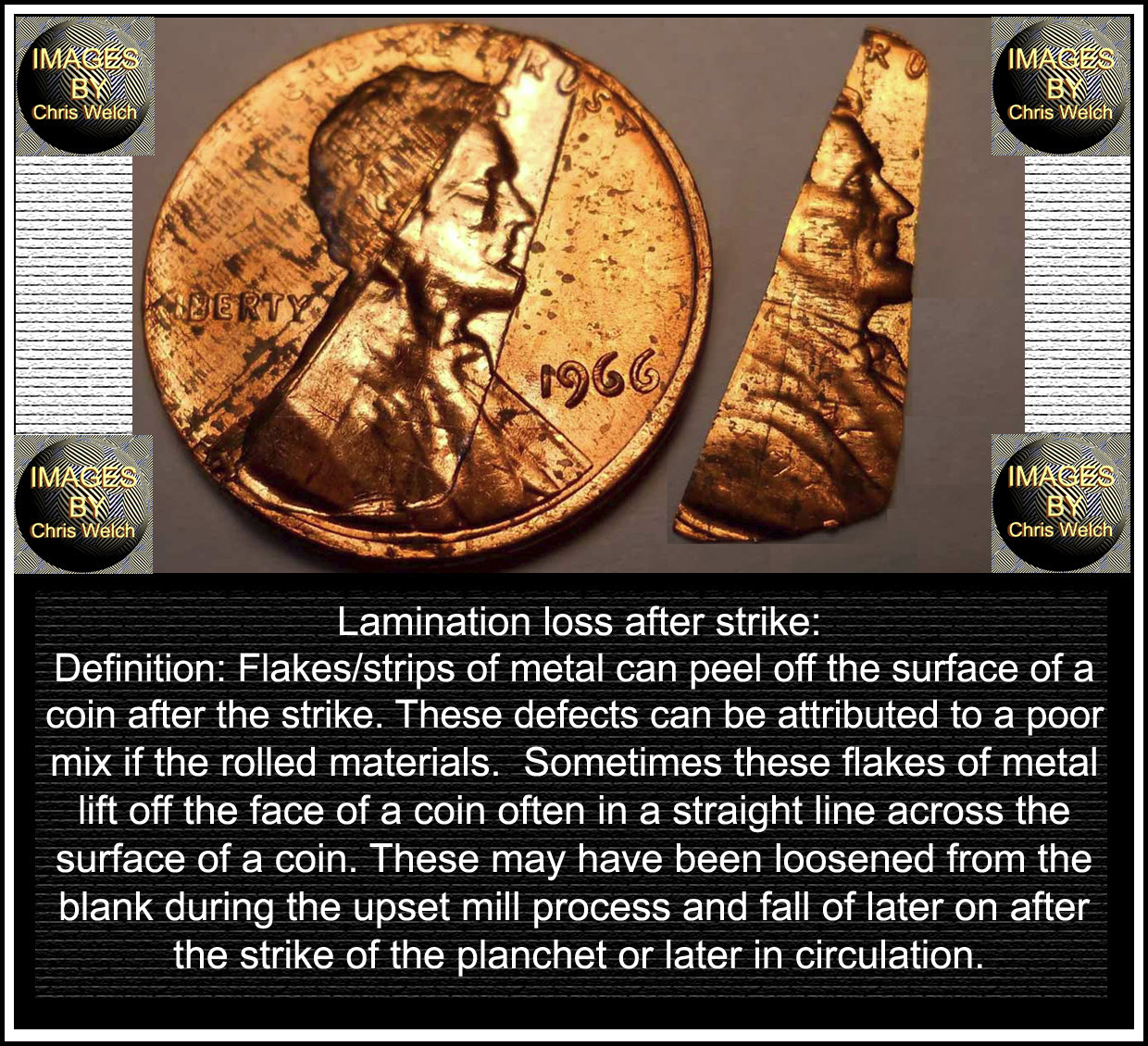
I already posted here on the forum the definitions of the delamination, lamination and cracked metal roll, so I will not repeat now.
First, lamination means unification of two different materials by different methods: like press, glue, heat, etc.
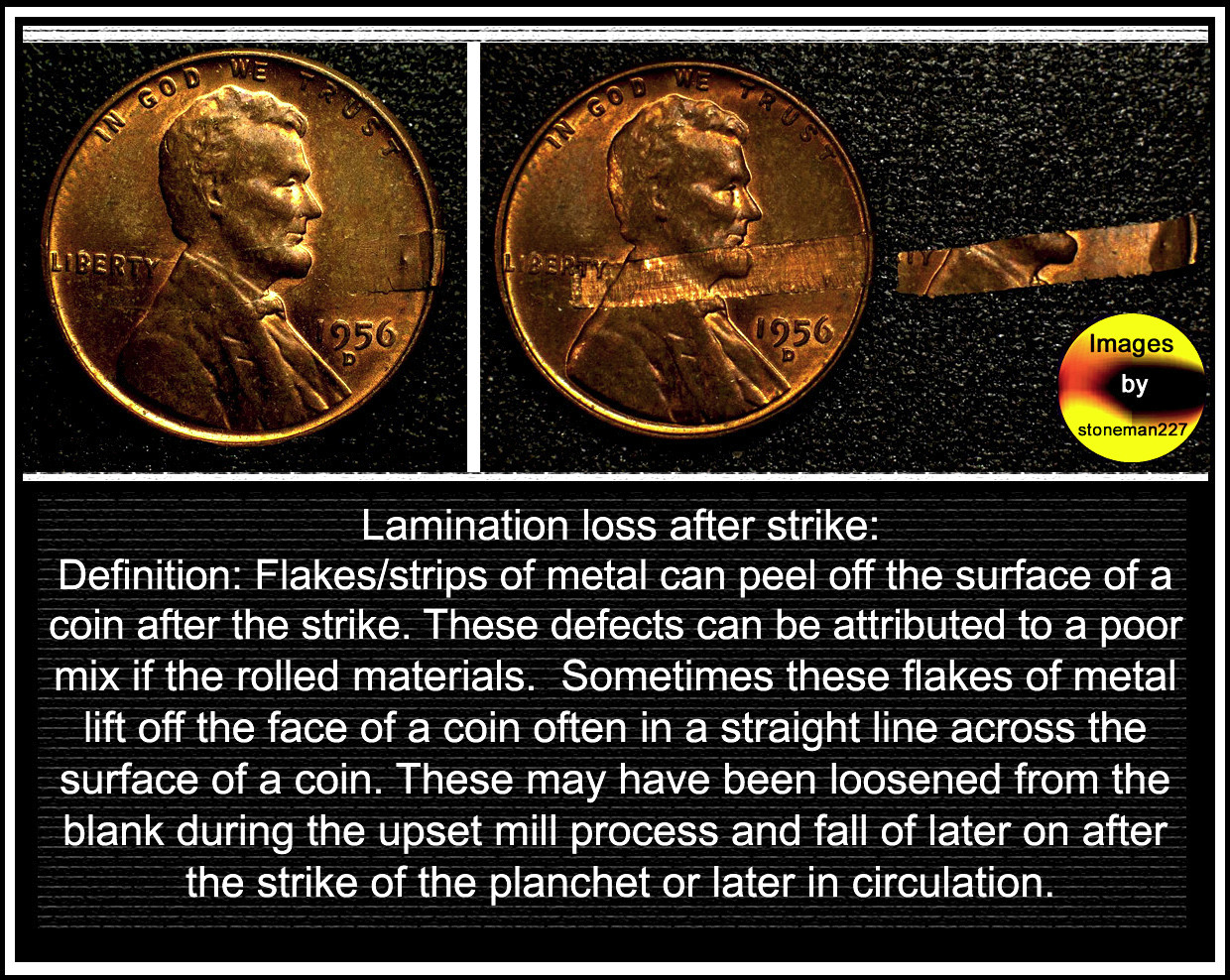
Delamination the right term is the longitudinal separation of the structure of the material due to the de crystallization. Take form of the very tinny lamellas in general with two sides almost parallels, and it is characteristic to the begin of the roll where the rolling forces push the material more up so the structure will separate. If detached the exfoliated material will show clear the material structure.
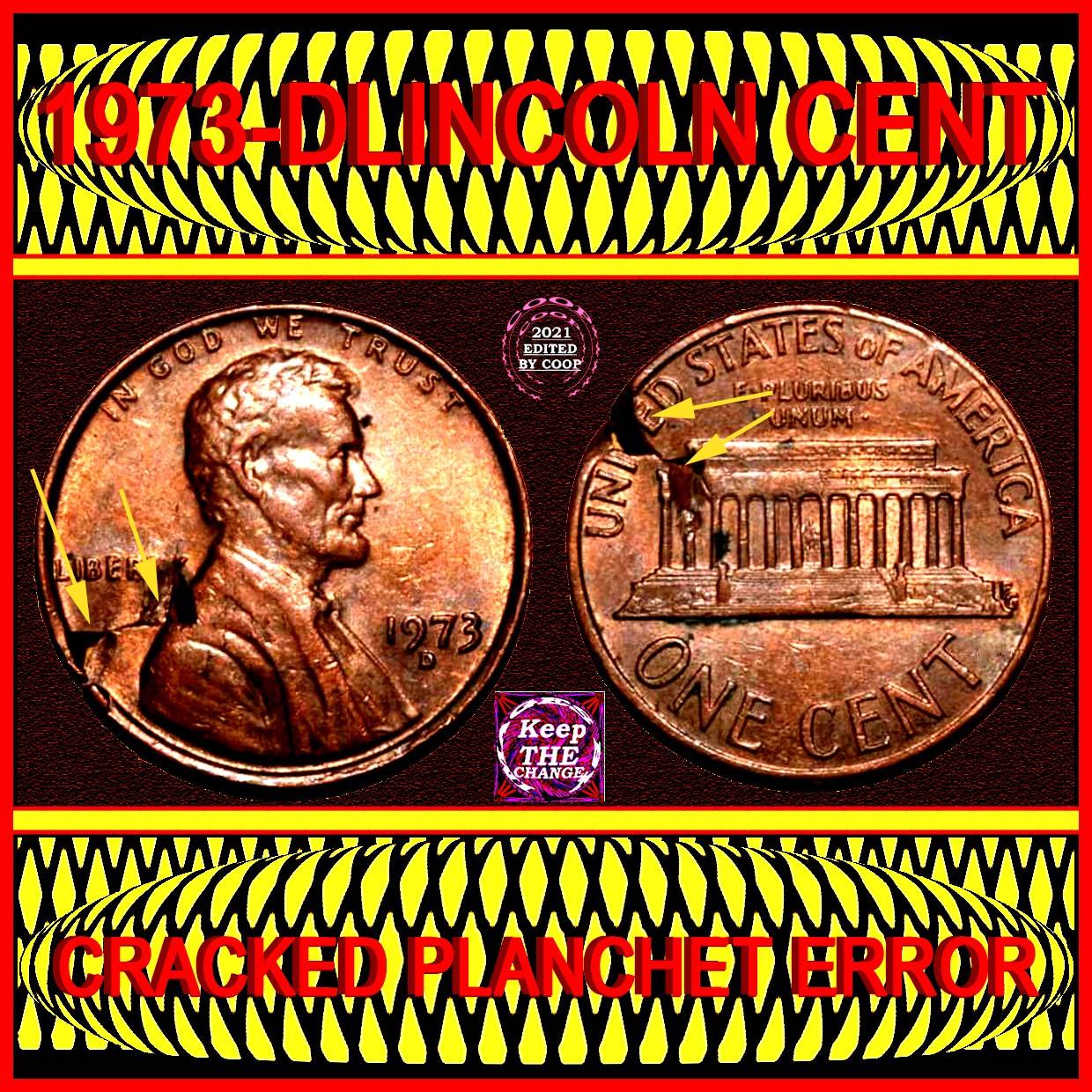
The crack roll or planchet is more at the end of the roll where the forces of rolling pushing the material in front and have space and less resistance, will make that the material will expand in two different directions= longitudinal and lateral, which will result in the separation of the material on vertical axe.
Another cracking cause it is a poor mixt of the alloy (this case). In this case, the adjacent metals which has less resistance to the pression (strike) will simply broke their structure.
On the strike another cause of cracking it is improper annealing, but this could be another topic on this forum.
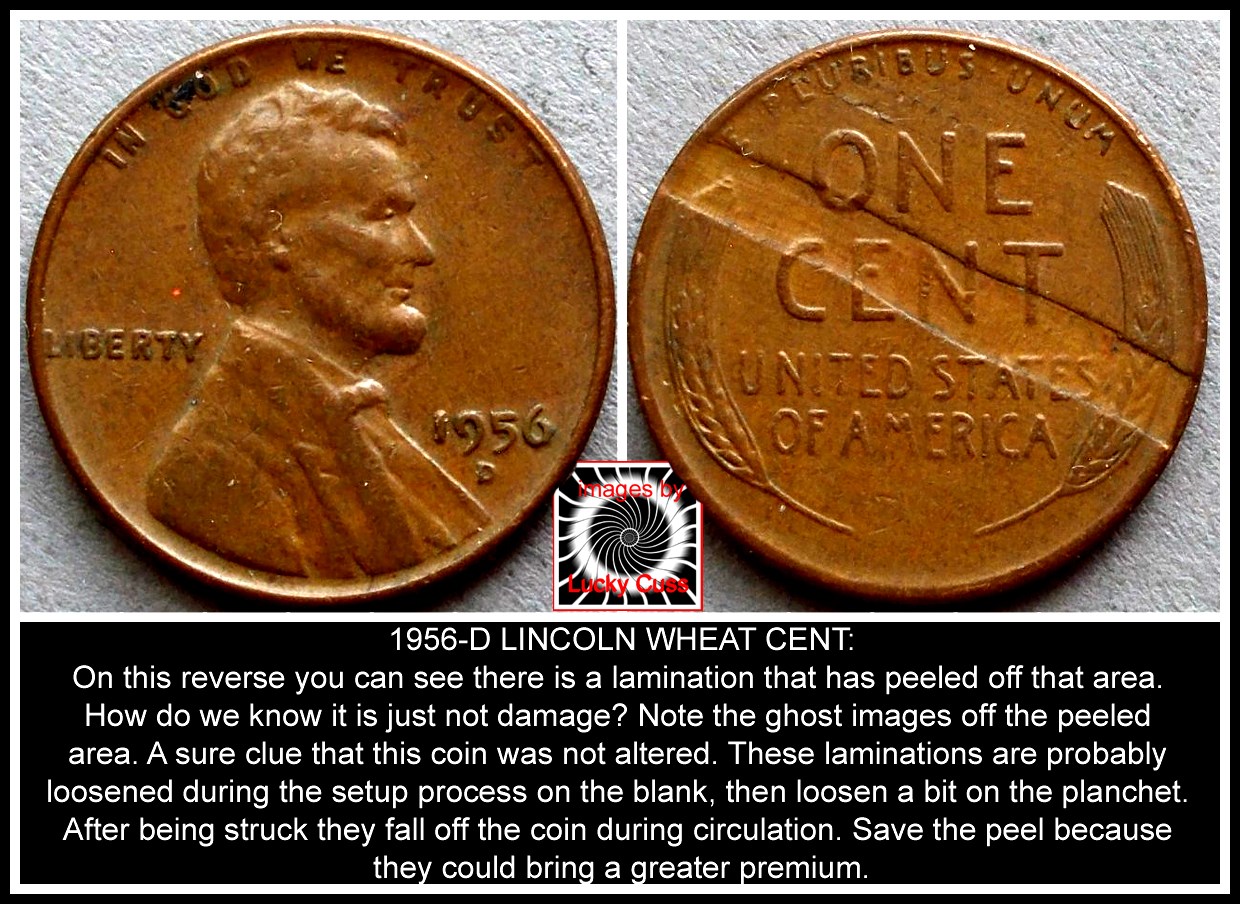
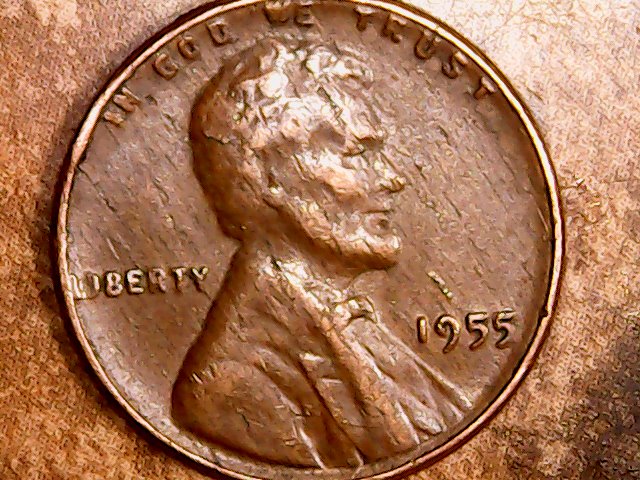
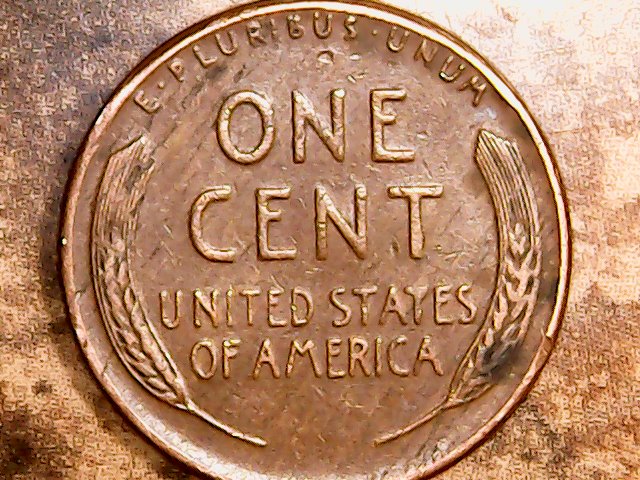
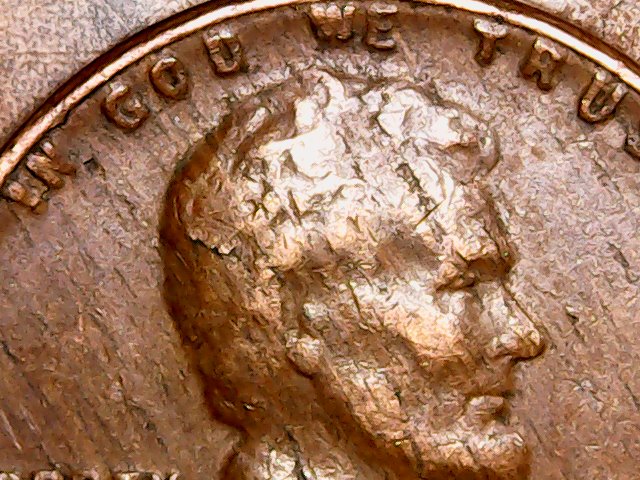
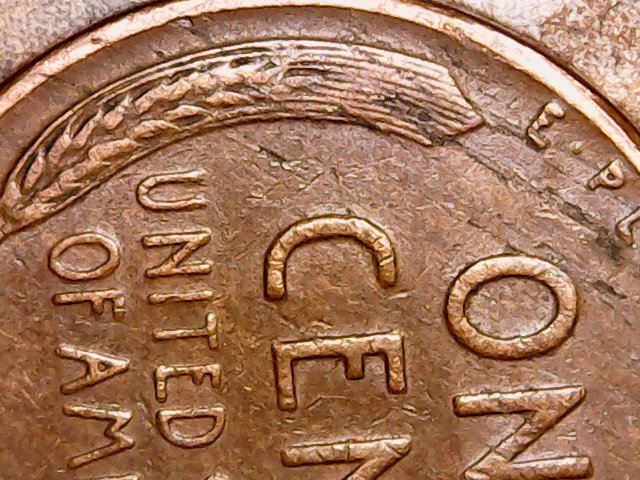
BACK to our coin: The appearance of the exfoliation it is PLURIBUS near the rim, but in O from ONE is clear that the material has a fail and crack due to the strike. Look at the vertical separation. No signs of the material structure is show.
The missing parts on the removed and moved parts on C is due to the strike.
The N was strike and the missing parts are due to strike forces, if was delamination the N will detaches easy.
Any comments are welcome.
I already posted here on the forum the definitions of the delamination, lamination and cracked metal roll, so I will not repeat now.
First, lamination means unification of two different materials by different methods: like press, glue, heat, etc.
Delamination the right term is the longitudinal separation of the structure of the material due to the de crystallization. Take form of the very tinny lamellas in general with two sides almost parallels, and it is characteristic to the begin of the roll where the rolling forces push the material more up so the structure will separate. If detached the exfoliated material will show clear the material structure.
The crack roll or planchet is more at the end of the roll where the forces of rolling pushing the material in front and have space and less resistance, will make that the material will expand in two different directions= longitudinal and lateral, which will result in the separation of the material on vertical axe.
Another cracking cause it is a poor mixt of the alloy (this case). In this case, the adjacent metals which has less resistance to the pression (strike) will simply broke their structure.
On the strike another cause of cracking it is improper annealing, but this could be another topic on this forum.
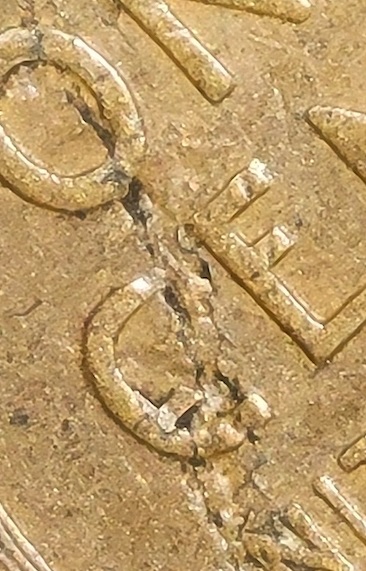
BACK to our coin: The appearance of the exfoliation it is PLURIBUS near the rim, but in O from ONE is clear that the material has a fail and crack due to the strike. Look at the vertical separation. No signs of the material structure is show.
The missing parts on the removed and moved parts on C is due to the strike.
The N was strike and the missing parts are due to strike forces, if was delamination the N will detaches easy.
Any comments are welcome.