| Author |
 Replies: 1,279 / Views: 81,853 Replies: 1,279 / Views: 81,853 |
|
|
|
Pillar of the Community
Russian Federation
5186 Posts |
Quote:I think 1386 (AH788) was my coin  Thanks for the correction! Here's an updated version of the date listing... 1389 - none yet (would be 791 AH) 1388 - Grinya (790 AH) 1387 - january1may (789 AH) 1386 - JohnConduitt (788 AH) 1385 - EddieDiz 1384 - tdziemia (?) 1383 - Spence, EddieDiz; Grinya, JohnConduitt (785 AH = Mar 1383-Feb 1384) 1382-81 - none yet (would be 784 and 783 AH) 1380 - JohnConduitt, Grinya (782 AH = Apr 1380-Mar 1381) There is apparently quite some dispute over whether "Bolaq" or "Tulyak" (or even something intermediate; there's a lot of variant spellings) is the correct name; as far as I can tell, the coins tend to use a form close to the former (but apparently in Arabic the difference is only one dot), while contemporary Russian sources consistently use a form close to the latter. (Zeno takes a third option and calls him "Ghiyas al-Din Muhammad". Some sources suggest that Bolaq and Tulyak might have been two different people, and differ on whether Ghiyas al-Din Muhammad was one of those two, both of those two, or a yet third person.) Incidentally, whatever his name was, he probably died at the battle of Kulikovo Field in September 1380, so "1380-81" is likely anachronistic (though the main year is 1380 either way). |
|
Pillar of the Community
United Kingdom
725 Posts |
Quote:
There is apparently quite some dispute over whether "Bolaq" or "Tulyak" Yes I'm using Sagdeeva, who had Muhammad Bolaq killed off in 779, so this coin had to be a new person, 'Tulyak'. I have a coin of Muhammad Bolaq for the 1370s... Talking of vague coins, I have this from the time of Dmitry Donskoy (d. 1389), or perhaps Vasily I Dmitriyevich. Because it's on the heavier side (1.5 weight), it should be earlier in the range. Double-sided Imitation from the south of the Grand Duchy of Moscow, 1389-1390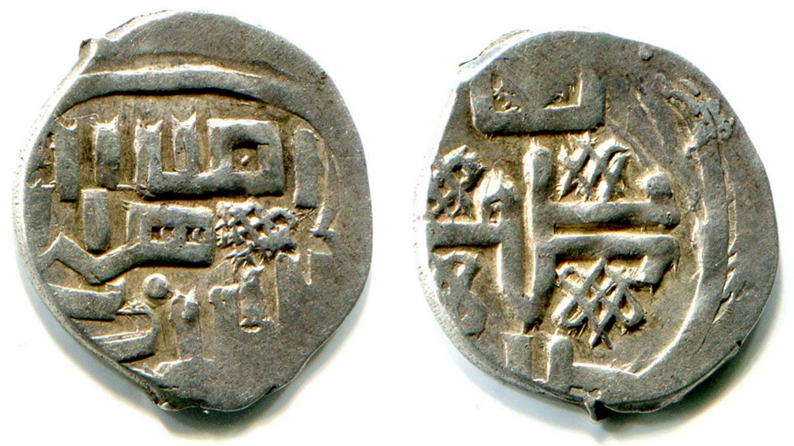 Moscow. Silver, 1.4g. (HP 1080; for obverse cf. Sagdeeva 204 from Saray; for reverse cf. HPF 115). Moscow. Silver, 1.4g. (HP 1080; for obverse cf. Sagdeeva 204 from Saray; for reverse cf. HPF 115). It was struck for trade with the Golden Horde. The obverse copies a Golden Horde dang of Uzbek (Öz Beg) Khan (1313-1341), while the reverse copies the reverse of Dmitry Donskoy's two-headed Janus coins. Edited by JohnConduitt
12/08/2021 4:46 pm
|
|
Pillar of the Community
 United States
8076 Posts |
Another minor point on the date "accounting." I think the 1384 attribution is solid for my Brabant coin. Here are auction listings by two houses that deal in a lot of coins from this part of the world: https://www.acsearch.info/search.html?id=5055655https://www.acsearch.info/search.html?id=8165202I probably caused some confusion with my comment about the very similar Flanders coin from this monetary union which is dated more broadly, 1384-1386: https://www.acsearch.info/search.html?id=5055446Very strong showing this decade! My only other coin with a date range starting in the 1380s is this Polish denar from the joint reign of Jadwiga and Wladyslaw Jagiello, 1386-1399 (photos are WCN's). Wschowa mint, Kop. 8413. I continue to wonder why they couldn't create better looking coins with the example of Hungary right at their southern border. 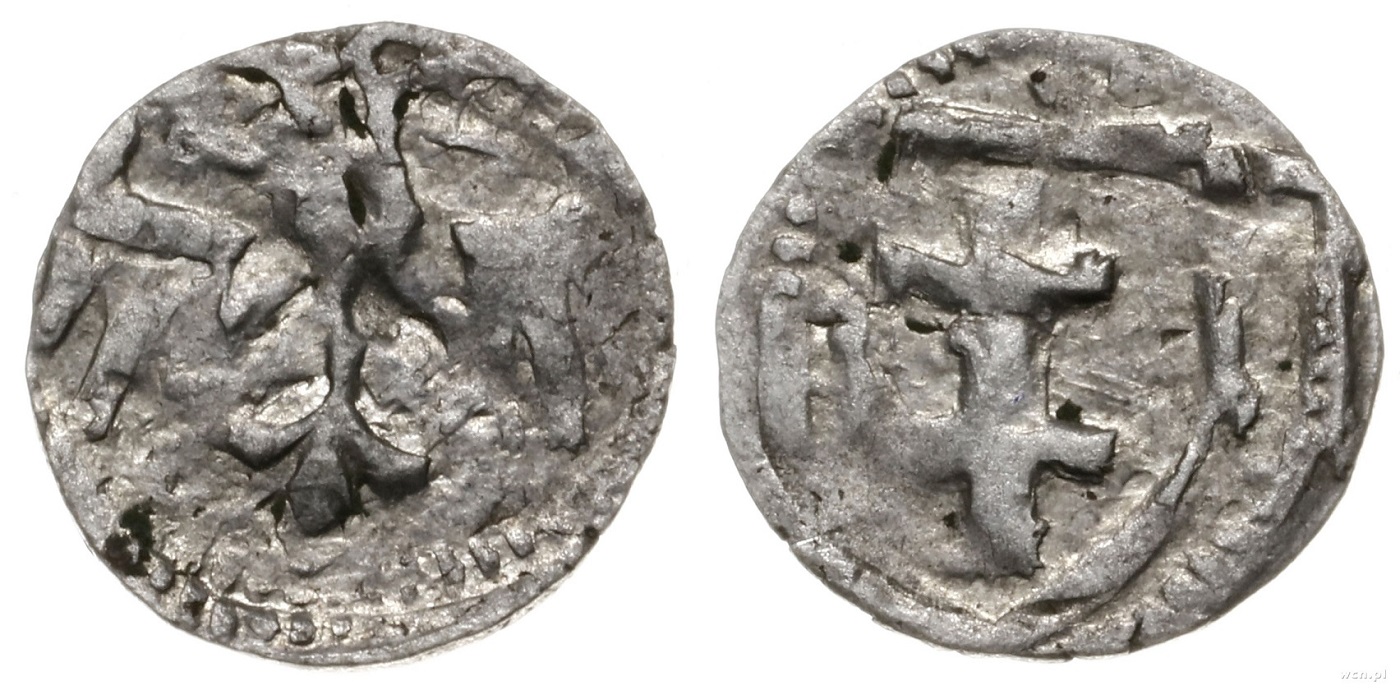 Edited by tdziemia
12/08/2021 5:38 pm
|
|
Moderator
  United States
34572 Posts |
This Pegione was issued by the Italian City State of Milan somewhere in the date range of 1385 to 1395 AD. The obv legend is GALEAZ COMES VIRTVTVM and the rev legend is DOMINVS MEDIOLANI 3 C G Z. It is attributed as Biaggi 1472. 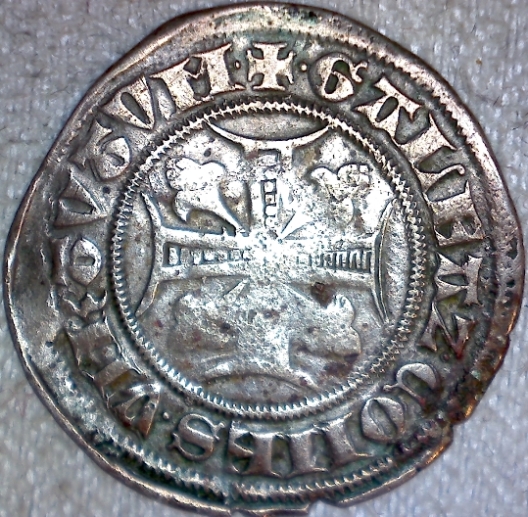 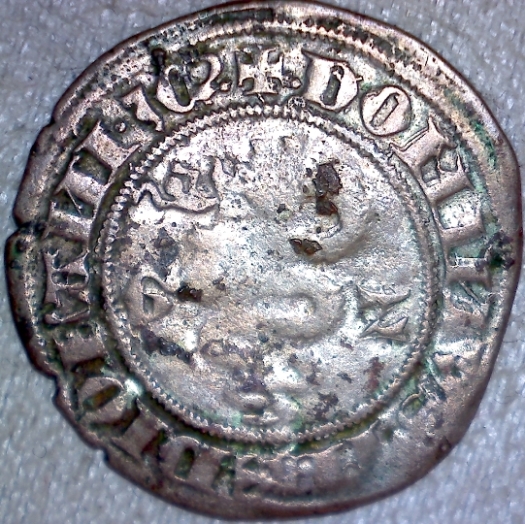 "If you climb a good tree, you get a push."
-----Ghanaian proverb
"The danger we all now face is distinguishing between what is authentic and what is performed."
-----King Adz
|
|
Pillar of the Community
United Kingdom
725 Posts |
One more from Dmitry Donskoy's time, although it's not datable to a year. Dmitry Donskoy Countermark on an Imitation Golden Horde Dang, 1385-1395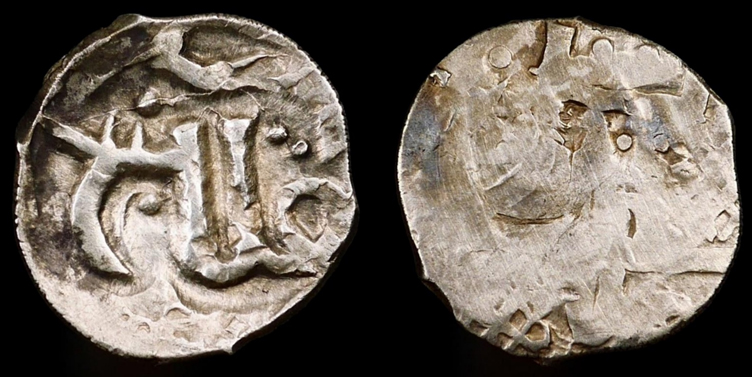 Kolomna. Silver, 0.9g. 'Malik' (King) countermark (HPF 111). Kolomna. Silver, 0.9g. 'Malik' (King) countermark (HPF 111).The Muscovites began countermarking Golden Horde coins, and imitations of Janibeg dangs, in the 1380s. They only started striking coins at all at the end of the 1370s. |
|
Pillar of the Community
United States
8076 Posts |
Neat Milan coin! First, quite a creative formation of the letters T in the obverse legend. Not sure I have seen that elsewhere. Second, that is a very curious obverse legend (maybe @erafjel can help). Galeazzo Visconti was lord of Milan at the point where it acquired Duchy status (1395). This coin pre-dates the duchy, but the normal title for lord would be DOMINVS. Instead, Galeazzo uses COMES (Count) modified by VIRTVTVM. I would take this to mean something like de facto Count?  Edited by tdziemia
12/09/2021 08:02 am
|
|
Pillar of the Community
Sweden
2124 Posts |
Quote:
Those a nice gold coins. Are they as expensive as English gold? The ecu I showed cost me 900 € a couple of years ago. Perhaps you have to give slightly more today for one in that condition. But I think this type is the least expensive of the French 14th century gold coins. I'm not too familiar with English gold, but when I look at some 14h century nobles, prices seem rather scary.  Quote:
that is a very curious obverse legend (maybe @erafjel can help). Galeazzo Visconti was lord of Milan at the point where it acquired Duchy status (1395). This coin pre-dates the duchy, but the normal title for lord would be DOMINVS. Instead, Galeazzo uses COMES (Count) modified by VIRTVTVM.  Virtutum Virtutum refers to the French County of Vertus. So Comes Virtutum means Count of the Vertusians/People of Vertus. Gian Galeazzo Visconti inherited the title from his father (also named Galeazzo Visconti), who got the title when he married Isabelle de France in 1360. Isabelle was the daughter of French king Jean II and got the county as her dowry; the title went to her husband. Isabelle died already in 1373, the county then becoming the property of her husband. When Galeazzo died in 1378, the county was divided between his brother Barnabó and his son Gian Galeazzo, but the latter poisoned the former, becoming count alone. And then he began minting coins, in Milan, with his French count title. (I didn't know all this, had to look it up.  ) And that pegione is really nice! |
|
Moderator
United States
34572 Posts |
Good information on Italian history @era. Also, yes @tdz, the odd letterforms were a strong reason behind me wanting to purchase this one. Here is a Ducat from the Romanian City of Wallachia. It can be dated to between 1383 to 1386 AD. The obv inscription is IWAAN-OVOEBO and the rev inscription is +IWAANOVBOENUAA P (well, sort of as I have Latinized some of the Cyrillic characters). It was issued by Mircea I "The Elder" and is attributed as MBR.S-17,83. 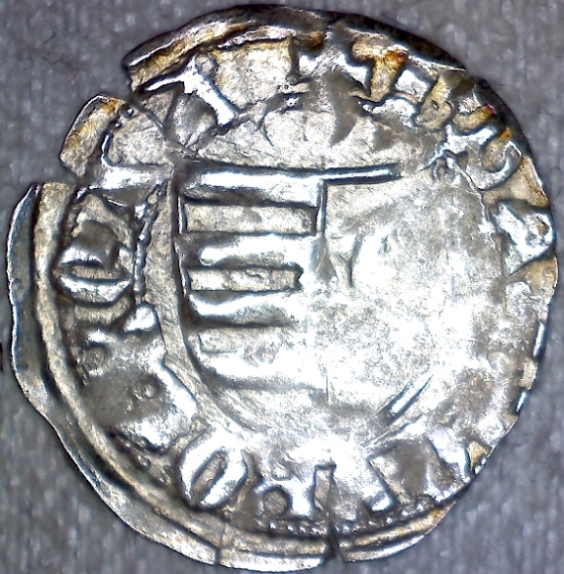 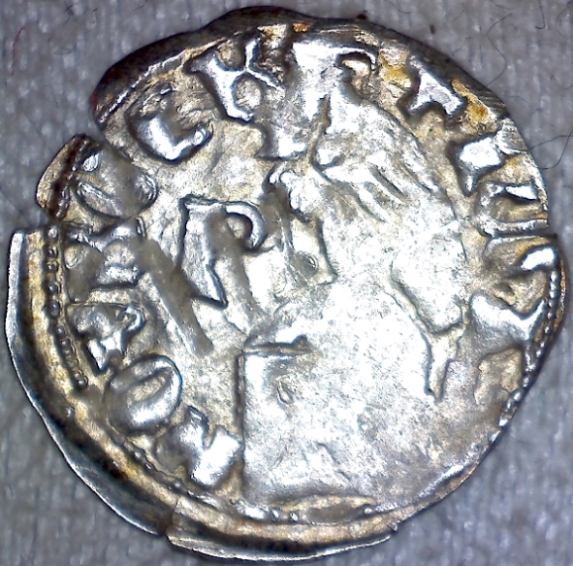 "If you climb a good tree, you get a push."
-----Ghanaian proverb
"The danger we all now face is distinguishing between what is authentic and what is performed."
-----King Adz
|
|
Moderator
United States
34572 Posts |
I can't pin this coin down to an exact date range, but it is generally listed as "circa 1387" AD. This uniface Bracteate was minted by the German City of Tiengen. The inscription is T - E V and is attributed as Bonhof 1793, Berger 2468, and Weil 75. As you can see by the amount of detail visible on the rev, it is quite thin. Therefore, to help preserve the condition, I keep it stored in a separate plastic case inside the 2x2. 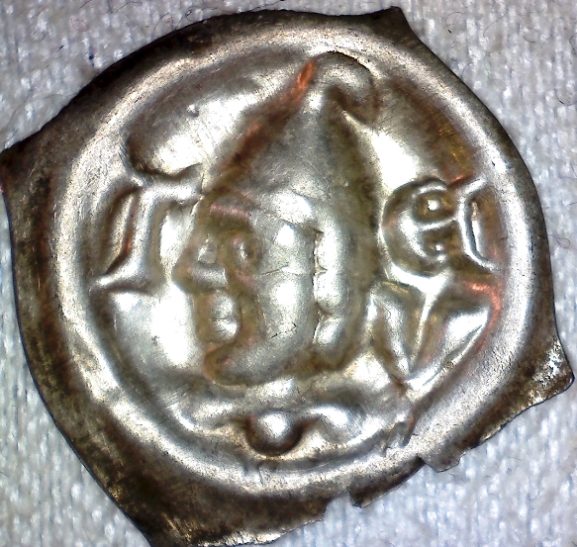 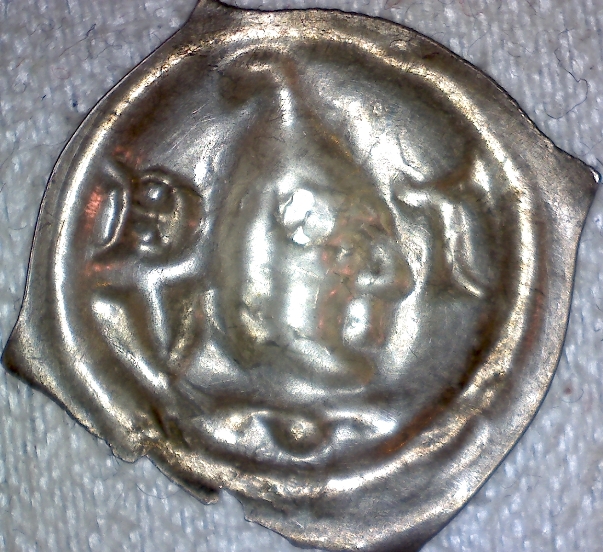 "If you climb a good tree, you get a push."
-----Ghanaian proverb
"The danger we all now face is distinguishing between what is authentic and what is performed."
-----King Adz
|
|
Valued Member
251 Posts |
Quite a lot of really nice coins! I wasn't sure that I need to publish the rest of mine after them, buy let's do it:) This is a Saray al-Jadida Axe type pul dated 787AH (1385) temp. Tokhtamysh Khan. 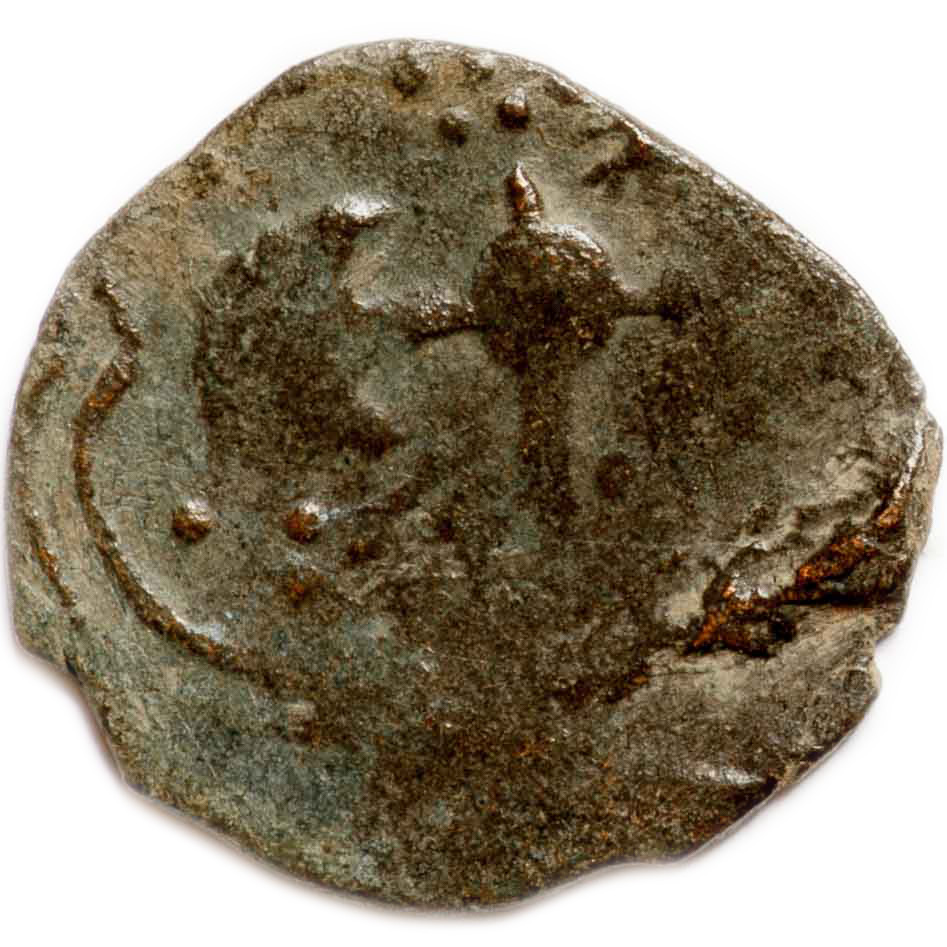 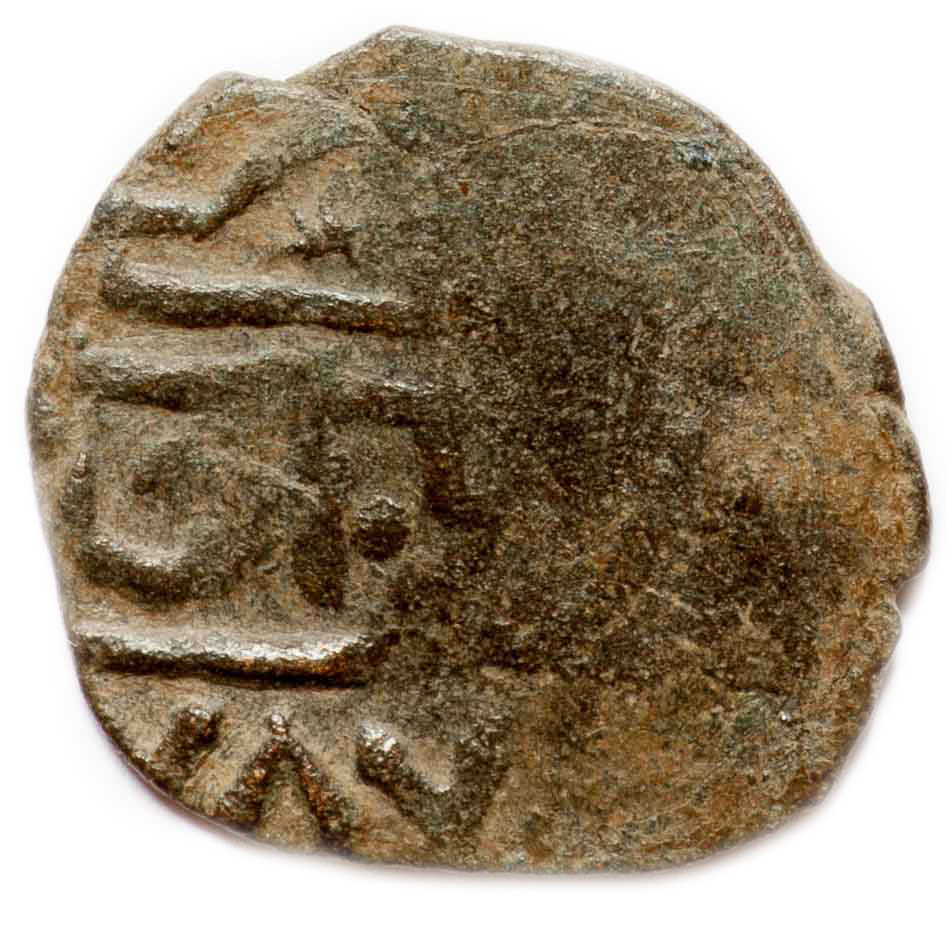 Not a common type, but conditions aren't good... 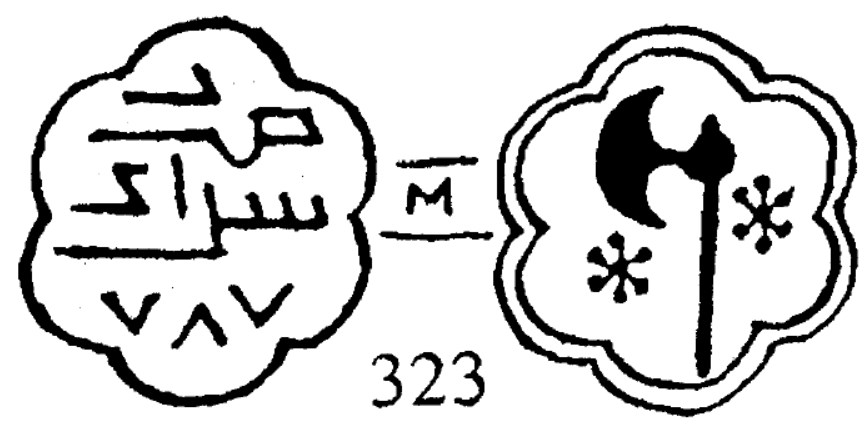 |
|
Moderator
United States
34572 Posts |
Very cool Pul @grin. Here is my last coin for this decade: This French Guenar is datable to the time range of 1389 to 1405 AD. The obv legend is + KAROLVS FRANCORV REX and the rev legend is + SIT NOME DNI BENEDICTV. I have attributed it as Roberts 2981b and Duplessy 377a. Over the years, the edges have been clipped, perhaps in an effort to harvest a little extra silver from the coin. 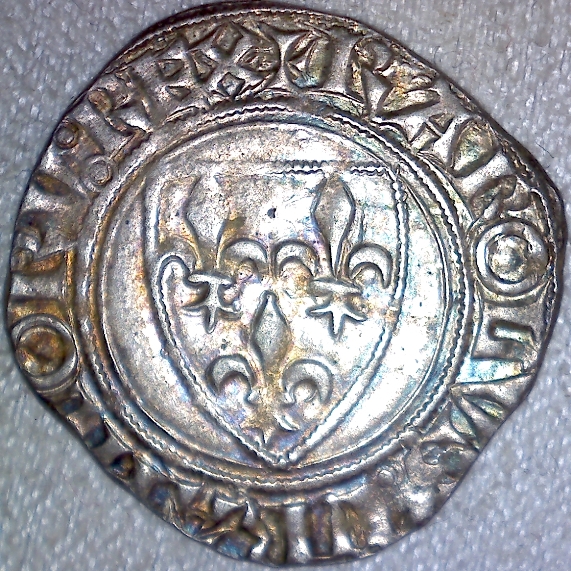 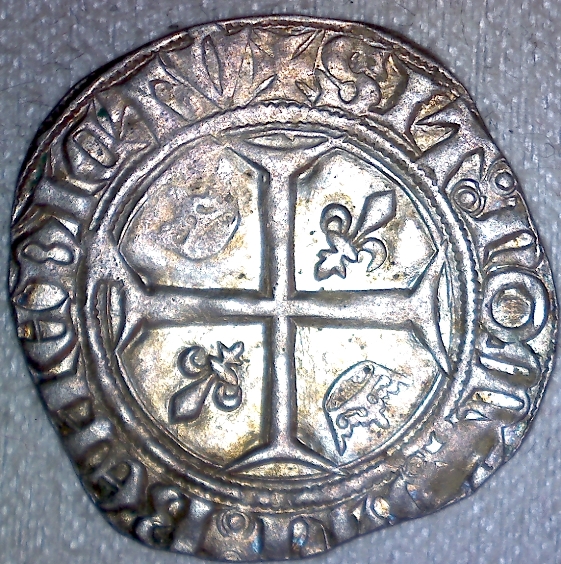 "If you climb a good tree, you get a push."
-----Ghanaian proverb
"The danger we all now face is distinguishing between what is authentic and what is performed."
-----King Adz
|
|
Valued Member
251 Posts |
@Spence, thanks. Silver coins are usually much better preserved in time than copper.... Here is also my last coin for the decade: one more datable pul "Hexagram with curls" type, temp. Tokhtamysh khan, Saray al-Jadida mint 790AH (1388). 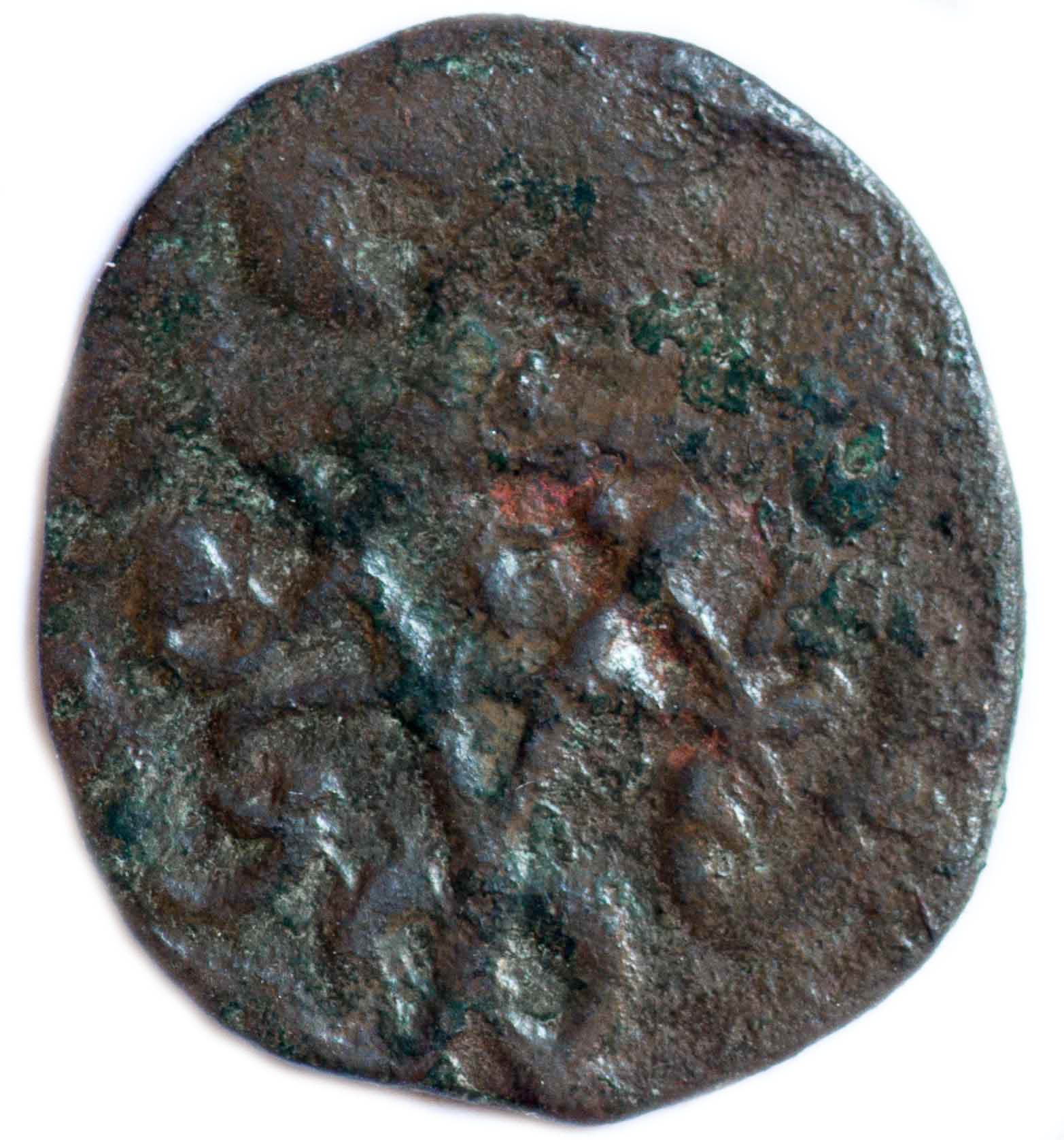 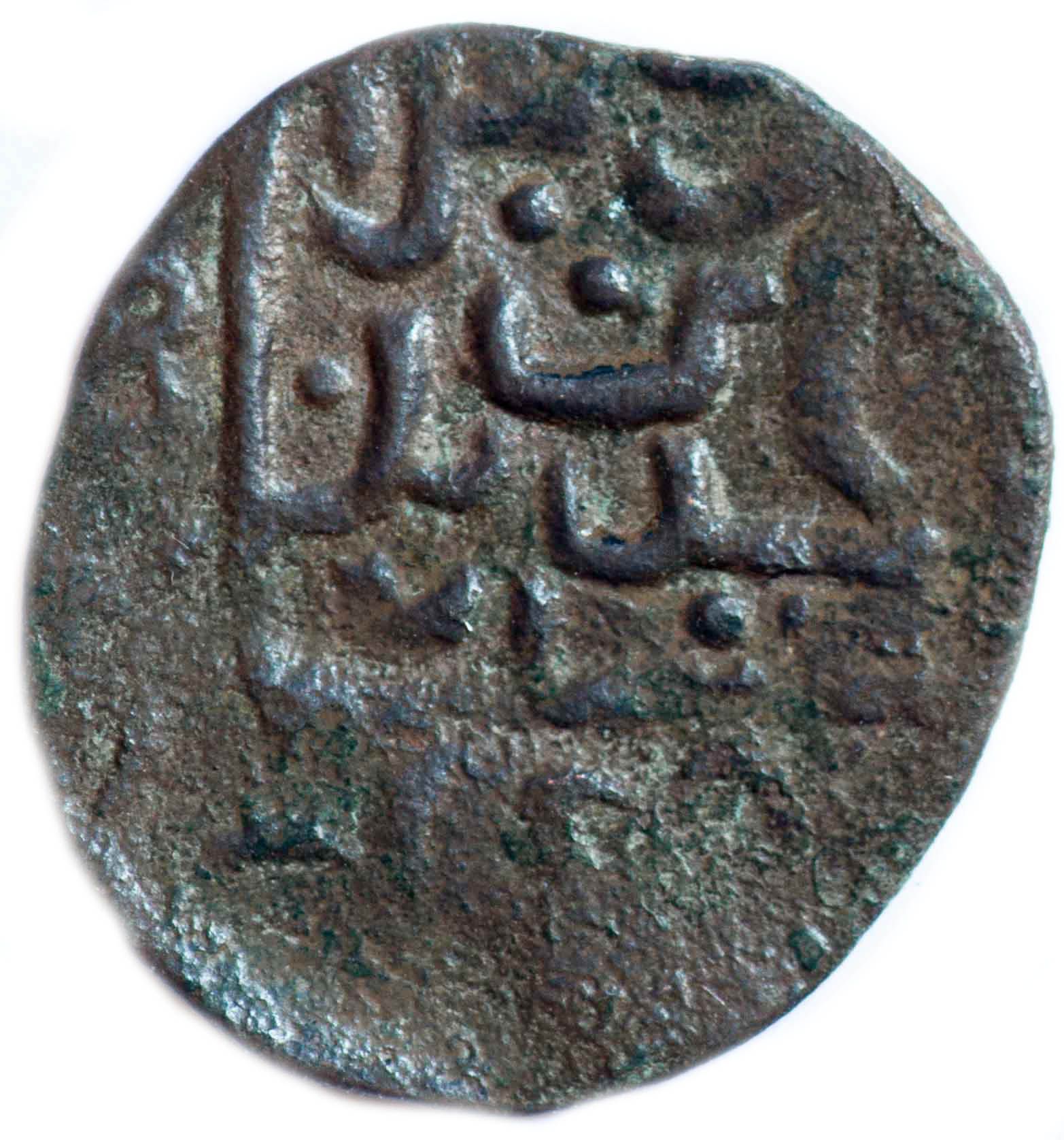 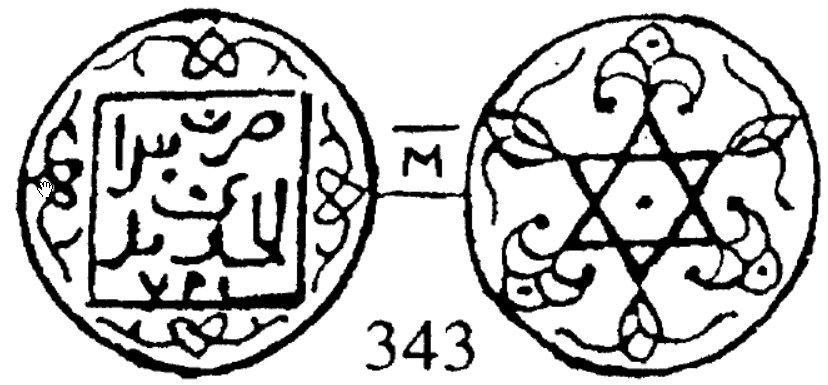 |
|
Moderator
United States
34572 Posts |
Sounds like we might be ready to drop back to the decade of the 1370s. Let's have a last call for this decade this evening and start anew in the morning.
"If you climb a good tree, you get a push."
-----Ghanaian proverb
"The danger we all now face is distinguishing between what is authentic and what is performed."
-----King Adz
|
|
Pillar of the Community
United States
8076 Posts |
That was an amazing decade! @grinya, those line drawings are really helpful for those of us (like me) who are unfamiliar with the devices on these types. And, yes, time is not kind to copper in many cases. I'll start the 1370s with this quattrino from Florence which can be dated to the second half of 1373 by the letter B on St. John's staff, which is the mark of mintmaster Bartolo di Giovanni Siminetti. 18 mm, 0.7 g. MIR 87/6. This is my only coin from this decade datable to a single year. 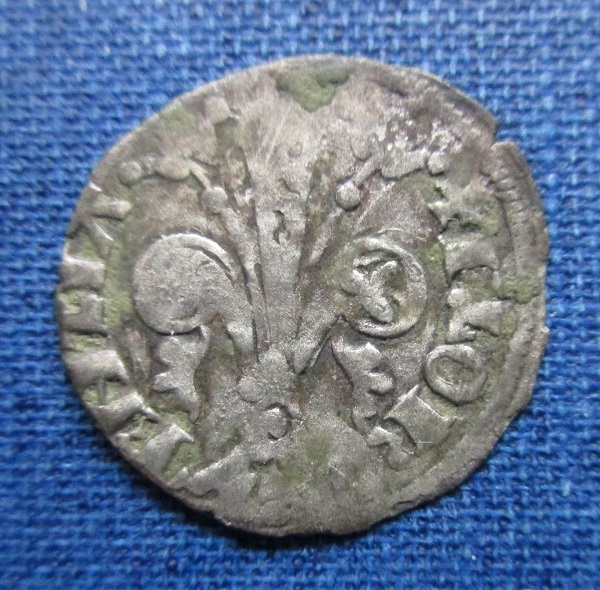 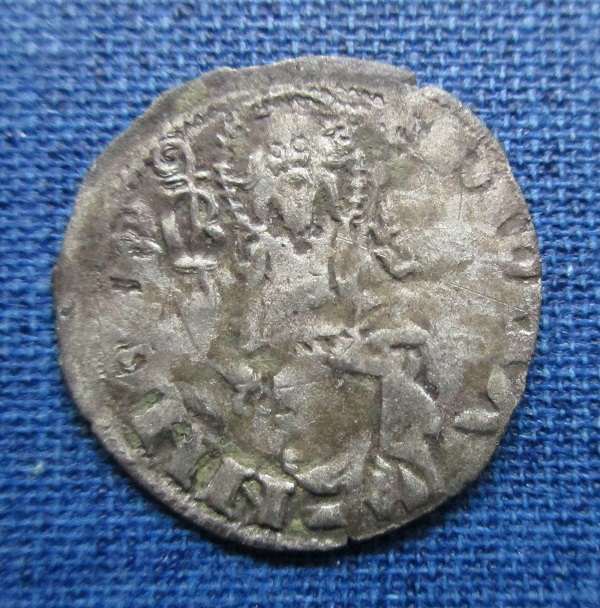 Obv: Ornate lily of Florence. FLOR ENTIA Rev: STanding figure of St. John the Baptist. SJOHA NNES I think I mentioned upthread that all coins of Florence from the 13th century to the 1530s have the same devices (lily obverse, St. John reverse, though with some variations to each); the use of initials or siglae by the mintmasters often allows dating of the coins to a 4-6 month period. Edited by tdziemia
12/13/2021 07:58 am
|
|
Pillar of the Community
United Kingdom
725 Posts |
I have to go back to the Golden Horde for a datable coin. It's another with the numbers in the wrong order. Even then, it's technically dated 1369-1370, but Muhammad Bolaq himself seems to be dated to 1370. Muhammad Bolaq Dang, 1370 (AH771)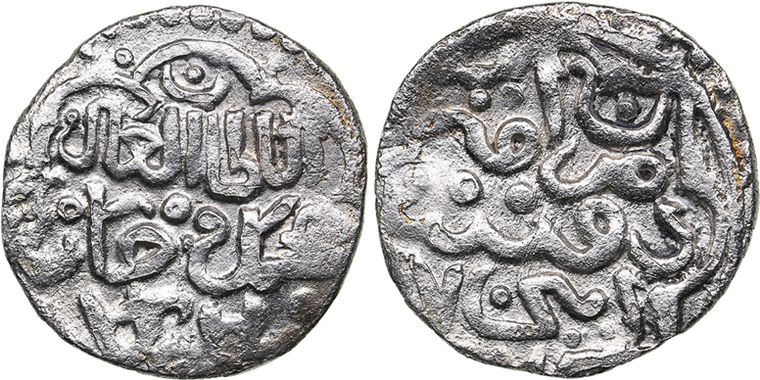 Ordu. Silver, 1.3g. Just Sultan / Muhammad Khan / May his reign be long. Mint Or/du year/717 (771) (Sagdeeva 349). Ordu. Silver, 1.3g. Just Sultan / Muhammad Khan / May his reign be long. Mint Or/du year/717 (771) (Sagdeeva 349). |
| |
Replies: 1,279 / Views: 81,853 |





 First Page
 Previous Page


 Posted 12/08/2021 4:42 pm


