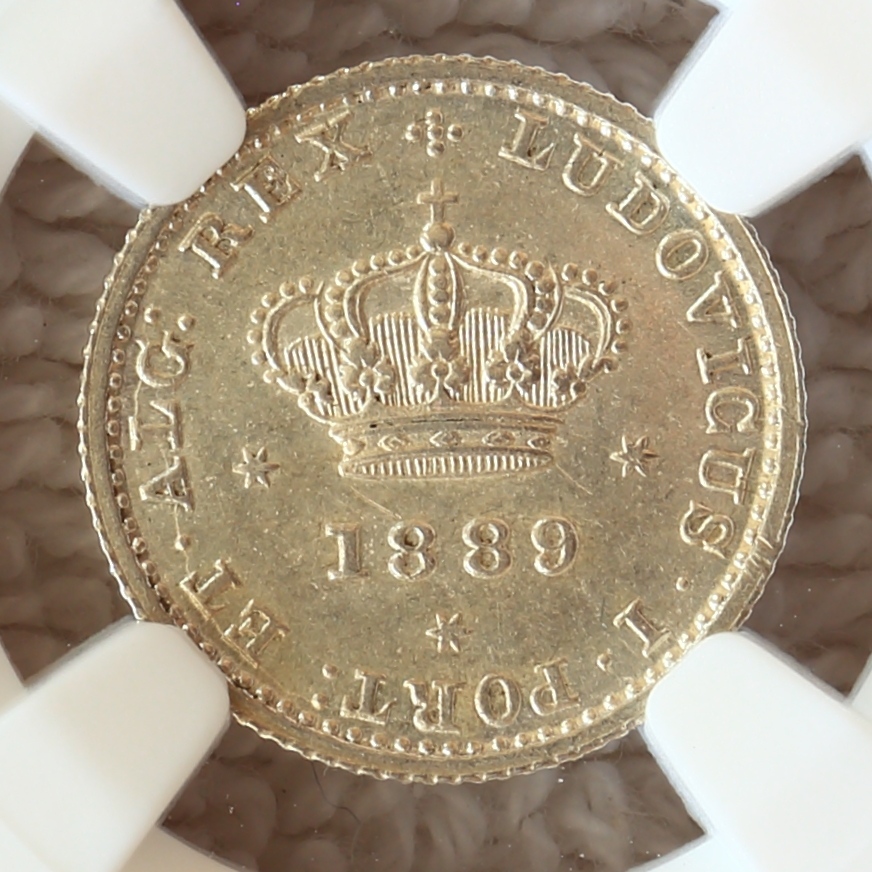
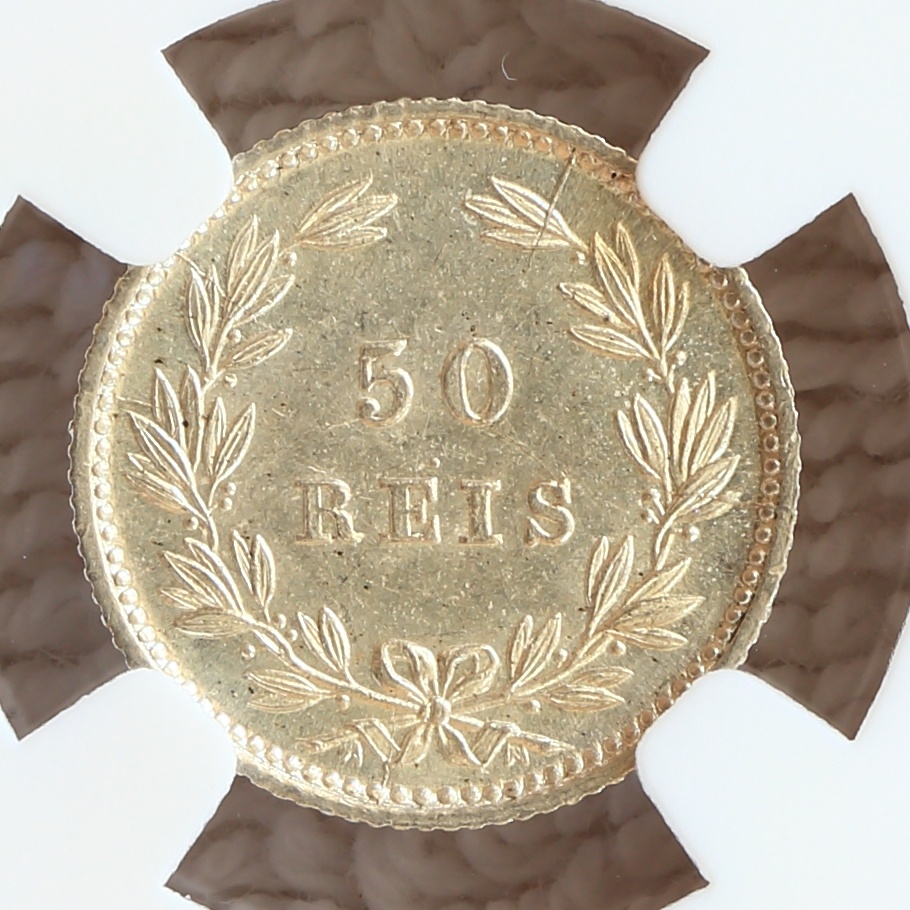
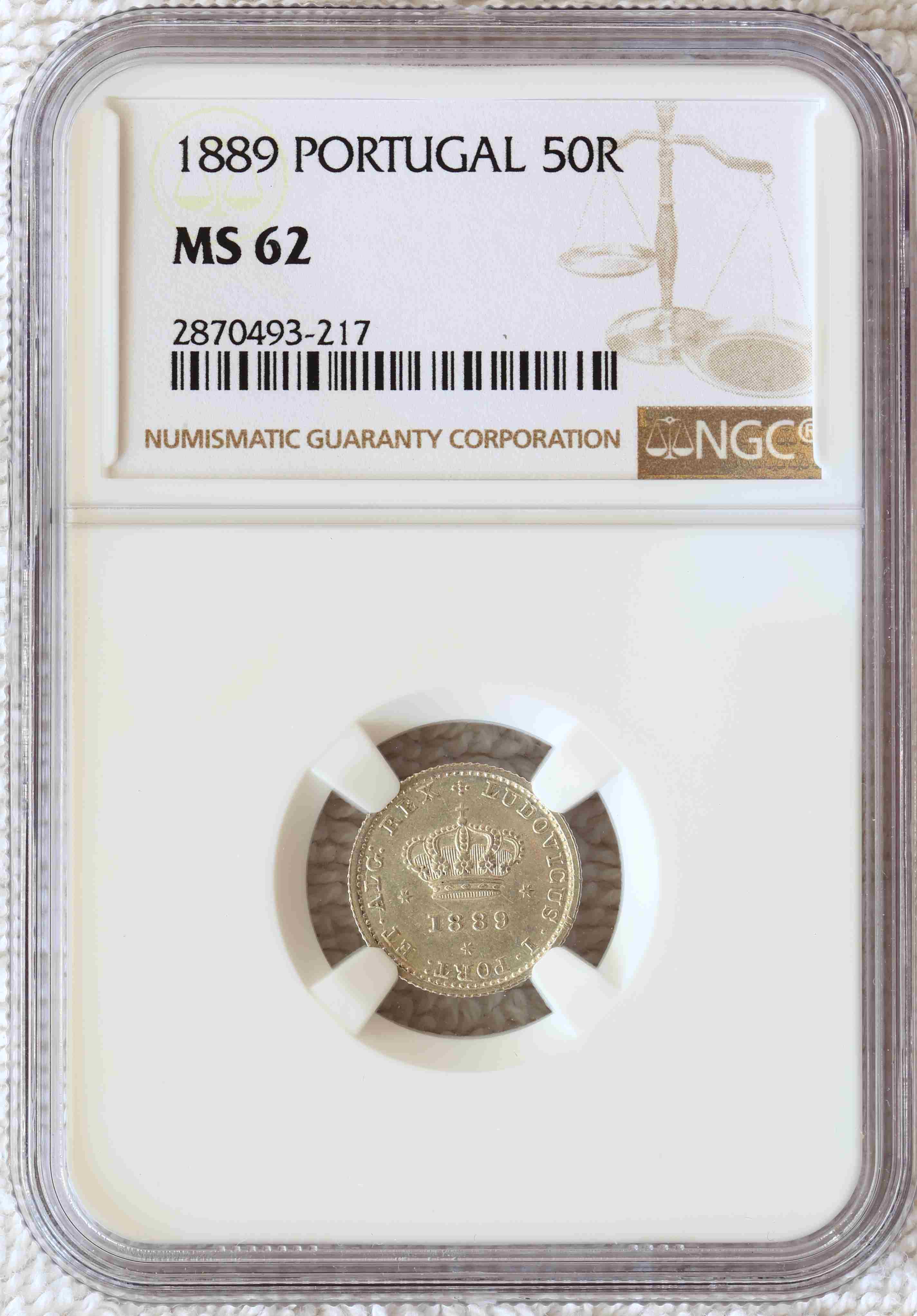
Today you get the oldest Portuguese coin I have acquired. This is 1/2 Vintem or 10 Reais (Not reis). The Real Branco (Hammered coinage) was the intermediary coinage between Dinheiro and Rei. The first Real Branco was introduced in 1380 and lasted until 1517, the coinage from 1517 to 1678 was essentially the same (both being hammered Reals). In 1678 the coinage was changed to mechanical and decimalized in 1835 With the name changing to Reis after the decimalization.
Reais were silver coins and had a value of 120 dinheiros (10 soldos or 1#8260;2 libra).
This coin was issued in the reign of Manuel I who was the king of Portugal from 1495 to 1521. Manuel continued the policies of his cousin John II in the support of Portuguese exploration of the Atlantic Ocean and development of Portuguese commerce. During his reign, the following achievements were realized:
1498 - The discovery of a maritime route to India by Vasco da Gama.
1500 - The discovery of Brazil by Pedro Álvares Cabral.
1501 - The discovery of Labrador by Gaspar and Miguel Corte-Real.
1505 - The appointment of Francisco de Almeida as the first viceroy of India.
1503-1515 - The establishment of monopolies on maritime trade routes to the Indian Ocean and Persian Gulf by Afonso de Albuquerque.
All these events made Portugal wealthy from foreign trade as it formally established a vast overseas empire. Manuel used the wealth to build a number of royal buildings (in the "Manueline" style) and to attract scientists and artists to his court.
While the coin is only a VF, the history of the time make it special. The coin.
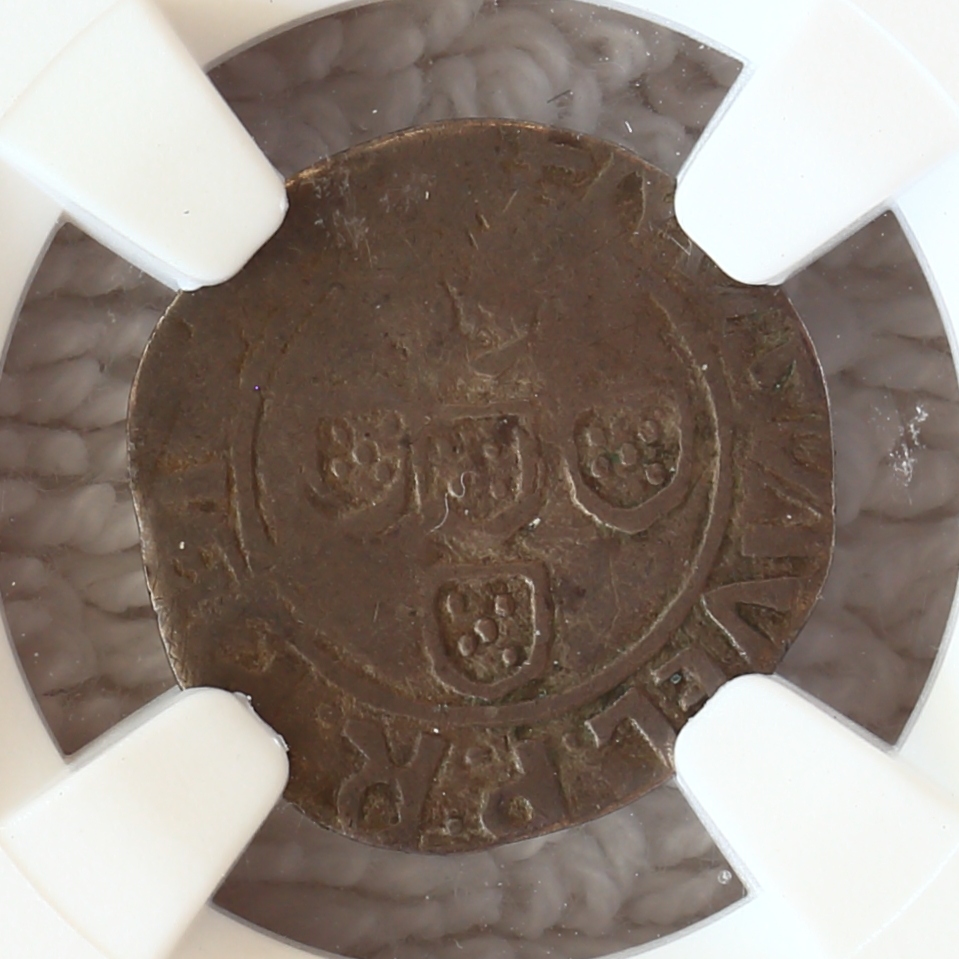
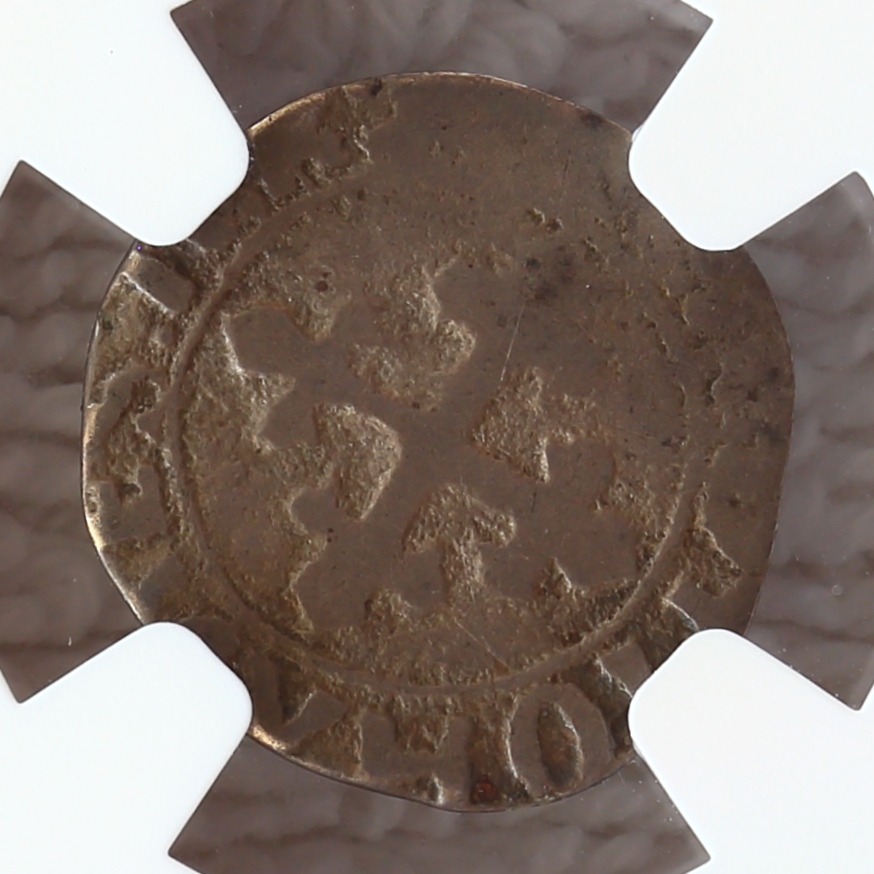
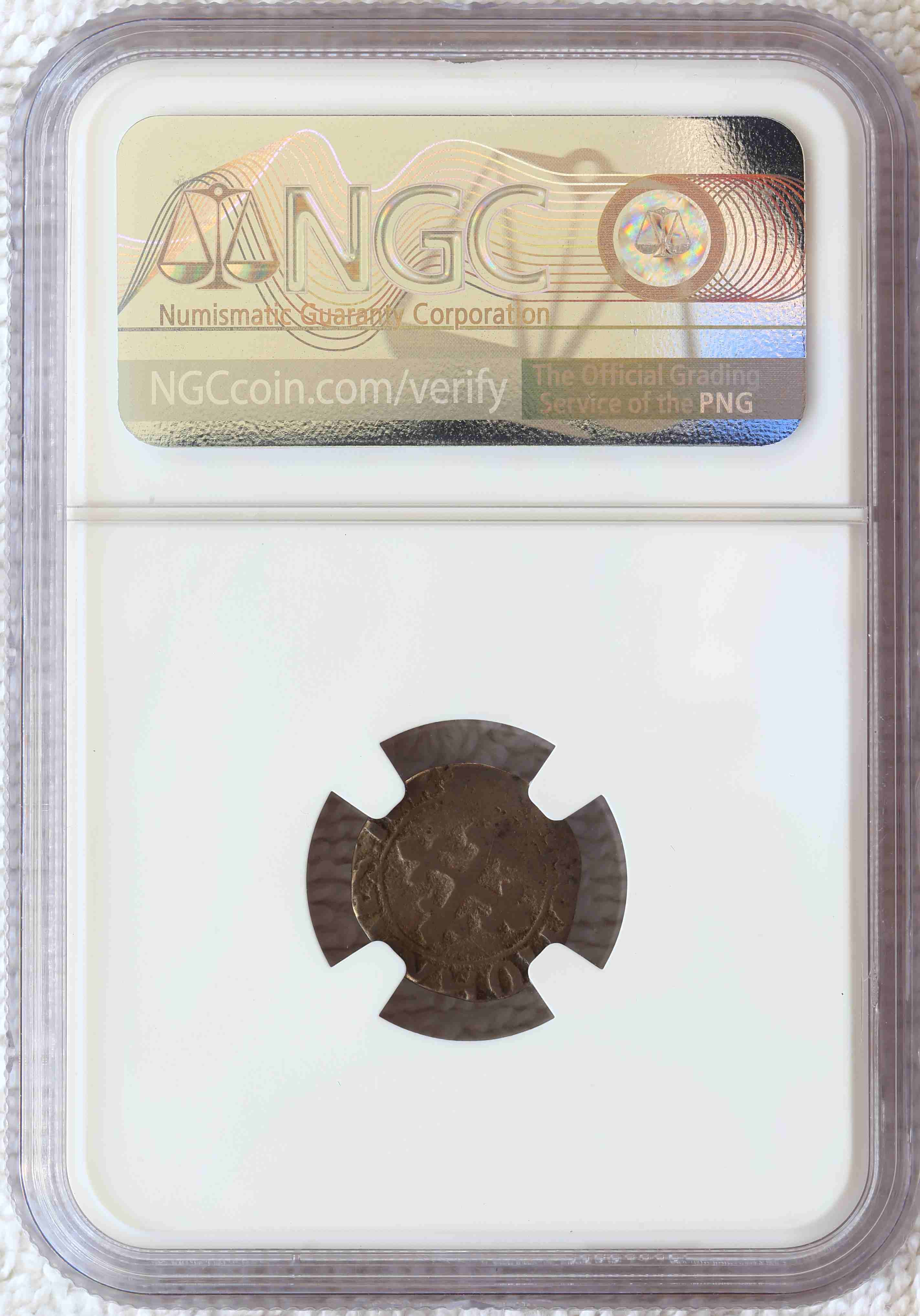
As I don't know much about the early coinage of Portugal, I had to get these slabbed.
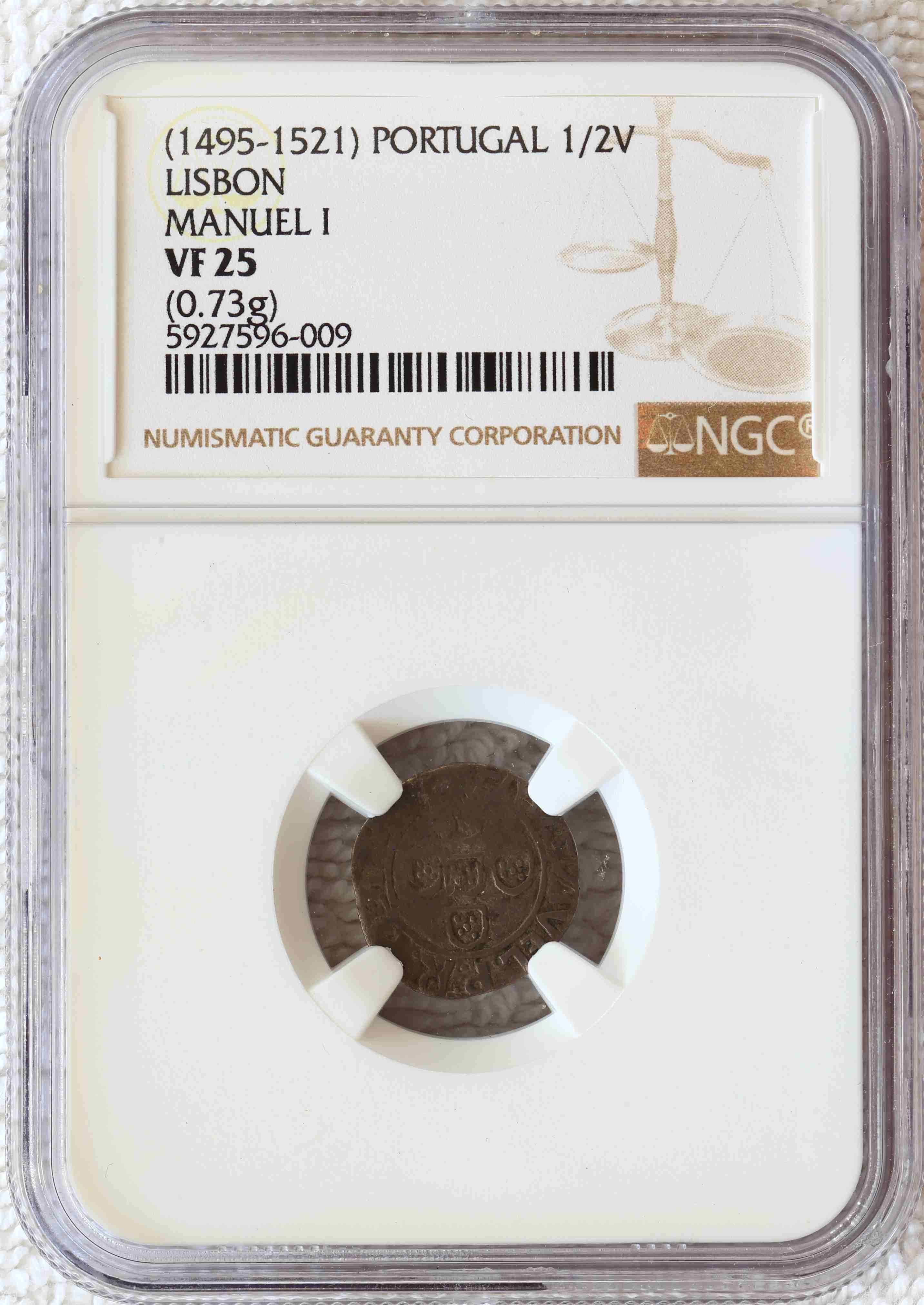
Issuer: Portugal
King Manuel I (1495-1521)
Type: Standard circulation coin
Years: 1495-1521
Value: ½ Vintem = 10 Reais
Currency:Real (hammered coinage, 1517-1678)
Composition: Silver (.917)
Weight: 1 g
Diameter: 16 mm
Shape: Round (irregular)
Technique: Hammered
Demonetized: Yes
Bullion Value: 81 cents








 First Page
 Previous Page


 Posted 10/28/2022 3:52 pm