A new addition.
Issuer: Portugal
King Carlos I (1889-1908)
Type:Circulating commemorative coin
Year: 1898
Value: 200 Reis
Currency: Real (decimalized, 1835-1910)
Composition: Silver (.9166)
Weight: 5 g
Diameter:24 mm
Thickness: 1.5 mm
Orientation: Coin alignment
Demonetized : es
References: KM 537
While I had the 500 Reis, I did not have the 200 reis.
The coin.
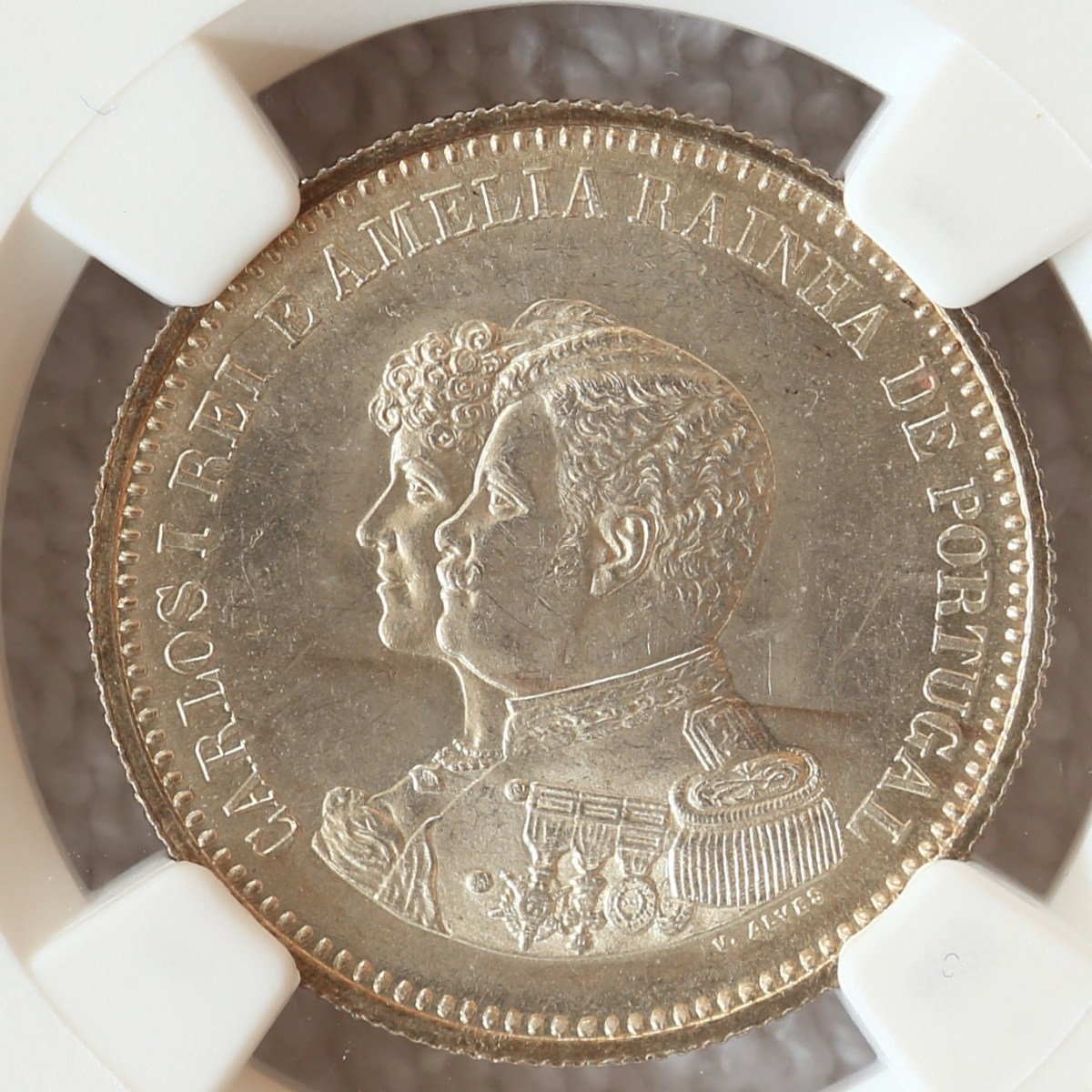
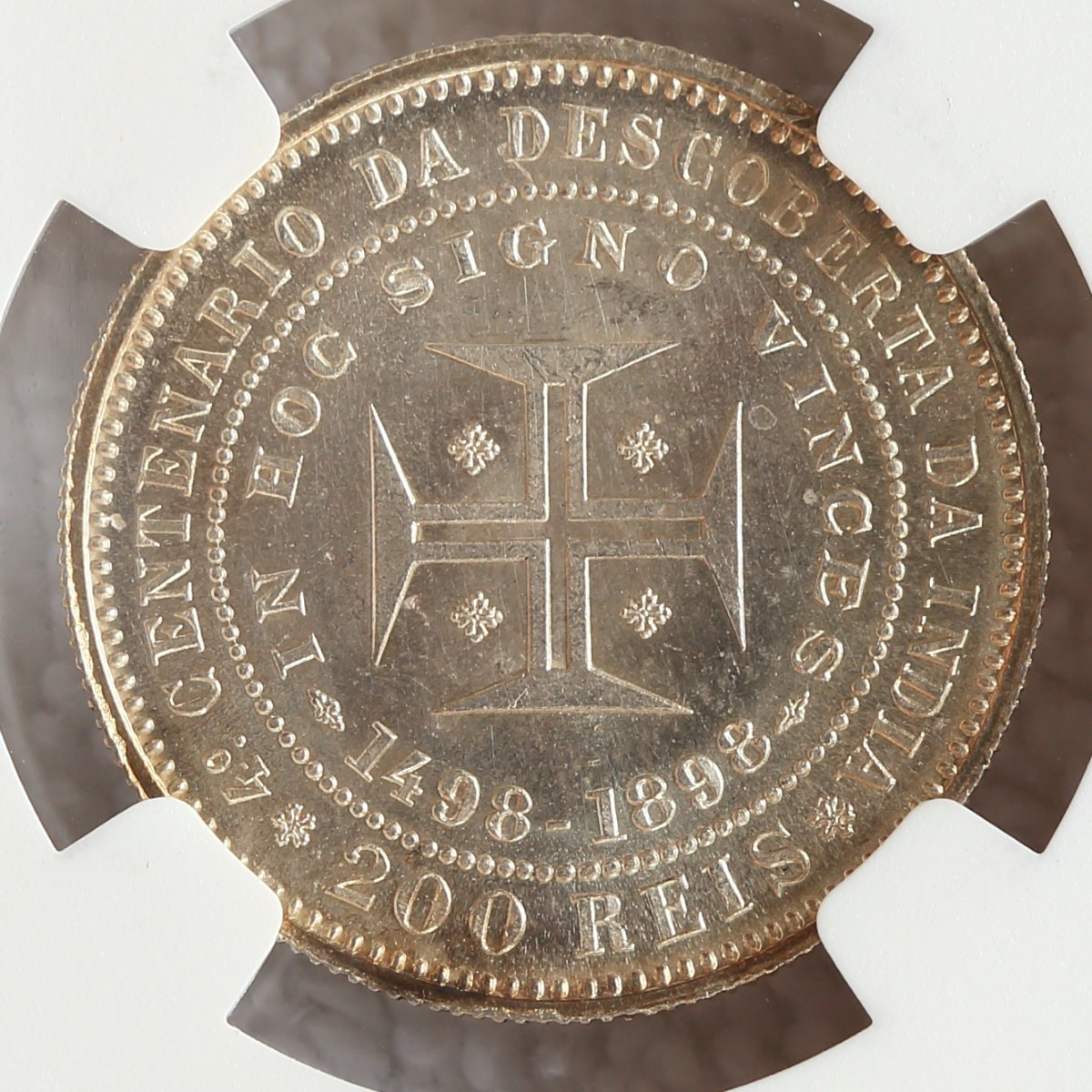
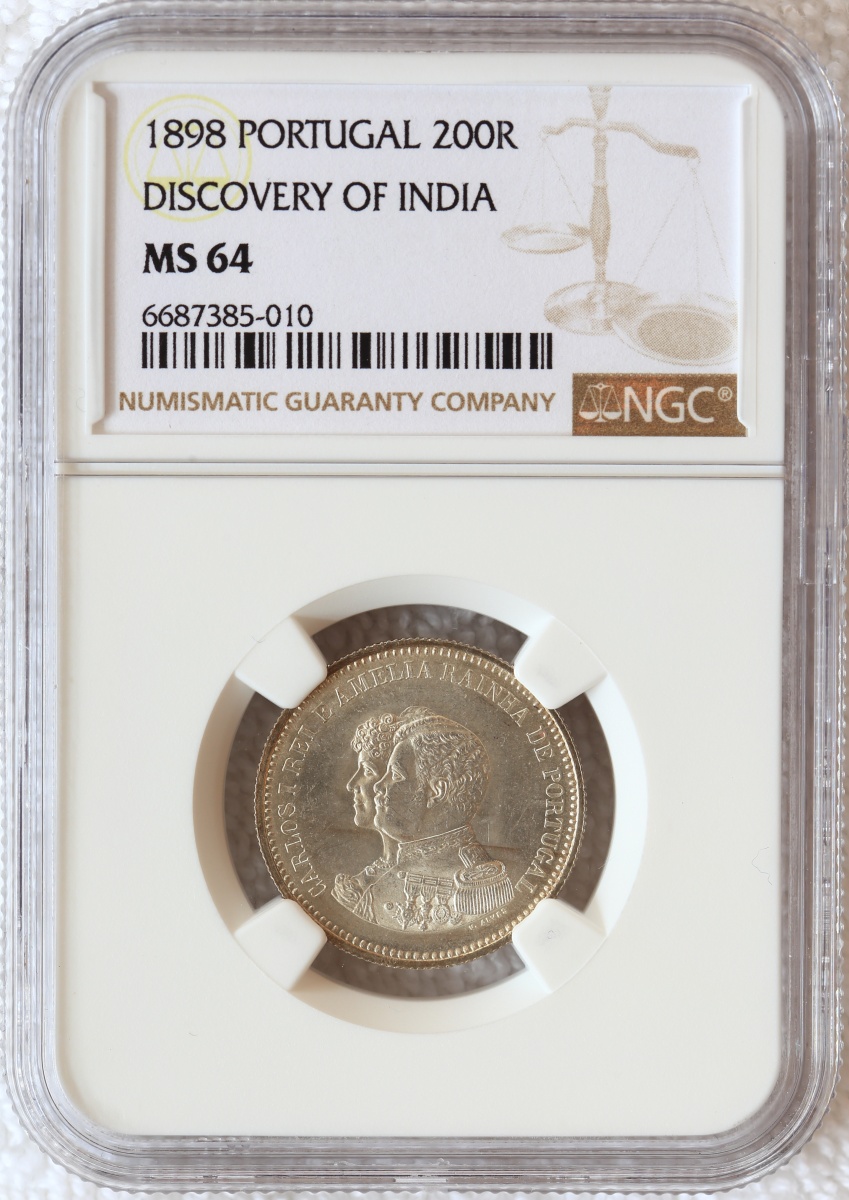
While I wrote up a lot about the King of Portugal, I didn't write about the Queen.
This coin also feature Queen Amalia.
Dona Maria Amelia (Born 28 September 1865 - Died 25 October 1951) was the last Queen of Portugal
She was the eldest daughter of Prince Philippe, Count of Paris and Princess Marie Isabelle d'Orleans, and a "Princess of Orleans" by birth.
On 22 May 1886, Amelia married Carlos, Prince Royal of Portugal. He was the eldest son of King Luís I of Portugal and Maria Pia of Savoy. He was at the time the heir apparent to the throne. The marriage had been arranged by their families after several attempts to arrange a marriage for her with a member of the Austrian or Spanish dynasties. At first, the marriage was not popular. However, Amelia and Carlos came to live quite harmoniously with each other.
They had three children:
Luís Filipe, Duke of Braganza (21 March 1887 - 1 February 1908).
Infanta Maria Anna of Portugal (born and deceased on 14 December 1887).
Manuel II of Portugal (15 November 1889 - 2 July 1932).
On 19 October 1889, King Luís died and Carlos succeeded him on the throne. Amelia became the new Queen consort of Portugal. However her husband became known for his extramarital affairs while the popularity of the Portuguese monarchy started to wane in the face of a bankrupt economy, industrial disturbances, socialist and republican antagonism and press criticism.
Amelia played an active role as a queen, and was active in many social projects, such as the prevention and treatment of tuberculosis and the foundation of charity organisations, sanatoriums and drugstores. She was considered less formal than her mother-in-law Maria Pia, learned Portuguese well and was described as calm and mild. She was interested in literature, opera and theatre, was a diarist and also painted.
After her husband and oldest son was killed in a regicide, her youngest was made a king but in October 1910 Manuel II was deposed by a military coup, which resulted in the establishment of the Portuguese First Republic. Queen Amelie left Portugal with the rest of the royal family and went into exile. She lived most of her remaining life in France. During the Second World War the Portuguese government invited her to return to Portugal, but she declined the offer. She visited Portugal for the last time in 1945.








 First Page
 Previous Page


 Posted 03/25/2024 7:04 pm


