The 1893 Isabella Quarter was issued to help provide financial support to the Board of Lady Managers of the World's Columbian Exposition held in Chicago in 1893. It was authorized via an amendment to the sundry civil expenses appropriation bill approved for, among other things, the overall World's Columbian Exposition. (52nd Congress, March 3, 1893)
The coin was the first commemorative quarter dollar coin of the series, and remained as such until the release of the 1932 Washington Quarter. The appropriation specified that 40,000 coins ($10,000) be struck for the benefit of the Board of Lady Managers.
Charles Barber, Sixth Chief Engraver of the US Mint, worked with the Board of Lady Managers to finalize the coin's designs. (See the link below for additional details.)
The obverse of the 1893 Isabella souvenir quarter features a portrait of the Spanish Queen, Isabella I of Castile; Isabella and her husband, King Ferdinand V, sponsored Christopher Columbus' 1492 voyage to the New World. She is depicted facing left and wearing a jeweled crown.
The appearance of a Royal crown on a US commemorative coin is an uncommon occurrence; the Isabella was the first of the classic series to include a crown in its design. Considering the Isabella was just the second US commemorative coin, its "crown design" could have been a harbinger of designs to come, especially considering the Royal connections to the US' early land grants and colonies. Fortunately, the design approach never became the norm, though the crown seen on Queen Isabella was not the only crown to appear on a coin of the US commemorative series (see the "Coins with Hats/Crowns Thread" link below for a discussion of the others).
Connected to the "first crown" status of the Isabella, the coin also marked the first time a foreign monarch appeared on a US coin. The Isabella Quarter was also the only time a monarch appeared on a US coin until the Hawaiian monarch, King Kamehameha I, appeared (uncredited) on the 1928 Hawaiian (European) Discovery Sesquicentennial half dollar. (See below for a link to a discussion of the 1928 Hawaiian coin.)
The reverse of the coin features a female figure, kneeling, facing left and holding a distaff in her left hand linked to a spindle held in her right. The design was meant to be symbolic of women's industry, using the thread/yarn manufacturing industry as its model. It can be argued, however, that
Charles Barber's portrayal was about 100 years out of date as it failed to present the then-current tools and manufacturing methods of the industry! (See the link to the "Coins with Hands Thread" below for the full story.)
A distaff is (typically) a short staff that holds the unprocessed fibers of wool or flax that are to be spun into yarn or thread via use of a spun spindle (short rod). As women were significant producers of yarn and thread via this method in the past, the distaff became a symbol representing female industry. It should be noted, however, by the time of the Columbian Exposition in 1893, the manual spinning of single threads with a distaff and spindle had largely been replaced by machines that could spin dozens if not hundreds of threads simultaneously. Thus, though based in accurate historical events, it can be argued that Barber selected a symbol that was 100 years out of date!
1893 World's Columbian Exposition Isabella Quarter Dollar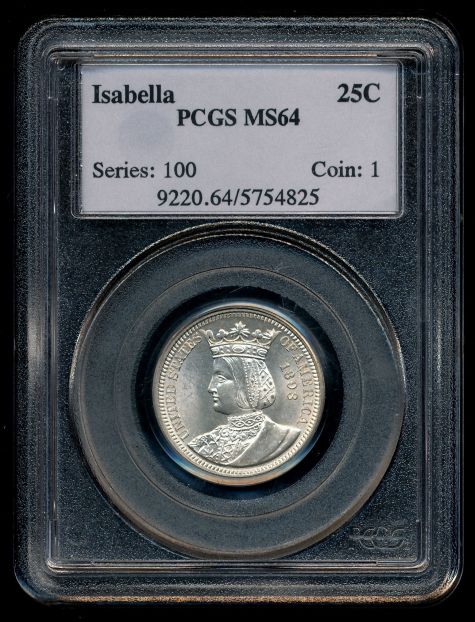
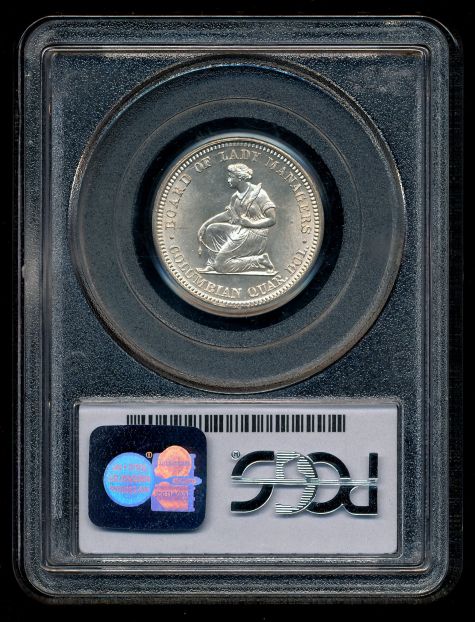
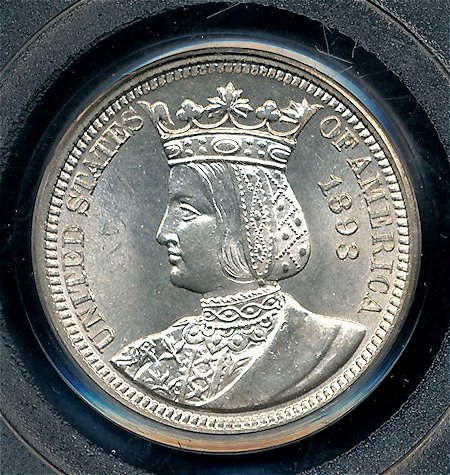
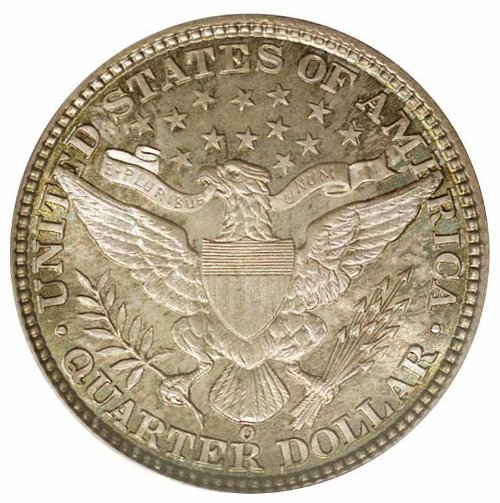
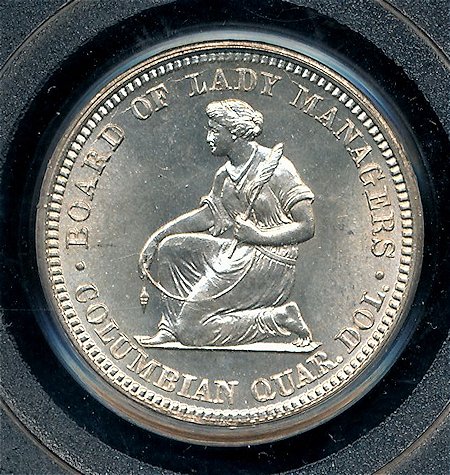 A noteworthy aspect of the Isabella's design: the 1893 Queen Isabella Quarter Dollar lacks all of the mottoes that US coin collectors have come to expect on a US coin. There is no "LIBERTY" or "IN GOD WE TRUST" or "E PLURIBUS UNUM" to be found on the coin. The Isabella is not unique in this design characteristic, but it is interesting when one considers the inclusion of all three on the then recently-issued Barber coinage.1892 Barber Quarter Dollar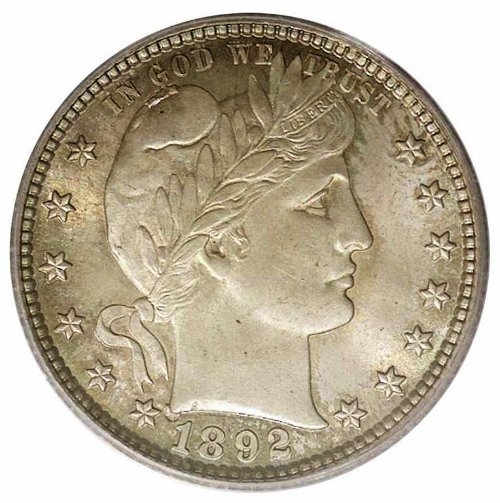
 (Image Credit: Image courtesy of Heritage Auctions, http://www.ha.com.)
For some context:

First Appearance of "In God We Trust": 1915-S Panama-Pacific International Exposition Half Dollar
First Appearance of "E Pluribus Unum": 1915-S Panama-Pacific International Exposition Quarter Eagle
First Appearance of "Liberty": 1918 Illinois Statehood Centennial Half Dollar
I have previously posted about the Isabella coin here:
-
1893 Isabella Quarter-
1893 Isabella - Appropriation Roots-
1893 Isabella Quarter - Coins with Hats/Crowns Thread-
1893 Isabella Quarter - Coins with Hands Thread-
1932 Washington Quarter-
1928 Hawaiian Half Dollar Chieftain-
Isabella Quarter - Caroline Peddle + More Charles Barber Design Discussion
Other of my posts about commemorative coins, classic and modern, are here:
Commems Collection









 Posted 12/16/2021 3:56 pm


