First Page


 Posted 02/08/2022 12:17 pm


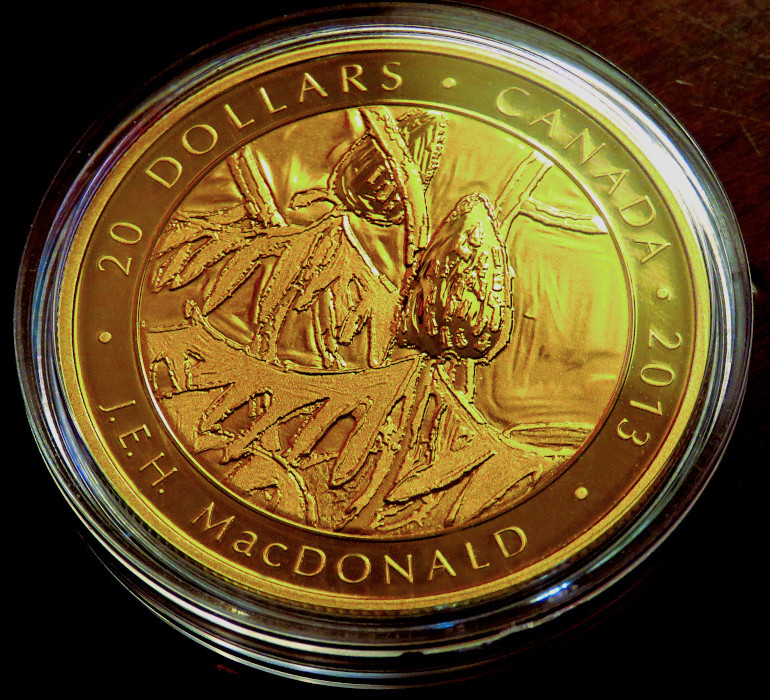
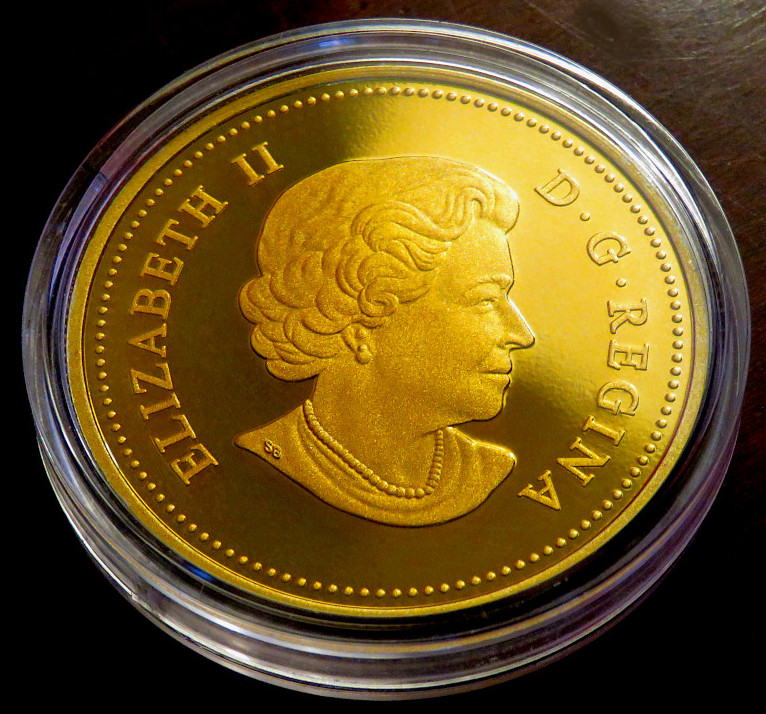
The biggest problem I have with this is that it is clearly some toning/tarnishing type of effect. If it were traditional silver toning, where you get the rainbow effect through to a dirty grey then that would be seen as undesirable in a NCLT proof release at least at the age of these coins (<10 yrs). There are coins that are sold by 3rd parties with "Post Mint Processing" to add colours, plating etc. While they are sold with a premium initially, I haven't seen them retain that premium and most folks classify these as PMD (Post Mint Damage)... in many respects, no different from putting the coin in a bezel to make a pendant.
NCLT Proof coins should be processed to retain the "as minted" lustre, sheen and colour for a long time and if you take care of them, don't subject them to extremes of humidity or environmental pollutants, they should remain in their "as minted" condition... I have many coins that range in age over the last 50 yrs and even a proof 1902 UK crown that still retains the original look.
There has been significant conjecture on what caused this... is it light exposure, is it environmental chemicals, is it humidity, is it temperature... I don't think anyone knows for sure as the results are not consistent across multiple coins... even when stored together... maybe some combination of all but the root seems to be an unfortunate choice of final wash/processing at the RCM prior to shipping. The RCM will never fess up and while the bullion milk spot issue is forgivable... it is bullion after all and milk spots don't impact bullion value, this is just unacceptable for NCLT.
The other concern I have is that these items may be sold as gold plated or worse, a wrong planchet gold issue which would be incorrect... I have no doubt that a XRF analysis will show nothing but silver but outside of an XRF, there is no real way to know without a deeper knowledge of what the initial mint release was or a destructive test on the coin itself. (of course incorrect gold planchet is easy to determine based on weight but there are always those out there who would dupe the inexperienced).
NCLT Proof coins should be processed to retain the "as minted" lustre, sheen and colour for a long time and if you take care of them, don't subject them to extremes of humidity or environmental pollutants, they should remain in their "as minted" condition... I have many coins that range in age over the last 50 yrs and even a proof 1902 UK crown that still retains the original look.
There has been significant conjecture on what caused this... is it light exposure, is it environmental chemicals, is it humidity, is it temperature... I don't think anyone knows for sure as the results are not consistent across multiple coins... even when stored together... maybe some combination of all but the root seems to be an unfortunate choice of final wash/processing at the RCM prior to shipping. The RCM will never fess up and while the bullion milk spot issue is forgivable... it is bullion after all and milk spots don't impact bullion value, this is just unacceptable for NCLT.
The other concern I have is that these items may be sold as gold plated or worse, a wrong planchet gold issue which would be incorrect... I have no doubt that a XRF analysis will show nothing but silver but outside of an XRF, there is no real way to know without a deeper knowledge of what the initial mint release was or a destructive test on the coin itself. (of course incorrect gold planchet is easy to determine based on weight but there are always those out there who would dupe the inexperienced).


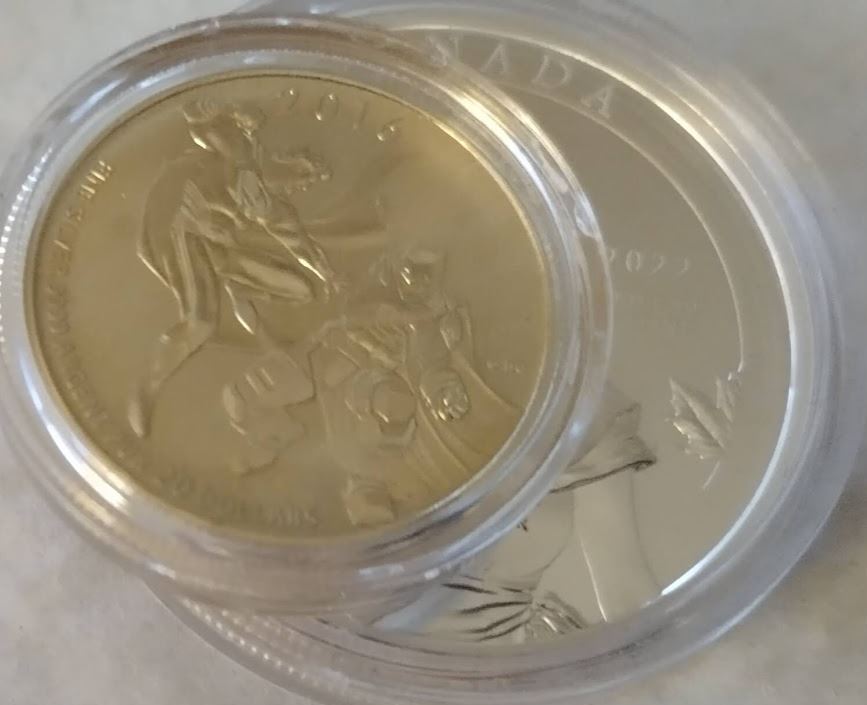 (note: pic without flash)
 to the Community, coinEvolution!