The 1904-05 Lewis and Clark Exposition Gold $1 coins were authorized under a much broader Act, one that primarily outlined how the Federal Government would participate in the Lewis and Clark Centennial and American Pacific Exposition and Oriental Fair ("L&C Exposition").
The L&C Exposition was held in Portland, Oregon from June 1 through October 15, 1905. In addition to celebrating the centennial of the Lewis and Clark expedition of 1804-06, the Exposition was also intended to promote Portland's economic potential (with an eye toward investors) and to foster trade and economic cooperation among nations on both sides of the Pacific Ocean. The Lewis and Clark Exposition Company was the organizer and manager of the Exposition, along with Oregon's appointed Centennial Commission. The Company decided upon "Westward The Course of Empire Takes Its Way" as the Exposition's motto/slogan; it alluded to the unlimited potential of the US' westward expansion.
The Exposition included participation by 17 US states (plus the Territories of Alaska, Oklahoma and the Philippines) and 21 nations. Overall, the exhibits presented a story of scientific progress and development and advancements in technology. Over the course of its four and a half months, the Exposition enjoyed a paid attendance of ~1.6 million plus ~900,000 free admissions - a total of ~2.5 million.
The original House bill calling for Federal support of a Lewis and Clark Centennial Exposition did not include a provision for the striking of a commemorative coin. It did, however, include authorization for commemorative and award medals, a supply of Thomas Jefferson Indian Peace medals for use/sale by the Board of Directors of the Exposition and "facsimiles of the 'Beaver money of Oregon Territory," also for use/sale by the Board.
The original "Beaver Money" consisted of gold $5 and $10 coins that were authorized by the Oregon Territorial legislature in 1849. It would have been interesting to see what type of "facsimile" pieces the Mint would have produced.
A companion bill was introduced in the Senate (both in November 1903); it included the same provisions for medals as the House bill. The Senate replaced the House bill in terms of further consideration, with the Senate Committee on Banking and Currency reviewing the Senate bill, suggesting minor amendments and recommending its passage. After debate, the Senate passed the bill, with the recommended amendments, and sent the bill to the House for its consideration.
The House Committee on Coinage, Weights, and Measures recommended amendment of the bill via substitution. During the amended bill's consideration in the House, Representative James Albertus Tawney (R-MN) summarized the changes: "The amendment eliminates the Federal authorization for the exposition; it eliminates all authority for invitations to be extended to foreign nations; it makes no provision whatever for a national commission. It simply provides for a Government exhibit and the erection of necessary buildings for the purpose of housing and caring for that exhibit while at the exposition, and authorizes the appointment of a Government board charged only with the duty of selecting, installing, and caring for the exhibit of the Government, and for that purpose appropriates $450,000 instead of $1,775,000. In addition to that it carries an appropriation of $25,000 for an Alaskan exhibit."
In terms of numismatics, the substitution removed the Beaver Money provision and added authorization for up to 250,000 gold dollars to be struck by the US Mint. It kept the language that called for the commemorative and award medals.
After some debate, the amended bill was passed by the House and sent to the Senate for concurrence. The Senate concurred with House changes without discussion or debate. The bill was examined and signed in each chamber, then sent to the President for approval. US President Theodore Roosevelt signed the bill into law on April 18, 1904.
The coin's design is of the "two-headed" variety. Its obverse design features a left-facing portrait of Captain Meriwether Lewis, while the reverse depicts Captain William Clark. The pair were the official Government leaders of the Expedition (the "Corps of Discovery") charged with exploring the newly acquired Louisiana Territory and also the Pacific Northwest, establishing relationships with the Native Americans in the area and helping to establish the United States jurisdiction over the area.
Coin dealer and tireless numismatic promoter Farran Zerbe was given the contract for coin and medal sales at the Exposition. He established an issue price of $2.00 per coin (a dollar less than the issue price of the gold dollars at the previous year's Louisiana Purchase Exposition) for the 1904 release, but sales were sluggish. The 1905 release faced even more sales issues. In the end, of the 60,000 coins struck (1904: 25,000; 1905: 35,000), approximately 40,000 were returned to the Mint to be melted. The 1904 release had a final net mintage of 9,997; the 1905 release net was 10,000. The coins were clearly not the Exposition's most popular souvenir!
1904 Lewis and Clark Exposition Gold Dollar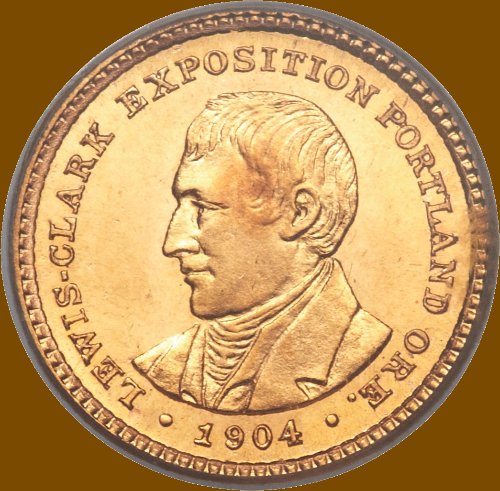
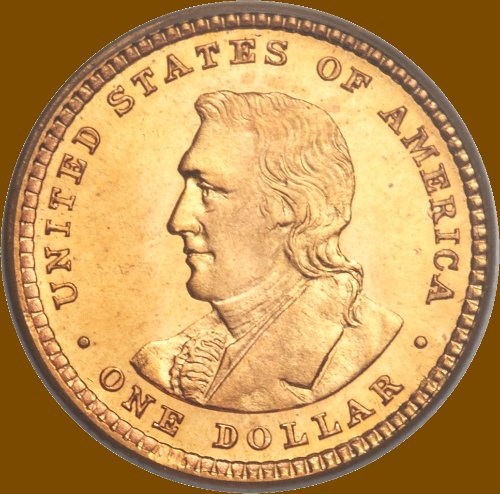 Lewis and Clark Exposition - Official Commemorative Medals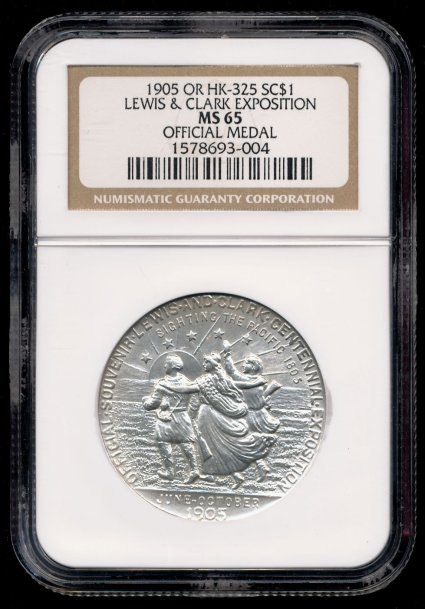
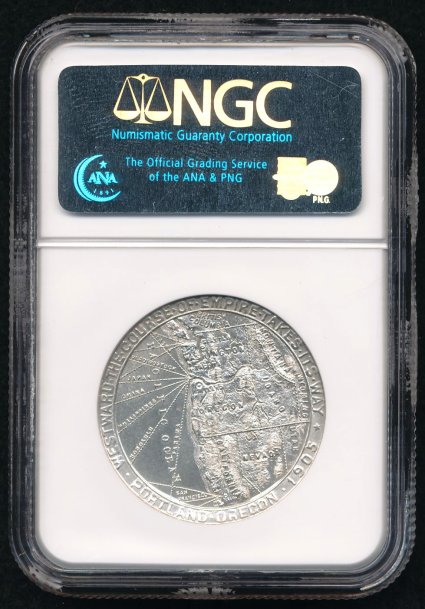
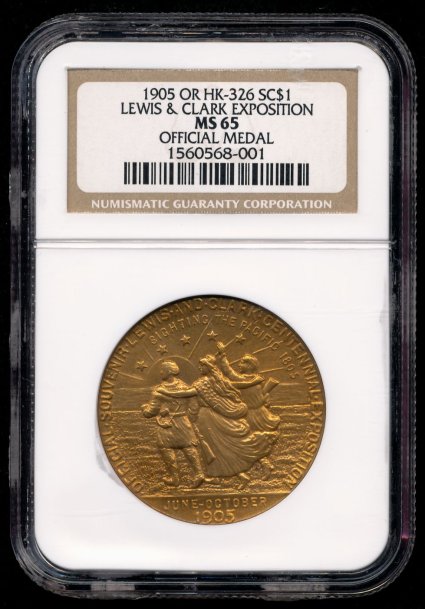
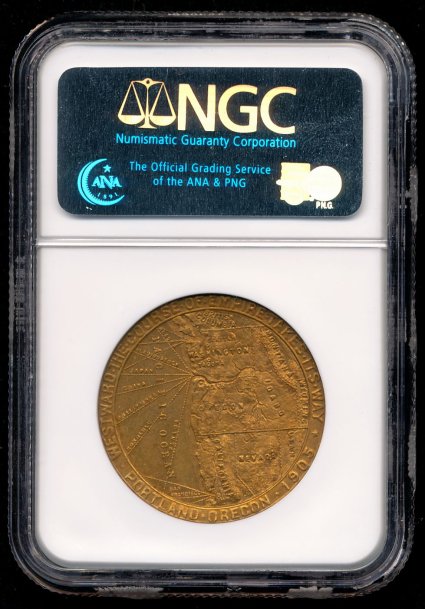
For more about Lewis and Clark and Proposed
US coinage, see:
-
What If? 1930 Lewis and Clark Expedition 125th-
What If? 1930 Lewis and Clark Expedition 125th - Part 2For more about the Exposition and its Medals, see:
-
1905 Lewis & Clark Exposition Official Medals - Coins with Maps Thread-
1905 Lewis & Clark Exposition Official Medals - Coins with Stars ThreadFor other of my posts about commemorative coins and medals, check out:
Commems Collection. 









 Posted 02/26/2022 11:28 pm


