| Author |
 Replies: 7 / Views: 1,303 Replies: 7 / Views: 1,303 |
|
|
New Member
United States
26 Posts |
Hi! not fully restored coins yet..but I am already trying to identify it..just asking for some clues.. thanks! :) is this one Arabic? and what would you say the "shopping cart" really is? :) 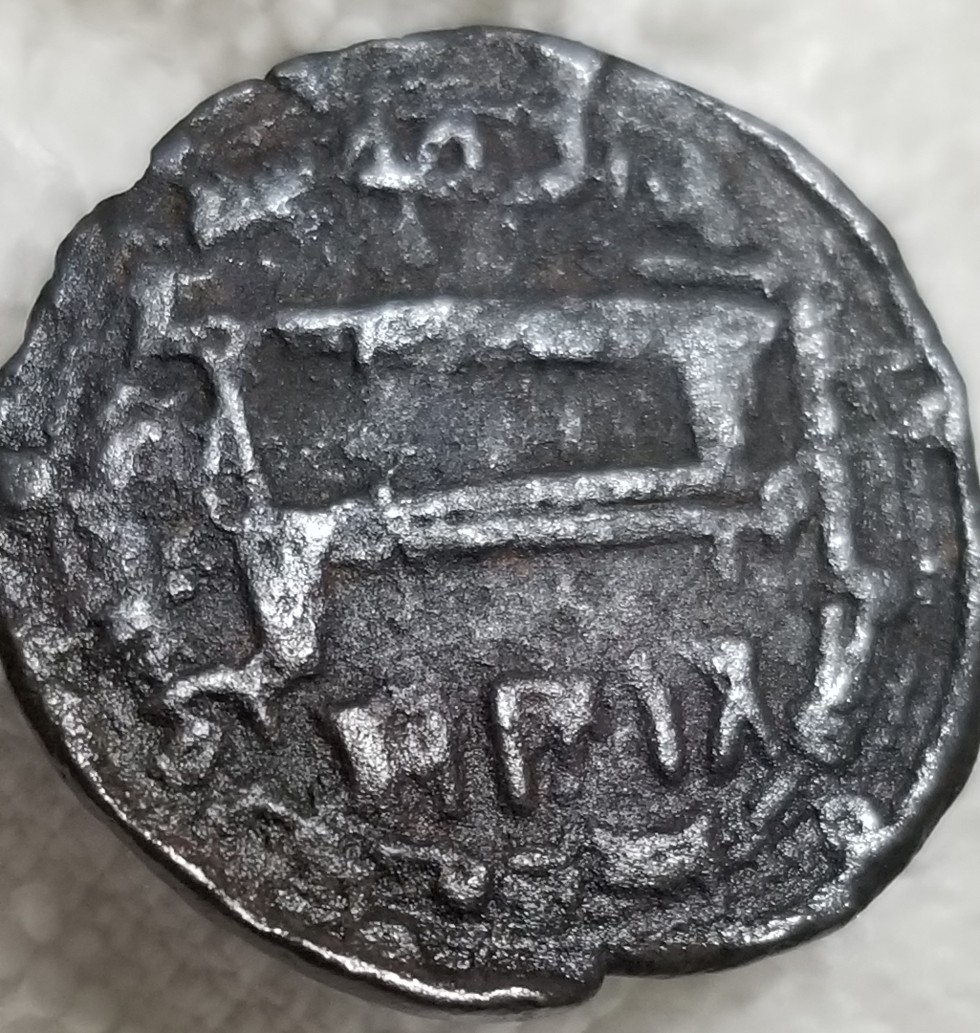 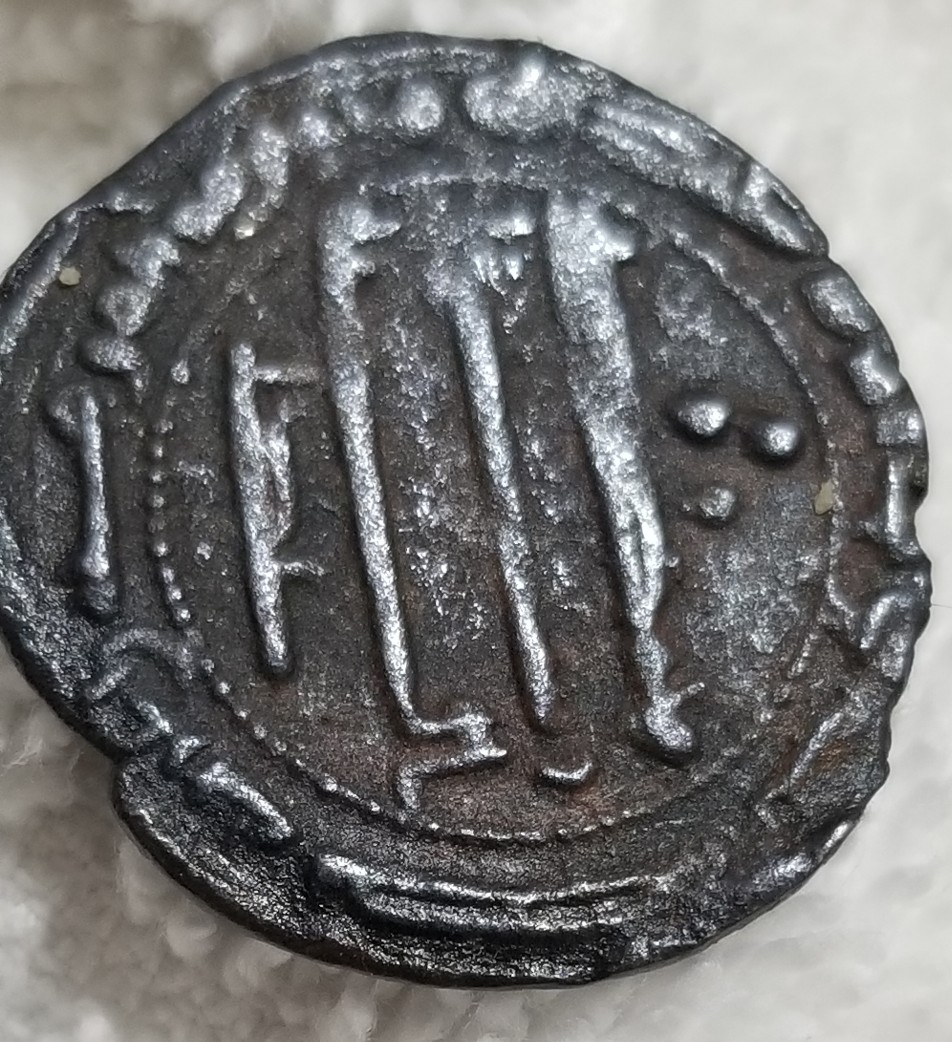 Thanks!! |
|
|
|
Valued Member
Canada
242 Posts |
I think it wants to be a medieval islamic silver dirham (possibly Spanish mint?) but it should be silver...
I know very little about these issues, and have only seen them catalogued as such, so maybe wait for someone more knowledgeable in this field.
|
|
Bedrock of the Community
Australia
21789 Posts |
I agree: Islamic silver dirham.
From the appearance of the rough fields, it has to be a recovery from aggressive soil conditions, or a fake.
I have to admit: I don't know which.
For a possible visual match, search Stephen Album' s website.
or
Vcoins: Coin India.
|
|
Moderator
 United States
34511 Posts |
Not a shopping cart, but rather Kufic script. I agree that the details are too mushy. What does it weigh?
"If you climb a good tree, you get a push."
-----Ghanaian proverb
"The danger we all now face is distinguishing between what is authentic and what is performed."
-----King Adz
|
|
New Member
 United States
26 Posts |
|
|
Moderator
Australia
16944 Posts |
The "shopping cart" is the Kalima, the Islamic statement of faith, written in the archaic Kufic script of Arabic. Specifically, the phrase "Allah is alone, he has no partner". Your top picture is upside-down.
If you're wondering how to narrow down the ID further, I will give this general rule-of-thumb. See how some of the Arabic letters have been "streched out" to create a bunch of long parallel lines? This wasn't done on the earliest Islamic coins, struck under the Umayyad Caliphate. These were done later, most commonly under the 'Abbasid Caliphate, after AD 750. So the coin you've linked to is indeed close to what I'd expect the coin to be.
The circle of text surrounding the "shopping cart" is supposed to contain the mint-name and date of issue in the Islamic calendar, written out in full. That may be too far gone to be able to read on this coin.
You also haven't said how big your coin is. The Emirate of Sind struck coins that looked exactly like Abbasid dirhams, only they were like miniature replicas.
Don't say "infinitely" when you mean "very"; otherwise, you'll have no word left when you want to talk about something really infinite. - C. S. Lewis
|
|
Pillar of the Community
United States
1554 Posts |
I hope you don't mind me cutting to the chase. Your coin is an 'Abbasid bronze fals, struck at al-Rafiqa in Iraq. The date is mushy but almost certainly AH 189 (AD 805), confirmed by the trio of pellets at upper reverse and the word 'adl ("just") below. The 'Abbasid caliph Harun is named in the reverse margin.
Edited by Kushanshah
08/30/2022 12:56 am
|
|
Moderator
Australia
16944 Posts |
Thanks Kushanshah, I was wondering if it was bronze - it looked too corroded and grainy for silver, but the lighting made the high points look silvery.
Early Islamic bronze coin designs tend to be a lot less standardized than the gold and silver designs. They tended not to circulate too far away from the mint-city of issue, whereas the gold and silver were used as trade coins and circulated widely across the Caliphate, and beyond.
Don't say "infinitely" when you mean "very"; otherwise, you'll have no word left when you want to talk about something really infinite. - C. S. Lewis
|
| |
Replies: 7 / Views: 1,303 |
|










 Posted 08/26/2022 10:18 pm


