The proposed commemorative half dollar for the Great Flood of the Ohio and Mississippi Rivers that occurred in January 1937 may be unique among coin proposals in that it was introduced in an effort to generate relief funds for those impacted by a natural disaster - the extreme flooding in the Ohio River Valley as the result of torrential rains over the course of 12 days. In some areas, more than 15 inches of rain fell!
The flood is believed to be the worst ever to hit the Ohio River Valley, it forced hundreds of thousands of people in multiple states to leave their homes and seek shelter elsewhere. Some flood water crests were measured 20 to 30 feet above flood stage! At the time, property damage was estimated at $250,000 - ~$5.2
billion in 2022. It was a natural disaster of all-time proportions!
Flooded Streets of Louisville, KY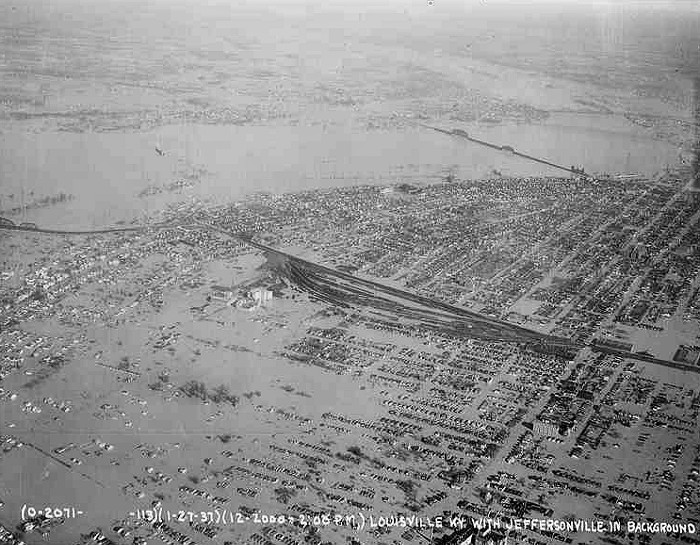 (Image Credit: National Weatherr Servicce. Public Domain.)Washed Out Country Road Near Patoka, Indiana
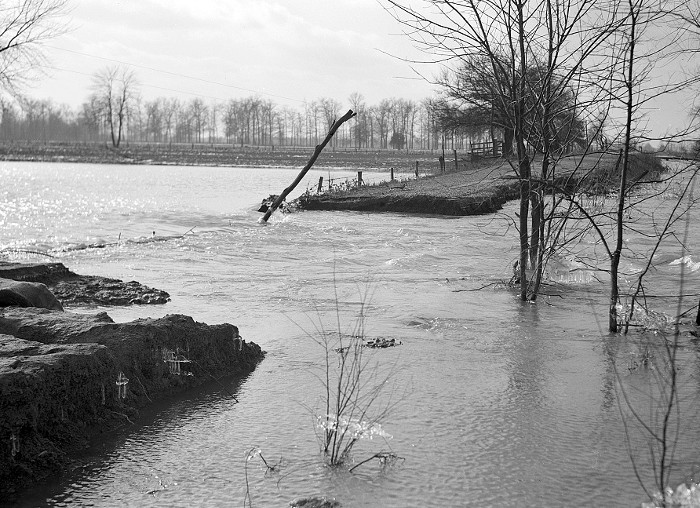 (Image Credit: Library of Congress, Prints and Photographs Division. Public Domain.)
Companion bills were introduced in the House and Senate. The House bill was introduced by Robert Crosser (D-OH) in January 1937; the Senate bill by Robert Johns Bulkley (D-OH) in April 1937. The House bill was introduced within days of the disaster - an example of how quickly Congress can move if it wants. The House bill was referred to its Committee on Coinage, Weights, and Measures; the Senate bill to its Committee on Banking and Currency.
The coin bills were a bit unusual in terms of the coins sought. The bills called for a minimum of 30,000 coins and a maximum of one million! The initial 30,000 half dollars were to be struck and delivered to the Flood Relief Commemorative Coin Association within one year of the bill's enactment. No time limit was specified for the Association to request the balance of its 970,000 half dollars. As written, the bill authorized a long-term, multi-year program that could request coins from any/all US Mint facilities. I'm generally not a fan of such programs, but if the Coin Association was able to demonstrate its positive impact on the ongoing relief effort via funds derived from coin sales, I believe I would have been an annual supporter (had I been alive at the time!).
I can't think of a coin proposal from the classic era with more charitable intentions than this one - its objectives weren't to provide financial support to a fair/exposition, or to build a memorial or to support a celebration - the coin looked to help rebuild areas devastated by natural causes and to help relieve human suffering. IMO, it's a shame that neither bill was reported out by its Committee or acted upon by either chamber of Congress. Both bills eventually died for lack of action.
For other of my posts about commemorative coins and medals, including more What If? stories, see:
Commems Collection.





 Posted 11/24/2022 12:39 pm





