Here's another of the multi-Congress attempts to secure a commemorative coin...
Most US commemorative coins commemorate traditional milestone anniversaries: 75th, 100th, 150th, 200th, etc. Some of the unsuccessful proposals for such coins, however, sought a coin tied to a more unusual anniversary. For example, the proposed 1937 Mecklenburg Declaration of Independence half dollar was to celebrate the 162nd anniversary of the alleged document. The Lafayette coin discussed here would have commemorated the 163rd anniversary of the subject event - unusual indeed.
Why mark Lafayette's arrival in Georgetown, SC?
It was near Georgetown, SC that Marie Joseph Paul Yves Roche Gilbert du Motier, Marquis de Lafayette arrived in America after leaving France to aid the Americans; he left against the orders of King Louis XVI. Lafayette purchased a ship in France, renamed it
La Victoire and secretly sailed it from Los Passajes, Spain. With him was a small group of fellow French officers (estimated to be a dozen) who also desired to help the Americans in their fight for independence, chief among these was Baron Johann De Kalb.
Marquis de Lafayette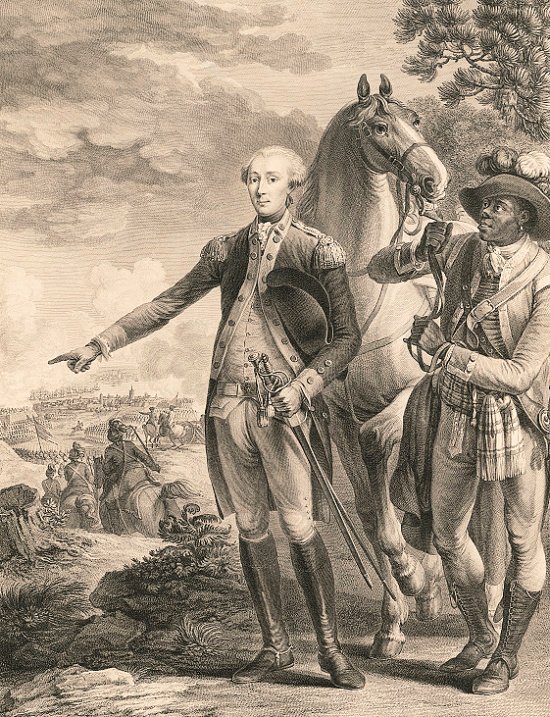 (Image Credit: Library of Congress, Prints and Photographs Division. Public Domain.)
After landing near Georgetown, SC, - in Winyah Bay at North Island - and staying for several days at the summer home of plantation owner Captain Benjamin Huger, Lafayette traveled to Philadelphia, PA, after first stopping in Charleston, SC, and received his promised commission as a General in the Continental Army before being introduced to George Washington.
"The rest is history," and I recommend seeking out more about Lafayette's journey to America and his contributions to the American caue. To get you started:
-
The Daring Departure of LaFayetteRepresentative Hampton Pitts Fulmer (D-SC) introduced a bill in the House in March 1940 during the 76th Congress that called for half dollars "in commemoration of the arrival of the Marquis de Lafayette at North Island, near Georgetown, South Carolina, on June 14, 1777." The bill was immediately referred to the House Committee on Coinage, Weights, and Measures.
The special half dollars were to be struck for the benefit of the South Carolina Daughters of the American Revolution (SC-DAR).
The bill called for up to 50,000 coins to be struck at one or more of the US Mint facilities, and the coins were to bear the year in which they were struck. The SC-DAR did not have any ordering restrictions placed upon it, and so, could have placed orders for the coins in more than one calendar year to create a multi-year program for collectors. Net proceeds derived from coin sales were to help defray expenses for "the erection of a suitable monument commemorating the landing of the Marquis de Lafayette."
The bill did not gain traction in the Committee, and died for lack of action. Fulmer tried again in the 77th Congress, re-introducing the bill in the House. It suffered the same fate as his previous attempt, receiving no action from Congress.
In 1940, Georgetown County erected a Historical Marker with the following inscription:
A lover of liberty, Lafayette left Bordeaux, France, March 26, 1777, "to conquer or perish" in the American cause, and arrived at Benjamin Huger's summer home near here, June 14, 1777, where he spent his first night in America. He rendered eminent service in our struggle for independence.Though I've yet to find a definitive link, it seems plausible that the Daughters of the American Revolution were at least somewhat involved with the Georgetown County marker considering their interest in a commemorative half dollar at the same time point.
Thirteen years before, on the 150th Anniversary of Lafayette's landing (1927), the Georgetown Chapter of the Daughters of the American Revolution sponsored a Historical Marker with the following inscription:
This tablet commemorates the 150th anniversary of the first landing of Marquis de Lafayette accompanied by Baron de Kalb on North Island, Georgetown County, S. C. June 13, 1777. He came to draw his sword for the young republic in the hour of her greatest need.So, though no commemorative coin was authorized, Lafayette and his landing near Georgetown, SC, were not forgotten!
For more of my topics on commemorative coins and medals, including many more What If? stories, see:
Commems Collection.









 Posted 12/29/2022 2:16 pm


