The 1876 US Independence Centennial and the accompanying Centennial Exposition held in Philadelphia, Pennsylvania, represents a very popular collecting area for many. It offers a rich variety of numismatic collectibles, a large variety of exonumia pieces and many ephemera items. I'm not a dedicated collector of 1876 Exposition items, but I have dabbled a bit. (The formal name of the Exposition was the "1876 International Exhibition of the Arts, Manufacturers, and Products of the Soil and Mine.")
The Centennial Exposition was held from May 10 to November 10, 1876 - it was closed on Sundays - in Philadelphia, PA at Fairmount Park. Admission was $0.50 and paid attendance exceeded 8 million. The Exposition grounds covered ~285 acres. The Exposition was sponsored by the US Government; the Government was also an important financial backer via a $1.5 million loan made in support in early 1876.
The primary buildings of the Exposition were the Main Exhibition Hall, Agricultural Hall, Horticultural Hall, Machinery Hall and Memorial Hall plus the Women's Pavilion. The five large Halls are reported to have enclosed ~50 acres!

The Main Exhibition Hall was the largest of the Exposition's buildings (at the time, it was the largest building in the world!); it focused on exhibits of industrial arts, but also included exhibits on education and science.
Centennial Exposition - Main Exhibition Hall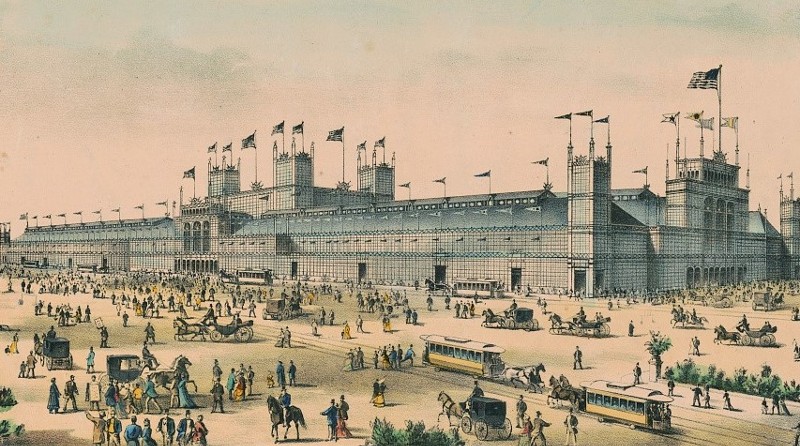 (Image Credit: Library of Congress, Prints and Photographs Division, Currier & Ives. Public Domain.) Machinery Hall:
 Presented exhibits focused on manufacturing/production. The Hall featured the giant Corliss Engine (invented by George Henry Corliss) that powered the Exposition (over 800 machines!). The steam engine was 45-feet tall and generated 1,400 horsepower. US President Ulysses S Grant and Brazilian Emperor Dom Pedro, together, opened the valves that brought the steam engine to life and officially opened the Exposition.
Centennial Exposition - Machinery Hall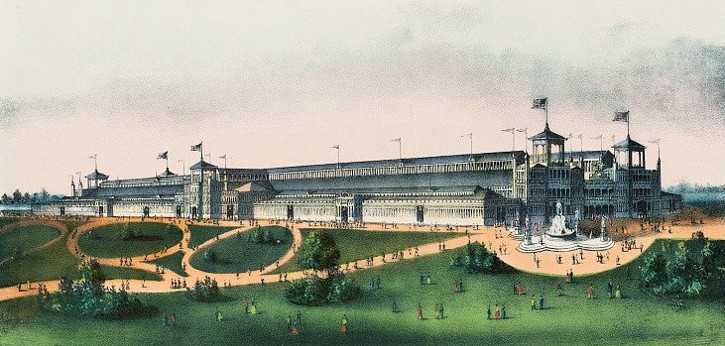 (Image Credit: Library of Congress, Prints and Photographs Division, Currier & Ives. Public Domain.)Centennial Exposition - Corliss Engine
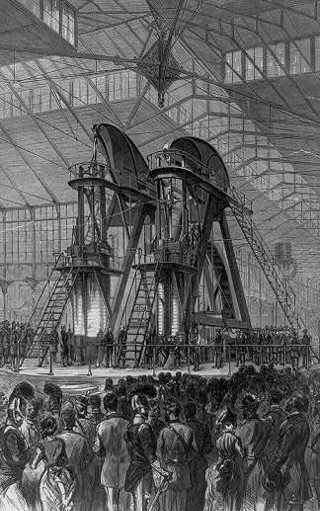 (Image Credit: Library of Congress, Prints and Photographs Division. Public Domain.) Agricultural Hall:
 displayed current farming (and related) equipment and presented farming demonstrations.
Centennial Exposition - Agricultural Hall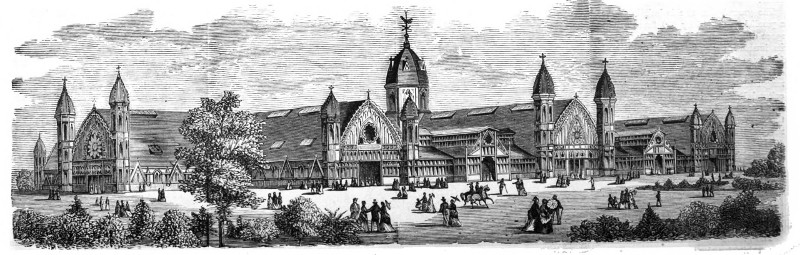 (Image Credit: Frank Leslie's Historical Register of the Centennial Exposition. Public Domain.) Horticultural Hall:
 presented flora from around the world along with a Victorian garden.
Centennial Exposition - Horticultural Hall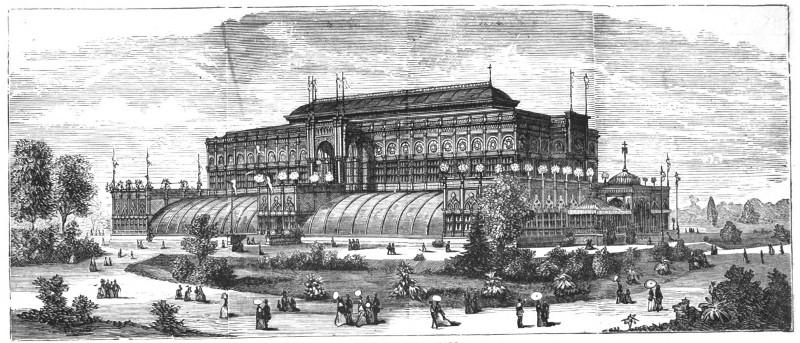 (Image Credit: Frank Leslie's Historical Register of the Centennial Exposition. Public Domain.) Memorial Hall:
 Exhibited works of fine art from around the world - the Exposition's art gallery.
Centennial Exposition - Memorial Hall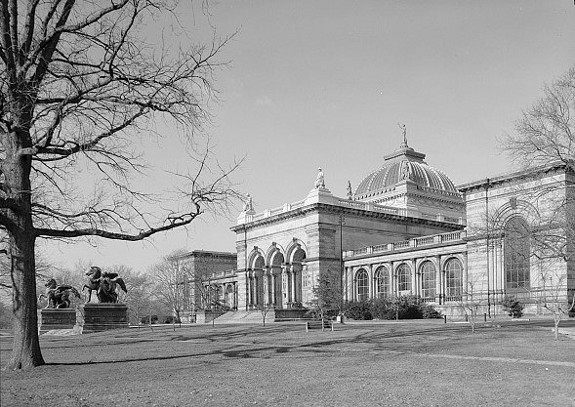 (Image Credit: Library of Congress, Prints and Photographs Division. Public Domain.) Women's Pavilion:
 Housed exhibits/displays created by women. Funds for the Pavilion's construction were raised by women. It was am ilestone event that would be repeated at the 1893 World's Columbian Exposition.
Centennial Exposition - Women's Pavilion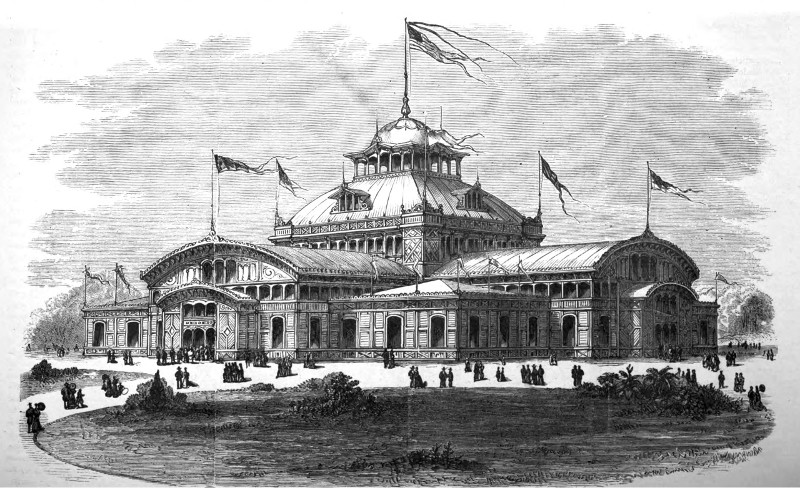 (Image Credit: Frank Leslie's Historical Register of the Centennial Exposition. Public Domain.)
The exhibits of the US Government were spread over seven smaller buildings that it constructed. Included were items from the Smithsoian collection, a life-saving station and a US Mint exhibit.
Centennial Exposition - Main US Government Building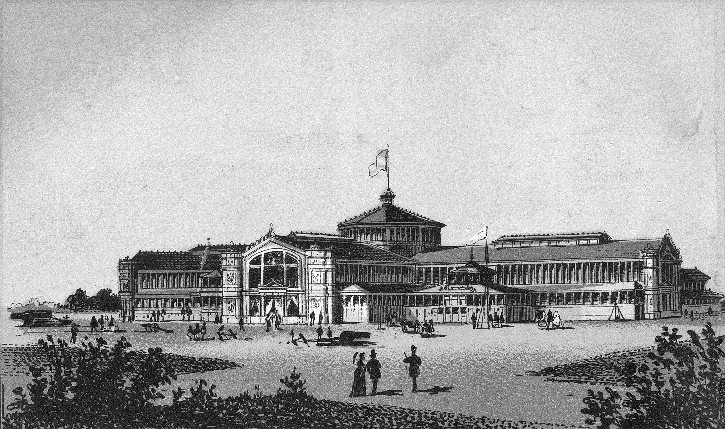
The Exposition was a true International Exposition, with 38 foreign nations participating at some level - 15 of them constructing a dedicated building. In addition, 26 States participated and constructed buildings (many resembled a house). In total, the Exposition featured more than 30,000 exhibits!
The Exposition was a turning point for the United States. It showcased the US' industrial might, its technological prowess, its strengths at industrial innovation and that it was a fast-rising world power that could no longer be considered "second rate" by other contemporary powers.
The Exposition exhibited many new/improved products. Notable exhibits at the Exposition included: Alexander Graham Bell demonstrating his newly-patented telephone and Thomas Edison presenting his telegraph system. The Exposition also saw the launch of an updated/improved sewing machine by Singer, a new model typewriter by Remington and improved revolvers from Colt's Patent Fire-Arms Manufacturing Company. The Exposition also saw the mainstream introduction of Heinz ketchup, Hire's root beer soda, bananas and pop corn.
Among its many displays was the hand and torch from the yet-to-be-completed Statue of Liberty ("Liberty Enlightening the World") by Frederic Bartholdi. For 50 cents, Exposition attendees could climb the 42-foot tall structure and take in the view from "torch level" - it proved to be a popular attraction.
Statue of Liberty Hand and Torch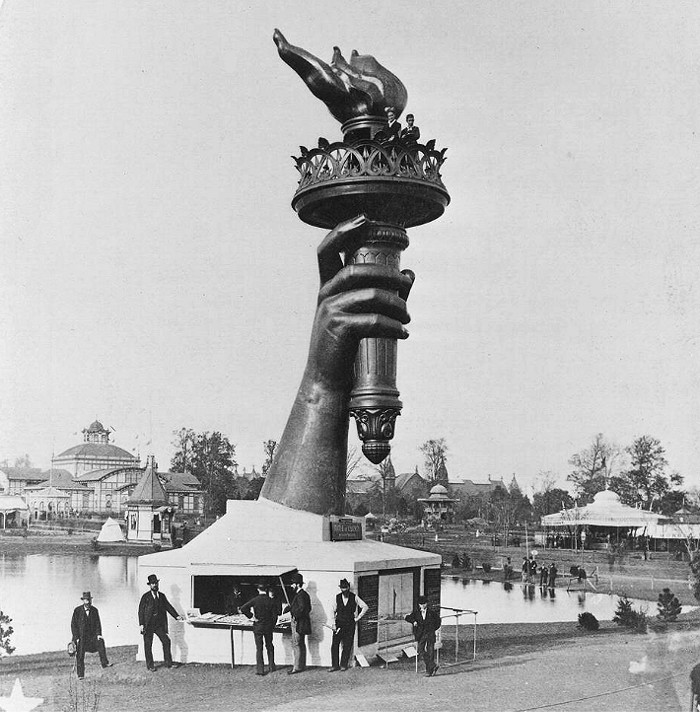 (Image Credit: Library of Congress, Prints and Photographs Division. Public Domain.)
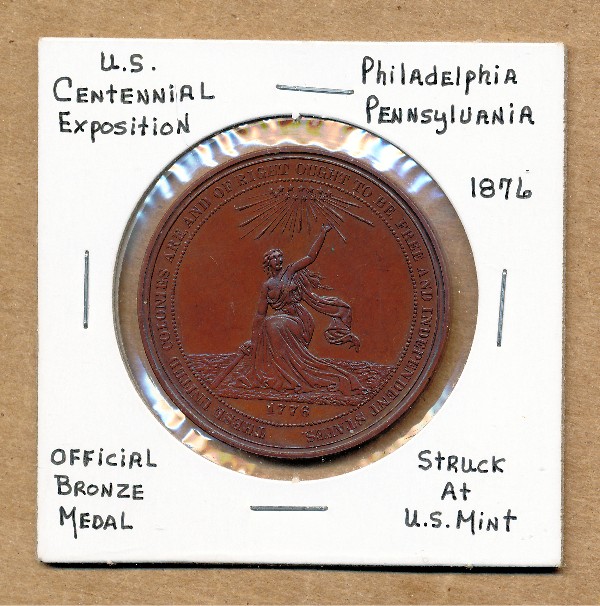
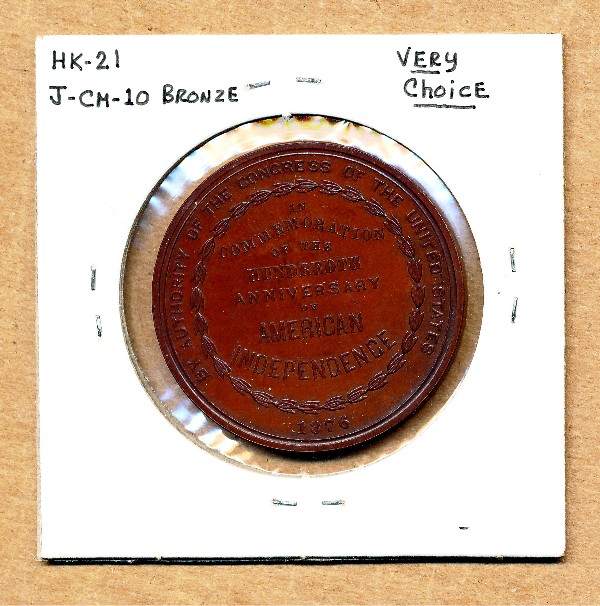
The US Mint had an exhibit at the Exposition, and struck and sold souvenir medals within the exhibit. It struck silver medals in the exhibit, while the bronze and gilt medals were struck at the Philadelphia Mint and brought to the Exposition. The silver medals sold for $3.00 each, while the bronze and gilt medals were priced at $0.50 each. Reported mintage figures for each medal are: silver - ~10,100; bronze - ~13,000 and gilt/gold-plated bronze - ~10,500.
I present my gilt medal here; I'll image and present my bronze and silver examples in an update.
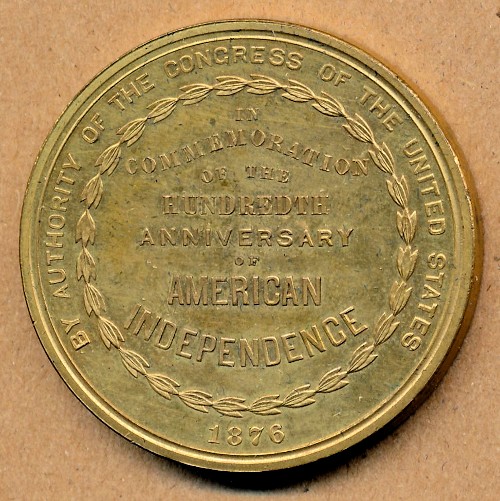
1876 Independence Centennial Exposition Souvenir Medal by US Mint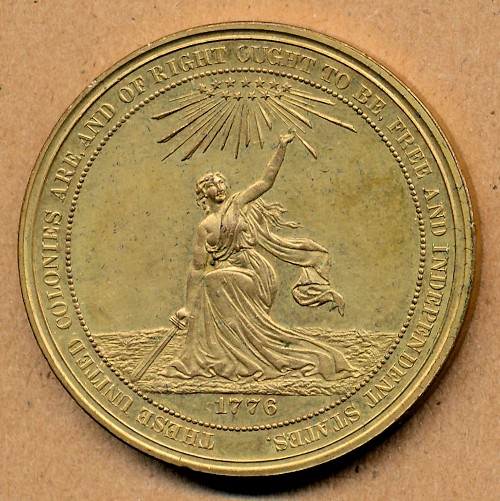
The obverse of the medal depicts the
Genius of American Independence kneeling on one knee. In her right hand is a sword, pointing down - it symbolizes that the War for Independence is over.
Genius raises her left hand toward the sky and points to a constellation of radiant stars that represents the new American nation. Encircling at the rim is the inscription: "THESE UNITED COLONIES ARE, AND OF RIGHT OUGHT TO BE, FREE AND INDEPENDENT STATES."
The medal's reverse is primarily inscriptions. At the rim is found "BY AUTHORITY OF THE CONGRESS OF THE UNITED STATES - 1876". A wreath is presented at center, with the inscription: "IN / COMMEMORATION / OF THE / HUNDREDTH / ANNIVERSARY / OF / AMERICAN / INDEPENDENCE" - distributed over eight lines within it.
For other of my posts about commemorative coins and medals, including more about US Mint Exposition Medals, see:
Commems Collection.





 Posted 07/07/2023 10:13 am