Coin Community Family of Web Sites
Specializing in Modern Numismatics Coin, Banknote and Medal Collectors's Online Mall 300,000 items to help build your collection! Royal Canadian Mint products, Canadian, Polish, American, and world coins and banknotes. Shop for APMEX Bullion on eBay!Vancouvers #1 Coin and Paper Money Dealer Shop CCF Members on eBay!


Username:
Password:
Save Password
Forgot your Password?


This page may contain links that result in small commissions to keep this free site up and running.

Welcome Guest! Registering and/or logging in will remove the anchor (bottom) ads. It's Free!

Doubling And Tricks Of The Light.

To participate in the forum you must log in or register.
Author Previous TopicReplies: 4 / Views: 1,069Next Topic  
Pillar of the Community
Learn More...
Brandmeister's Avatar
United States
6448 Posts
 Posted 10/08/2023  11:33 pm Show Profile   Check Brandmeister's eBay Listings Bookmark this topic Add Brandmeister to your friends list Get a Link to this Message Number of Subscribers
Doubling-And-Tricks-Of-The-Light.
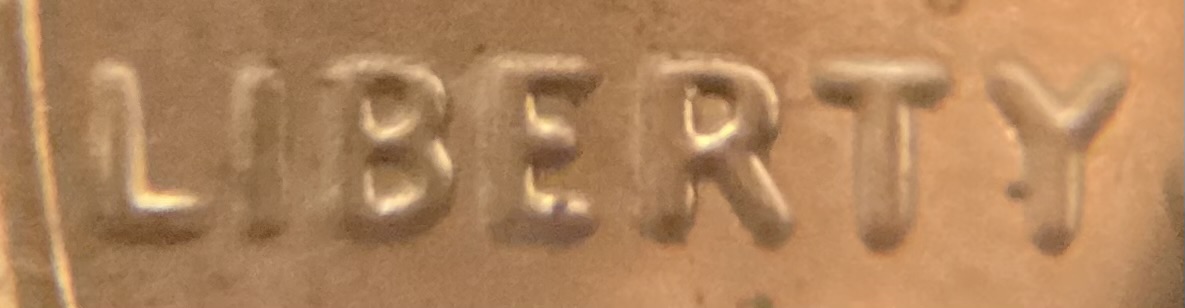
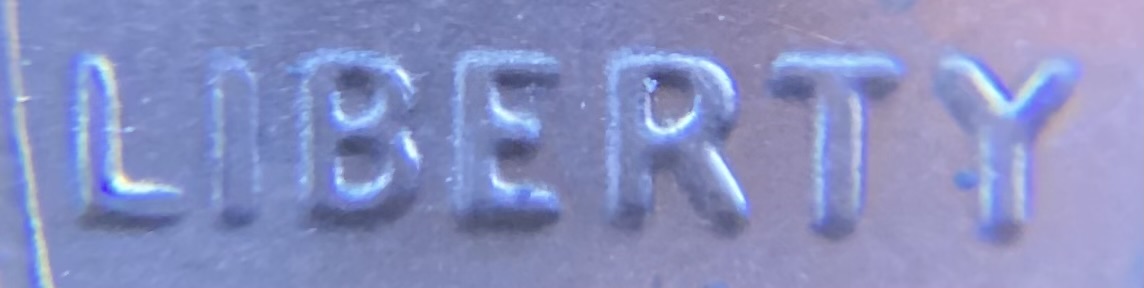
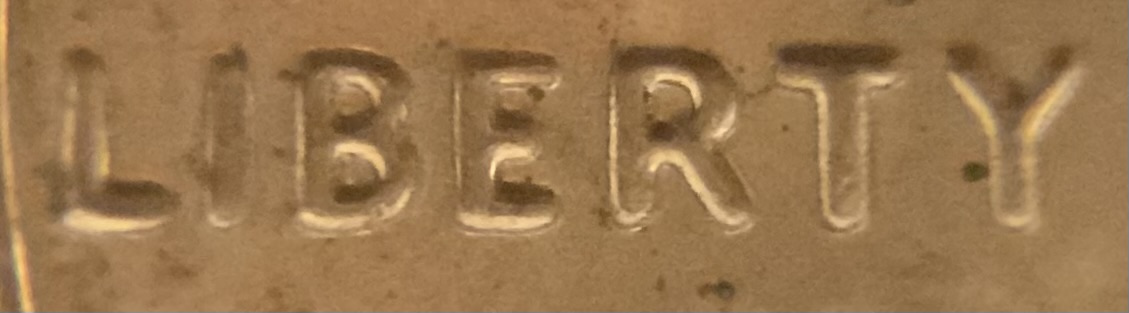
Figures 1-3: Three pictures of the same U.S. one cent in different lighting conditions.

This is something that has nagged at me for a few weeks now. Finally I grabbed a 2022-P cent and tried to replicate the phenomenon that I feel happens more often than folks realize.

On current generation working dies, there is a deterioration phenomenon that happens on the surface. It is a super shallow, very fine feathering adjacent to devices. It is almost like super fine, aligned scratches.. However, when photographed in diffused light—particularly cents photographed in indirect sunlight, yellowish fluorescent light, or incandescent light—that delicate feathering catches the light and appears quite solid and substantial. Sometimes it even appears level with the parent device. When you subject the coin surface to harsh LED light or turn the coin relative to the light source, the perceived thickness disappears, and the micro-scuffing is revealed.

I think this trick of the light is easier to detect on cupronickel surfaces, because when the silvery surface catches sunlight, it reflects in a different color than the silvery devices. On cents, the copper color favors several component frequencies of sunlight and other "soft" lights, so the illusion can be very convincing.

On a true double, the feature stands above the surface. It might be harder to see in different lighting or different angles, but it is always physically present. That is true even of Class IX doubled dies. The doubling isn't a surface phenomenon, it is physically raised or incuse with a real volume of metal. If you pushed the coin into Play Doh, that doubled feature would leave a physical mark. The deterioration ghosts would not (unless they were really, really eaten into the die surface, as happens on some nickels).

Is this something that others have observed as well? If I am off base with these observations, I would be happy to see the proof as to why.

*** Moved by Staff moved to a more appropriate forum. ***

Moderator
Learn More...
Dearborn's Avatar
United States
94586 Posts
Valued Member
United States
127 Posts
 Posted 10/09/2023  09:06 am  Show Profile   Bookmark this reply Add Tileman to your friends list Get a Link to this Reply
Yes, I am very guilty of seeing doubling from the light reflection. What helped me was, someone on here told me " your looking to hard". Some of the magnifiers have built in lights from different angles. I had one that really made everything appear doubled. So much that I had hard time with everyone saying it was not. Eventually I realized.I &.
Pillar of the Community
Learn More...
Brandmeister's Avatar
United States
6448 Posts
 Posted 10/09/2023  10:39 am  Show Profile   Check Brandmeister's eBay Listings Bookmark this reply Add Brandmeister to your friends list Get a Link to this Reply
Now that the criteria for many modern doubles is "extra thickness", I believe that we will see this situation more often. Also, there is a conflict between the mentality of photographing a new double to make it more apparent, therefore proving it, and a more scientific mentality of trying to actively disprove it.

I have really noticed Lincoln shield cents because people post questions on CCF, and then we examine the Copper Coins catalog. Many of the CC DDO / DDR attributions are slightly blurry. Sometimes the light direction causes shadows to fall across the doubled features, other times it accentuates deterioration ghosting. You can definitely make a Y look like it has a thin right arm and the remainder thickened by photographing it a specific way. In the photos above, that R can look downright chubby under the right lighting conditions.

And tbh, we've had at least one strenuous debate since I've joined that resolved itself into photographic misfortune (in my opinion, anyway).
Moderator
Learn More...
jbuck's Avatar
United States
187446 Posts
  Previous TopicReplies: 4 / Views: 1,069Next Topic  

To participate in the forum you must log in or register.


Disclaimer: While a tremendous amount of effort goes into ensuring the accuracy of the information contained in this site, Coin Community assumes no liability for errors. Copyright 2005 - 2026 Coin Community Family- all rights reserved worldwide. Use of any images or content on this website without prior written permission of Coin Community or the original lender is strictly prohibited.
Contact Us  |  Advertise Here  |  Privacy Policy / Terms of Use

Coin Community Forum © 2005 - 2026 Coin Community Forums
It took 0.28 seconds to rattle this change. Forums

