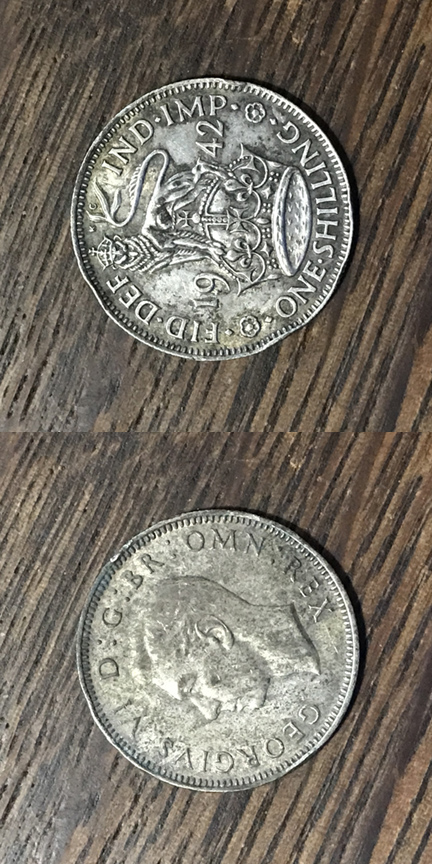
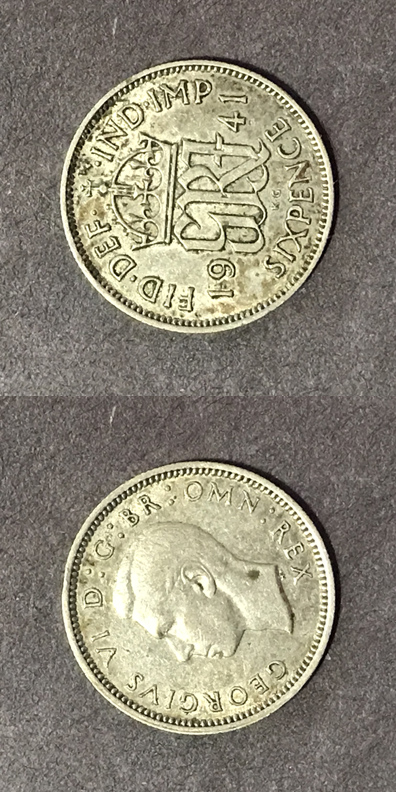
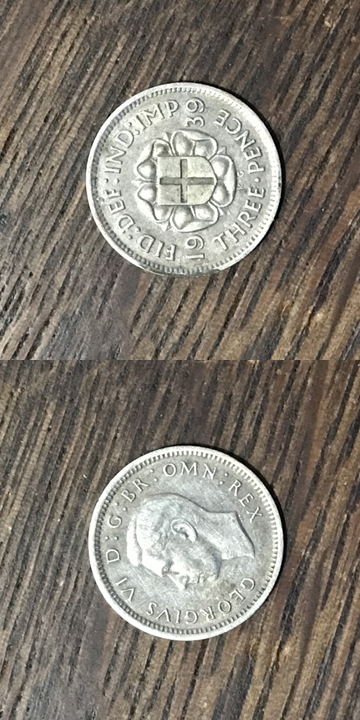
| Author |
 Replies: 285 / Views: 11,729 Replies: 285 / Views: 11,729 |
|
|
|
Bedrock of the Community
 United States
27514 Posts |
.500 - Egypt 2 Qirsh 1944 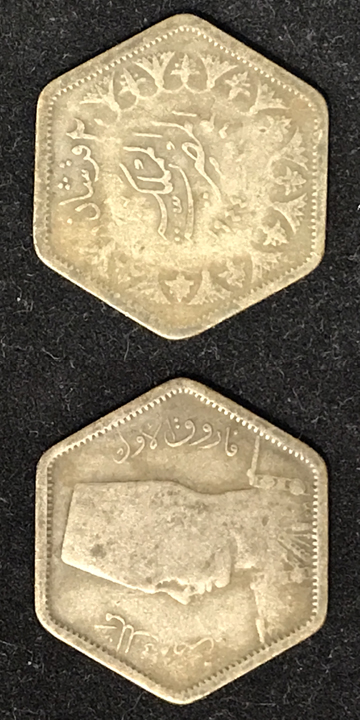 Inordinately fascinated by bits of metal with strange markings and figures
|
|
Bedrock of the Community
United States
27514 Posts |
Inordinately fascinated by bits of metal with strange markings and figures
|
|
Pillar of the Community
  United States
8056 Posts |
Uh oh ... looks like we're slowing down.  I've got a few older coins at 50%. The best known one is this Polish 1 gulden coin (KM#120) also known as a tymf or timf (30 groschen), made in the mid-1660s: 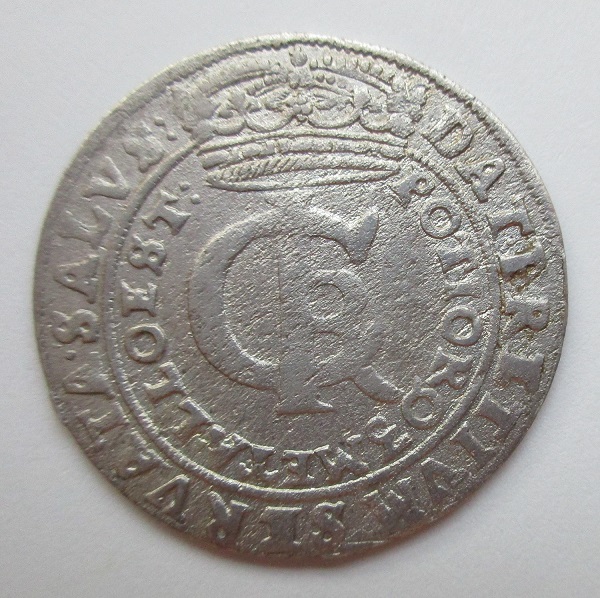 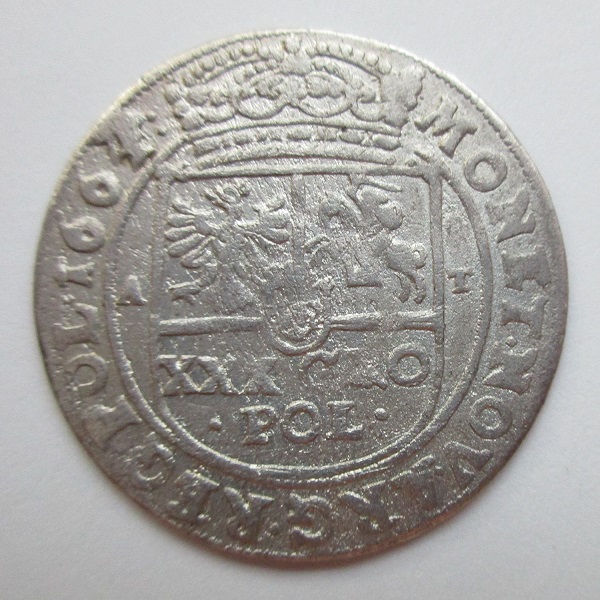 Looking through the two places I collect for which there is documentation on the composition, I was surprised that 50% is a bit of a "no man's land." It seems like the larger silver coins are well above that purity (the Polish tymf being an exception), and the lower denomination coins (shillings, groats, etc) are below. Edited by tdziemia
12/16/2023 08:30 am
|
|
Pillar of the Community
United States
8056 Posts |
|
|
Bedrock of the Community
United Kingdom
18858 Posts |
United Kingdom Crown 1927 (50% silver): 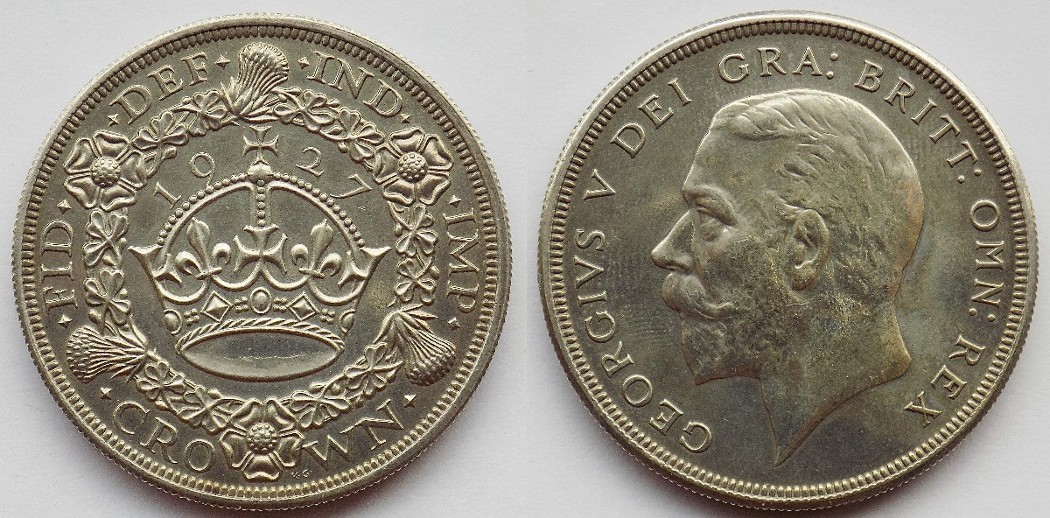 |
|
Bedrock of the Community
United States
27514 Posts |
.500 - 1935 New Zealand Half Crown 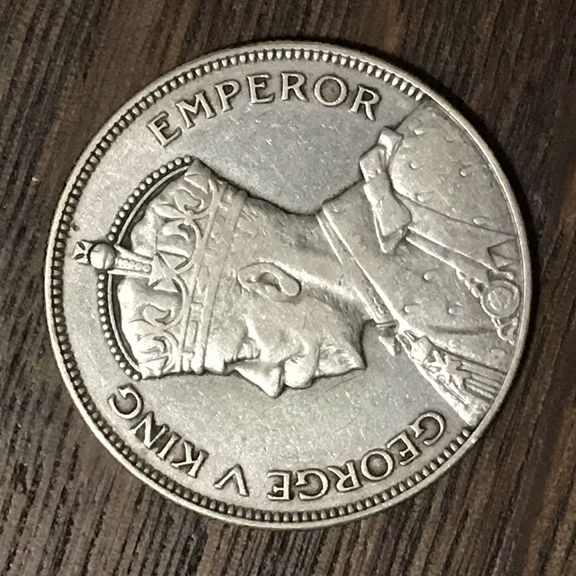 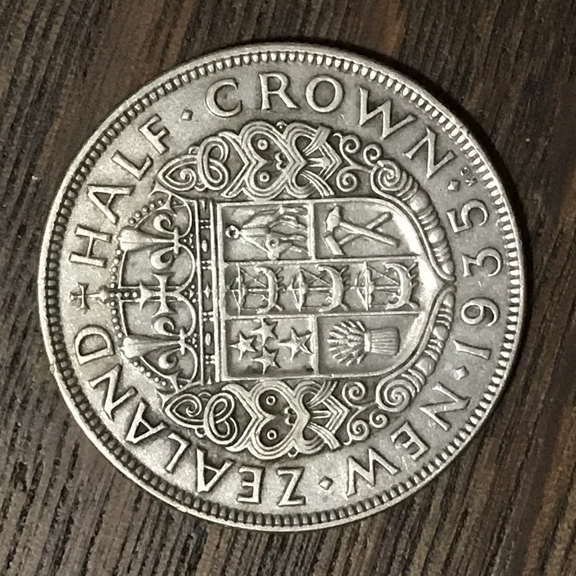 Inordinately fascinated by bits of metal with strange markings and figures
|
|
Pillar of the Community
United States
8056 Posts |
Wow! on that crown.
Here's what we have for the 50-59% slice:
58% Spanish Netherlands/Brabant escalin KM#47 (tdziemia)
54% Poland 4 groszy 1767 KM#185 (tdziemia); KM has this at 55%
51% Poland 4 groschen 1787 KM#208.1 (tdziemia); KM has this at 55%
50% Australia florin 1958 KM#60 (triggersmob)
..Egypt 2 quirsh 1944 KM#369 (Hondo Boguss)
..France 10 euros 2011 (NumisRob)
..Great Britain florin 1920 KM#817a (NumisRob)
..Great Britain crown 1927 KM#836 (NumisRob)
..Great Britain 3 pence1939 KM#848 (Hondo Boguss)
..Great Britain 6 pence 1941 KM#852 (Hondo Boguss)
..Great Britain shilling 1942 KM#853 (Hondo Boguss)
..India ½ rupee 1945 KM#552 (Hondo Boguss)
..New Zealand ½ Crown 1935 KM#5 (Hondo Boguss)
..Peru 1 sol 1931 KM#218.2 (Hondo Boguss)
..Poland 1 gulden KM#120 (tdziemia)
........Portugal 1000 escudos 2001 KM#731 (hfjacinto)
..Portugal 10 euros 2010 (hfjacinto)
|
|
Pillar of the Community
United States
8056 Posts |
We will give it one more day, then turn to the 40-49% range on Tuesday morning. I think we will do better in the 40s than in the 50s, though my original prediction of 30 different compositions is looking challenging (we are at 13 compositions held by members, and 3 more identified as existing). I know some Mexico types are going to help, and I've got a few for each upcoming ten% slice. We will see!
Here is where we stand since starting:
69% Poland ¼ thaler 1657 KM#A94 (tdziemia)
68% France 20 francs 1930s KM#879 (erafjel, Hondo Boguss)
67% France 30 sols 1792 KM#606 (ironhorse)
........Germany / Prussia 1/3 thaler KM#303 (spence)
65% Costa Rica 25 centimos 1924 KM#168 (NumisRob)
........Portugal 50 escudos 1971 KM#601 (triggersmob)
64% Austria 5, 10 schillings KM#2882, 2889 (Hondo Boguss)
........Curacao ½ guilder 1941 KM#44 (Hondo Boguss)
........Curacao 1/10 guilder 1944 KM#43 (january1may)
........Netherlands 5 cents 1859 KM#91 (spence)
........Netherlands 25 cents KM#164 (triggersmob)
63% Germany 5 marks 1958 KM#123.1 (mrwhatisit)
........Poland 2 gulden 1770 KM#186.2 (tdziemia)
62% Flanders 4 stuivers 1540 N#96940 (tdziemia)
60% Straits Settlements 20 cents 1927 KM#30b (Hondo Boguss)
........Sweden 20 ore 1907 KM#775 (triggersmob)
Also noted that the pegione of Milan circa 1400 was at around 66%, and that the Kutch 1/2 kori (Y-13) is at 61%. (Note: for some of the Kutch coins listed at 0.61 in Numista, KM has them at 0.601).
58% Spanish Netherlands/Brabant escalin KM#47 (tdziemia)
57% Nethelands 5 cents KM#52 (BCTokens)
54% Poland 4 groszy 1767 KM#185 (tdziemia); KM has this at 55%
51% Poland 4 groschen 1787 KM#208.1 (tdziemia); KM has at 55%
50% Australia florin 1958 KM#60 (triggersmob)
........Egypt 2 quirsh 1944 KM#369 (Hondo Boguss)
........France 10 euros 2011 (NumisRob)
........Great Britain florin KM#817a, crown KM#836 (NumisRob)
........Great Britain 3p KM#848, 6p & shilling KM#852, 853 (Hondo Boguss)
........India ½ rupee 1945 KM#552 (Hondo Boguss)
........New Zealand ½ Crown 1935 KM#5 (Hondo Boguss)
........Peru 1 sol 1931 KM#218.2 (Hondo Boguss)
........Poland 1 gulden 1664 KM#120 (tdziemia)
........Portugal 1000 escudos KM#731, 10 euros 2010 (hfjacinto)
Also noted that the 1/6 talara coin of the Duchy of Warsaw, KM#C85 under Poland is 53%.
Edited by tdziemia
12/18/2023 05:51 am
|
|
Pillar of the Community
Russian Federation
5186 Posts |
I have a few 50% coins and I'll check for them tomorrow; it's a common composition and I didn't memorize which of my coins have it!
Nothing else in this range, though. I think it's very uncommon to have a composition that's just over but not exactly 50% silver - usually it's either below 50%, exactly 50%, or way over 50%.
(I wonder if all ten options in the 70-79% range are attested. We don't cover that range in this thread, but maybe later...)
Edited by january1may
12/17/2023 4:54 pm
|
|
Valued Member
Canada
113 Posts |
Netherlands 5 cent, 1826B: 0.569 or 57%. 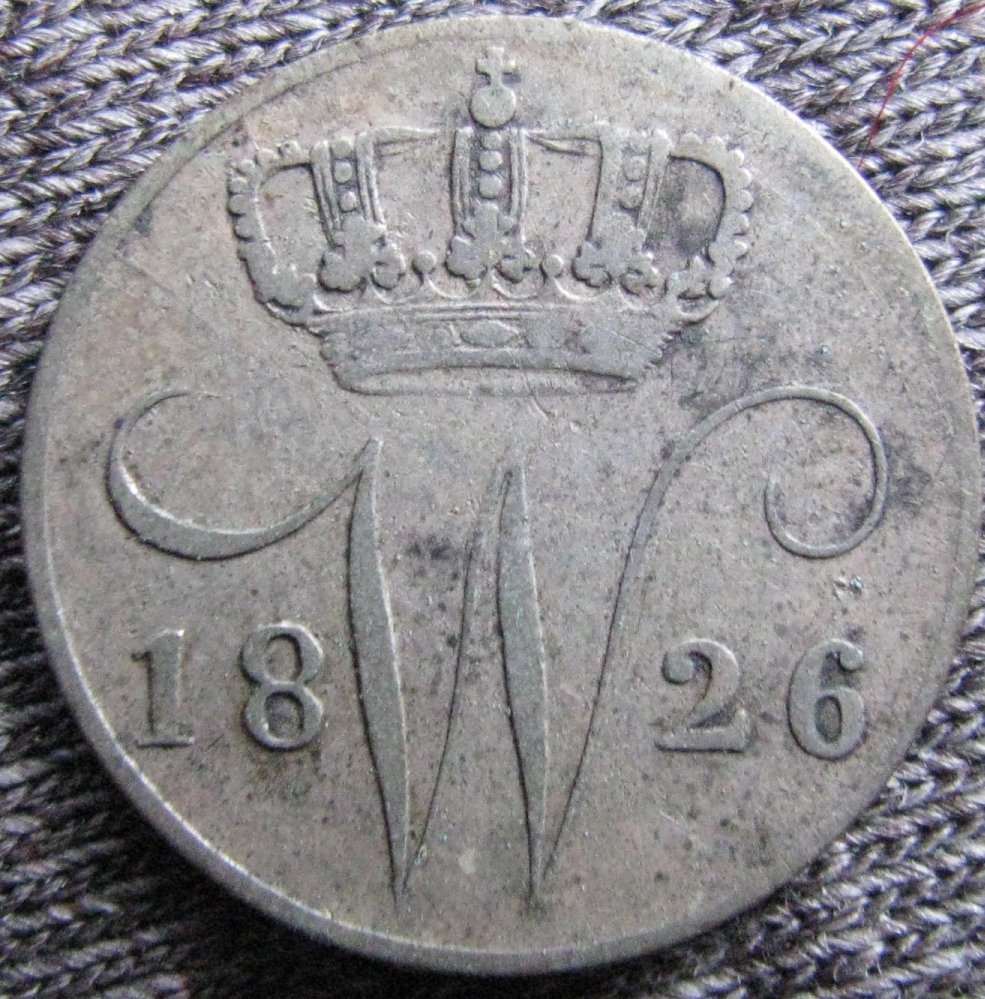 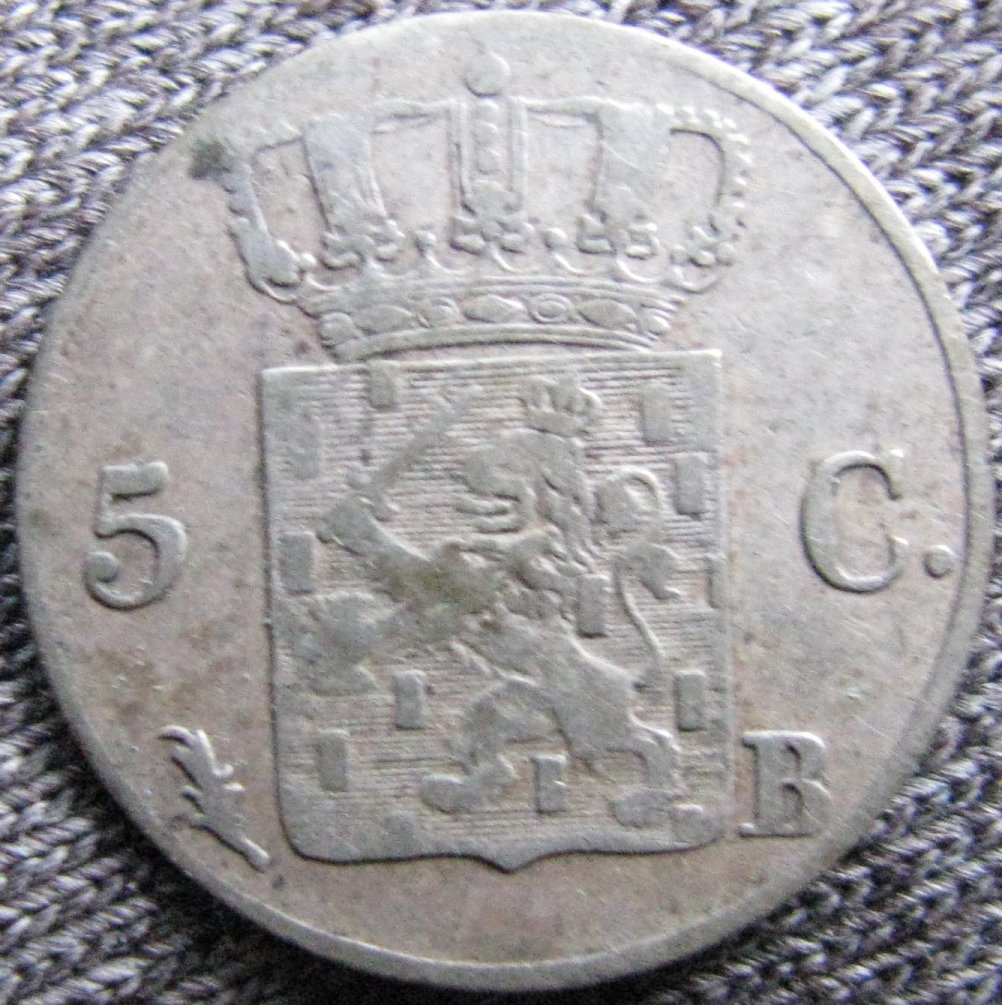 Jan |
|
Pillar of the Community
United States
8056 Posts |
Welcome BCT, that's a fantastic addition to the thread! Since I just posted a lengthy list, it will get appended on the next iteration. I was able to go back and add to the comprehensive list. Quote:
I think it's very uncommon to have a composition that's just over but not exactly 50% silver - usually it's either below 50%, exactly 50%, or way over 50%. Agreed. The Polish monetary system was using silver purity based on 16ths, as best I can tell from Gumowski. So my 54% was "8 2/3 / 16 " In the next round, 7 /16 is 0.438, so SPOILER ALERT there is a 44% type, and 7 1/4 is 0.453 for a 45% type. Fifteenth century Low Countries was using a different purity measurement system, probably similar to France. So, having several different denominators (different ones for Western Europe and Central Europe) means that when we apply them, we will get different results in decimal terms, helping us to hit different percentages. Edited by tdziemia
12/18/2023 05:52 am
|
|
Pillar of the Community
Russian Federation
5186 Posts |
Quote:
Fifteenth century Low Countries was using a different purity measurement system, probably similar to France. Based on a denominator of 24 AFAIK? I have a coin from early 17th century Low Countries where the percentage confusion makes it unclear to me which exact number it is, and we'll hopefully see it here after we enter the 30s. Edited by january1may
12/18/2023 12:12 am
|
|
Bedrock of the Community
United States
27514 Posts |
Excellent 5 C, BCTokens!
And tdziemia, I'm looking forward to your next contributions! All of mine are rather mundane and common.
Inordinately fascinated by bits of metal with strange markings and figures
|
|
Pillar of the Community
United States
8056 Posts |
Quote:
Based on a denominator of 24 AFAIK? I think it is based on "deniers" which are 1/12.5 and "grains" which are 1/24 of a denier. Those "double briquets" were specified at "X deniers argent le Roi et a 80 de taille" and the single briquets at "V deniers argent le Roi aussi a 80 le marc." (de Witte, Volume II, p. 44). Van Gelder and Hoc call these two compositions 0.798 pure and 0.399 pure (I don't understand why it deviates a tiny amount from 0.800 and 0.400, unless the king's silver starts at 0.998). And they come up with a weight of 3.06 grams for both types, which puts a mark (Troyes?) at about 244.5 grams. I've never found a description of how this system works, but backed out what it seems to be by using those two references. Maybe someone else (erafjel?) knows, as I think this system was based on the French one. If your early 17th c. coin is from "Spanish Netherlands" I can find the composition in Van Gelder & Hoc. If it's Dutch Republic and not given on Numista, I can't help. Edited by tdziemia
12/18/2023 07:10 am
|
|
Pillar of the Community
Sweden
2124 Posts |
Quote:
I think it is based on "deniers" which are 1/12.5 and "grains" which are 1/24 of a denier.
Those "double briquets" were specified at "X deniers argent le Roi et a 80 de taille" and the single briquets at "V deniers argent le Roi aussi a 80 le marc." (de Witte, Volume II, p. 44).
Van Gelder and Hoc call these two compositions 0.798 pure and 0.399 pure (I don't understand why it deviates a tiny amount from 0.800 and 0.400, unless the king's silver starts at 0.998).
...
Maybe someone else (erafjel?) knows, as I think this system was based on the French one. I don't seem to have anything to contribute in the 50-59 % range, but I do of course follow this thread, so your cry for help shall not go unheard!  "Argent-le-roi" is defined as 23/24, and a denier as 1/12 thereof. That gives 1 denier = 1/12.521739... That explains the tiny difference from "even" fractions: 10/12 x 23/24 = 0.7986111... and 5/12 x 23/24 = 0.39930555... A precision of 0.399 rather than 0.400 is illusory for 15th century coins, of course. The precision for 23/24 is two significant digits, so the translation to decimal fractions should also have two significant digits, thus 0.80 rather than 0.798 and 0.40 rather than 0.399. But I suppose we are stuck to convention here and will keep seeing fineness expressed with three decimals. |
| |
Replies: 285 / Views: 11,729 |






 First Page
 Previous Page


 Posted 12/14/2023 3:12 pm