| Author |
 Replies: 162 / Views: 11,128 Replies: 162 / Views: 11,128 |
|
|
|
Pillar of the Community
United States
4508 Posts |
What the PCGS Guarantee Does Not Cover.
The following is further explanation of what the PCGS Guarantee does not cover.
Clerical or "mechanical" errors. PCGS occasionally makes clerical errors in inputting data which is shown on the insert in the PCGS holder; consequently, the PCGS Guarantee does not cover obvious clerical errors, what we call "mechanical errors." The key concept is how obvious the error is to the naked eye. If you can easily tell just by looking at the coin that the description on the holder is wrong, then the coin/holder combination is not covered by the PCGS Guarantee. Examples would include the following:
"A date listed on the holder that does not match the date of the coin. For example, if you had a 1928 $20 St. Gaudens, but the PCGS holder showed the date as 1929 (a much more valuable coin), this coin would not be covered by the PCGS Guarantee as the date on the coin itself is obviously 1928."
The 1866 dime S mint mark is not obviously, so PCGS should cover the error because it is not an obvious mechanical error as CAC put a sticker on the coin as a 1866 P.
|
|
Pillar of the Community
United States
517 Posts |
What a cluster post; I know others will disagree, but much might had been avoided if the OP started with images of the "subject" coin  ... |
|
Pillar of the Community
United States
3848 Posts |
Quote:
much might had been avoided if the OP started with images of the "subject" coin As far as I know, he didn't have images of the subject coin because he was originally given the info for the wrong coin  Suffering from bust half fever. Want to learn how to attribute early half dollars by die variety? Click Here: http://goccf.com/t/434955Shoot me a PM if you are looking to sell bust halves. |
|
Valued Member
United States
202 Posts |
Quote:
What a cluster post; I know others will disagree, but much might had been avoided if the OP started with images of the "subject" coin... Looks like images of the coin are up now. What are your thoughts? Do you think the PCGS graders correctly identified the coin as a weak S, but someone clicked the wrong button labeling it as a Philadelphia mint coin? Or did multiple graders incorrectly identify the coin as from the Philadelphia mint and label it as such? |
|
Pillar of the Community
United States
4233 Posts |
https://www.pcgs.com/guaranteeQuote:
In the event the purchaser of a PCGS graded coin ... This guarantee does not apply to, and cannot be utilized by, the original submitter (or the original submitter's agents, employees, affiliates, family, or representatives) of the graded coin. The way I read this, neither the OP nor GC has any claim with the PCGS guarantee. The buyer could have, but it appears they didn't want to. This makes sense. As a seller you don't get money for what you could have sold it for if only it was really what the slab originally said. That's the risk you take trying to buy, grade and flip raw coins. Since the sale was cancelled, there is no purchaser and nothing was bought relying on the original slab. If I was the OP I would just sell it for what it really is, take my lumps and move on.
|
|
Pillar of the Community
United States
517 Posts |
None of the TPGs are infallible, and mistakes are made; I have documented some of the worse- counterfeits authenticated as genuine in genuine TPG holders. I have also seen both misatributions and "mechanical errors" from the top 2 as well. Side note, yes. I have documented a counterfeit in a genuine PCGS holder with a genuine CAC green bean... You hear the story all of the time about the time crunch in processing submissions, and graders having little time to complete the grading process; so, this certainly could have been missed. I added an image of a PCGS certified "P" example for reference in a similar grade for comparison. 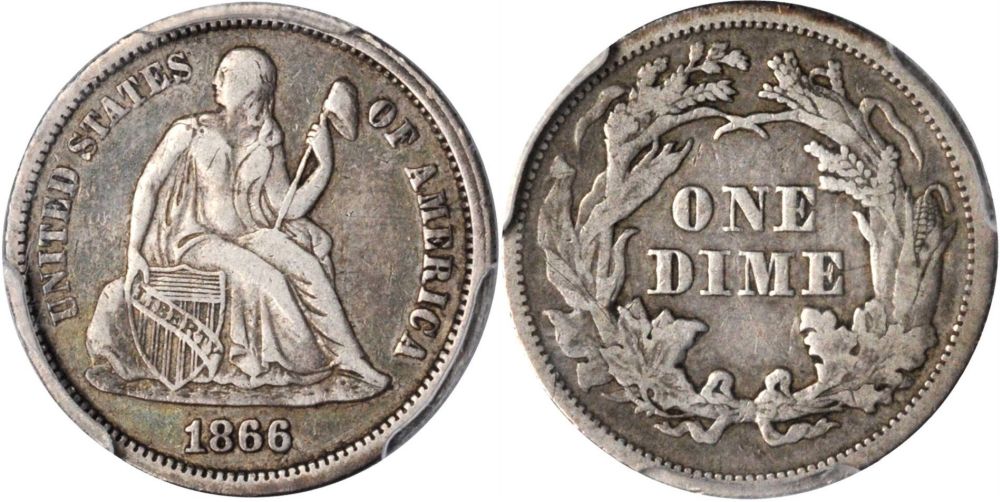 It may well NOT have been missed if it had been submitted for attribution (variety attribution) which is an additional paid service and I believe allows the graders time to review details like shown in this thread to prove which mint it was made... Understanding the rarity of the issue I would have added that, and it then would have also been guaranteed as correct. Back to this post, I stand by my cluster comment, as I am still unclear who said what to whom when . |
|
Pillar of the Community
United States
3509 Posts |
Quote:
The way I read this, neither the OP nor GC has any claim with the PCGS guarantee. Why, as the submitter (customer), wouldn't GC have a claim with the guarantee? |
|
Pillar of the Community
United States
4233 Posts |
Quote:
Why, as the submitter (customer), wouldn't GC have a claim with the guarantee? Because GC is the original submitter's agent. That's just the way I read it. GC didn't buy the coin already in a wrong slab and neither did the OP. Only a buyer gets the guarantee, and there is no longer any buyer here. |
|
Pillar of the Community
United States
4508 Posts |
Quote:
The way I read this, neither the OP nor GC has any claim with the PCGS guarantee. If the sale was voided and the buyer refunded because the coin was not as labeled, the ownership would revert back to the OP and the OP should be able to make a claim with PCGS. I would be surprised if PCGS covered any of the difference in the sales price between the 1866 P and the 1866 S. If PCGS refused the claim, it would be a small claims issue with the amount of money involved. |
|
Pillar of the Community
United States
4233 Posts |
"This guarantee does not apply to, and cannot be utilized by, the original submitter", as I pointed out above. The OP, via their agent GC, is the original submitter. So they do not have a claim under the guarantee. I really _hate_ standing up for PCGS in this aspect, since they messed up the grade/attribution and caused all this to begin with. Of course they could chip in and try to make it right with the OP, but I do not see a legal case here. The fact that it was sold and then unsold is clouding the picture. PCGS isn't going to pay out for what an original submitter might have sold it for if that slab had been correct. They're only paying out if somebody actually bought it based on the slab error, and then only to that purchaser.
Edited by kbbpll
03/22/2024 4:31 pm
|
|
Pillar of the Community
United States
990 Posts |
I'm sure when PCGS is requested to grade a valuable coin such as a 1909-S VDB cent, the grader focuses on the mint mark to ensure it hasn't been surreptitiously added to a more common 1909-P VDB cent, so I wonder why the grader in this case did not focus on the mint mark area of the 1866 dime.  |
|
Pillar of the Community
United States
4508 Posts |
Quote:
"This guarantee does not apply to, and cannot be utilized by, the original submitter", as I pointed out above. You are correct the OP does not have a claim with PCGS. |
|
Bedrock of the Community
United States
94367 Posts |
I am confused. How can the grade not be guaranteed to the original submitter? So if I'm unhappy with a graded note I submitted to PCGS, I cannot re-submit that note with a guarantee it won't grade lower, but if I sell it to Joe Blow, he can re-submit it and gets the guarantee?
Edited by Coinfrog
03/22/2024 5:44 pm
|
|
Bedrock of the Community
United States
10982 Posts |
Quote:So let me get this straight - if I buy a PCGS slab on ebay, the grade is only guaranteed for the original submitter, and not me as a subsequent buyer. Surely not? What has been stated says the opposite. Only the buyer has the guarantee. The original submitter does not. |
|
Pillar of the Community
United States
4508 Posts |
The following is Great Collections terms and conditions on sale of coins:
14. NO WARRANTY, EXPRESSED OR IMPLIED, INCLUDING ANY WARRANTY OF MERCHANTABILITY OR FITNESS FOR A PARTICULAR PURPOSE, IS MADE IN RESPECT TO ANY ITEM EXCEPT FOR WARRANTY OF TITLE. IN THE CASE OF TITLE, GREATCOLLECTIONS IS SELLING ONLY THAT RIGHT OR TITLE TO THE ITEM THAT THE CONSIGNOR MAY HAVE AS OF THE AUCTION SALE DATE. ALL ITEMS ARE SOLD "AS IS" AND WITH ALL FAULTS. PURCHASER HEREBY ASSUMES ALL RISKS CONCERNING AND RELATED TO THE GRADING, QUALITY, DESCRIPTION, CONDITION, AUTHENTICITY, AND PROVENANCE OF AN ITEM.
GC without the consignor consent cancelled the sale after the 1866 S dime was auctioned. The OP could argue that GC did not have the right to cancel the sale without taking financial responsibility based on their terms and conditions, and the buyer should have gone through PCGS for reimbursement.
|
| |
Replies: 162 / Views: 11,128 |







 First Page
 Previous Page


 Posted 03/22/2024 09:24 am





