| Author |
 Replies: 162 / Views: 11,122 Replies: 162 / Views: 11,122 |
|
|
|
Valued Member
United States
202 Posts |
Quote:
What has been stated says the opposite. Only the buyer has the guarantee. The original submitter does not. Makes one reconsider sending in coins to PCGS either as the submitter or through a third party such as an auction house or dealer. Even as a buyer, who would otherwise be eligible for the guarantee, PCGS can fall back on the 'mechanical error' argument to void it. Earle42 nailed it on page 3 of this thread. The guarantee is essentially useless the way it is worded. |
|
Bedrock of the Community
United States
12057 Posts |
I'm curious how anyone can suggest that an auction house selling consigned items is anything less than 100% liable for how the items are (mis)represented to potential bidders.
If PCGS mistakenly slabs a fake coin as authentic and the auction house sells it as such, the auction house would be 100% on the hook, not PCGS. Due diligence is a thing - you can't just take the consignor's (or PCGS's) word that an item is represented correctly. It's no different than if they had sold a raw coin that was fake and represented it as being a real coin.
The right thing to do here would be for GC to refund the consignor and then if desired seek damages from PCGS (a sort of subrogation) but I highly doubt GC would have any recourse from PCGS since they were not the original submitter. This is how reputations are earned (or lost) - why risk all of this negative publicity over what is a relatively insignificant amount to GC?
Member ANA - EAC - TNA - SSDC - CCT #890 "Most of the things worth doing in the world had been declared impossible before they were done." -- Louis D. Brandeis |
|
Pillar of the Community
United States
4233 Posts |
GC doesn't need the consignor's consent to cancel a sale. https://www.greatcollections.com/forms/coins.pdf "Consignment Terms and Conditions" Quote:
5. GreatCollections has the right in its sole discretion to reject any Consignment, to cancel any Auction, to postpone or change the date/time of Auction and/or to rescind any sale.
...
9. In addition, GreatCollections offers a return privilege to Buyers. Should your coin/item be returned, we will cancel the sale and relist your item. In the event that GreatCollections cancels the sale of your coins/items or your coins/items are returned, all Listing Fees and Seller's Fees will be refunded to Consignor.
...
11. GreatCollections shall remit to Consignor, within 30 days after the close of the Auction, the net proceeds, which equals the Hammer Price less Seller's Fees, Listing Fees, Grading Fees, other monies owed to GreatCollections by Consignor, Cash Advances Principal, and Interest for monies owed to GreatCollections by Consignor including but not limited to Cash Advances (in order). https://www.greatcollections.com/main-terms "Terms and Conditions" (buyer) Quote:
10. Non-Payment by Bidder. ... [who knows what's going on here as far as OP]
12. Return Policy. On all non-bullion items, GreatCollections offers a generous return policy (unless otherwise marked on the item information page) as a courtesy to Buyers, providing the item is paid for within seven days of the auction date These all seem relevant to the OP as both a consignor and a buyer. You're just not going to get any money out of a coin because it could have sold if only it was what you thought it was. The recourse is also specifically spelled out - take it to arbitration. |
|
Pillar of the Community
United States
4508 Posts |
Quote:
GC doesn't need the consignor's consent to cancel a sale. I agree GC does not need a consignor consent to cancel a sale, I was just trying to make an argument for the OP as Great Collections put the OP in no man's land with PCGS when they cancelled the sale. My issue is that the sale closed and the OP was paid and the sale was then cancelled. At what point does the money from the sale belong to the OP? |
|
Pillar of the Community
Taiwan
607 Posts |
The sale was over but not finalized as the astute buyer realized the attribution problem and exercised his return option. GC then returned the coin to PCGS to be corrected. The coin will be relisted and when that sale is finalized the OP will be credited.
Edited by Everest
03/22/2024 9:29 pm
|
|
Bedrock of the Community
United States
10982 Posts |
Quote:
If PCGS mistakenly slabs a fake coin as authentic and the auction house sells it as such, the auction house would be 100% on the hook, not PCGS. @paraylse: PCGS are the grading professionals who were paid to grade/authenticate the coin. How could they not be on the hook? That's their job. If I buy a coin, anywhere at anytime, that PCGS has authenticated as genuine then PCGS is liable if it is found to be not genuine. |
|
Pillar of the Community
United States
517 Posts |
Interesting, red eyeing it through some fine print it appears (as I am sure some others have stated in this train wreck post) the responsibility rests on the purchaser of the "certified" coin. GC clearly puts the responsibility on the buyer in this clause of their stated terms:  And PCGS' guarantee is between them and the "purchaser". 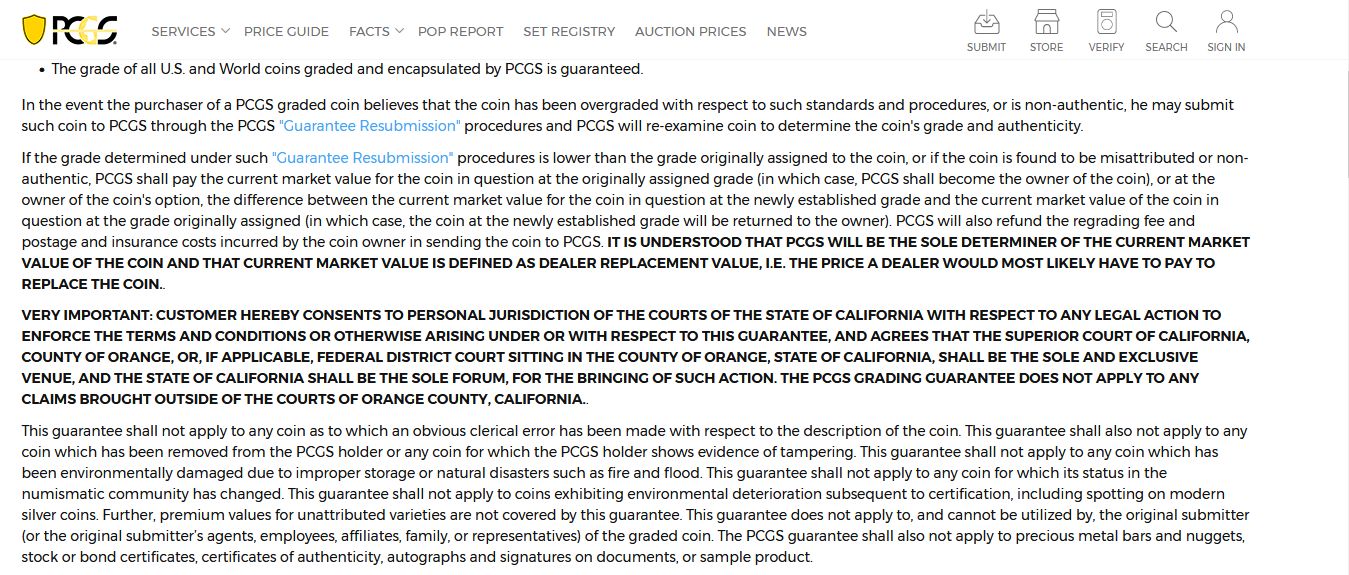 I understand there may be some good will involved here between GC and the buyer when/ if they allowed the return, but it appears the buyer should have been on the hook for the issue, not the seller. The Return Policy appears to be based on speed of payment; what is not clear to me is when the seller receives payment or if there was an advance made in this case. Regardless, when GC allowed the return and cancellation of the transaction, I would think logically that was their decision and responsibility, not the Seller's.  To further confuse it, it is not clear if PCGS would consider this error under their guarantee; not sure it would fly as a "mechanical error", as it is clear by their own definition(s)- "The key concept is how obvious the error is to the naked eye. If you can easily tell just by looking at the coin that the description on the holder is wrong, then the coin/holder combination is not covered by the PCGS Guarantee". Not sure this is obvious as stated. 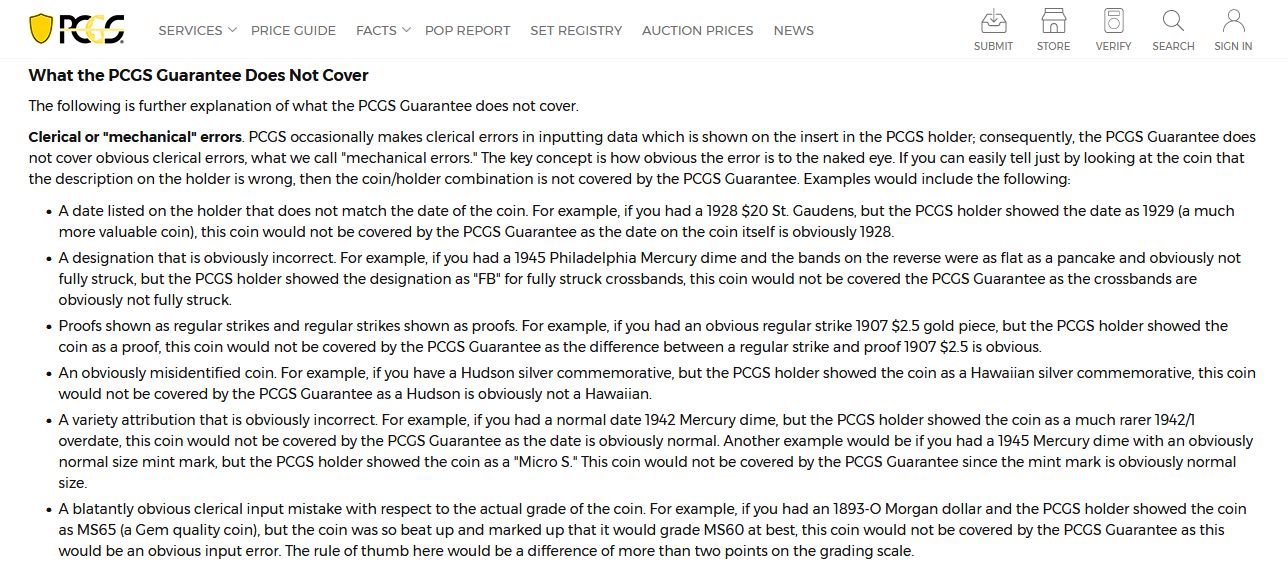 One thing I am struggling with is that I have consigned coins from my previous collection to an auction sale in the past. But, I knew what my coins were and had approximate values and goals for each for the sale. And as a counterfeit researcher and documenter I understand the importance of accurate attribution. I don't take the TPGs word as the final, as I believe I need to know more than them on a particular example, not blindly send it in. I understand the seller didn't submit the coins, but I feel he is still responsible for knowing what he had, but maybe that is just me. Trying to put myself in the same shoes; I send in a coin for auction that I didn't know its attribution and receive more than it is worth without knowing it; I hope I hadn't spent the money. Edited by burfle23
03/23/2024 12:36 am
|
|
Pillar of the Community
United States
517 Posts |
I am curious of anyone has the cert number for the error slab?
|
|
Pillar of the Community
United States
4233 Posts |
Quote:
The Return Policy appears to be based on speed of payment; what is not clear to me is when the seller receives payment or if there was an advance made in this case. It's not clear whether GC pays a consignor before they are paid for the coin or a buyer has decided to return the coin. It doesn't seem like good business to pay out before you've received the funds, but who knows. There's about a two week window for GC to make that decision. The kicker in this case is that going off the PCGS value guides, 1866-P VF30 is valued at $2000, and 1866-S VF30 is $700. You could get up to 60% as a cash advance - $1200 - and end up with a $700 coin to pay it off with. The GC item# is posted earlier in this thread but the listing no longer exists. I don't know how else to get at the original cert# unless the OP or GC wants to reveal it. Jack, remember that counterfeit 1901-S 25c in a PCGS slab? This whole thing reminds me of that. I wonder if the last buyer ever found out that it's fake. |
|
Pillar of the Community
United States
517 Posts |
Thanks Kevin! I never heard back about the owner or status of the '01-S but see there is still a "make offer to owner" available, so I asked my contact at Heritage again.
I guess I am more curious than anything about the 1866 cert, but I would have brought it to my contact at PCGS' attention.
|
|
Pillar of the Community
United States
2023 Posts |
Quote:
The GC item# is posted earlier in this thread but the listing no longer exists. I don't know how else to get at the original cert# unless the OP or GC wants to reveal it.
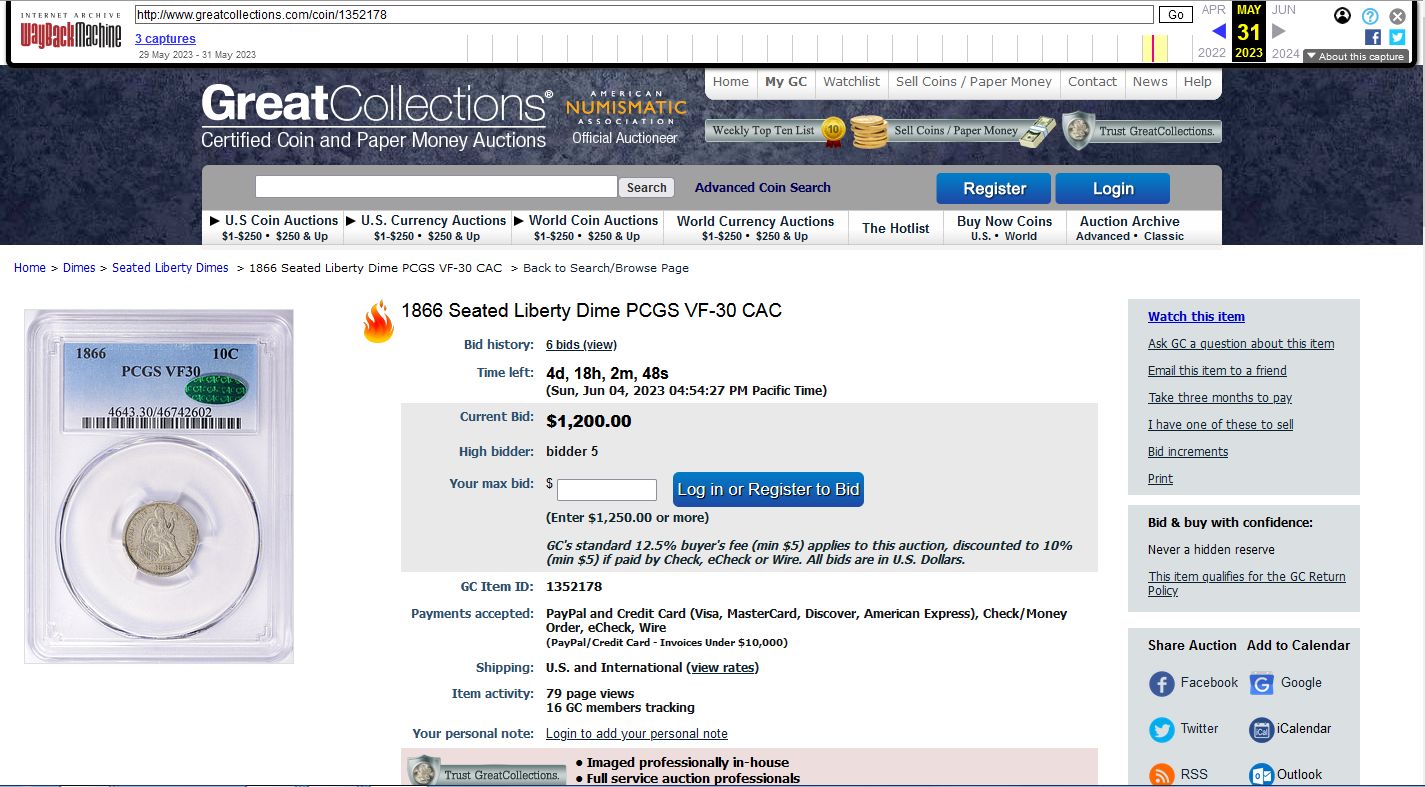
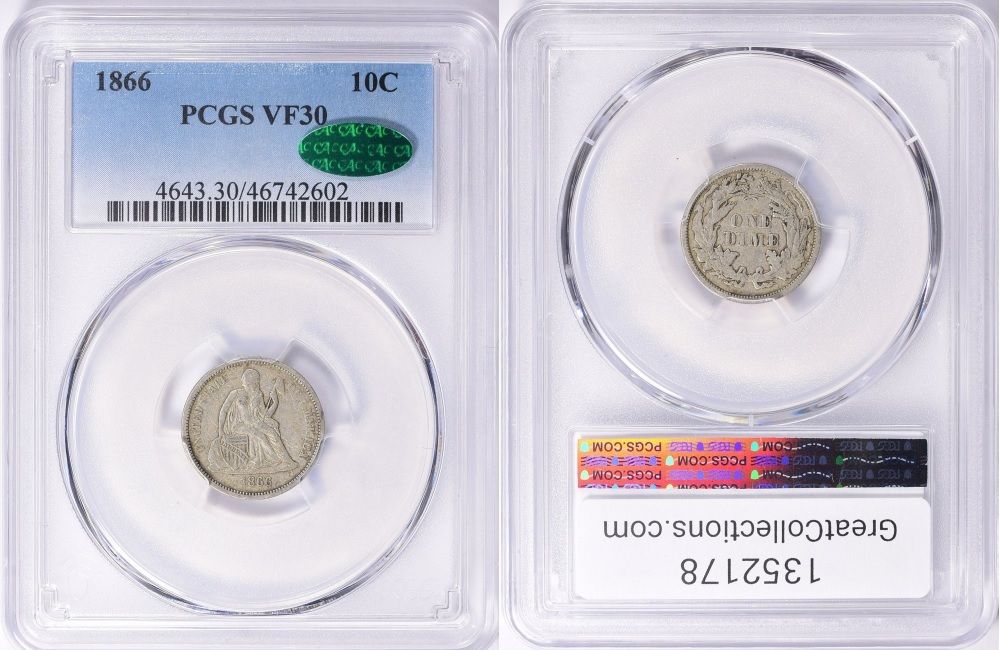
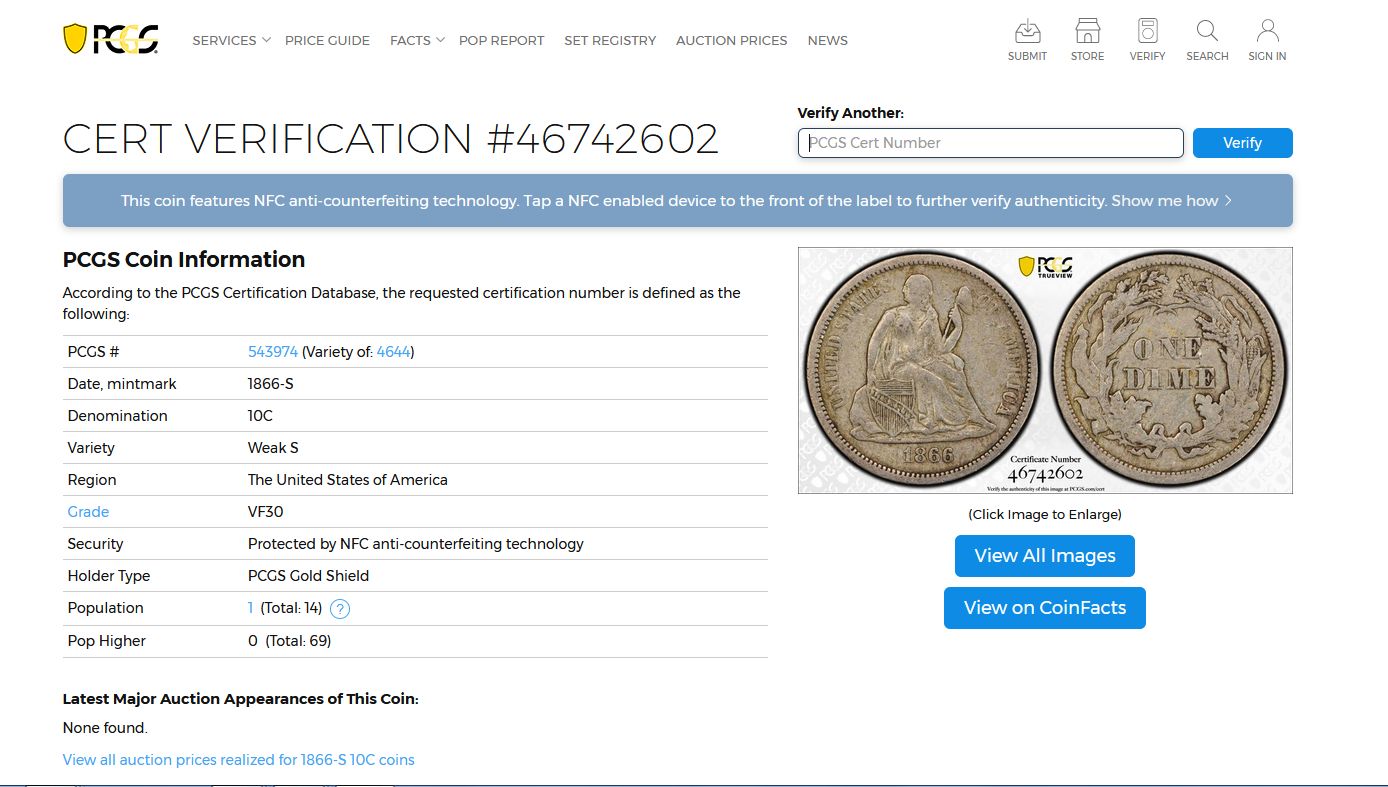
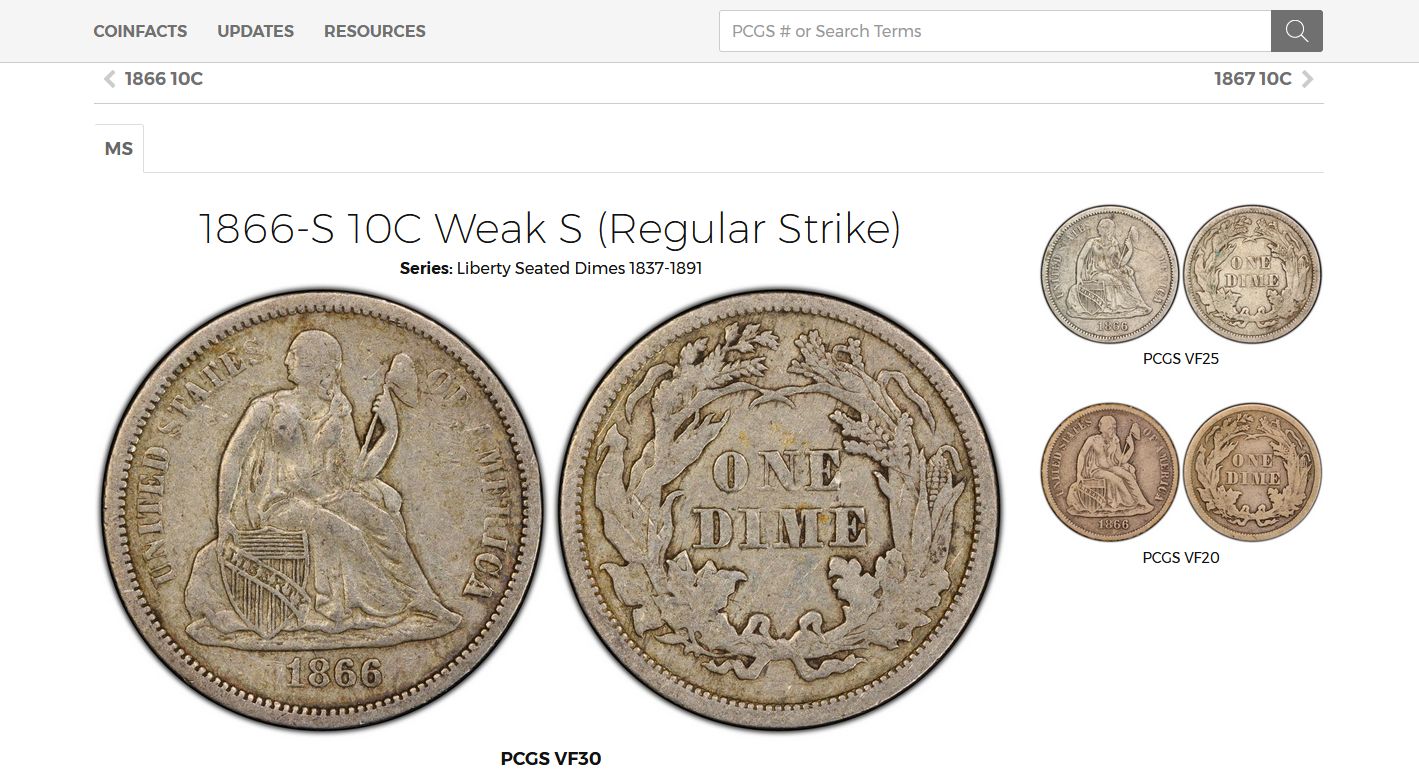
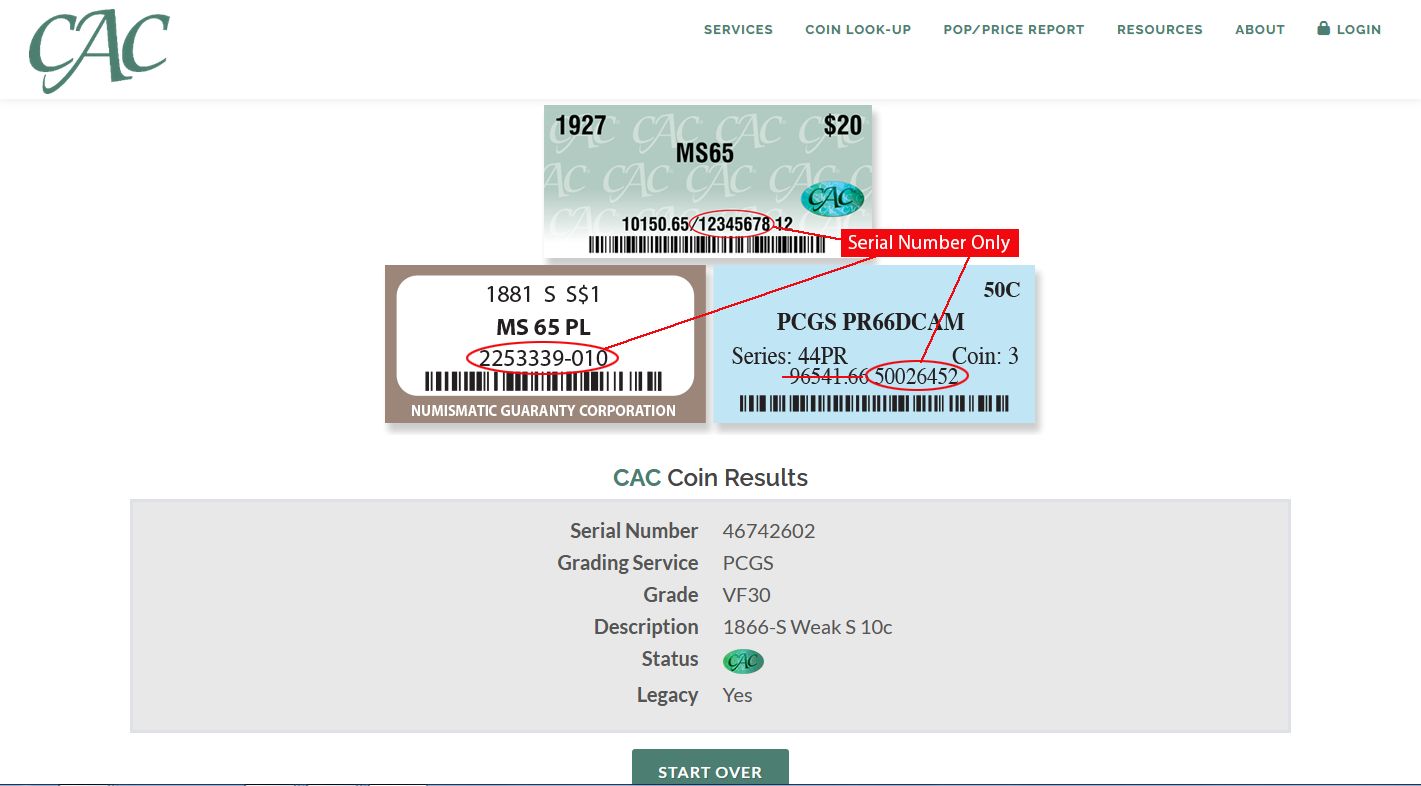
The cert# was provided back on page 4 by GC, in the image of the coin. I wouldn't expect this to happen every time but the original listing (from the GC item#) happens to be saved at the Internet Archive: https://web.archive.org/web/2023053...coin/1352178 (edit to replace functional link). The label in the original listing is the same as GC provided earlier, showing "1866" (PCGS# 4643) but PCGS currently lists the cert verification as "1866-S / Weak S" (PCGS# 543974, variety of 4644). This page is not Archived so I can't tell if it was always this way. https://www.pcgs.com/cert/46742602Edited by Alpha2814
03/23/2024 6:19 pm
|
|
Bedrock of the Community
United States
12057 Posts |
Let's say you consign a coin to Bob to be auctioned. Bob's staff appraises the coin and values it at $10,000. Bob's Auction House may decide to pay you for the coin when it sells in the auction 3 months from now, or may instead advance you a percentage of the expected sale payment up front and pay you the rest when the item sells. Bob's advances you a 60% or $6,000 payment now with a promise to pay the remainder of the sale proceeds after the sale is finalized. 3 months later, your coin sells for $12,500, and Bob's sends you payment for the remainder of your proceeds from escrow once the sale clears.
Two weeks later, the buyer gets their $12,500 coin and finds out it's been misrepresented and is really a $2500 coin. The buyer exercises their return privilege under their contract based on Bob's policies, and the coin is returned. Bob's team reviews the buyer's complaint and determines it to have merit. Bob's refunds the buyer, then offers the coin for sale again with correct representation. This time it sells for $3000 to the new buyer.
Can Bob's Auction House legally demand that the original consignor return the net proceeds of the $12,500 sale that were paid to that consignor?
Member ANA - EAC - TNA - SSDC - CCT #890 "Most of the things worth doing in the world had been declared impossible before they were done." -- Louis D. Brandeis Edited by paralyse
03/23/2024 5:48 pm
|
|
Pillar of the Community
United States
6903 Posts |
paralyse, that is going to depend primarily on what sort of contract exists between the seller and Bob. People don't consign items to auction in a legal vacuum. The possible actions might also depend on lawyers. I am acquainted with several situations where superior litigators were able to enforce fuzzy notions or escape from seemingly ironclad agreements.
|
|
Pillar of the Community
United States
4233 Posts |
Thanks @Alpha2814, I didn't think they would reuse the same cert# so that's useful information. They probably kept the original photo when fixing it too. Jack, I think the make offer thing on Heritage is automatic unless you opt out. If the owner still has the 1901-S and hasn't done anything about it, I wonder what the PCGS guarantee would give them. It sold 8+ years ago. @paralyse Perhaps Bob's Auctions copies the GC consignor agreement: Quote:
12. In the event the Consignor's sales do not exceed fees or monies owed to GreatCollections, the Consignor agrees to pay GreatCollections all monies owed within seven days of the date of the invoice and/or settlement statement, after which date, compound interest at the rate of 10% per annum shall accrue on the outstanding balance. I would guess that once the dust settles, Bob sends them an invoice, and they have to pay it. At least as far as the cash advance is concerned, the coin is like collateral on a loan. If you don't pay back a regular loan, they sell the collateral, and you're still on the hook for the difference if the collateral was worth less than the loan balance, right? What a weird and complicated situation to be in for both parties here. |
|
Pillar of the Community
United States
517 Posts |
Edited by burfle23
03/24/2024 09:44 am
|
| |
Replies: 162 / Views: 11,122 |








 First Page
 Previous Page


 Posted 03/22/2024 7:31 pm