Here's a bit of common-knowledge US commemorative coin trivia...The classic series of US commemorative coins certainly has its share of "date management" issues (e.g., the "1900" Lafayette Memorial Dollar that was struck in 1899), but some coins are particularly odd or quirky in terms of their dates. Check out -
Classic Commemorative Coin Dates Can Be Misleading for a quick survey.
I've discussed before how it was typical for early US commemorative coins to not have date restrictions specified in their enabling legislation, and how such a loophole was legislated out of commemorative coin bills by Congress in the mid-1930s (see
Quick Bits #44 - Senate Committee On Banking And Currency).
The Senate Committee's guidance created a few "interesting" situations, none more so than the 1936 Battle of Gettysburg 75th Anniversary Half Dollar and the 1936 Landing of the Swedes in Delaware Tercentenary Half Dollar.
In each case, the coins were authorized (and dated) "1936," were struck by the US Mint in 1937 and commemorate an event whose anniversary was celebrated in 1938. A "Triple Play" of unmatched dates!
To help clarify the anniversary being celebrated, each coin is dual-dated with the milestone years of the event. The Gettysburg coin features the dates "1863" and "1938" on its reverse, while the Delaware half dollar features the dates "1638-1938" on its reverse. In each case, the anniversary dates are worked into the coin's overall commemorative design.
Too quick of a glance at either coin could lead the viewer to conclude that either the sponsor or the US Mint needed to brush up on US history. But really, just "blame" Congress (and the manipulative coin sponsors that took advantage of a loophole in previous authorizing legislation). Sometimes the cure isn't much better than the problem.
1936 Battle of Gettysburg 75th Anniversary Half Dollar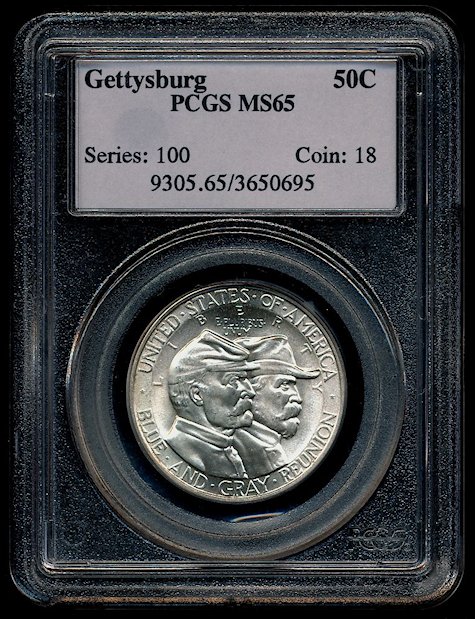
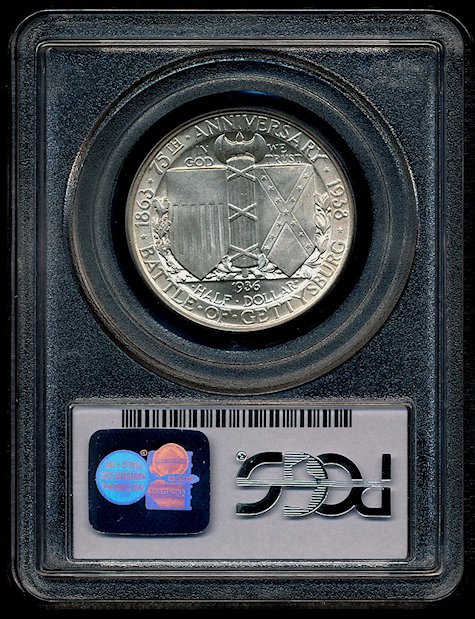 1936 Landing of the Swedes in Delaware Tercentenary Half Dollar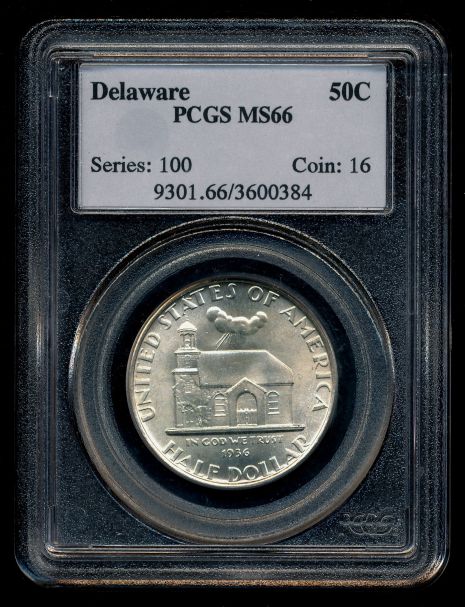
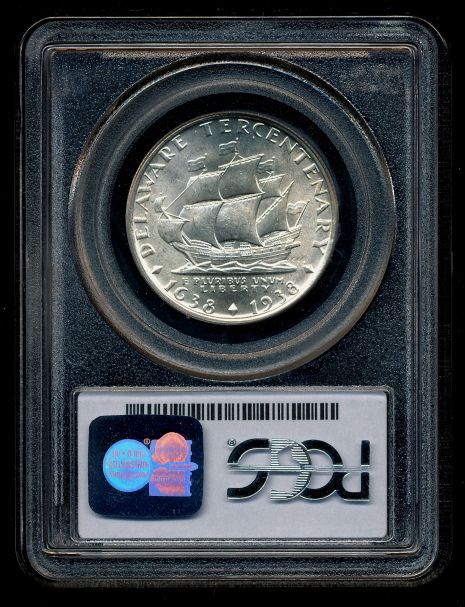
For more of my stories about commemorative coins and medals, including more on the Delaware and Gettysburg half dollars, see:
Commems Collection.










 Posted 06/20/2024 3:00 pm


