USPaperMoneyInfo.com has an excellent discussion on how currency serial numbers and plate position numbers are related located
here.
That page includes a downloadable spreadsheet that you can use to determine plate position, run number sheet number, etc. given a note's serial number, run size and type of printing process. I've always found the spreadsheet to be very accurate. If you don't want to download the spreadsheet, the webpage goes through the math behind determining plate position so you can calculate it yourself.
Recently, though, as I was completing my Series 2021 $1 FRN District Set, I got a note with serial number L62055634B that when entered into the spreadsheet didn't come up with the plate position indicated on the note.
According to the BEP's Monthly reports, in July 2023 the Fort Worth facility printed San Franciso FRB $1 FRNs from L57600001B-L96000000B. So, this is when the note was printed and it would normally have been printed in the 50 note LEPE sheet format. Both the spreadsheet results and a manual calculation indicate a plate position of G5, yet the actual plate position indicated on the note is E4. I doubt the note is counterfeit (who counterfeits $1 FRNs?) so what gives?
It should be noted that for the LEPE process the plate position number doesn't depend on the run size. Run size is only used to determine run number, sheet number, etc. So, changing the run size for a LEPE printed note has no effect on the calculated plate position.
In order to come up with a plate position of E4 for this note, I had to change the print process to 32 subj COPE with a 100,000 run size (plate position number for the COPE process does depend on run size) AND swap the COPE halves (which supposedly does not commonly occur, but can).
What do you think? Were the LEPE process printers unavailable at Fort Worth in July 2023 for some reason, so they used the older COPE process printers? or is something else going on?




 Posted 09/24/2024 10:08 pm




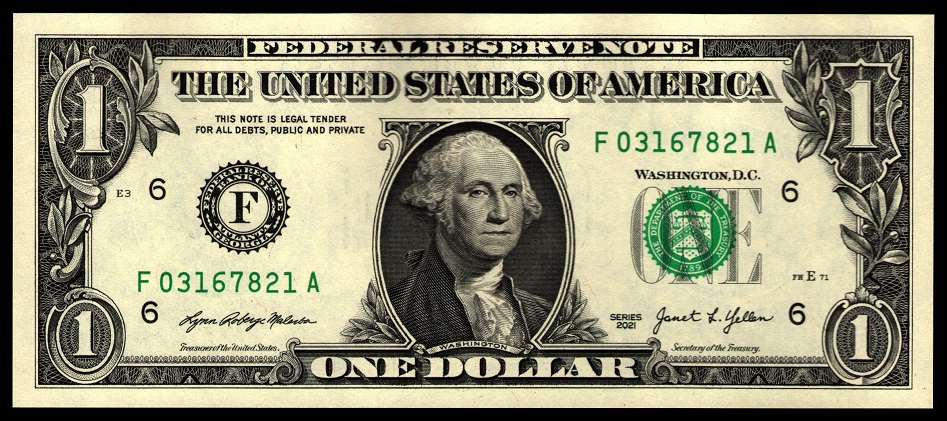
 ), you can tell whether a $1 FRN was printed on a 50 or 32 subject sheet by looking at the size of the plate position number on the note (see the BEPs discussion


