| Author |
 Replies: 143 / Views: 9,865 Replies: 143 / Views: 9,865 |
|
|
|
Pillar of the Community
 United States
9011 Posts |
|
|
Pillar of the Community
 United States
3363 Posts |
-makecents- Thank you.
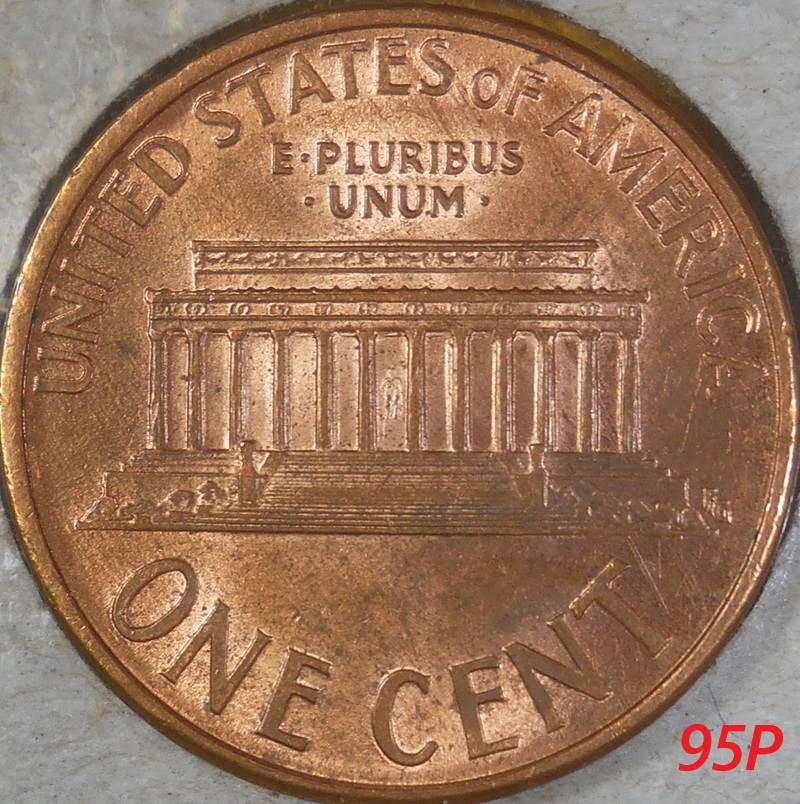
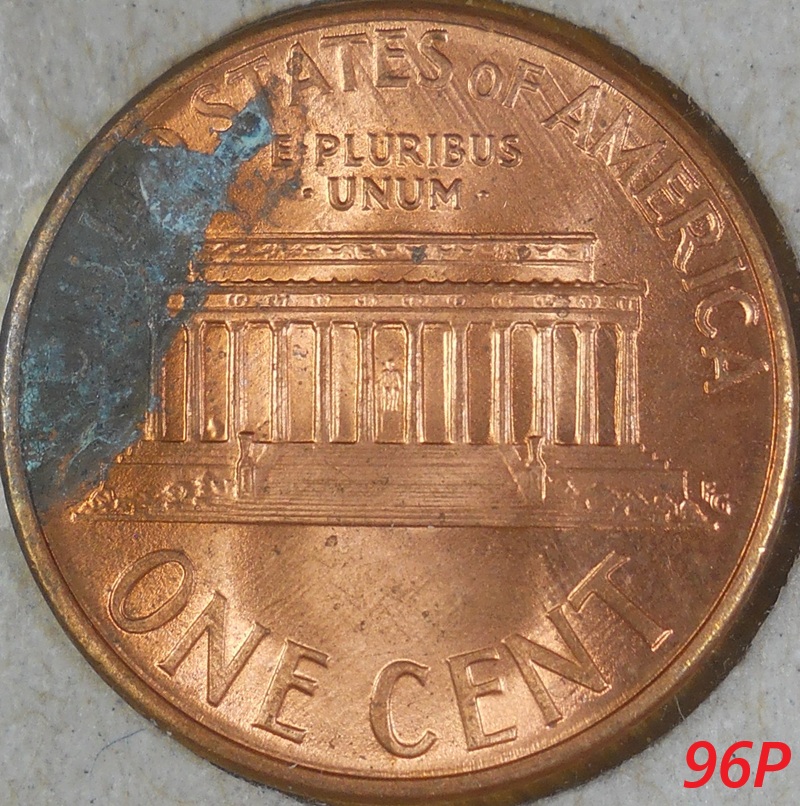
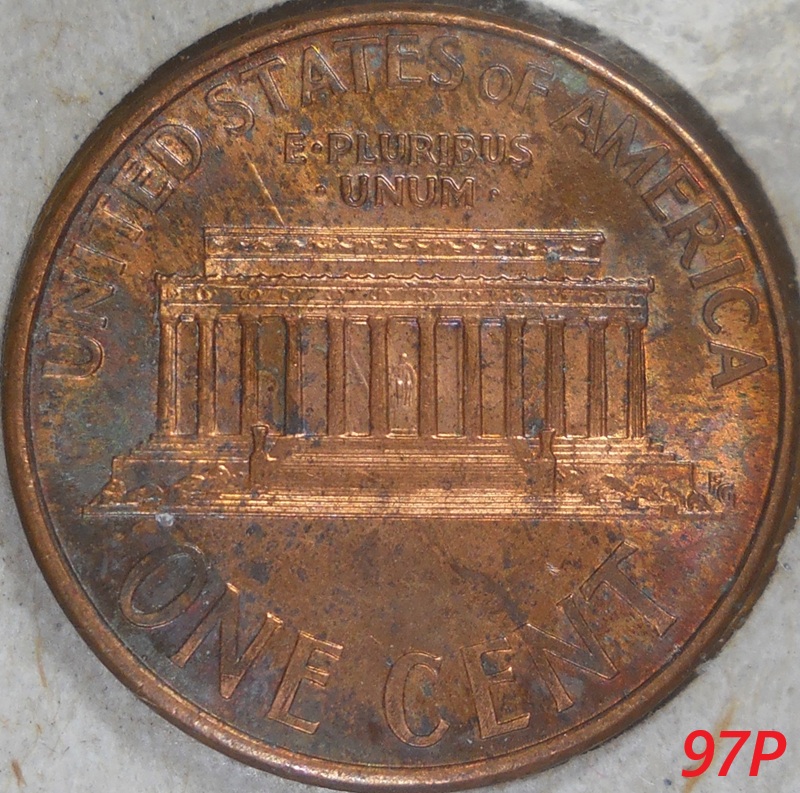
The 95 and 96 are what I am calling "Type C" since the scrapes are not long enough to measure for an arc.
The 97 has a long straight scrape (no arc) so it would have been struck on a horizontal stroke Schuler press with a Pusher Feeding device. Odds are the 95 and 96 were also.
I have not identified a scrape prior to 2018 on any denomination that shows a slight arc. I would like to see one! Theoretically they are possible!
Thanks for your help!
PS: Also looking for examples of feeder mechanism die damage on ANY denomination between 1946 and 1993!
|
|
Pillar of the Community
United States
9011 Posts |
Quote:
PS: Also looking for examples of feeder mechanism die damage on ANY denomination between 1946 and 1993! I will continue to look. -makecents-
|
|
Pillar of the Community
United States
9011 Posts |
|
|
Pillar of the Community
United States
3363 Posts |
Quote:
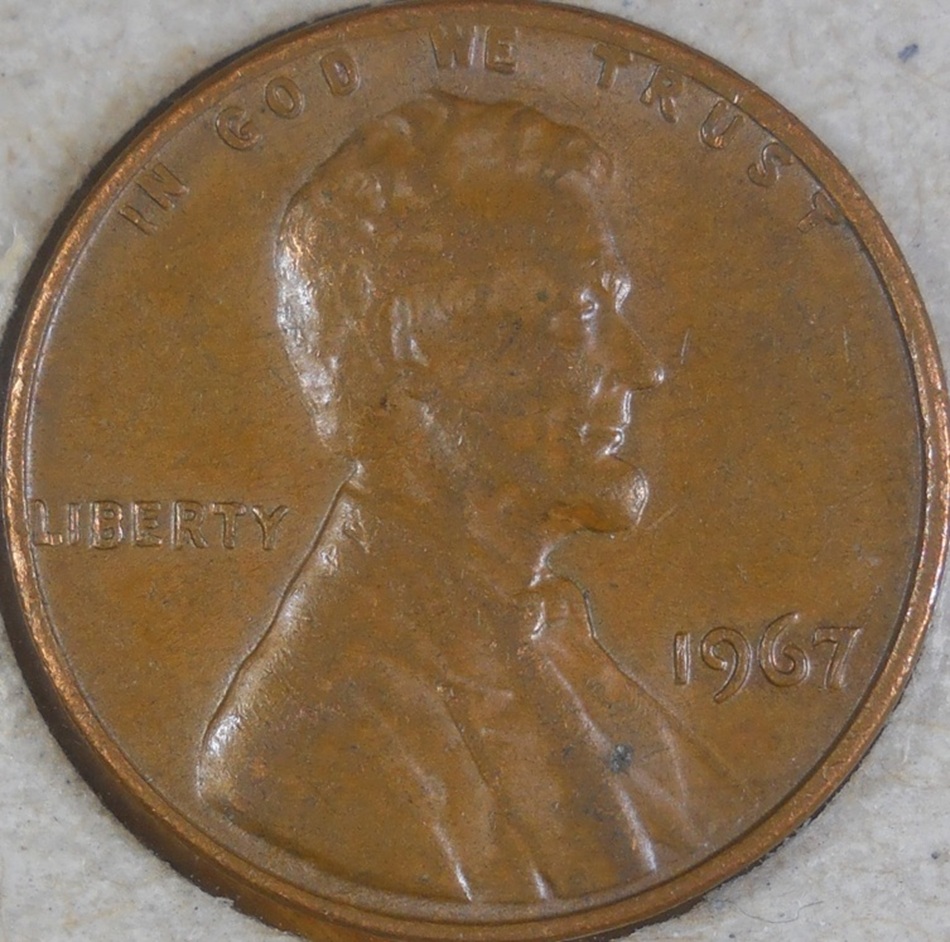
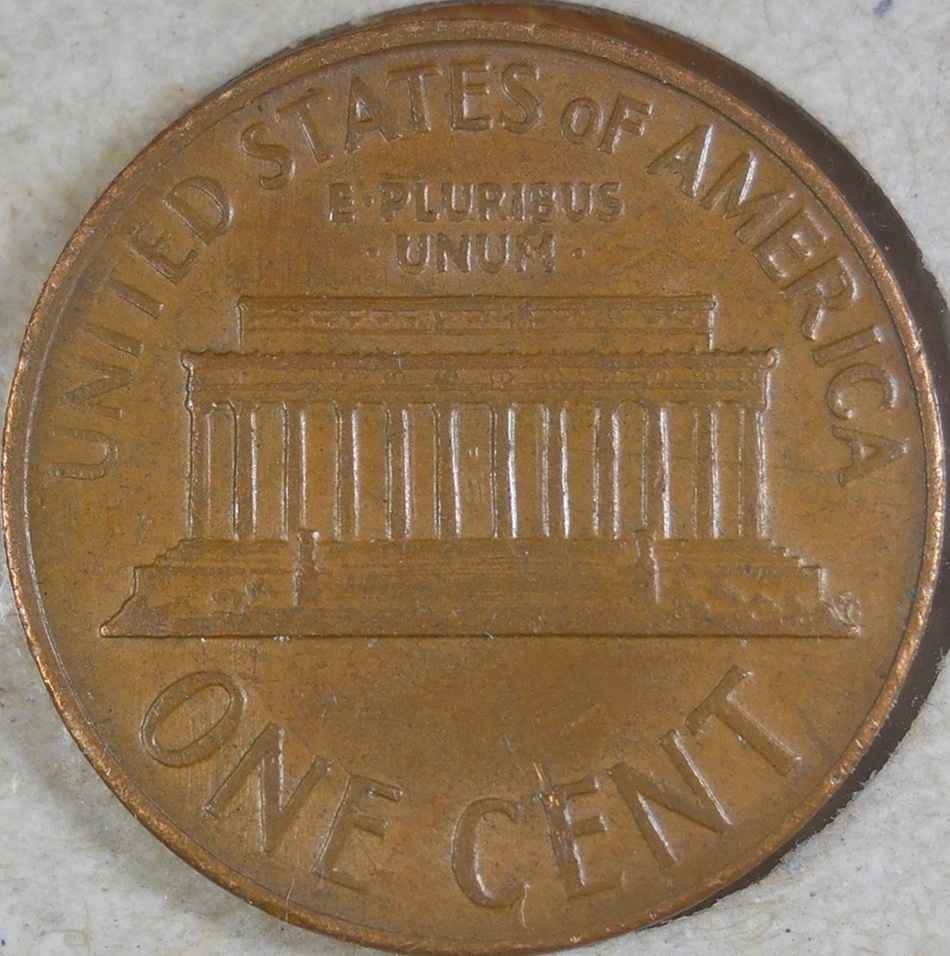
. Alright, Pete. While searching some Loomis rolls, I ran across this this 67P cent. I have no feeder finger scrapes to reference for this time period, so not sure what to even look for as far as direction and look of them. That being said, this looks different than just die scratches and they run the length of the coin with decent consistency, north to south. See what you think.
Thanks! I have no idea what those are! I don't think they are from feeder mechanism damage, but I could not zoom the photos with enough resolution. Appreciate your help! |
|
Pillar of the Community
United States
9011 Posts |
Pete, do you have any cent examples with feeder finger scrapes in this era that you could post? I have searched the web and have found nothing but dimes during this time period and they are almost perfectly horizontal, just like dimes of the current times.
-makecents-
|
|
Pillar of the Community
United States
3363 Posts |
Quote:
. Pete, do you have any cent examples with feeder finger scrapes in this era that you could post? I have searched the web and have found nothing but dimes during this time period and they are almost perfectly horizontal, just like dimes of the current times. I do not! That is why I said I would like to see some! Interesting, isn't it? |
|
Pillar of the Community
United States
9011 Posts |
Quote:
I do not! That is why I said I would like to see some! Interesting, isn't it? Oh, I agree, it is interesting. I mentioned earlier in your thread that I understood why you were looking for the time period you were, after trying to find something, anything.... So that was why I was curious if you had anything to show us what to look for. The scrapes are very different from era to era, the shape, width and direction of them and I have no clue what to look for.  I'm sorry you cannot make out what I'm trying to show you and do not know for sure what I have is but pretty sure it's not die scratches. If you would like, PM me and I will send the coin to you. -makecents-
|
|
Pillar of the Community
United States
3363 Posts |
I can see enough to be fairly certain it is not from a feeder. The features look symmetrical and evenly spaced.
Thanks for your help!
|
|
Pillar of the Community
United States
9011 Posts |
|
|
Pillar of the Community
United States
3363 Posts |
Quote:
. Pete, do you have any cent examples with feeder finger scrapes in this era that you could post? I have searched the web and have found nothing but dimes during this time period and they are almost perfectly horizontal, just like dimes of the current times. I do not! That is why I said I would like to see some! Interesting, isn't it? |
|
Pillar of the Community
United States
3363 Posts |
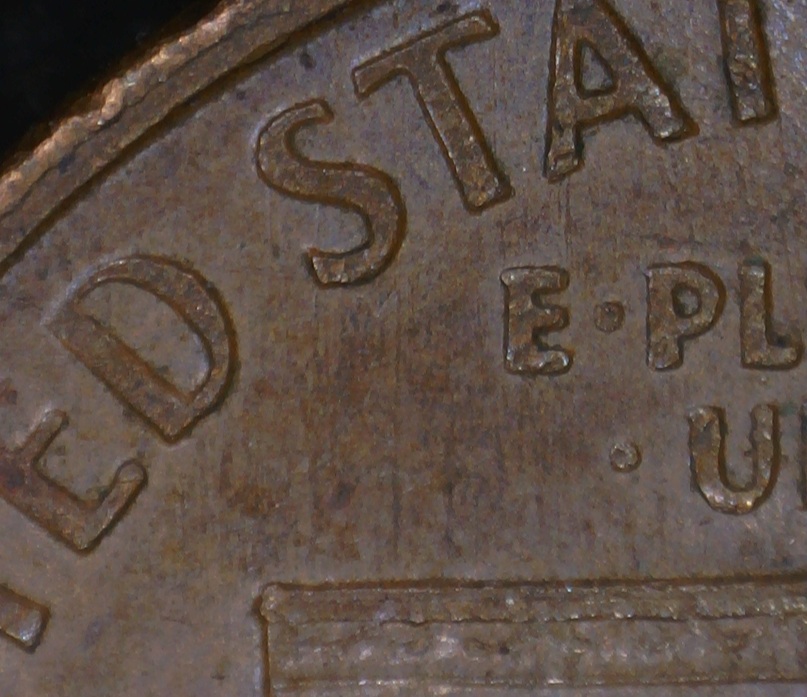
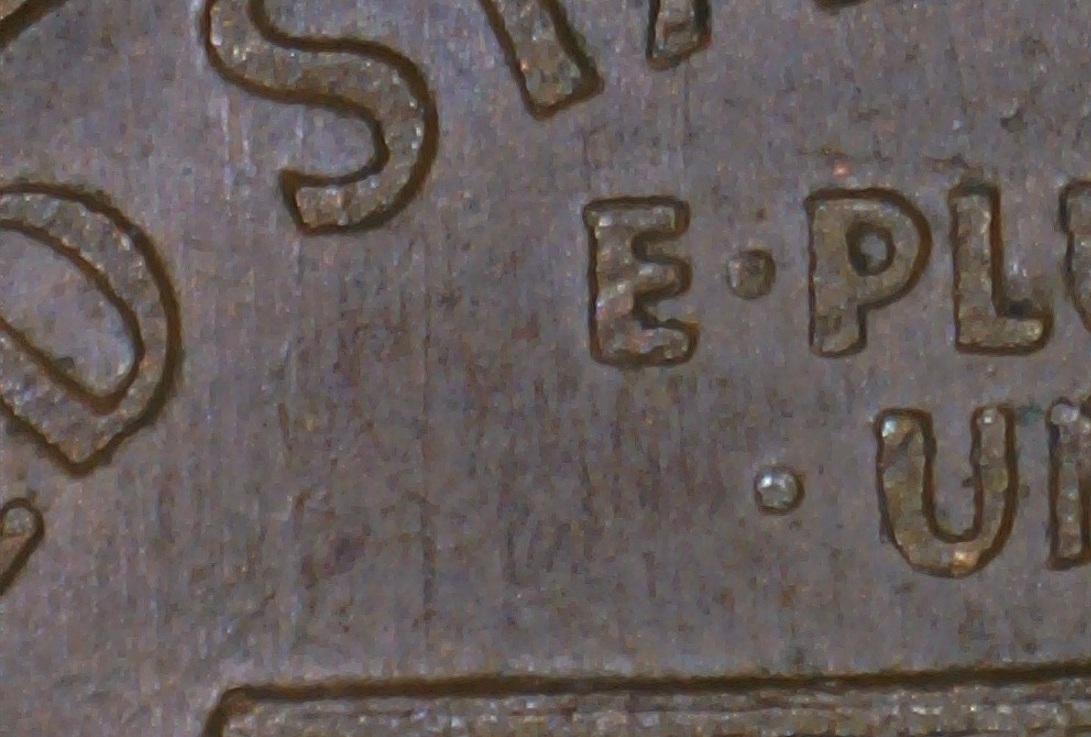
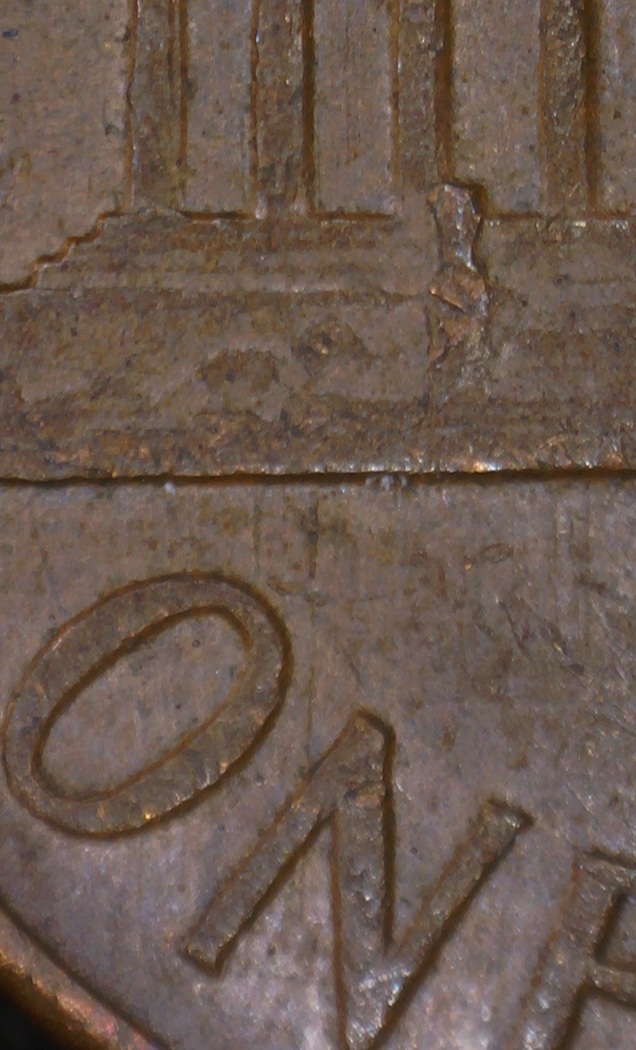
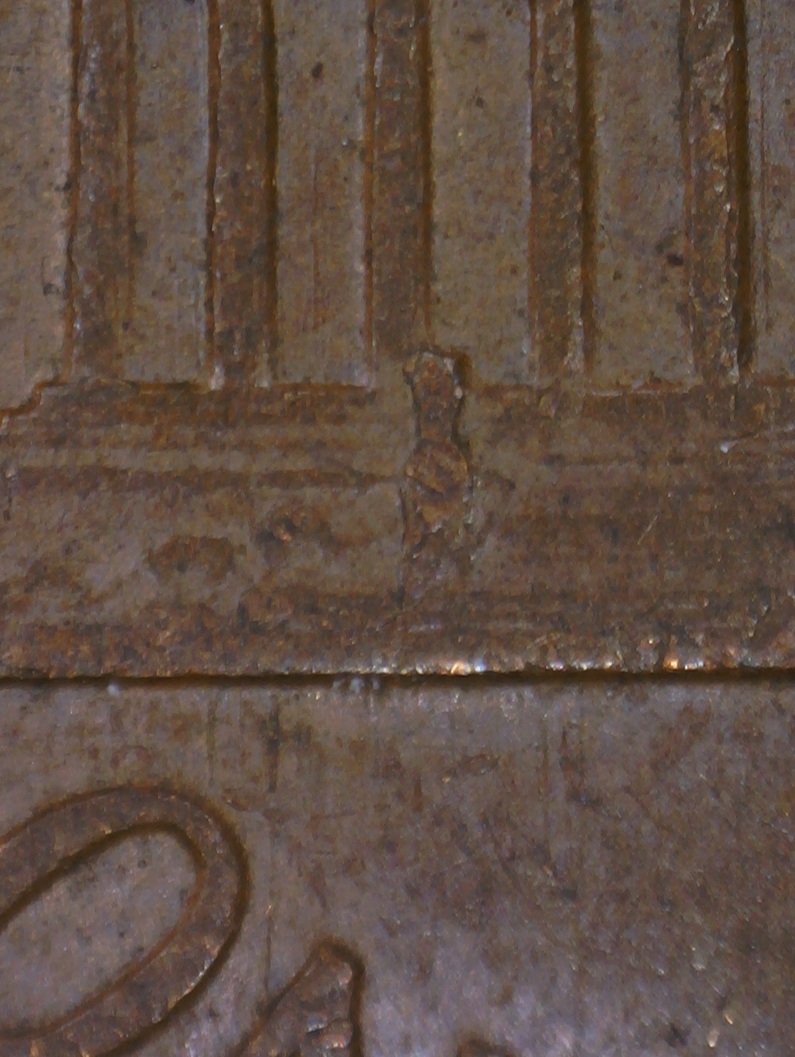
This 1957-D example of feeder mechanism die damage is only one of two examples I have seen between 1946 and the 1990s (the other example is a 1967 Dime with die scrapes at a 0°angle to the horizontal design axis). I think this 1957-D example was from a Conversion Unit on a Bliss Press. Notice that the angle to the horizontal design axis is approximately 60°. Every example of feeder mechanism die damage I have identified has been at an angle of 0°, 30°, 45°, 60° or 90° to the horizontal design axis, within a few degrees of tolerance. In 1945, a Conversion Unit for Coining Presses (a Dual Coining Press) was designed by a machinist at the San Francisco Mint, Mr. William P Kruse, along with the collaboration of the Superintendent of Coining at the San Francisco Mint, Mr. Joseph Steel, and entered production. The patent was issued in 1949, (SEE schematic). It is likely that these conversion units were widely used and installed on Bliss Presses and any of the Ferracute Presses still in production. In 1945, it was reported that "This device can be used and is being used on all coinage, domestic and foreign of the sizes of quarters or less." It seems that it was a simple matter to attach the device to an existing press, which accounts for its almost immediate broad use. 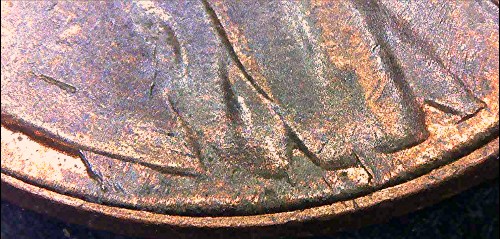 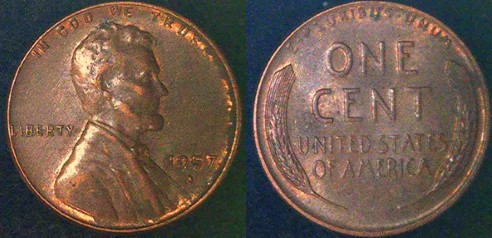 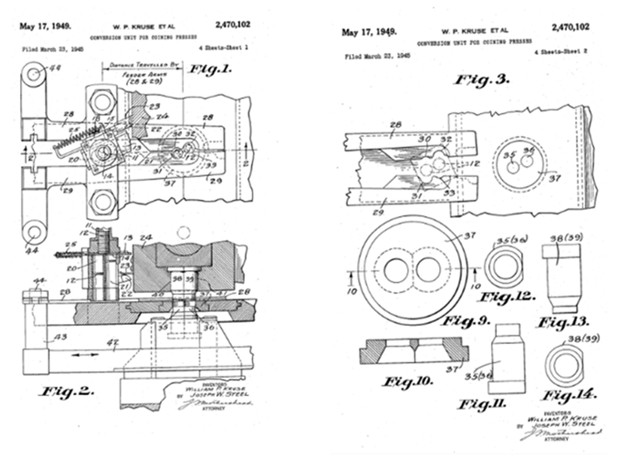 Edited by Pete2226
06/19/2025 09:29 am
|
|
Pillar of the Community
United States
9011 Posts |
|
|
Pillar of the Community
United States
9011 Posts |
|
|
Pillar of the Community
United States
3363 Posts |
Makecents THANKS! Interesting! I don't know how you find those posts! I appreciate it!
|
| |
Replies: 143 / Views: 9,865 |






 First Page




 Posted 06/05/2025 09:26 am