| Author |
 Replies: 33 / Views: 3,508 Replies: 33 / Views: 3,508 |
|
|
|
New Member
 United States
44 Posts |
|
|
Moderator
 United States
196572 Posts |
Thank you for the update.  |
|
Pillar of the Community
Russian Federation
5186 Posts |
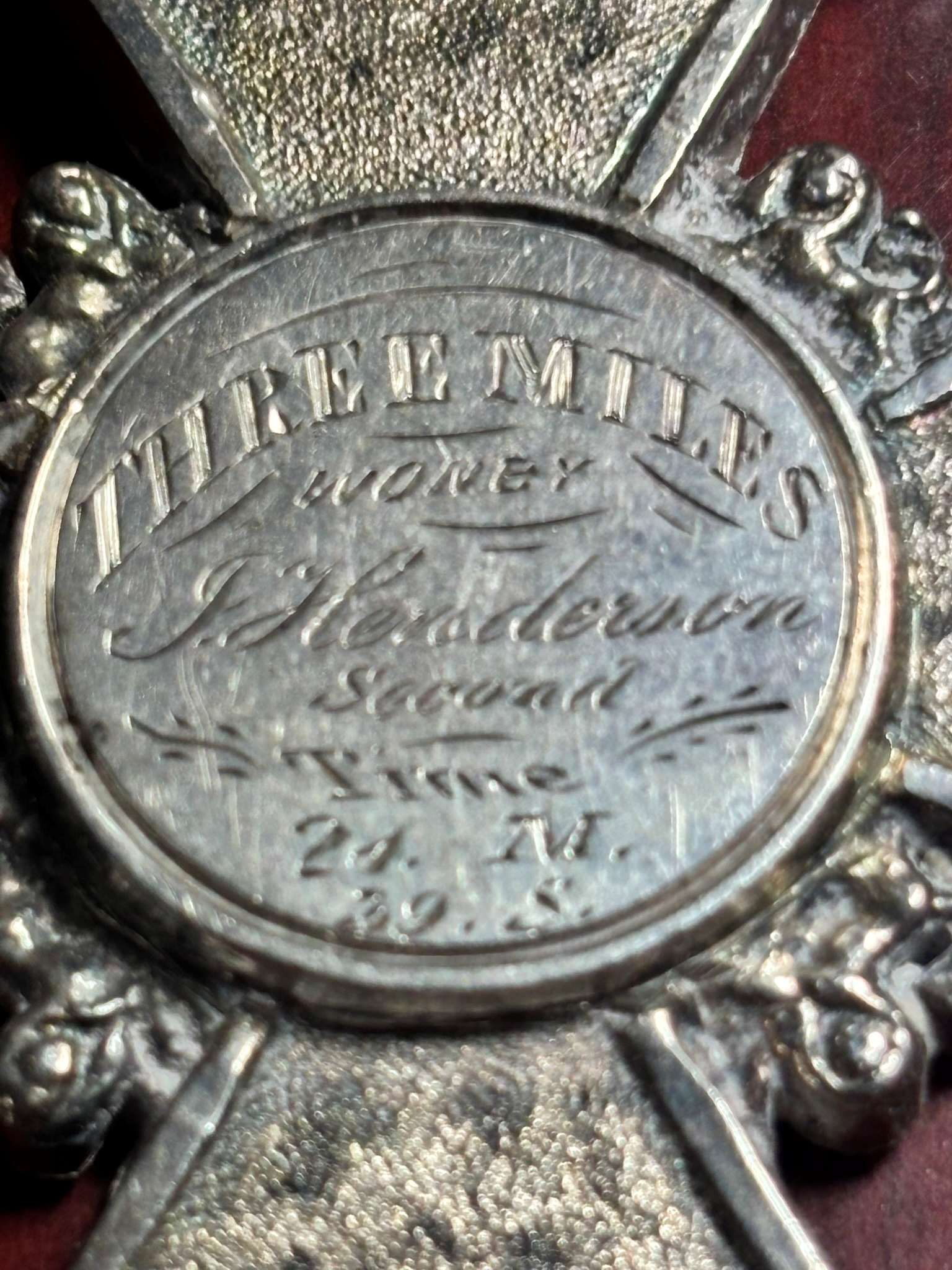
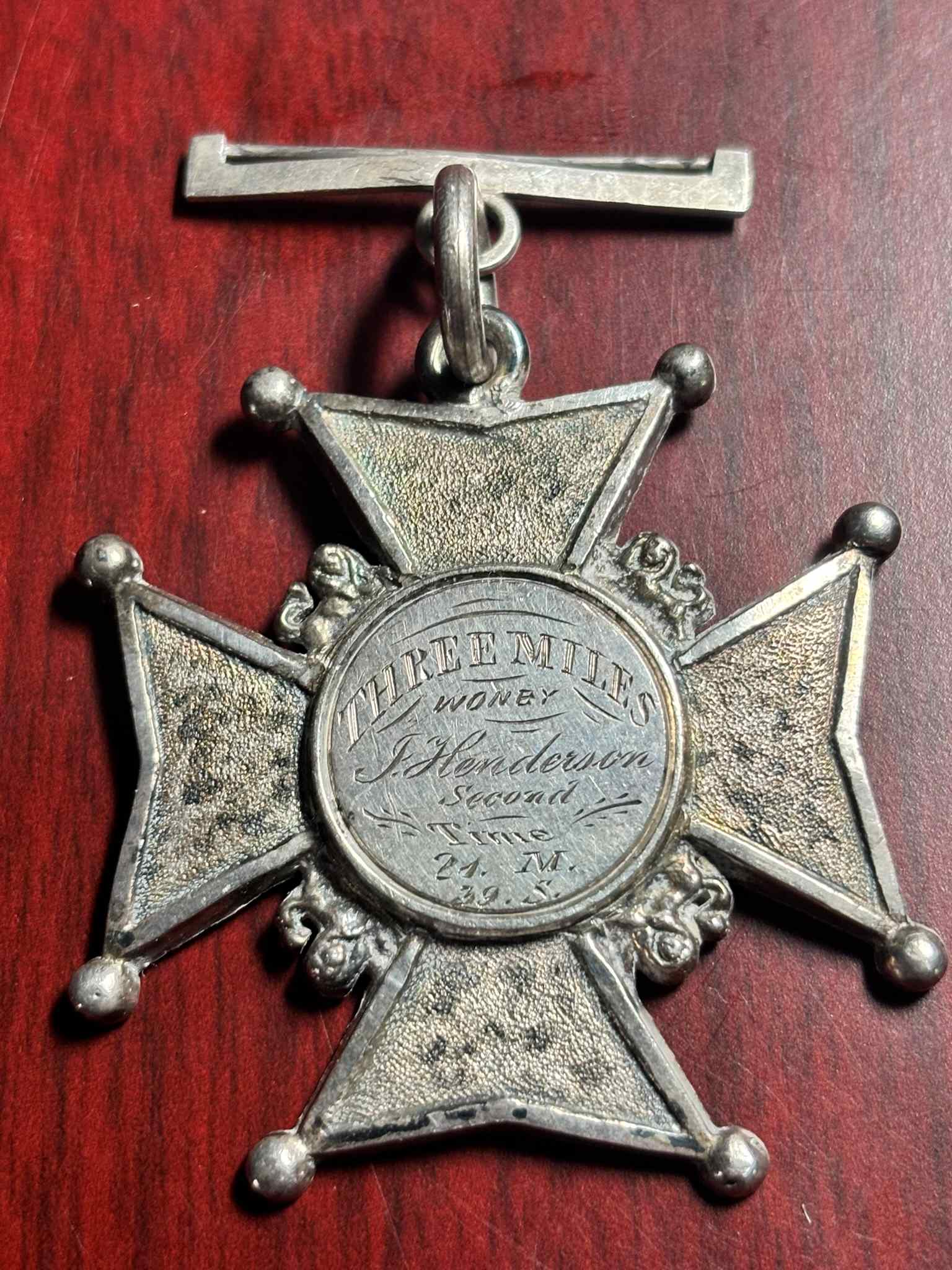
I'm not sure if it's more reasonable to assume that it was a 2nd place medal that kept the "won by" line for some reason (which would imply multiple similar medals?), or that the guy who won the race was named J. Henderson II and they spelled out the numeral.
(I think probably the former but the latter doesn't seem impossible.)
|
|
New Member
United States
44 Posts |
Ah, yes. Thanks for pointing out that it could be J (or F) Henderson II that won 1st place in the race. I think that's definitely possible.
|
|
Valued Member
 United States
220 Posts |
Just something that might help narrow your search. The metric system was established in the late 1700s. The only countries that didn't adopt the metric system are the USA, UK, Liberia and Myanmar.
So, unless it is nautical miles, it's probably one of those four.
|
|
Moderator
United States
34564 Posts |
@blind, I'd love for someone across the pond to weigh in, but I was thinking that British Empire folks commonly use the metric system for many things while still using miles for distance.
"If you climb a good tree, you get a push."
-----Ghanaian proverb
"The danger we all now face is distinguishing between what is authentic and what is performed."
-----King Adz
|
|
Moderator
Australia
17007 Posts |
Quote:
The metric system was established in the late 1700s. The only countries that didn't adopt the metric system are the USA, UK, Liberia and Myanmar. It's not quite as helpful or useful as that. The Metric system was invented by revolutionary France in the late 1700s, and spread by them into the rest of Europe as they conquered most of Europe during the Napoleonic wars. Britain, of course, remained unconquered by the French, meaning the British Empire and thus the entire English-speaking world in the 1800s retained use of the non-metric Imperial system. Most English-speaking countries did not switch from Imperial to Metric until some time in the 1970s. Australia officially converted from miles to kilometres in 1974, New Zealand in 1976. Don't say "infinitely" when you mean "very"; otherwise, you'll have no word left when you want to talk about something really infinite. - C. S. Lewis
|
|
Moderator
United States
196572 Posts |
We tried here in the 1970s. I remember in grade school it was all metric all the time. Then in the 1980s it all seemed to disappear overnight. Sad.
|
|
Valued Member
United States
220 Posts |
This thread is  A couple of observations I missed or didn't connect earlier: The number 1 in 21 minutes is most likely European script, and the wording is obviously in English. I'm not aware of any other areas that write their number "1" like an inverted "V" Also, I am pretty sure after looking through data bases (Mr. Google is my friend) the first name starts with an "I" and not a "J". The tail doesn't wrap back around and cross the vertical. Sooo, if you really want to get frustrated look up Eight point/tip Maltese Cross with ball ends and lions. An uncanny similarity between the Order of the Bath Knight Commander medal will pop up. It also has similar lions vs one of the many other markings. IF you want to take it one step further, look up Maltese Cross on Wikipedia, and you will see how world wide the use of the Maltese Cross is. I didn't find anything in sports Heraldry, so it very well be a locally produced award. One last thought on the race time. It might be run walking called "pedestrianism" back then or women's bike races, which were becoming a thing...with really big wheels and long dresses. Again, good luck |
|
Valued Member
United States
130 Posts |
I never would have guessed but I think it is the Alexandra Snow Shoe Club! This is from the Montreal Gazette February 8, 1868 - 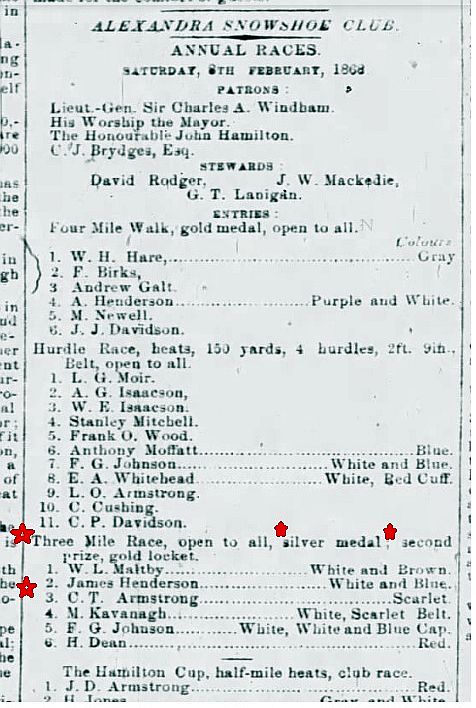 See this reference too - The Montreal Snow Shoe Club Its History and Record, with a Synopsis of the Racing Events of Other Clubs Throughout the Dominion, from 1840 to the Present Time By Hugh W. Becket · 1882 https://www.google.com/books/editio...c=frontcover |
|
Pillar of the Community
Russian Federation
5186 Posts |
 Wow, what a find! That seems pretty definite. (I checked the book and apparently James Henderson did arrive second.) I wonder why it was called Alexandra - is there a place named Alexandra in Montreal? The book doesn't go into much detail on that, only mentioning that some new clubs appeared in a burst of activity in 1867/68 (Alexandra being one of them). |
|
New Member
United States
44 Posts |
That's incredible!! I think that seals the deal and I really appreciate everyone's research and input on this thread. I loved that medal before but now it's at another level knowing its history and seeing that article.
By the way, the museum staff in Alexandra NZ sent another note a little while back that after extensive research and a look through all of their records, they decided it most likely came from another part of the world. Great stuff all around.
|
|
New Member
United States
44 Posts |
To put a bow on this one I'll also be reaching out to museums in Montreal to find the right place to donate this medal. I'll probably start with the McCord Stewart Museum. Once it's shipped off I'll send out one last update.
thanks again everyone. what a community.
|
|
Moderator
United States
196572 Posts |
Quote:
I never would have guessed but I think it is the Alexandra Snow Shoe Club! ... Fantastic!  Quote:
I wonder why it was called Alexandra ... A club sponsor or matron, maybe?  |
|
Moderator
United States
196572 Posts |
Quote:
To put a bow on this one I'll also be reaching out to museums in Montreal to find the right place to donate this medal. I'll probably start with the McCord Stewart Museum. Once it's shipped off I'll send out one last update. Excellent! |
| |
Replies: 33 / Views: 3,508 |






 First Page




 Posted 06/11/2025 09:47 am





